How IVR is Helping Healthcare Providers Deliver Personalized and Efficient Patient Care

11 mins read

Posted on Jan 31, 2025

Saravana Kumar
SEO


Saravana Kumar
SEO






Healthcare is a predominant industry and a crucial necessity for everyone. Automation tools can be a game-changer for various industries, including healthcare. IVR (Interactive Voice Response) technology is one such solution, providing an excellent platform for businesses to invest in. IVR solutions use VoIP (Voice Over Internet Protocol), an automated voice call system, to handle customer queries. When implemented in the healthcare industry, it can streamline operations for healthcare agents.
Effective communication is vital in healthcare as it directly impacts patient care. IVR serves as a preferred solution due to its ease of use and maintenance. It enhances workflow in pharmacies, hospitals, nursing homes, and clinics by ensuring seamless connectivity between patients and healthcare providers.
Why is IVR Essential for the Healthcare Industry?
IVR is a powerful tool for business-to-customer communication. In the healthcare sector, IVR calling system provides 24/7 patient support, handling queries, appointment scheduling, and bookings through an automated, pre-recorded system.
Patients interact with IVR by responding via keypad inputs to navigate options. If the IVR does not resolve their query, the call is forwarded to a live agent for further assistance. IVR is especially useful for managing international patients, enabling a global presence without the need to hire foreign staff. Additionally, IVR has streamlined hospital operations by reducing miscommunication and ensuring no patient calls are missed.
The primary role of IVR is call routing. It directs inbound calls to the appropriate department, eliminating the need for a manual receptionist. This enhances efficiency by ensuring calls reach the right personnel quickly, improving overall patient experience and operational workflow in healthcare institutions.
Challenges in the Hospital Industry and How IVR Solutions Can Resolve Them:
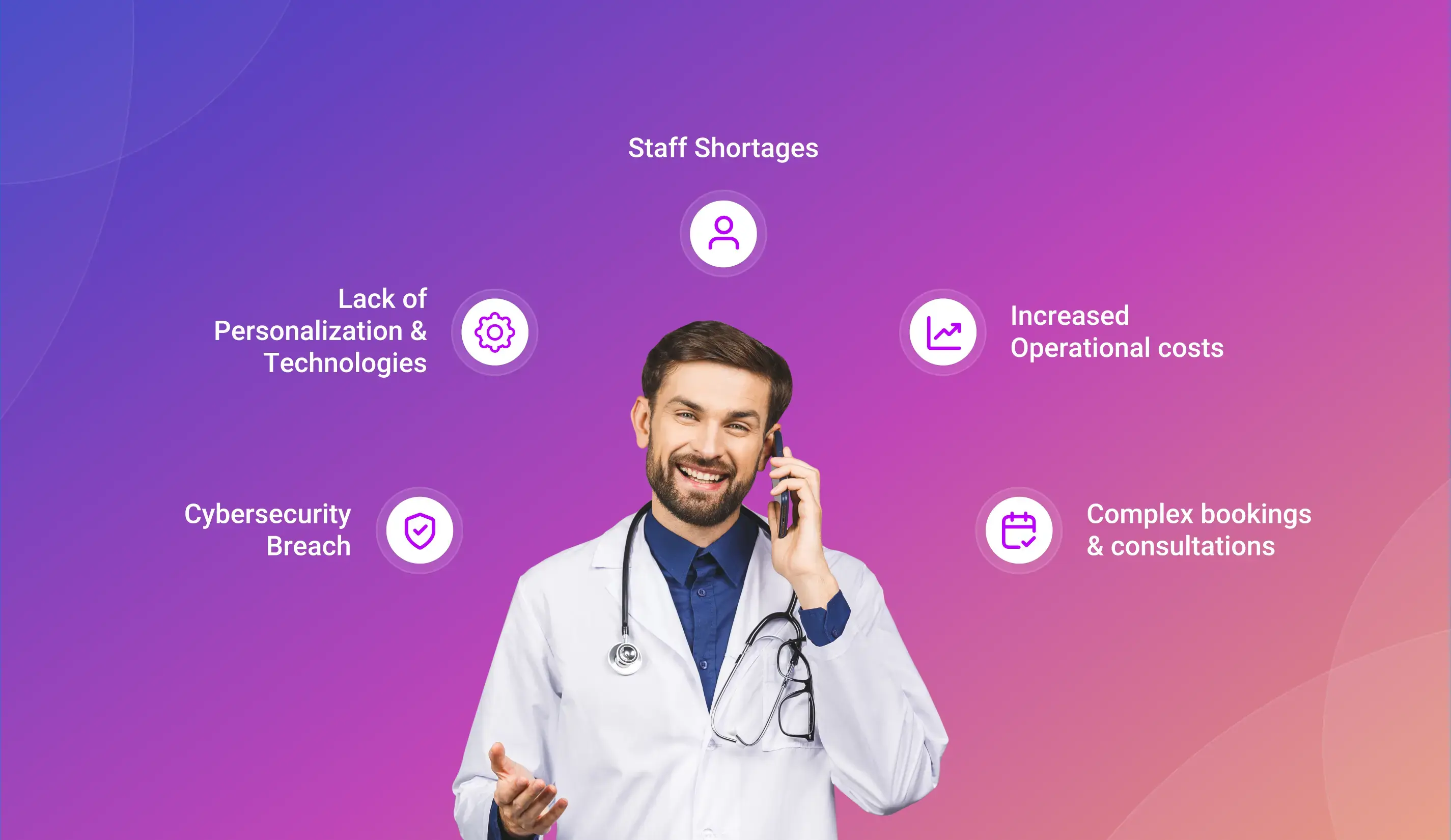
1. Staff Shortages
From the outset, the healthcare industry has been grappling with staffing shortages, which have worsened significantly following the pandemic. The demand for various healthcare professionals, including doctors and registered nurses, is expected to exceed the available supply in the coming years. It is crucial to address this challenge by implementing digital health tech solutions such as virtual reality medical training to help alleviate the strain.
IVR's Role in Solving This
With IVR service, hospitals and healthcare centers can avoid hiring and training staff to handle patient inquiries. It addresses basic queries like doctor availability, appointments, checkups, reminders, and lab results efficiently.
2. Cybersecurity Breach
Security is a critical concern for any business handling sensitive customer data, with numerous reported cases of malicious attacks. A survey reveals that approximately 382,262,109 health records were compromised, affecting 1.2 times the population of the United States. These incidents highlight the urgent need for robust security practices, particularly within the healthcare sector, to safeguard personal and medical information from cyber threats and ensure the trust of patients and clients.
IVR's Role in Solving This
Security is essential for handling sensitive customer information through IVR systems. The healthcare industry should implement data encryption, multi-factor authentication, regular audits, and ensure security compliance. At TeleCMI, our IVR software meets these standards.
3. Lack of Personalization & Technologies
Today, customers have various options to communicate with healthcare professionals. However, personalized services are limited in this competitive landscape. Customers increasingly prefer to manage tasks such as booking, rescheduling appointments, checking payment statuses, and learning about prescriptions and medications independently, without relying on a third party for assistance.
IVR's Role in Solving This
IVR technology offers a personalized experience by greeting healthcare callers with a pre-recorded voice and providing options to choose from. Once selected, the IVR delivers the appropriate response, enhancing customer satisfaction.
4. Complex Bookings and Consultations
Despite being in the technological era, the healthcare industry still faces challenges with appointment bookings and consultations. For example, when customers call to book an appointment, high call volumes often lead to long wait times. This can result in customers abandoning the call, causing the healthcare industry to lose potential clients and revenue. Efficient solutions are necessary to manage call volumes and improve customer satisfaction.
IVR's Role in Solving This
Cloud IVR technology enables easy, hassle-free booking, especially when hospitals are busy or closed. Clinics can complement this with a dedicated online medical appointment booking system that allows patients to schedule appointments, check booking status, and receive reminders for appointments or cancellations without human interaction
5. Increased Operational Costs
Operational costs pose a significant challenge for small-scale hospitals. Various stakeholders, from device manufacturers to pharmaceutical companies, influence healthcare service pricing. As healthcare costs rise, it can lead to increased revenue for healthcare companies but also frustrate customers due to higher expenses for services like lab tests and check-ups. Additionally, higher call volumes necessitate more staff, further driving up costs for healthcare providers.
IVR's Role in Solving This
Cloud IVR minimizes call drops, ensures 24/7 responses, and reduces call queues, improving customer satisfaction and productivity. By automating routine calls, it lowers operational costs and allows agents to focus on higher-priority tasks.
Transform healthcare communication with IVR - Streamline, Automate, and enhance patient care!
Start Your Free TrialFeatures of IVR to be considered in the Health Sector:
Explore the high-end features of IVR solutions in the healthcare industry:
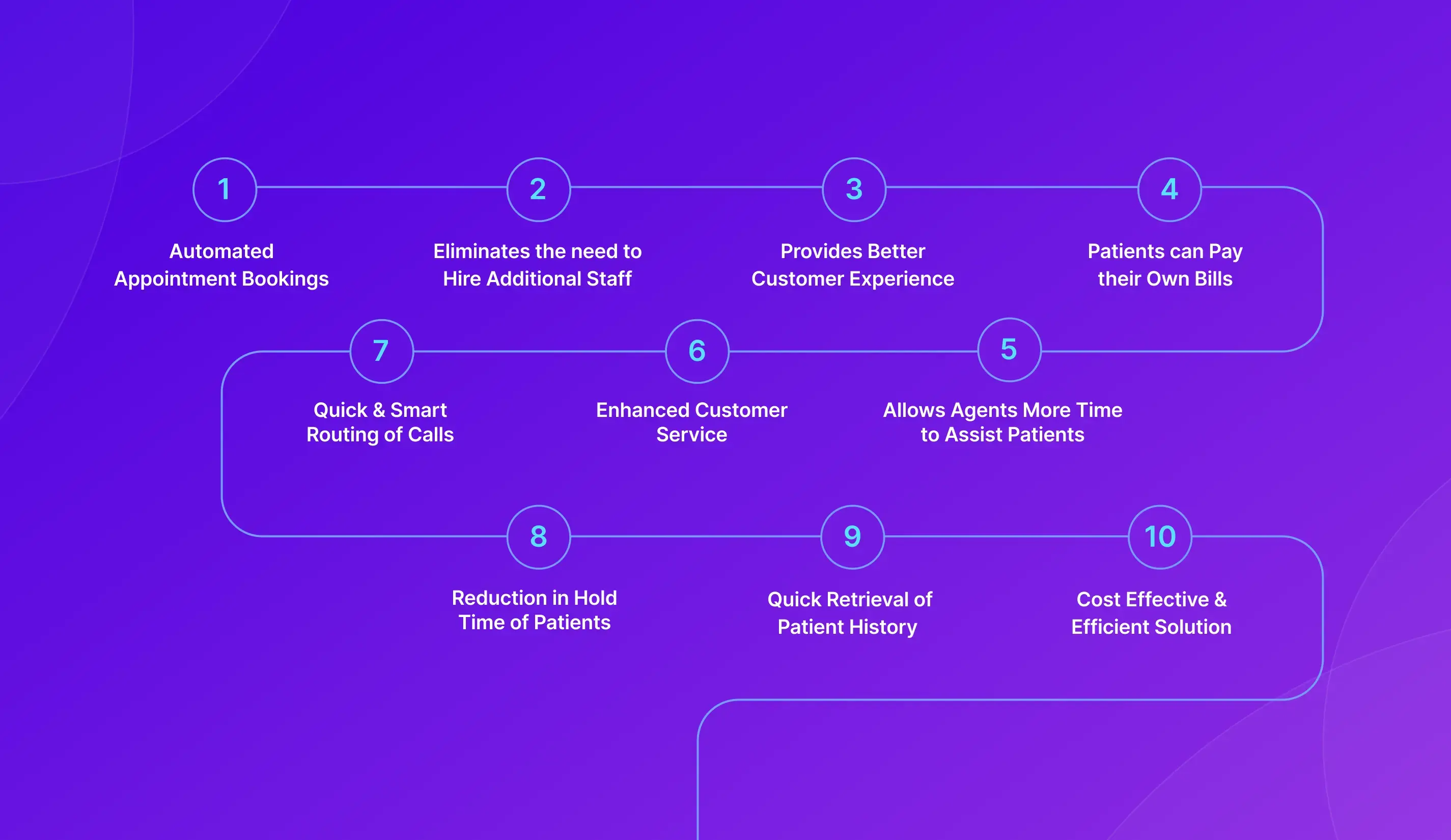
1. Automated Appointment Bookings
Implementing IVR solutions in the healthcare sector can make patient bookings seamless—especially when combined with patient management software. Receptionists, who typically handle repetitive booking tasks daily, can streamline operations by automating the process. With IVR acting as a virtual receptionist, patient bookings are handled efficiently as it checks doctor availability and processes appointments instantly. When integrated with patient management software, this setup ensures faster and more organized bookings, enhances the patient experience, boosts agent productivity, and significantly reduces workload for human staff.
2. Eliminates the need to Hire Additional Staff
As mentioned, the IVR software replaces certain agent tasks, streamlining operations and reducing the administrative burden on healthcare staff. This allows employees to focus on more critical tasks, improving overall efficiency. Additionally, it saves businesses from the need to hire extra staff, cutting operational costs. Since IVR solutions are cloud-based, there’s no need for a dedicated IT team to manage maintenance and upgrades, further reducing overhead expenses and ensuring smooth, hassle-free operation.
3. Provides Better Customer Experience
With Hosted PBX solutions, customer queries are resolved quickly and efficiently, leading to higher satisfaction levels. This positive experience encourages patients to return to the same clinic or hospital for future consultations or to purchase products. Moreover, satisfied customers are more likely to recommend the clinic to friends and family, helping attract new clients and grow your business. They may also share positive reviews and ratings on popular platforms, further enhancing your clinic’s reputation and online visibility.
4. Patients can Pay their Own Bills
IVR provides personalized options for resolving queries and performing various tasks, eliminating the need for patients to wait in long queues. They can make payments and complete other operations from the comfort of their home by calling the clinic or hospital and using the IVR system.
5. Allows Agents More Time to Assist Patients
Agents can remain more productive, offering better assistance and a more personalized experience. By focusing on customer queries and providing customized responses, they can significantly enhance the overall customer experience and satisfaction.
6. Enhanced Customer Service
Clinics and hospitals can deliver excellent customer service by optimizing operations and maximizing revenue. By offering personalized options, providing prompt responses, and streamlining processes, they can enhance customer satisfaction and excel in service delivery.
7. Quick & Smart Routing of Calls
With IVR solutions, clinics and hospitals can efficiently route calls to the appropriate agents. By setting up call flows in the IVR system, you can categorize agents based on their skills and specialties. This allows calls to be directed accordingly, ensuring that agents handle inquiries related to their expertise, leading to better and more informed customer responses.
8. Reduction in Hold Time of Patients
Patients no longer need to wait long to connect with agents. With call queuing functionality, all calls are managed simultaneously, significantly reducing wait times for patients in the queue.
9. Quick Retrieval of Patient History
With an intuitive dashboard that seamlessly integrates business tools and CRM, data is continuously synchronized and updated. This allows for easy retrieval of patient histories, enabling agents to provide accurate responses. Agents can quickly search by patient name or ID, filter, extract, and download patient information within seconds, all through the user-friendly dashboard.
10. Cost Effective & Efficient Solution
IVR offers budget-friendly solutions for small clinics and hospitals facing investment and pricing challenges. Since no physical infrastructure or additional equipment is required, IVR is both affordable and easy to set up. Moreover, it reduces operational costs by eliminating the need to hire extra agents or purchase new applications to manage various functions, making it a cost-effective choice.
High-end Benefits of IVR in the Healthcare Industry
Let’s explore the key benefits of IVR in the healthcare sector:
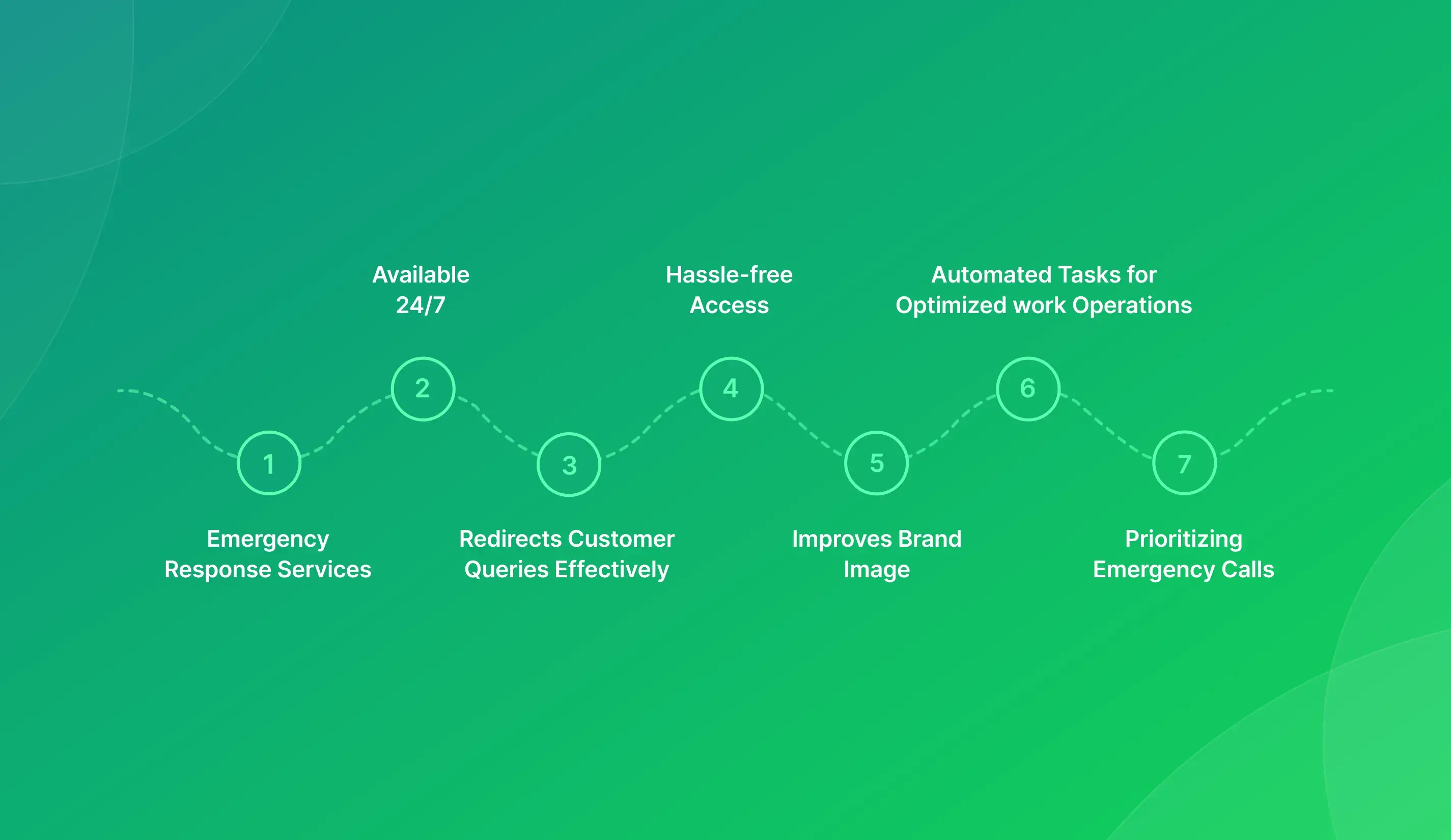
1. Emergency Response Services
The healthcare industry often deals with urgent queries around the clock. By adopting IVR solutions, clinics and hospitals can offer quick, automated responses to customers seeking immediate assistance in emergencies.
2. Available 24/7
With cloud telephony solutions, healthcare services can be accessible 24/7, providing seamless support across the globe on any device. This ensures that customers in different time zones can engage with services at their convenience.
3. Redirects Customer Queries Effectively
IVR systems can effectively route customer queries by following pre-set call flows. This ensures calls are directed to the right agent or department, helping to resolve issues faster and more accurately.
4. Hassle-free Access
Cloud-based pbx solutions allow access from a variety of devices such as desktops, smartphones, laptops, and tablets. Agents can easily retrieve patient data or business reports with just a few clicks, offering more flexibility in operations.
5. Improves Brand Image
By streamlining operations, improving customer satisfaction, and boosting productivity, IVR enhances a healthcare business’s brand image. This leads to a broader customer base, with potential clients from all over the world.
6. Automated Tasks for Optimized work Operations
IVR can automate repetitive tasks, freeing up staff to focus on more critical aspects of patient care. This increases operational efficiency for both businesses and customers.
7. Prioritizing Emergency Calls
One of IVR’s most useful features is the ability to prioritize emergency calls. For instance, urgent calls can be routed immediately to the appropriate personnel, ensuring that critical issues are addressed promptly before non-urgent queries.
TeleCMI’s Role in Overcoming the Biggest Challenges in Healthcare
TeleCMI is a leading global IVR provider, offers a cloud-based smart IVR solution tailored to resolve pain points in the healthcare industry. Our system seamlessly integrates with healthcare CRM systems, eliminating current operational complexities. With features such as Call Routing, Call Forwarding, Call Conferencing, and Call Recording, our AI-driven IVR ensures efficient call handling.
Healthcare professionals benefit from Sticky Agent, powerful third-party app integrations, automated SMS, and in-depth analytics. These features not only improve business operations but also reduce costs.
TeleCMI provides fully customizable IVR services that are adaptable to the unique needs of healthcare providers, helping you streamline workflows and enhance patient experiences.
Take advantage of a Free Trial to explore the benefits of TeleCMI’s IVR solutions. Contact us now for a demo and a competitive pricing list to see how we can support your healthcare facility.
See How IVR Enhances Healthcare with Personalized Patient Care!

Quick Resolutions
Better Engagement
Call Optimization
Frequently asked questions (FAQ)
Saravana Kumar

I’m passionate about exploring and sharing insights on modern cloud communication technologies. At TeleCMI, I focus on helping readers understand the evolving world of cloud telephony and IVR solutions in a simple yet in-depth way. My goal is to deliver genuine value by turning complex telecom concepts into clear, actionable knowledge that builds trust and drives innovation.