PBX System vs VoIP: Which is Better for Your Business

9 mins read

Posted on Mar 06, 2024

Vignesh N
SEO


Vignesh N
SEO




Every business must engage its customers promptly. This is where businesses need a phone system. These phones can be an excellent way to speak with customers.
Previously, traditional phone systems were the only way to connect with customers. Presently, with the internet and cloud everywhere, VoIP phone systems are the life-savior. They are also the saviors of most businesses because of their attractive features and budget-friendly pricing.
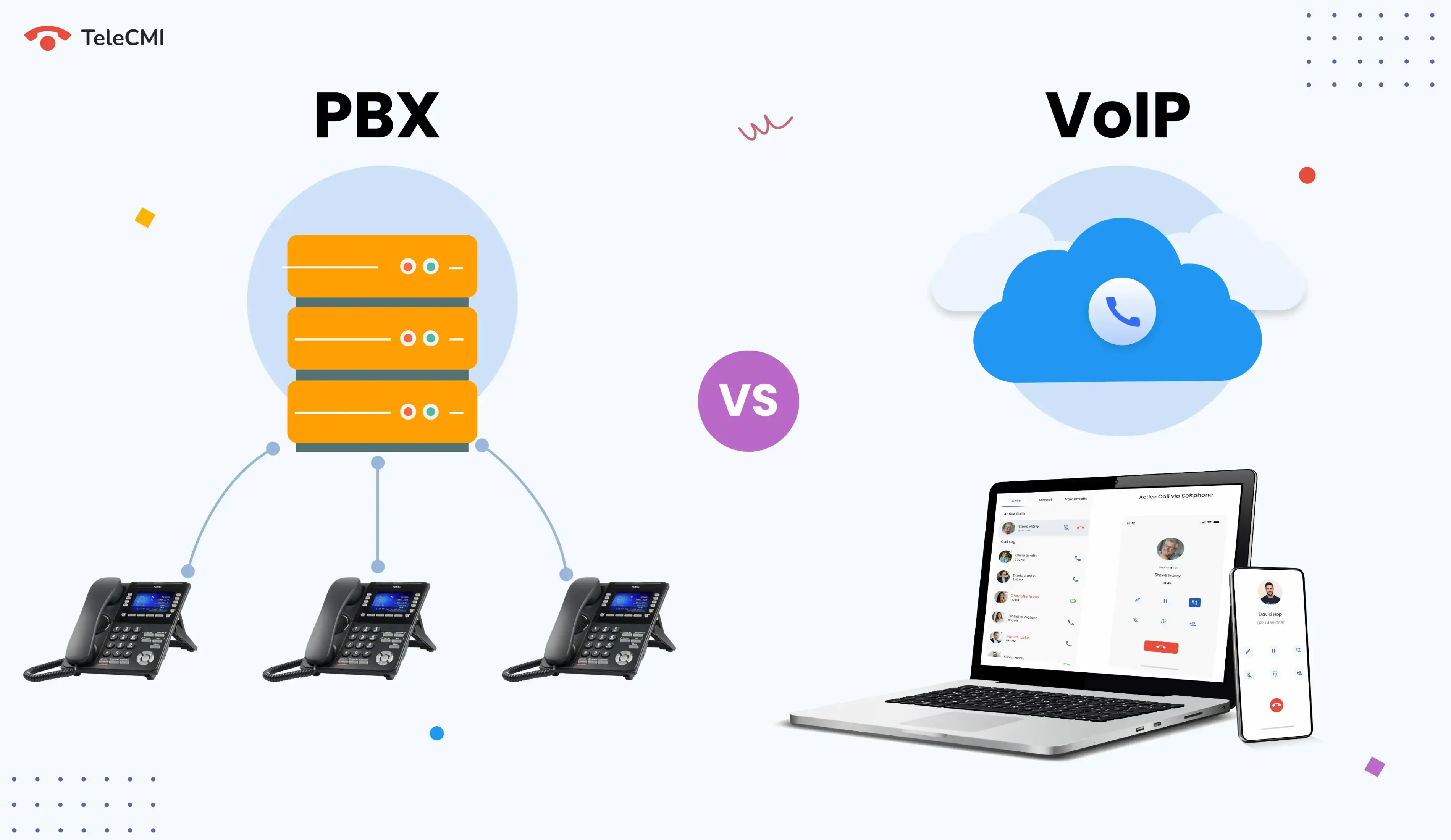
In this blog, let us discuss PBX Vs. VoIP Phone Systems, along with its features and other metrics, are in brief.
PBX Phone Systems: An Overview
PBX represents Private Branch Exchange. This phone system enables internal communication using a private telephone network. Companies can make internal calls and transfer calls between extensions.
They manage calls by connecting to Public Switched Telephone Networks (PSTN). They have hardware installed on-premise. They require a separate IT team to manage and have a hefty maintenance process.
VoIP Technology: An Overview
VoIP (Voice over Internet Protocol) helps businesses manage calls through the Internet. It works on any internet-connected device instead of the cables and wiring.
Hence, they are cost-effective and do not require physical infrastructure or hardware setup. This technology is a recent trend among most businesses, and they comparatively adopt it for their operations.
Different Types of PBX and VoIP Phone Systems:
Let us explore the various types of PBX and VoIP Phone Systems here:
PBX Phone System Types:
PBX Phone Systems are categorized into the following types:
Traditional PBX
These are basic phone systems with multiple phone lines and extensions. Previously, businesses used these phones to communicate with their customers, and they have limited features.
However, they require frequent, expensive maintenance to function efficiently. They also have high upfront costs for setup and installation. Also, they depend on a third party for upgrades.
On-Premise PBX
On-premise PBX systems are installed on a physical premise. These phone systems require separate wiring and cable lines, which are maintained exclusively by a PBX technician.
They use PSTN and ISDN (Integrated Services Digital Network) technologies to connect the phone lines. With these phones, businesses can continue using their existing phone carrier. This can provide a complete control over the phone lines.
Hybrid PBX
Hybrid PBX systems combine traditional and on-premise PBX phones. These phone systems communicate with customers using PSTN and SIP (Session Initiation Protocol).
The best advantage of these systems is that they can switch between traditional or on-premise phones whenever there is an issue with any of them. This can provide higher flexibility to remain connected.
However, the major drawback of Hybrid PBX systems is that they are highly expensive. They are pricy in terms of maintenance and upgrades. Small businesses and startups that are struggling with investments will find it challenging to afford them.
Cloud-Based PBX
Cloud PBX systems have become a favorite for most businesses. In these systems, communication happens over the cloud telephony. All you have to do is get an internet-connected device and initiate the conversation.
They are also called virtual PBX systems, and businesses can take complete control of the system as it is not deployed or installed anywhere by anyone. Upgrading and maintenance processes are also hassle-free and can be done with a few clicks on personal devices.
Hosted PBX
Hosted PBX phone systems are the ones that use existing broadband services. Similar to the above one, no physical machine is required. However, you need to deploy or install third-party hardware to get started. The whole communication process takes place through SIP trunk technology, and no telephone lines are required.
VoIP Phone System Types:
VoIP phone systems are divided into the following types:
Analog Telephone Adapter
This is an adapter that connects the analog device to the VoIP network. It comes in all sizes and is suitable for all businesses. It comes from small USB adapters that are linked directly to larger PCs and further connected to wall jacks.
These phones also enable multiple devices to be connected simultaneously over Ethernet or other wireless networks. They convert the analog audio signal into digital data and transmit it over the Internet. They are easy to use and require hardware to work effectively.
Hybrid VoIP Systems
Hybrid phone systems use both analog and digital components to initiate communication. However, they are expensive compared to the rest of them. These systems are best for businesses looking to switch to VoIP technology.
Apart from pricing, these systems are fully flexible and offer many advantages. They help businesses continue using their existing phones without switching to new ones.
Premise-Based VoIP
Premise-based VoIP phone systems use VoIP to transmit data. Instead of relying on cloud or PSTN services, on-premise VoIP systems can be used without any equipment or software.
You just need an internet-connected device to enable conversations. One of the best examples is the Skype application. Depending on the user's convenience, this app can be used on an iPhone or iPad to make and receive calls.
SIP Trunking
SIP refers to Session Initiation Protocol. This protocol is used for setting up, dividing, providing information about callers, and routing calls. It can also direct calls between various networks.
Let us consider an example:
Your business uses traditional analog phones and wants to switch to VoIP. By adopting an SIP trunk, you can easily route calls over the network.
They are more expensive than VoIP since they require multiple phone lines. In contrast, it comes with features such as call forwarding, three-way calling, etc.
Hosted VoIP
Hosted VoIP phones are similar to traditional phones but use an internet connection instead of PSTN wires. These systems can be used over WiFi or internet connection to place calls.
These phones also enable businesses to switch between extensions and locations quickly. This can be helpful for companies with multiple branches that want to collaborate with the internal team.
Let us Explore The Key Differences Between PBX and VoIP Phone Systems:
Primary differences between PBX Vs. VoIP Phone Systems:
How do PBX Systems Work?
PBX phone systems rely on circuit switching and copper wiring for making and receiving calls. These phones are designed for large-scale industries to operate on their own network.
- Analog or traditional PBX phone systems use PSTN to connect with callers on the other end.
- They use old copper wires to connect inbound and outbound calls.
- These wires are connected to the on-premise phone systems, which are further connected to the PBX box.
- This box is used to route incoming calls within the network.
- By using extensions, the calls can be transferred outside the network.
On the other hand, Virtual PBX or cloud-based PBX makes use of an internet connection to initiate conversations.
How do VoIP Phone Systems Work?
A VoIP phone usually operates by using digital signals for authenticating and establishing calls. Here is how a VoIP phone system works:
- A business can get a VoIP phone number from a VoIP service provider.
- The VoIP provider may set up and manage the incoming and outgoing calls.
- Once they are set up, the VoIP app is responsible for converting analog signals into digital ones.
- These digital packets are sent to the servers through the internet.
- The call now reaches the VoIP provider's server, which further routes the call.
- Finally, the digital packets are converted as audio signals, which can be listened to by the customer on the other end.
PBX Vs VoIP Phone Systems: Getting Started
When comparing PBX phone systems to VoIP, businesses should invest in the phone system that perfectly fits their requirements and budget. PBX phones are outdated and expensive. While VoIP phone systems can be an excellent option.
They also come with advanced features to meet businesses' demands. They are highly scalable, secure, and cost-effective.
Remember to consider these comparison factors when choosing the phone system between PBX and VoIP.
If you are a business looking to invest in phone systems, TeleCMI is here to help. We have handled multiple requirements from different industry verticals. All the solutions were delivered on time with high-end customizations. You can get in touch with us for a free demo, and our experts are here to resolve your queries.
Make your business call now
Get started with our free trial
Vignesh N

With deep expertise in cloud telecommunications, I help readers explore the latest trends in VoIP and modern business communication. At TeleCMI, I focus on educating businesses with clear, practical insights, making complex telecom concepts easy to understand. I’m passionate about helping organizations improve efficiency, enhance customer engagement, and adopt smarter communication strategies.