How Much Does Call Masking Cost for Businesses in 2026

10 mins read

Posted on May 21, 2026

Vignesh N
SEO


Vignesh N
SEO




Every day, businesses across industries such as e-commerce, healthcare, food delivery, and real estate handle thousands of customer calls, and most of them do it without protecting a single phone number.
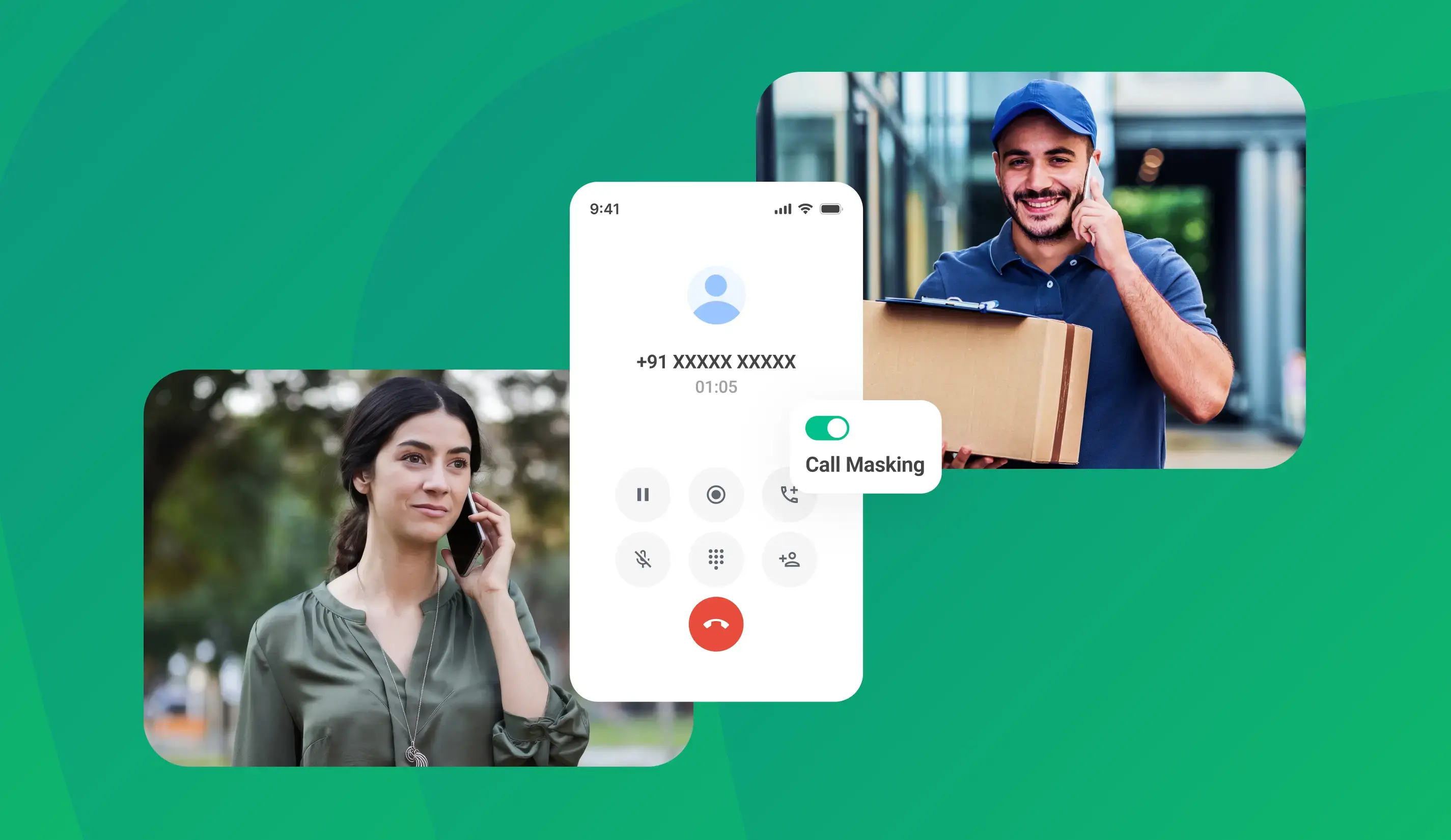
That's a problem. When real numbers are exposed, businesses are subjected to spam, data breaches, unauthorized contact, and broken customer trust. Call masking addresses this issue by replacing real phone numbers with virtual proxy numbers so customers and agents can connect freely without either side revealing the other's actual number.
But here's where most businesses get stuck: pricing. Call masking costs vary widely depending on individual factors like call volume, business size, features, and provider, making it difficult to know what you should actually be paying.
This guide breaks it all down. From per-minute rates to monthly plans, from startup-friendly options to enterprise contracts, here's everything you need to know about call masking pricing in 2026.
Secure every call, protect customer trust, and scale safely with TeleCMI Call Masking
Get a personalized demo
Key Takeaways
 Businesses can upgrade their communication systems without disrupting customer interactions.
- Maintaining privacy and secure communication helps build long-term customer trust.
- The right communication tools can improve operational efficiency and scalability.
- Choosing a solution should involve balancing features, security, and business needs.
- A well-planned communication setup supports smoother customer experiences and business growth.
What is Call Masking
Call Masking or Number Masking works as a business tool that protects customer and agent phone numbers through the use of virtual phone numbers. The system enables customers and agents to communicate while keeping their actual telephone numbers hidden from each other.
It also helps businesses safeguard user privacy and maintain employee safety and achieve data protection compliance, building customer trust and stopping unauthorized external communication from their organization.
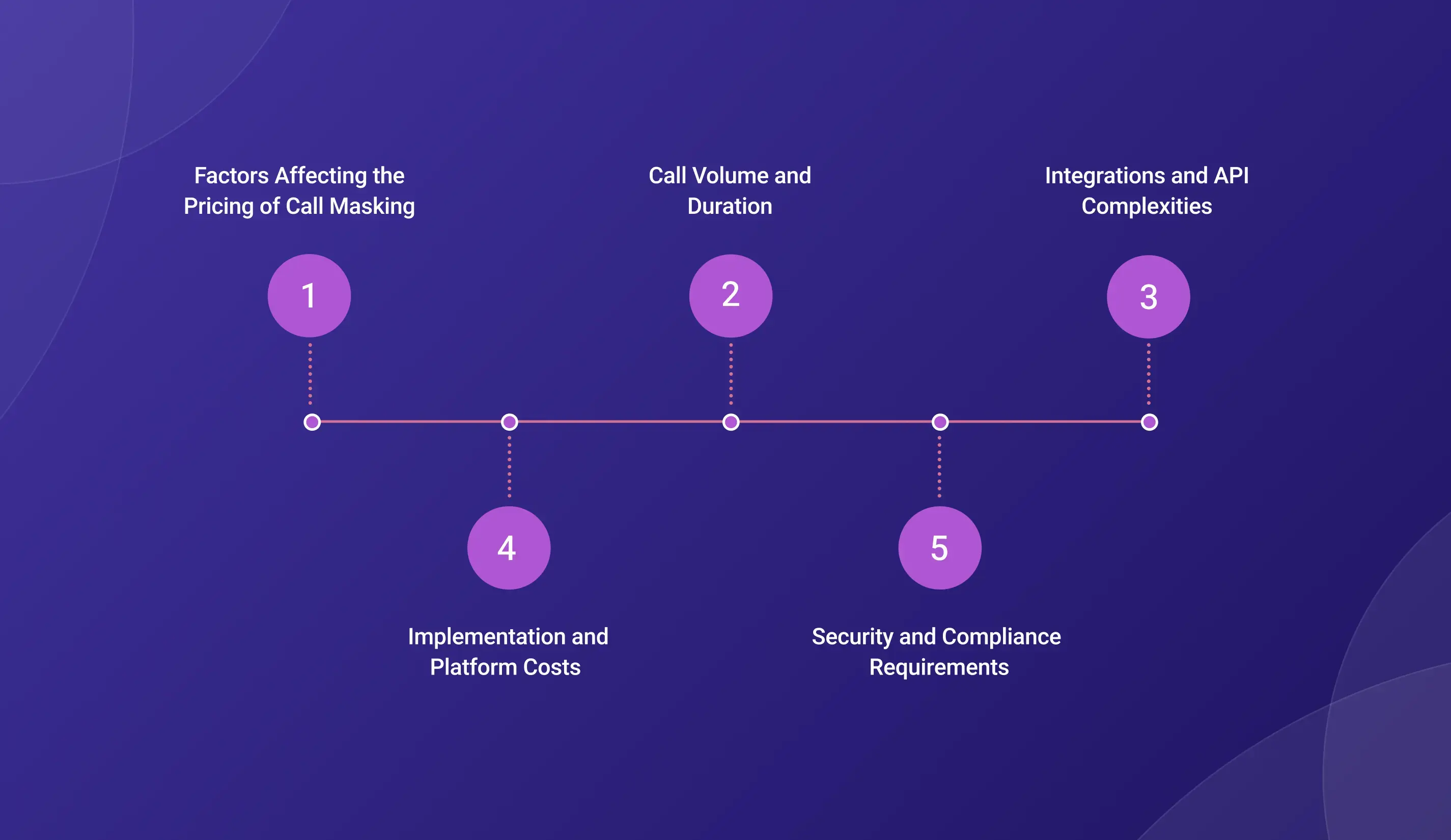
Factors Affecting the Pricing of Call Masking
Call Masking services generally charge businesses on a usage-based model approach (per minute or per month), and platform licensing fees. These factors are influenced by various calculations, including:
Call Volume and Duration: The total number of calls handled by a business, along with the total length of each call, determines their operational costs. Businesses with high call traffic or longer conversations usually experience higher usage costs.
Integrations and API Complexities: Integrating call masking solutions with CRM systems and ERP systems and customer support platforms requires custom APIs and technical configurations which result in higher implementation costs.
Implementation and Platform Costs: Many providers charge setup fees, platform subscription costs, and maintenance charges for virtual number hosting and cloud infrastructure management.
Security and Compliance Requirements: Businesses operating in regulated industries may require advanced encryption, secure routing, and compliance with regulations like GDPR, HIPAA, or TRAI, which can increase overall pricing. Modern providers also use TLS and SRTP encryption protocols to secure voice traffic during masked call sessions. Given the growing legal risks around data handling, awareness of a cipa lawsuit can push businesses to adopt stricter security measures and compliance practices, reducing exposure while protecting sensitive communication data.
How Much Does Call Masking Cost for Businesses in 2026
In 2026, call masking pricing in India typically starts around Rs.1.50 (0.016$) per minute for standard pay-as-you-go and API-based solutions, depending on provider, usage, and feature requirements. Some providers also offer monthly subscription plans that allow enterprise customers to access masking services with advanced features such as call recording, analytics, and reporting at approximately $10.57 per month. However, pricing also depends on the following factors:
- Business size: Large enterprises receive volume discounts, which reduces operational costs compared to small businesses that face higher per-unit expenses.
- Usage-based costs: Your total call masking expenses increase with every call you make and every additional minute you spend on calls.
- Features: Total expenses may rise when businesses add advanced functions such as call recording, click-to-call, and real-time transcription, and CRM integrations.
Select a call masking solution that provides you with reliability and scalability while helping you protect customer privacy and reduce communication risks.
Best Call Masking Pricing Plans for Small Businesses in India
- TeleCMI
- Exotel
- MyOperator
TeleCMI
TeleCMI offers a transparent and flexible subscription-based strategy customized for different business sizes.
Exotel
Exotel follows a prepaid, credit-based and bundled pricing strategy, combining fixed setup charges with usage based costs.
MyOperator
MyOperator adopts a tiered, SaaS-based subscription approach for businesses, with pricing being billed annually.
Call Masking Pricing Comparison Table
Customer Masking service pricing for businesses varies based on options like a pay-as-you-go model or a monthly subscription. The table below offers a general idea for organizations to make informed decisions regarding call masking solutions.
Compare providers, evaluate your needs, and choose a plan that scales with you so you can protect customer data while maintaining seamless communication.
Every unmasked call is a risk your business doesn't want to take. TeleCMI makes privacy effortless for your team, your agents, and customers
Start Free TrialHow to Choose the Right Plan for Your Business
Choosing a call masking plan in 2026 is no longer just about privacy; it's about building a secure, high-performance communication system for your business. The chosen plan should provide advanced features for users while protecting their private information as AI-based interactions have become more common. In relation to other digital services, such as SEO marketing, call masking is an affordable protection for your business.
Businesses should consider the following factors before choosing a plan:
1. Define your Business Needs
Before looking at providers, find what your business actually requires.
- High-Frequency/Short-Lived: If you run a delivery or ride-sharing app, you need a plan that excels at "Session Management," where numbers are assigned for 30–60 minutes and then recycled.
- Long-Term/Relationship-Based: If you are in real estate or high-ticket sales, you need "Sticky Masking," where the same proxy number stays assigned to a specific lead for weeks to maintain continuity.
2. Two-Way Masking
In 2026, one-way masking is rarely used. Ensure your plan supports True Two-Way Anonymity.
- The Bridge: Both the agent and the customer should see a proxy number.
- Callback Support: If a customer misses a call, they should be able to call the masked number back and be automatically routed to the correct agent without the agent's real phone ever ringing directly.
3. Integration Capabilities
Your masking solution shouldn't be difficult to integrate with your existing tech stack. Choose accordingly.
- API-First Architecture: Look for RESTful APIs that allow your developers to trigger a masked session automatically when an order is placed.
- CRM Sync: Ensure it integrates with tools like Salesforce, HubSpot, or Zendesk so that every masked call is logged, recorded, and tied to a customer ticket without manual entry.
4. Scalability and Reliability
A delivery surge at 8 PM shouldn't crash your communication lines.
- Number Pool Depth: Choose a provider with a deep pool of virtual numbers to avoid "collision" (where two different sessions are assigned the same number at once).
- Uptime SLAs: In 2026, look for a 99.99% uptime guarantee. A 10-minute outage in call masking can lead to hundreds of failed deliveries or lost sales.
5. Affordability
Don't just look at the monthly subscription; analyze the Total Cost of Ownership (TCO).
- The "Double-Leg" Billing: Most providers charge for both legs of the call (Caller to Cloud + Cloud to Receiver). Consider this into your per-minute budget.
- Committed Use Discounts: If you handle over 100,000 minutes a month, shift from retail pay-as-you-go rates and get a volume-based contract to save 20-30% in total cost.
6. Security and Compliance
With global privacy laws (GDPR, CCPA, and TRAI in India) becoming more stringent, compliance is a non-negotiable expense.
- Data Residency: Ensure the provider can store call logs and recordings in your specific region to meet local data sovereignty laws.
- Encryption: The "bridge" itself should be encrypted (TLS/SRTP) to prevent eavesdropping on sensitive business conversations.
- Automated Expiry: The plan should include logic that automatically "kills" the connection once a transaction is marked complete in your system.
Benefits of Call Masking
The key benefits of Call Masking for both customers and employees include:
Improved Customer and Agent Privacy: Call masking in Post-call analytics protects users against fraud, private data leakage, and prevents users from contacting people outside the platform by hiding actual phone numbers of customers and agents.
Operational Efficiency and Analytics: Businesses have the ability to track and record all calls while they remain hidden. This enables them to assess both agent performance and customer service.
Data Protection Compliance: Helps businesses comply with data privacy laws like PDPA, GDPR, and similar regulations, by safeguarding customer's sensitive information.
Enhanced Experience with Professional Communication: Interactions stay within the business communication provider program to ensure better monitoring and service.
Conclusion
Call Masking in 2026 has shifted from just being a feature to an essential requirement for any business that values customer privacy. By hiding personal numbers in calls, call masking helps companies build both customer and agent trust while maintaining a secure communication.
The growing use of cloud communication with AI-powered features like conversational AI makes it difficult for businesses to find suitable call masking solutions. Organizations will determine which solution to implement through a detailed process that evaluates the system's cost, ability to grow, and its basic operational needs.
This will create sustained long-term growth for companies while maintaining a secure communication system, which will improve customer experience.
Don't leave customer privacy to chance. Start masking smarter! Explore our call masking solutions and take the first step toward secure, scalable growth.
Ready to protect your customers and scale securely?

Trusted by 3500+ Businesses
Virtual Numbers in 150+ Countries
AI Call Automation
Affordable Plans
Frequently asked questions (FAQ)
Vignesh N

With deep expertise in cloud telecommunications, I help readers explore the latest trends in VoIP and modern business communication. At TeleCMI, I focus on educating businesses with clear, practical insights, making complex telecom concepts easy to understand. I’m passionate about helping organizations improve efficiency, enhance customer engagement, and adopt smarter communication strategies.

.webp)