Call Masking vs Virtual Numbers: Key Differences Every Business Should Know in 2026

17 mins read

Posted on Jun 15, 2026

Vignesh N
SEO


Vignesh N
SEO






Most Indian businesses think they're the same thing. You run a fintech app, a delivery platform, or a customer support team. You deal with phone calls every day. And you need to hide customer numbers from your team or your business number from customers. Both sound right.
India's delivery and fintech markets grew 3.2x between 2020 and 2024, according to RedSeer Strategic Consulting. That growth brought a sharp increase in phone-based fraud, harassment, and privacy breaches. Last-mile delivery fraud costs logistics companies 8-12% of revenue annually. Driver harassment complaints in ride share platforms increased 240% in 2023 alone.
But here's the thing. Call masking system and virtual numbers solve completely different problems. Mix them up? You waste money. You leave security holes open. You end up frustrated.
What's the actual difference between call masking and virtual numbers? Why does it matter for your business? And which one do you actually need?
Let's break it down.
What Is Call Privacy in Modern Business Communication?
In India, businesses handling customer communications must also consider compliance requirements from the TRAI and the Digital Personal Data Protection Act when implementing call privacy solutions such as call masking and virtual numbers.
Call privacy's become essential. A delivery customer shouldn't know their driver's home address. A telehealth patient shouldn't have their doctor's personal number. A fintech user shouldn't expose their real contact during KYC verification.
But "call privacy" covers two totally different solutions. And yeah, people get confused because they sound similar.
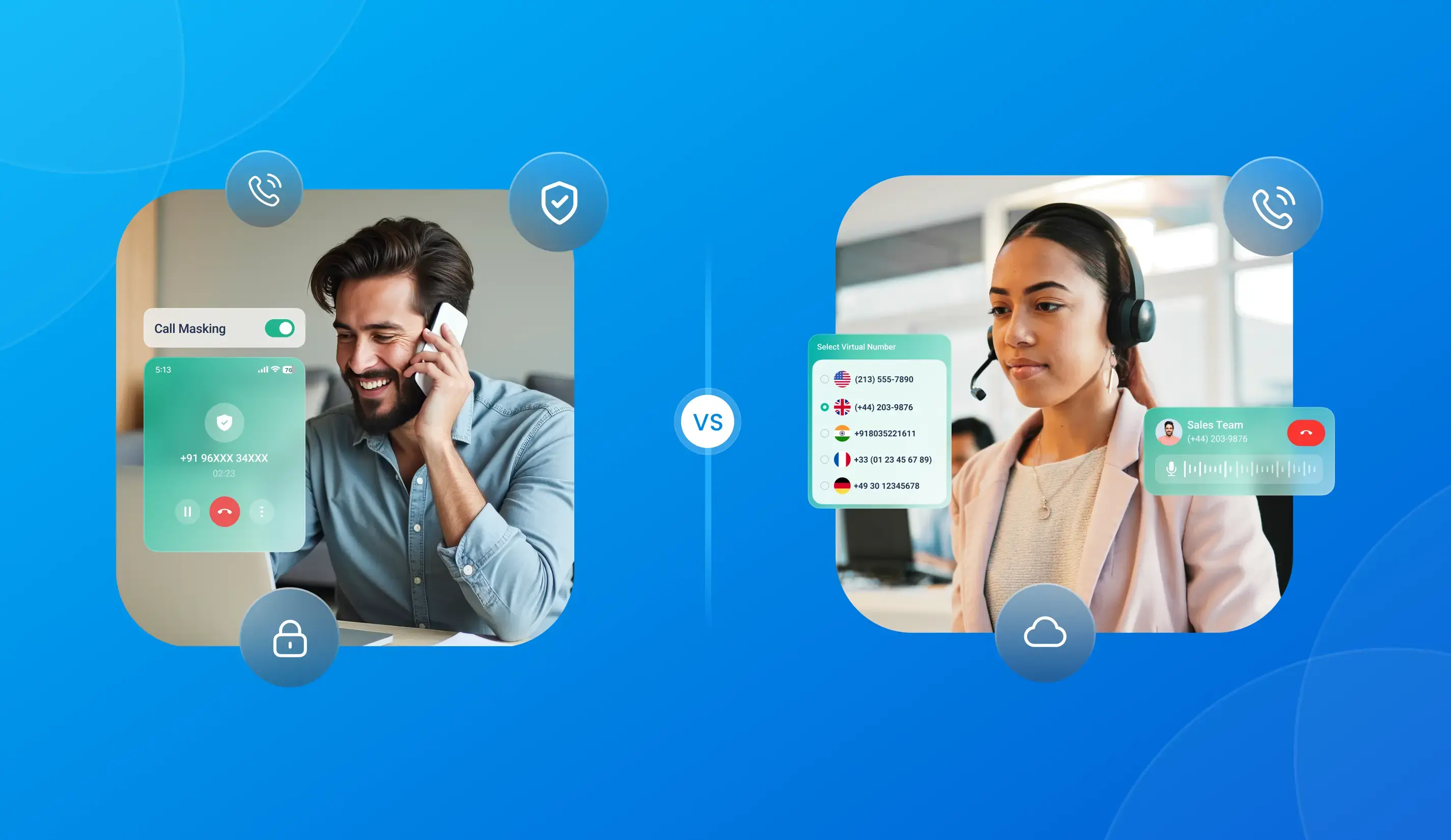
Call masking hides real phone numbers during calls. A temporary bridge between two people. Neither sees the other's actual contact. After the call, it's gone.
Virtual numbers are cloud-based business phone lines. Permanent. Branded. Tracked. They stay the same forever.
What Is Call Masking?
Call Masking is a temporary phone number that exists only during a single call. Two people dial it. They connect. Neither learns the other's real number. The call ends. The number disappears and gets recycled for the next interaction.
Call masking creates a temporary phone number that exists only during a single call. That's it. One call. One number. Then it disappears.
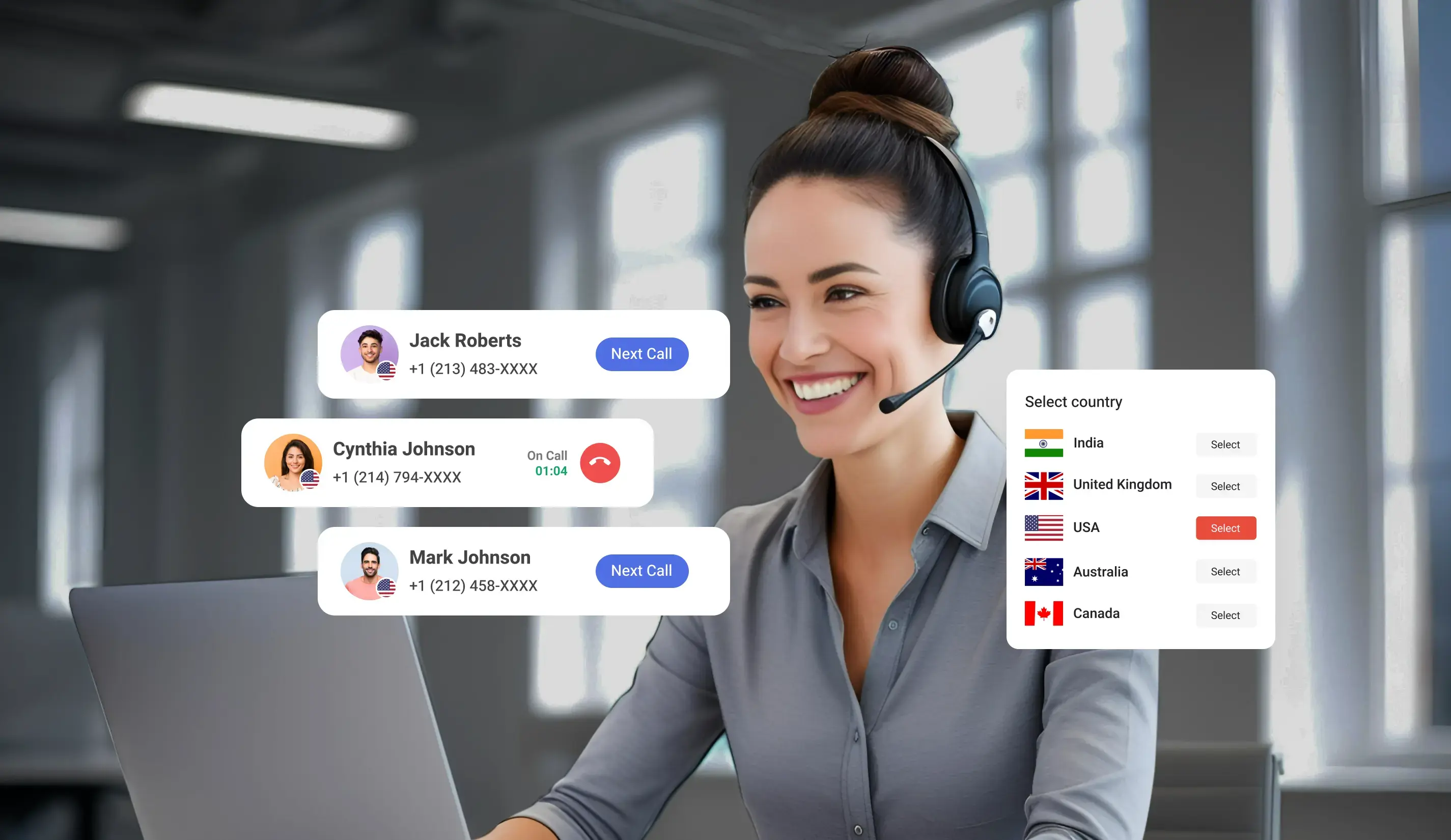
Here's how it actually works. A customer orders food through Zomato or Swiggy. The system generates a masked number and gives it to both the customer and the driver. Driver sees it. Customer sees the same number. Both dial that masked number. The platform routes the call between them. Neither learns the other's real contact. Delivery's done. The masked number gets recycled.
Think of it like renting a phone booth for 15 minutes. You use it once. You don't own it. Nobody gets your identity from it. When you're done, the booth goes back to being empty.
Step-by-step flow:
User A opens the app and requests a ride or delivery. Driver B accepts the request. System generates masked number X instantly. Both receive the same masked number. User A calls masked number X. Driver B calls masked number X. Platform connects them directly. Call ends. Masked number is discarded or recycled for the next interaction.
Real-time masking between user and agent: Neither side ever exchanges personal contact information. The system handles everything. This happens in milliseconds. The entire interaction stays encrypted and private.
Example industries using call masking:
Uber and Ola run on masked calls. Zomato and Swiggy for food delivery. Dating apps like Bumble. Telehealth platforms. Fintech apps during transaction verification. Logistics companies for last-mile delivery. Every time you need two strangers to communicate without exposing their real numbers, that's masking.
The real value? A customer ordering food 20 times never gives out their home address or phone number to any driver. A driver working 50 deliveries a day doesn't have access to 50 customer phone numbers. Neither side can spam, stalk, or harass the other after the interaction ends.
What Is a Virtual Number?
A virtual number is a cloud-based business phone number that allows organizations to manage calls without traditional phone lines. Most virtual numbers operate through VoIP infrastructure and are often integrated with Cloud PBX systems, enabling businesses to route, record, and track calls efficiently.
This is what you see when you call customer support for a SaaS company. The number never changes. You save it. Next month, you call the same number. Different person might pick up, but the number stays constant. That's the entire point.
How it works:
Your business gets a virtual phone number. In India, that's something like +91-8000-XXXX-XX. In the US, it's a local or toll-free number. Customers call that number whenever they need help.
The call rings your office. Your contact centre. Wherever your team is working.
Every call gets logged automatically. Your dashboard shows:
- Who called
- When they called
- How long they talked
- Which team member answered
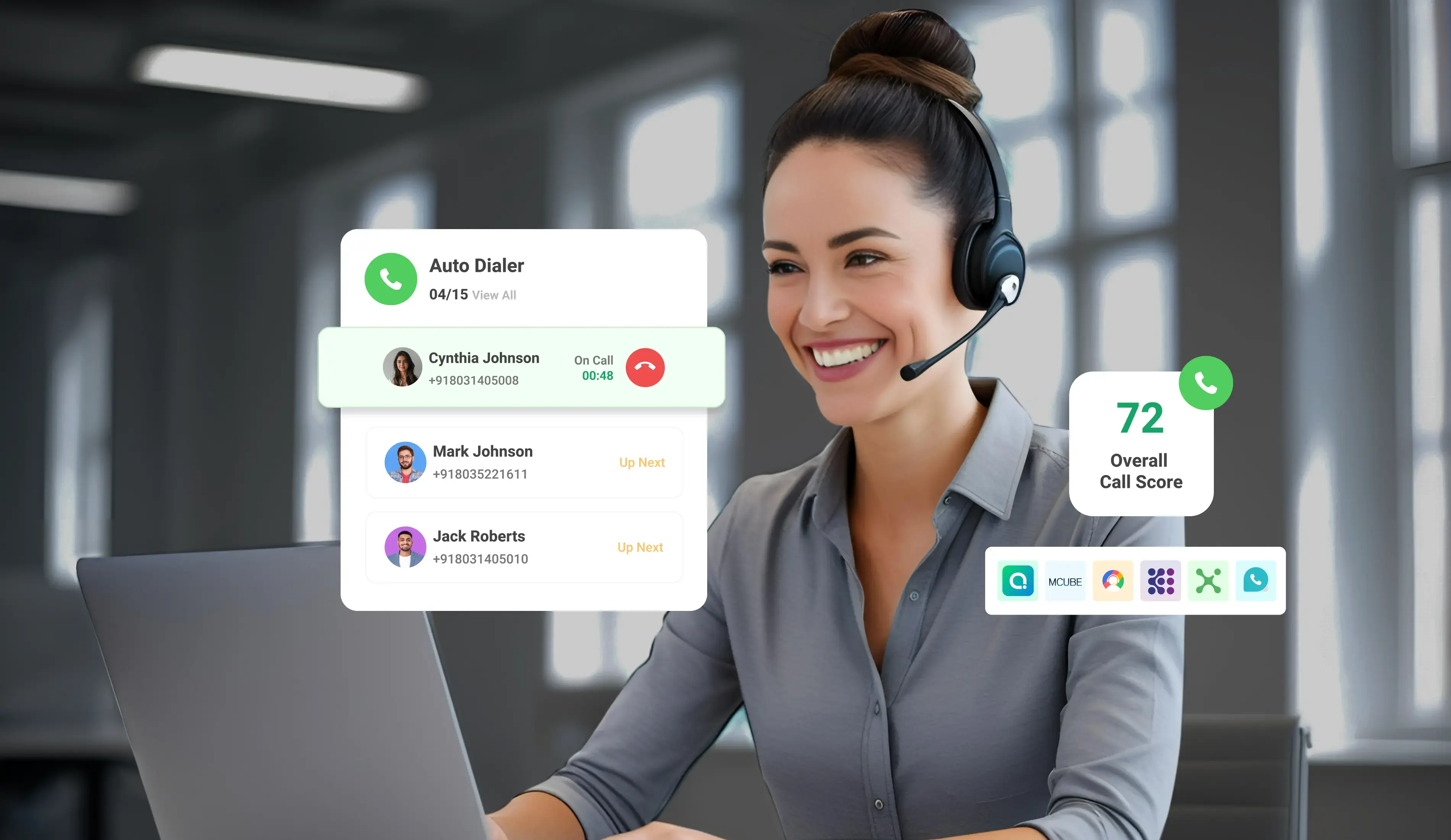
You can also see analytics. Average response time. Call duration. Resolution rate. Which agent closes calls fastest.
Who uses virtual numbers:
SaaS companies. Support centers. Sales teams. Restaurants with multiple locations. They all run on virtual numbers.
Here's a real example. A B2B SaaS company gives this number to enterprise clients. Those clients call for onboarding. For training. For support when something breaks. They call that same number repeatedly over months or years.
Management can see the full picture. Which customers call most. Which product features generate the most support questions. Which CSM solves issues fastest. All from the dashboard.
Call Masking vs Virtual Numbers: Key Differences
They sound similar. They're not. Let me break down exactly what separates them.
Purpose: Call masking is designed for privacy. Virtual numbers are designed for brand and business relationships.
Number visibility: With masking, both parties see a temporary number that disappears after the call. With virtual numbers, customers see your permanent business number every time they call.
Use case: Masking works for one-time or infrequent interactions where privacy matters. Virtual numbers work for ongoing business relationships where customers call repeatedly.
Scalability: Call masking scales to millions of simultaneous calls without complexity. Virtual numbers scale with your team size. Add more team members; the same number routes to them.
Cost model: Masking charges per minute or per call. No subscription. Virtual numbers charge monthly subscription plus per-minute rates. The subscription covers platform, dashboard, analytics, and CRM integration.
Customer experience: Masking feels safe and anonymous. Virtual feels professional and trusted because the number's familiar.
Integration complexity: Masking is simple. Two people dial, the system connects. Virtual numbers can integrate with popular CRM platforms such as Salesforce and HubSpot, allowing sales and support teams to automatically track customer interactions and call history.
Protect Customer Privacy and Build Trust With Secure Business Calling Solutions
Start 14 Days Free TrialWhen to Use Call Masking
Use call masking when privacy is non-negotiable and calls are one-time or very infrequent.
On-demand services: Delivery apps, ride share platforms, logistics companies live on masked calls. A customer books food at 7 p.m. At 7:45 the driver calls to confirm the address. Neither party needs the other's real number. Neither party should have it. Delivery's done. They're never interacting again. The system discards that masked number and reuses it for the next customer-driver pairing. This reduces delivery fraud and protects both parties from unwanted contact.
According to a 2024 survey by the Internet and Mobile Association of India (IAMAI), 62% of delivery users experienced privacy concerns about drivers having access to their home addresses. Platforms using call masking reported 73% reduction in unsolicited contact after delivery.
Two-way temporary communication: When both sides need to talk once and then never again, masking protects both. Driver gets a masked number. Customer gets the same masked number. They communicate. It's gone. No permanent contact exchange. No harassment risk.
Privacy-first apps: Dating apps, healthcare platforms, fintech apps during verification calls. Users meeting strangers need anonymity until they decide to exchange real numbers. HIPAA compliance requires that patient and doctor never exchange personal phone numbers. Banks need secure channels for fraud verification without exposing real contact info.
Logistics and delivery tracking: When drivers need to contact customers about delivery status, location changes, or clarifications, but customers shouldn't have driver phone numbers. This reduces last-mile fraud and protects driver safety. A delivery driver working in a high-crime area shouldn't have 50 customer home addresses and phone numbers on their phone.
The mistake? Using call masking for customer support. If you mask every support call, you've got no way to know that the same person called twice about the same billing issue. Your agents can't offer continuity. No tracking. Support experience falls apart.
When to Use Virtual Numbers
Use virtual numbers when you need a consistent brand identity and customers are calling repeatedly.
Customer support centers: Your support team should have one number. Customers call that same number for help every time. They save it. They trust it. When they've got a problem, they don't think "what's the support number." They think, "let me call that number." Your team uses a dashboard to track average response time, call duration, and resolution rate per agent. When a call comes in, it routes to whoever's available. No customer gets a dead line. No calls get lost. This is why every SaaS company uses virtual numbers for support.
Marketing campaigns: Run campaigns across email, Instagram, Google Ads, and LinkedIn? Use the same virtual number everywhere. Your system tracks which channel drove the call. Email drove 200 calls this month. Instagram drove 150. Google Ads drove 300. Now you know where your marketing budget should go. You can measure which marketing source generates the most calls and which calls actually convert to sales.
Sales tracking: Sales teams need virtual numbers for lead management. A sales manager needs to know that John called prospect ABC, the call went 12 minutes, and it was the fourth contact attempt. That data goes straight into Salesforce automatically. Every call is logged against a contact record. When the deal closes, you can trace which calls actually drove it. Salespeople use the same number for callbacks so prospects recognize them.
Multi-agent teams: Whether you're running a contact centre with 50 agents or a support team with 5 people, a virtual number routes calls to whoever's available. A restaurant chain with 12 locations? One number. Calls a route to the nearest location. Management tracks call volume across all branches. Location A got 300 calls this week. Location B got 150. Now you know where to add staff.
Benefits of Both Solutions
Both solve real problems. Neither is universally better. Here's what each one actually gives you.
Call Masking Benefits:
Privacy protection. Real phone numbers never get exchanged. A customer never learns a driver's personal contact. A driver never gets 50 customer addresses and phone numbers. This is security.
Fraud prevention. Spoofing and phishing attacks become harder when masked numbers are used. Fintech platforms can verify transactions without exposing real numbers to fraud rings. Cybercriminals can't build databases of customer numbers if masked numbers expire immediately. Official government data shows cyber fraud cases in India jumped over four-fold in FY 2024, with high-value cases (over ₹100,000) increasing from 6,699 to 29,082, causing ₹177 crore ($20 million) in losses.
Secure communication. Two parties communicate without ever risking their personal contact info. Dating app users stay safe until they decide to meet in person. Telehealth patients keep their privacy. Delivery customers keep their addresses private.
Better user trust. A platform that hides customer numbers from drivers builds trust with both sides. Users feel safe. Drivers feel safe. Platform reputation improves.
Virtual Number Benefits:
Professional brand identity. Customers see a consistent, trustworthy number. They recognize it. They save it. When they need you again, they know exactly what to call. This builds brand recall and customer loyalty. A SaaS company's support number becomes part of their brand identity.
Call tracking analytics. Track duration, quality, resolution rates, and agent performance. Who's your fastest agent? Which issues take the longest to resolve? Which customers call most often? Which product features generate the most support inquiries? This data informs coaching, hiring, and product decisions.
Better lead management. Virtual numbers integrate with CRM systems, helping teams track every customer conversation, lead source, and sales opportunity from a single dashboard. Every call becomes a data point. Salesforce knows that John from ABC Company called. The deal closes. You can trace exactly which calls led to the close. This is how sales teams improve forecasting and coaching.
Scalable communication. Add team members without changing the customer-facing number. A support centre growing from 5 agents to 50 agents doesn't need a new number. Same number routes to everyone. Customers call once and always get routed correctly.
Business Use Cases: India & SaaS Markets
This is where it gets real. Here's how actual companies are using this.
- SaaS companies and lead management: A B2B SaaS company in Hyderabad providing expense management software to enterprise clients uses a virtual number: +91-XXX-XXXX-XXXX. All enterprise clients call this number for onboarding, training, and support escalations. The platform tracks every call. Which clients call most? Which features generate support calls? Which CSM agent resolves issues fastest? That data feeds product decisions and team coaching. They know that clients calling about approval workflows have higher churn, so they improve the feature.
- E-commerce platforms and delivery communication: An e-commerce logistics company in Bengaluru handling 10,000 deliveries daily uses call masking. Customer places an order. System generates masked number. Driver calls about address clarification. Customer calls about ETA. Neither learns the other's real contact. This reduces last-mile logistics fraud. Drivers can't contact customers after delivery to demand tips or collect personal info. Customers can't contact drivers after delivery to complain without going through the platform. Both parties are protected.
- Fintech apps and secure verification calls: A fintech startup disbursing micro-loans in Tier-2 cities uses both. Verification calls during KYC are masked. Temporary. Privacy-focused. Customer service callbacks use the virtual number. Permanent. Relationship-focused. Two different tools for two different purposes. Same platform. Different modes. They mask verification because the customer shouldn't exchange personal numbers with a verification agent. They use virtual support because customers need to call back multiple times about loan status, repayment, or issues.
- Healthcare apps and patient privacy: An Indian telehealth platform connecting patients to doctors uses call masking for consultations. Patient books a call with a doctor. System generates masked number. Both dial it. Neither gets the other's permanent contact. Consultation happens. Masked number expires. Patient confidentiality is protected. Doctor privacy is maintained. The platform stays HIPAA compliant.
- Logistics and driver-customer masking: A logistics SaaS company in Mumbai uses virtual numbers for sales (sales team dials one number for all outreach, every prospect call logs to Salesforce). But for their delivery platform integration, they use call masking between drivers and customers. Driver gets masked number. Customer gets masked number. Communication happens. No personal contacts exchanged. Platform tracks delivery status without either party having the other's phone number.
How to Choose: Simple Decision Flow
Ask yourself three questions.
- First question: Will these two people ever interact again?
If yes, use a virtual number. Customer support, sales follow-ups, and ongoing business relationships. You need the customer to recognize the number next time.
If no, use call masking. One-time delivery, first date introduction, one-time consultation. After it's done, it's done.
- Second question: Do you need to track this interaction for business intelligence?
If yes, virtual number. You want to know which customers call most, which agent resolved it fastest, and which features generate support calls.
If privacy is more important than tracking, use call masking. The entire point is that there's a minimal data trail. The number disappears. Nothing to track.
- Third question: Is brand trust and recognition important?
Virtual numbers build trust through familiarity. Customers recognize the number because they've called it before. Masking builds trust through anonymity. Customers feel safe because nobody's getting their personal contact info.
You're running a rideshare app? Users need to feel safe from strangers. Masking wins. You're running a support center? Customers need to feel like they've got a relationship with your brand. Virtual wins.
The fastest companies in India right now. Delivery platforms, fintech startups, SaaS companies, telehealth apps. They use both. Mask where privacy matters. Virtual where relationships matter. They don't confuse the two.
Call Masking vs Virtual Numbers: Cost Comparison
Call masking typically charges per minute or per call. You don't pay subscription fees. You just pay for the minutes you're actually using. High-volume platforms handling millions of temporary calls benefit from this model.
Virtual numbers charge a monthly subscription somewhere between $30 and $100 depending on the provider, plus per-minute rates. The subscription covers the platform, the dashboard, analytics, and CRM integration.
So which costs less? Depends on your actual numbers. If you're handling 10 million delivery rides a month with 3-minute average calls, masking is definitely cheaper. If you're handling 5,000 customer support calls a month, virtual is cheaper because the monthly fee spreads across way more interactions.
But here's the thing: don't pick based on price alone. Masking won't give you analytics. Virtual won't protect customer privacy the same way. Pick the tool that solves your actual problem first. Then check the cost.
Most businesses do not choose between call masking and virtual numbers. They use both. Call masking protects privacy during temporary interactions, while virtual numbers support long-term customer communication and business operations.
Conclusion
Call masking and virtual numbers both use the cloud and both involve phone numbers. That's where the similarity ends.
Need privacy and one-time communication? Call masking.
Need branding, customer relationships, and analytics? Virtual number.
Get this right, and you're building a platform customers trust. Get it wrong, and you're throwing budget away while leaving security holes open.
The companies winning in India's delivery, fintech, SaaS, and telehealth markets, they're matching the tool to the actual problem. Not picking based on price or what's trendy. Not confusing the two.
That distinction is what separates platforms customers actually use from ones they abandon.
Ready to Secure Customer Communications? Explore TeleCMI Call Masking & Virtual Number Solutions

Secure Call Masking for Customer & Agent Privacy
Trusted by 3500+ Businesses Worldwide
Virtual Numbers Across 150+ Countries
Real-Time Call Tracking, Analytics & CRM Integrations
Frequently asked questions (FAQ)
Vignesh N

With deep expertise in cloud telecommunications, I help readers explore the latest trends in VoIP and modern business communication. At TeleCMI, I focus on educating businesses with clear, practical insights, making complex telecom concepts easy to understand. I’m passionate about helping organizations improve efficiency, enhance customer engagement, and adopt smarter communication strategies.