Multichannel Contact Center: Everything You Need to Succeed

9 mins read

Posted on Jun 26, 2025

Vignesh N
SEO


Vignesh N
SEO





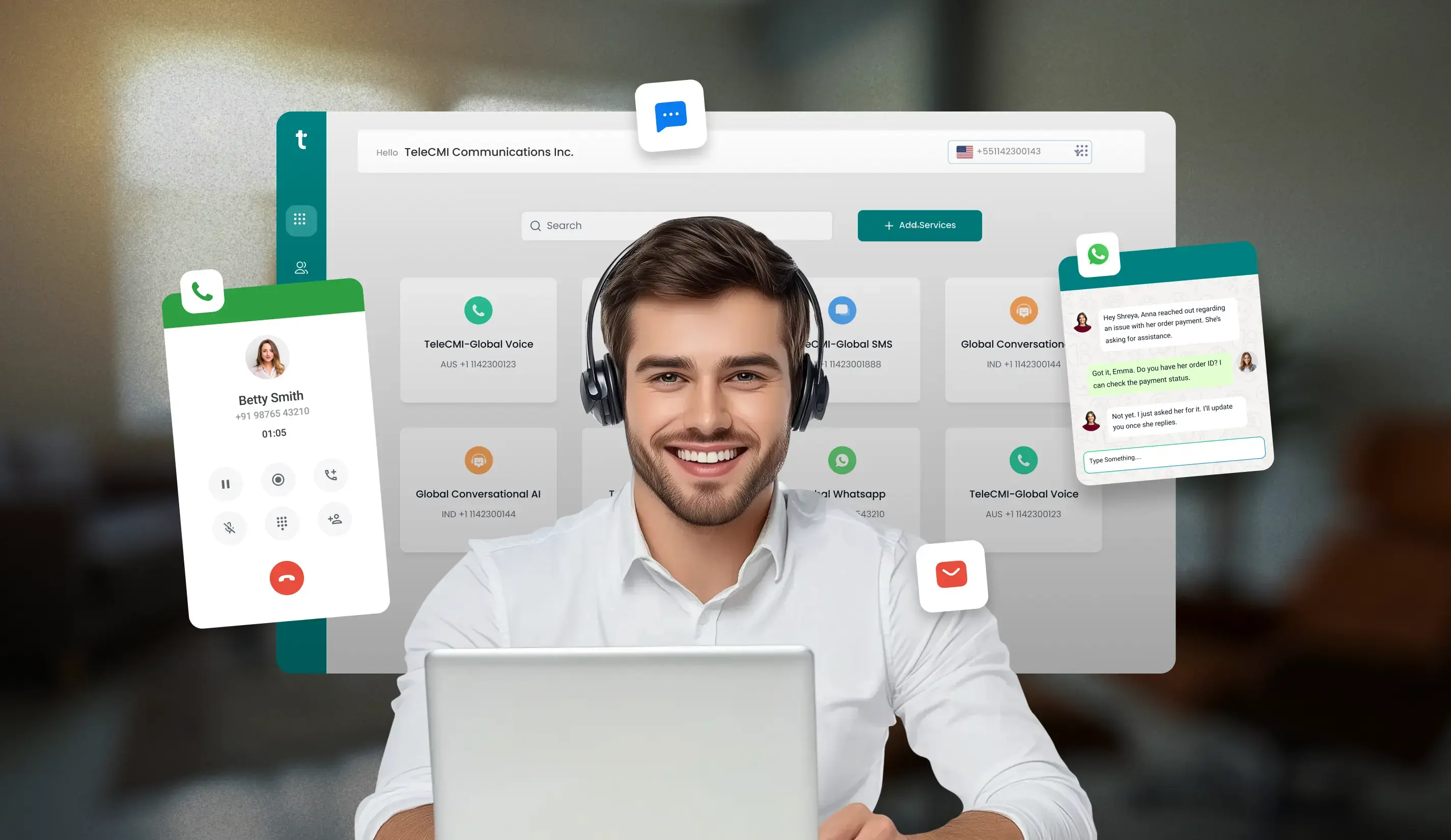
Ever feel like your customers are everywhere at once?
They are visiting your site, chatting with you on social media, emailing, and, in some cases, calling when they require urgent assistance. And amidst all this, your team is expected to handle these chats seamlessly, respond promptly, and provide a consistent experience.
It is not easy, right?
We have entered a new era of customer communication, where it is no longer enough to provide support through only one or two channels to meet customer expectations. A recent study by Salesforce showed that 83 percent of customers anticipate engaging with a company immediately when they reach out to contact it, regardless of the platform. Companies that are unable to keep up with this demand risk losing customers to more efficient competitors.
A multichannel contact center is where it fits, and that is why a cloud contact center solution like the one offered by TeleCMI is becoming a necessary tool in the modern business world.
In this guide, we will break down what a multichannel contact center is, how it operates, how it compares to omnichannel models, its key advantages, and how to successfully implement one. This is all you need to know whether you are scaling support or modernizing your service infrastructure.
What Is a Multichannel Contact Center?
A multichannel contact center is a customer service platform that enables your business to communicate with customers across multiple channels, including voice, email, SMS, chat, and social media, all within a single dashboard. Maintaining a well-organized email list is also important for managing customer inquiries and ensuring messages reach the right recipients. Using a bulk email verifier helps confirm that your list contains only active and verified email addresses, improving delivery rates and communication efficiency.
Rather than dealing with each channel individually, a multichannel system, such as the TeleCMI cloud-based platform, consolidates them all in one location. This helps support agents stay organized, respond quickly, and remain visible throughout all customer interactions. These platforms can also integrate with website email tools, making it easier to capture and manage email-based inquiries directly from your site.
For example, when a customer emails you on Monday and then contacts you again via WhatsApp on Wednesday, your agents will be able to view the entire conversation history; thus, no context is lost.
Channels Typically Supported in a Multichannel Contact Center
Modern multichannel contact center support a wide range of communication touchpoints:
- Voice Calls: Inbound and outbound calls, often powered by VoIP.
- Email: Structured ticketing or personal support via business email.
- Live Chat: Embedded on websites and mobile apps for real-time assistance.
- SMS/Text Messaging: Ideal for sending alerts updates and facilitating two-way communication.
- Social Messaging: Platforms like Facebook Messenger, Instagram, and Twitter DMs.
- Messaging Apps: Including WhatsApp Business, Telegram, and more.
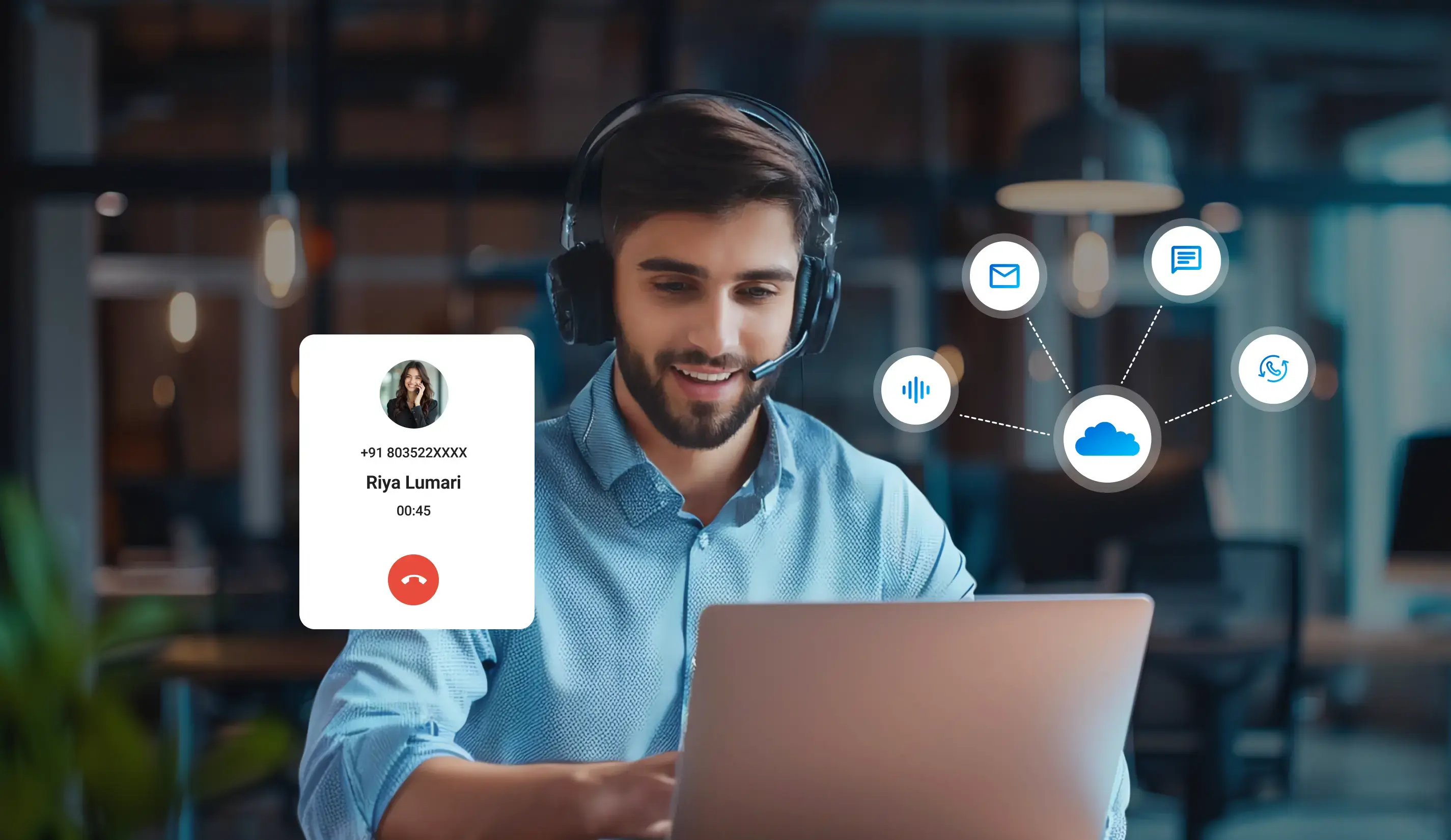
TeleCMI's multichannel solution unites all these channels into a single platform, allowing your team to manage customer conversations across channels without switching tools.
Multichannel vs. Omnichannel Contact Center
Although often confused, multichannel and omnichannel contact center are different.
A multichannel contact center enables agents to attend to conversations on various channels, although these channels do not necessarily communicate with each other. For example, your team may respond to a Facebook message without reading the customer's previous email.
An omnichannel contact center, or an enhanced form of multichannel, ensures a seamless experience where all interactions, regardless of the channel, are monitored and unified.
TeleCMI bridges this divide with hybridity, enabling you to track conversations flawlessly while remaining agile, thereby allowing your customer engagement strategy to evolve.
Benefits of a Multichannel Contact Center
1. Expand Your Reach: Your customers like to use various platforms at various times. By providing support across multiple channels, you eliminate friction and meet them where they already are. Businesses can also use The QR Code Generator (TQRCG) to create scannable codes that instantly direct customers to chat, support pages, or messaging channels, making it even easier to connect across platforms.
2. Improve Customer Satisfaction: Customers often dislike being asked to call back. The multichannel approach provides them with the ease of deciding how they want to communicate with your brand: email for detailed questions, chat for quick questions, and voice for urgent matters.
3. Better Customer Engagement: Better engagement is achieved through consistent and responsive communication. Your team is more approachable, and customers will be more willing to contact you, leave their feedback, or make a repeat purchase.
4. Increased Agent Productivity: One perspective of multichannel conversations implies fewer tabs and more efficient workflows. Your team manages more conversations without being overwhelmed by the unified agent interface of TeleCMI.
5. Actionable Insights: Analytics across platforms will enable you to monitor key performance indicators (KPIs) such as response time, resolution rate, and sentiment trends, providing the information you need to optimize your strategy and operations.
6. Global Scalability: The more your business expands, the more customers you have. A multichannel configuration grows with your communication requirements- you can add new areas, time zones, and channels of choice without increasing complexity.
7. Cost Efficiency: Promoting support through chat or messaging applications minimizes reliance on voice channels, which can be expensive. Integrate automation, such as chatbots or canned responses, and you will realize even greater savings in operations.

Also Read: See how outbound call center software helps sales teams close deals and maximize revenue
How to Implement a Multichannel Contact Center in Your Business
Implementing a multichannel contact center doesn't have to feel like a big project. The following is a step-by-step process:
1. Assess Customer Behaviour and Channel Preferences: Begin by examining the channels your customers are already using. In what areas are the delays occurring? Which media have the most engagement?
Tip: Utilize the built-in analytics of TeleCMI to identify channel-specific interaction patterns and pain points.
2. Select a Platform That Meets Your Needs: Select a solution that encompasses the necessary channels, is compatible with your current tools (such as Zoho CRM telephony integration or helpdesk), and is scalable according to your business growth. TeleCMI provides seamless connections to major business applications.
3. Define Clear KPIs and SLAs: Establish standards for your team. Set such KPIs as First Response Time (FRT), Average Resolution Time (ART), and Customer Satisfaction (CSAT) at every channel.
4. Train Agents for Cross-Channel Communication: Depending on the channel, tone and expectations are different. Email must be formal, and chat must be fast. Train your agents to become flexible.
5. Launch in Phases and Monitor Performance: Begin with the most frequently used channels. Monitor the Performance of the agents, customer satisfaction, and response time before implementing other platforms.
6. Optimize Using Feedback and Data: Obtain internal feedback and observe customer behavior to gain a deeper understanding. Continue to optimize procedures, introduce automation where necessary, and refine training using real-time data.
Choosing the Right Multichannel Contact Center Software
The following are some factors to consider when assessing multichannel contact center software:
Channel Coverage: Does it favour the channels that your customers prefer? TeleCMI supports voice, SMS, WhatsApp, chat, email, and social in a single place.
Ease of Integration: Ensure it is compatible with your CRM, ticketing system, or business tools. TeleCMI can be connected to more than 170+ CRM and helpdesk systems.
User Interface: Your agents do not have to spend days in training. Seek clear dashboards, user-friendly controls, and simple navigation.
Customization & Automation: Features such as auto-responses, call routing, chat triggers, and workflow automation can make a huge difference in efficiency.
Analytics & Reporting: You will be able to measure what matters —customer satisfaction, agent productivity, and channel performance—with robust reporting features.
Security & Compliance: The protection of data is not a compromise. Ensure the software is compliant with GDPR, HIPAA, or local laws as required. TeleCMI is constructed based on enterprise-level security standards, including encryption, TLS, and role-based access control.
Future-Proof Your Contact Center with TeleCMI: The Smarter Way to Engage
In a fast-paced, customer-centric world, support on a single or two channels is no longer sufficient. Customers will demand speed, ease, and seamlessness- whichever point they connect.
The multichannel contact center solution provided by TeleCMI is designed to help companies stay ahead of these expectations. By unifying calls, texts, chats, and social messages on a single platform, you can streamline your support process, increase agent productivity, and consistently provide customers with great experiences.
Regardless of your stage of development and whether you are an early adopter or working to modernize your support infrastructure, TeleCMI provides you with the tools to scale without fear of failure, offering AI call routing, real-time dashboards, and proactive alerts.
Revolutionize Customer Support with a Multichannel Contact Center

Boost Agent Efficiency & CX
Scalable & AI-Driven
Enterprise-Grade Security
Frequently asked questions (FAQ)
Vignesh N

With deep expertise in cloud telecommunications, I help readers explore the latest trends in VoIP and modern business communication. At TeleCMI, I focus on educating businesses with clear, practical insights, making complex telecom concepts easy to understand. I’m passionate about helping organizations improve efficiency, enhance customer engagement, and adopt smarter communication strategies.

 for your Call Center and Enhance Efficiency_.webp)