5 Proven Ways Small Businesses Save 30–60% on Phone Bills

9 mins read

Posted on Feb 06, 2026


Saravana Kumar
SEO


Saravana Kumar
SEO






According to the Samsung report, medium-sized businesses spend an average of $42 per line per month on mobile voice and data. Then, for a small business, it's almost half, around $20-$25 per line per month, around ₹1833.
The reason is rarely high call volume. It is usually poor calling habits, scattered SIM cards, and missed customer calls that turn into repeated follow-ups. Most Indian small businesses can reduce 30–60% of their monthly phone bill by fixing just a few simple calling practices without affecting customer service.
This blog explains five proven, practical ways small businesses can quickly reduce phone costs through simple changes that do not require technical knowledge or large investments.

Key Takeaways
 Personal SIMs, missed calls, repeated callbacks, and multiple recharges are the main reasons small businesses overspend.
- Switching to a single official business number or using business DIDs reduces confusion, lowers costs, and creates a professional brand image.
- Consolidating multiple SIMs into one verified business number is usually the fastest way to see immediate savings.
- Consolidating multiple SIMs into one verified business number is usually the fastest way to see immediate savings.
- Customers can get the answers they need from the Interactive Voice Response system right away.
- Call routing makes sure your calls go to the right person, so you don't have to keep calling back. It helps get things fixed on the first try.
Why Small Businesses Overspend on Phone Bills
The problem is not call volume, but lack of structure
Most small businesses do not overspend because they talk too much on the phone. They overspend because calls are handled in an unorganised way.
- Employees use personal SIM cards for business calls, making usage hard to track or control.
- Outgoing calls are not monitored, leading to long or unnecessary conversations.
- Multiple recharge packs are purchased every month for different team members.
- Missed incoming calls often lead to repeated follow-up calls.
- Customers typically dial different numbers and continue their attempts if their calls are not answered.
- Without a call-routing system, a missed call turns into several attempts.
- There is a lack of call analytics or reporting to detect wastage or misuse.
The 5 Most Effective Ways to Cut Your Business Phone Costs
Method 1: Switch From Multiple SIM Cards to One Official Business Number
Many small businesses operate with five to ten different SIM cards because each employee uses a personal mobile number for business calls. Every SIM requires its own recharge, and there is no clear way to track how calls are being used.
By moving to a single official business number, all customer calls are routed through a single, controlled channel. This change alone can immediately reduce phone expenses.
Why it works
- One monthly pack rather than several
- Transparent insight into call consumption
- Decreased chance of individual abuse
- A single, professional number customers can trust
Using a consistent communication channel also improves customer confidence. Digital.gov notes that businesses create better customer experiences and build trust when they use one reliable point of contact for communication.
Method 2: Use IVR to Reduce Outbound Call Volume
In many small businesses, a large portion of outgoing calls are made only because customers could not get basic information on their first attempt. Missed calls, order status checks, and routine service questions often trigger repeated follow-up calls from the team.
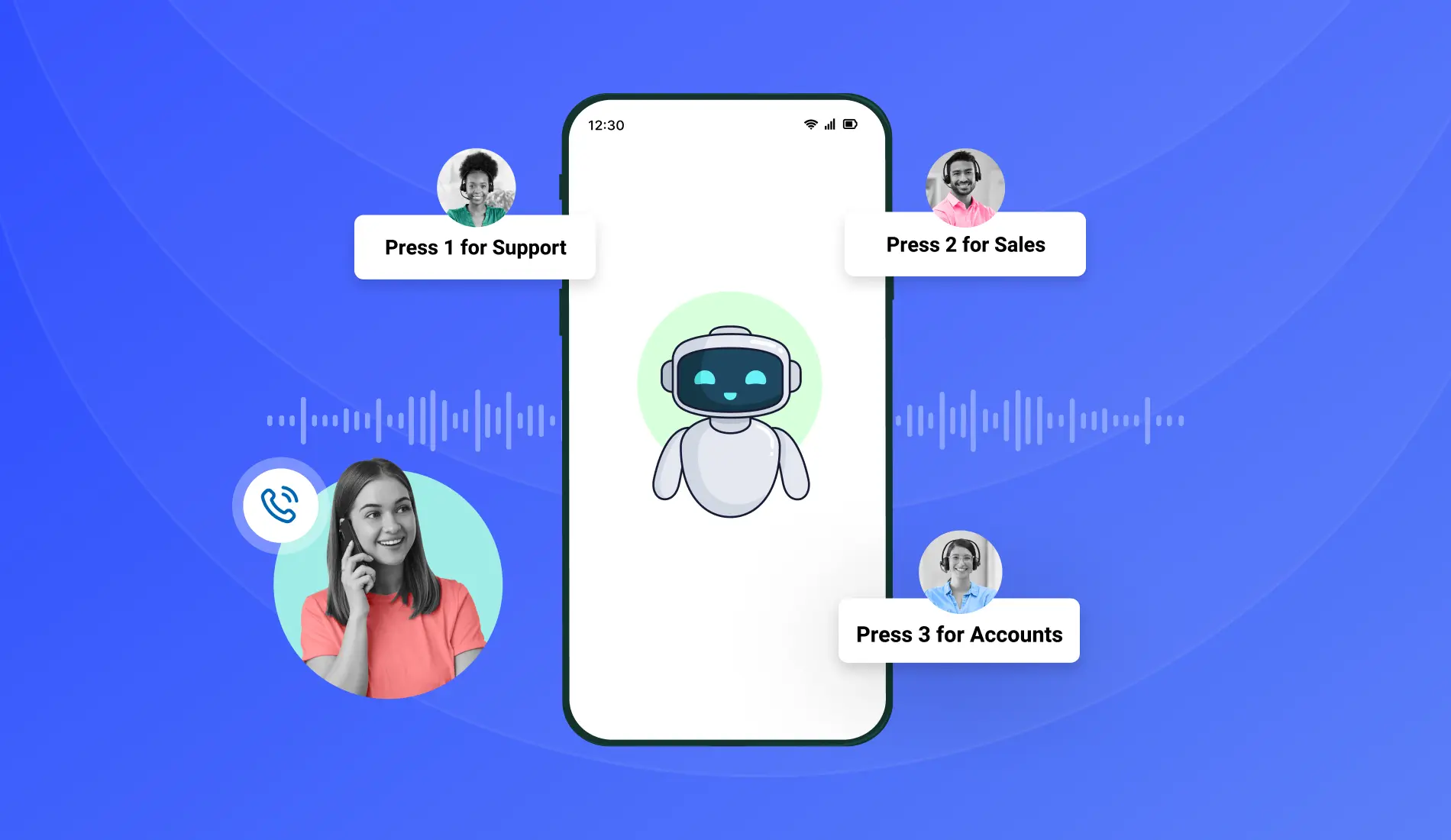
A basic IVR setup can handle those common questions all by itself, so an employee doesn't even need to get involved.
How it works
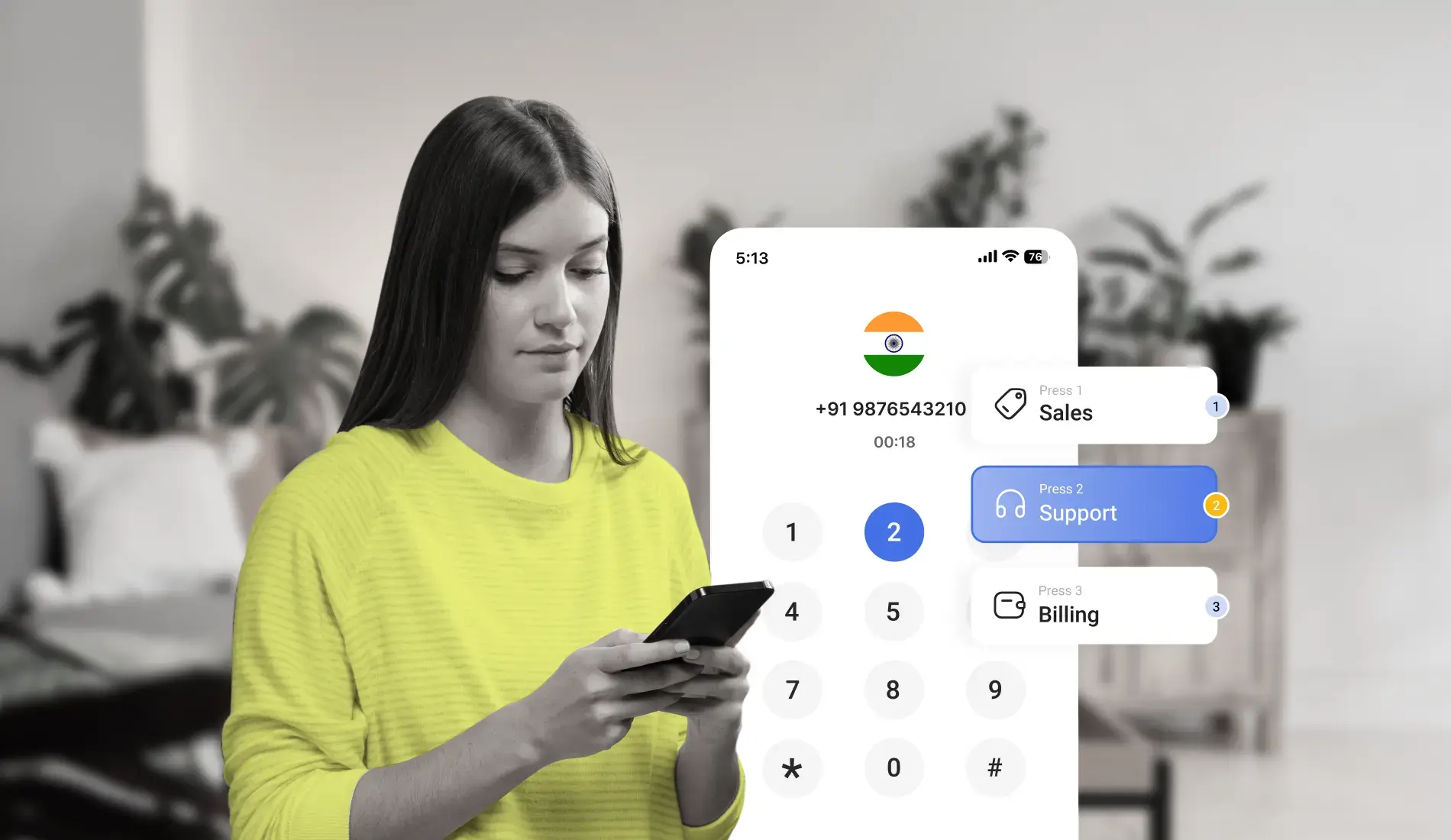
When a customer dials in, they are presented with distinct options like:
- “Press 1 to check delivery status.”
- “Press 2 for information on service requests.”
The customer receives the information they require instantly, without having to wait for a return call.
Why does it reduce costs?
- Reduced the number of follow-up calls
- Reduced total call expenses
- Every customer inquiry receives a response.
- Faster and smoother customer experience
Self-service options reduce the need for live agents, thereby lowering call volume and costs.

An Insight from Harvard Business Review: Repeated call attempts and long waiting times increase customer frustration and add to operational costs.
Method 3: Use Call Routing to Avoid Repeat Call-Backs
If a customer calls a personal mobile number and doesn't get an answer, they'll usually try calling again. This comes up when someone's too busy to answer, their phone is off, or they just miss the call. Each failed attempt leads to another call, increasing both call volume and cost.
Without call routing, one customer enquiry can easily turn into multiple calls from both sides.
How call routing helps
With a call routing systemin place:
- Every incoming call is directed to the right team or an available employee.
- The customer speaks to someone on the first attempt.
- One call is enough to resolve the issue.
This removes redundant callbacks and decreases total call usage.
Benefits
- Increased initial call resolution
- Reduced the number of follow-up calls made
- Reduce phone costs
- Decreased customer annoyance
Most small businesses save 30–60% by fixing call structure — not by reducing calls.
Start 14 Days Free TrialMethod 4: Use Call Analytics to Identify Wastage & Misuse
When employees use personal SIM cards for business calls, owners have no clear view of how calls are being made. There is no simple way to know how many calls happen each day, how long they last, or whether they are related to business at all.
This lack of visibility allows small but costly inefficiencies to continue unnoticed.
What call analytics shows
By using call analytics, businesses can clearly see:
- Calls made during office hours that are unrelated to work
- Regular interactions with the same customers
- Call duration that are unusually long
- Repeated callbacks
- The length of inactive or ineffective calls
Rather than making assumptions, owners receive precise information on the actual usage of calls.
How does analytics reduce cost?
- Exact call counts and durations are visible.
- Call purpose becomes clearer.
- Improper or excessive usage is easy to spot.
- Spending is limited to genuine business calls.
Benefits
- Saves money
- Increases employee accountability
- Helps optimise overall calling strategy
For small businesses, call analytics turns phone expenses from a blind cost into a controllable one.
Method 5: Shift from SIM Plans to Business DIDs
Many small businesses continue to pay for multiple mobile recharge packs simply because each employee has a separate SIM. Business DIDs, or virtual phone numbers, replace this model with a centralised calling system.
Rather than keeping separate SIM plans, both outgoing and incoming calls are routed through shared virtual numbers, controlled from a central spot.
Why does it reduce costs?
- Lower overall costs compared to handling multiple SIM cards.
- All call usage is centralized and easy to control.
- It is possible to add new employees without purchasing new SIM cards.
- You don't need individual monthly recharge packs.
- Perfect for growing or developing teams
For small businesses, business DIDs offer a simpler and more cost-effective way to manage calls while keeping expenses predictable and under control.
Quick Checklist: Are You Wasting Money on Phone Bills Right Now?
Use this checklist to quickly assess whether your current calling setup is costing more than it should.
- Each employee uses their own personal SIM for business calls.
- Customers have more than one phone number for the same business.
- Repeated follow-ups or callbacks are frequently the result of missed calls.
- Calls are not automatically routed to available staff members.
- The number of daily calls is not visible to you.
- You have no idea which calls are business-related and which are not.
- Purchasing a new SIM card and a recharge plan is necessary when adding a new employee.
Mini Case Study: How One Small Business Cut Their Phone Bill by 52% in 30 Days
Business: Local packers and movers, Chennai
Team Size: 7 employees
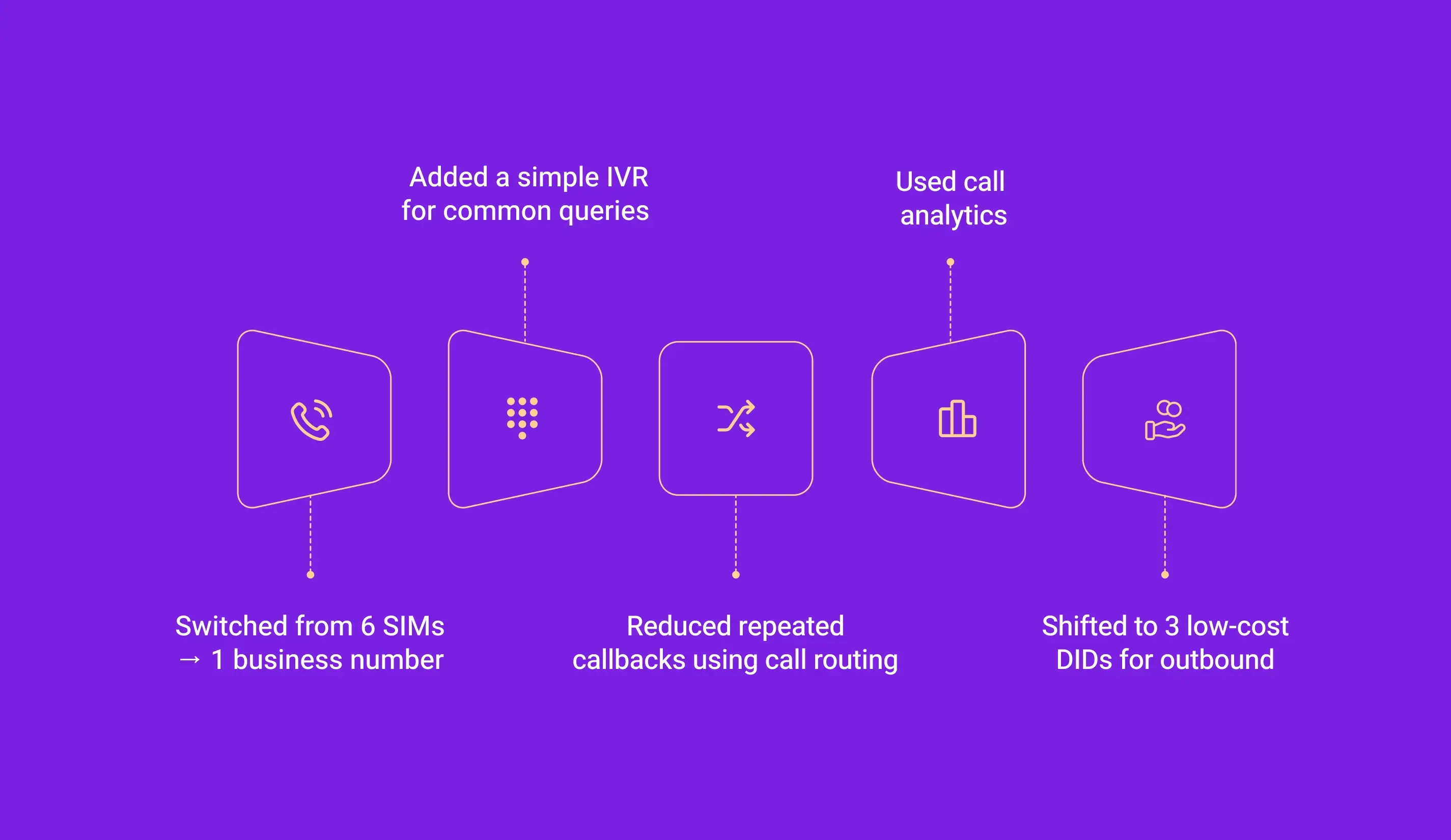
The business was using six personal SIM cards for customer calls. Each SIM had a separate recharge, no call tracking, and frequent missed calls. Customers were confused because everyone had a different number, leading to repeated callbacks and higher phone bills.
The company started using call analytics, enabled call routing so that calls reached available staff, added a basic IVR for frequently asked questions, and moved to a single official business number. Additionally, they switched out several SIM plans with inexpensive business DIDs for outgoing calls.
Result: Within 30 days, the business reduced its phone bill by 52%, while improving call handling and customer response.Conclusion
Conclusion
High phone bills are rarely caused by too many customer calls. They are usually the result of scattered SIM cards, missed calls, repeated follow-ups, and a lack of visibility into how calls are handled.
As this blog shows, small businesses can reduce phone expenses by 30–60% by making a few practical changes. Using a single official business number, adding basic IVR, routing calls correctly, tracking call usage, and shifting away from individual SIM plans all help bring structure and control to everyday communication. Most importantly, lowering phone costs does not mean lowering customer service. In fact, when calls are managed more efficiently, customers reach the right person faster, and teams spend less time on repeat work.
The simplest place to start is also the most effective: replace multiple personal SIM cards with one verified business number. From there, every additional improvement delivers both cost savings and better customer experience.
Bring structure to business calls and reduce monthly phone spend

Centralised call handling
Faster first-call resolution
IVR-based self-service
Usage tracking
Frequently asked questions (FAQ)
Saravana Kumar

I’m passionate about exploring and sharing insights on modern cloud communication technologies. At TeleCMI, I focus on helping readers understand the evolving world of cloud telephony and IVR solutions in a simple yet in-depth way. My goal is to deliver genuine value by turning complex telecom concepts into clear, actionable knowledge that builds trust and drives innovation.