TRAI 160 (One-Sixty) Series: What Every Fintech Needs to Know Right Now

6 mins read

Posted on Nov 13, 2025

Vignesh N
SEO


Vignesh N
SEO






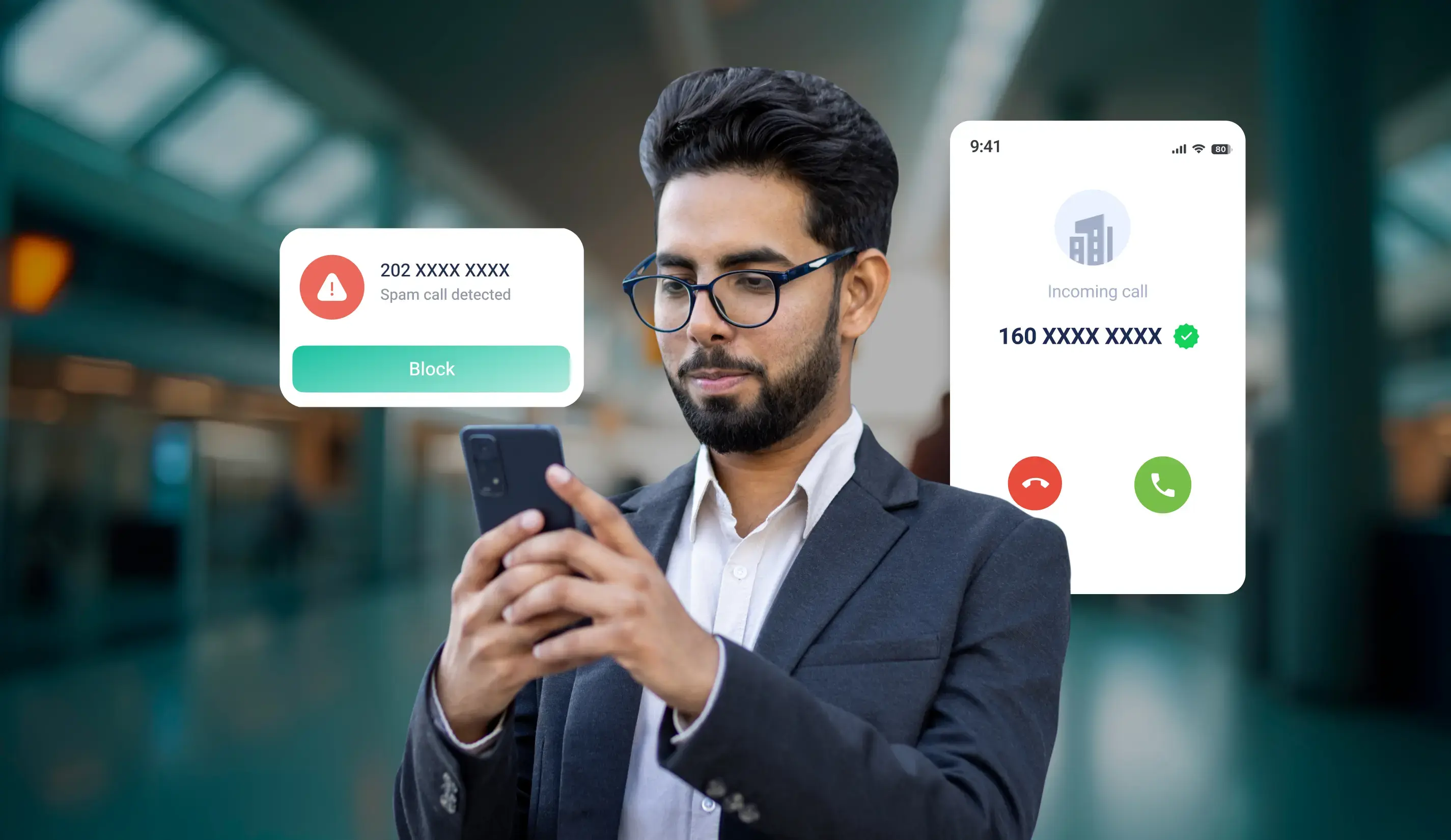
The Department of Telecommunications (DoT), in coordination with the TRAI (Telecom Regulatory Authority of India), introduces a 160-number series to reduce spam, fraudulent, and unsolicited calls.
People have lost communication trust in FinTechs, NBFCs, insurance companies, and tech-driven financial platforms, as they have lost INR 21,367 crores to bank frauds during April to September 2024 alone — a Report by Business Standard.
The 160-series (+91 160XX XXX XXX) aims to restore credibility in voice-based financial communication by creating a verified caller identity layer. It is not just a compliance upgrade for the FinTech industry; it's a strategy that shapes customer trust, operational efficiency, and brand protection. This article decodes the 160-series framework and how it impacts the financial and banking industries.
What is the 160-number Series in the TRAI regulation?
The 160-number series is a dedicated caller identification approach for transactional and service calls by government or private organizations, introduced by DOT. With this number series, firms can make calls for OTPs, bank transactions, insurance notifications, stock updates, and government reminders, and definitely not for promotional purposes.
160- number series allocation structure:
- 1600 number series used by the central and state government bodies.
- 1601 number series used by financial institutions like the Reserve Bank of India (RBI), Securities and Exchange Board of India (SEBI), Insurance Regulatory and Development Authority (IRDAI), and Pension Fund Regulatory and Development Authority (PFRDA).
Note: For promotional calls, you can register the 140 (One-fourty) number series on the DoT website.
How It Works
1. Only verified users can apply a 160-number series via DLT blockchain registration and RBI license validation.
2. Numbers are centrally allocated and whitelisted at the telecom switch level.
3. Every call is logged, including the timestamp, recipient, and consent status, on an immutable ledger.
4. No spoofing possible. Any attempt is dropped instantly.
As a result, when a user sees +91-1601-PAYTMP or +91-1601-CREDOT, they know it's real.
Why the 160-Series Matters?
According to the NDTV report, there have been 1.2 million unregistered telemarketing spam calls; DOT has also blacklisted over 50 firms and 2,75,000 lines in mid-2024.
The 160-series implementation safeguards financial communication, secures better customer trust, and ensures strengthened compliance to create a digital trust-financial ecosystem.
Using 140-Series for Service Calls? A Costly Compliance Mistake
Most businesses use the 140-number series for promotional, transactional, and service calls. But as per DOT guidelines, misuse of the 140-series is a regulatory violation. Reports by the Economic Times, states that fake banks uses 140 series to process fraudulent transactions, resulted in a loss of ₹21,367 crore through voice phishing between Apr - Sep 2024.
Key Differences between 140-series and 160-series
Why the 160-Series Is Essential for Fintech Industries
The one-sixty (160) number series redefines security, trust, and regulatory alignment, specifically for the banking, financial services, and insurance industries (BFSI).
- Customer Trust: With the verified 160-series, businesses can prevent their business number from being marked as spam by clearly distinguishing legitimate financial communications from unsolicited calls, thereby improving credibility, pickup rates, and overall customer engagement.
- Regulatory Exposure: As TRAI strengthens DLT (Distributed Ledger Technology) monitoring, implementing the 160-number reduces compliance risks associated with unsolicited or misclassified calls.
- Telecom Routing: Using pre-authenticated telecom pathways improves routing consistency and delivery accuracy, reducing call failures and latency.
- DLT Alignment: All message templates, headers, and voice routes remain transparent and auditable. This provides a single source of truth around service and transactional communication.
- CX Stack Integration: With verified caller identities synced across CRM and dialer systems, Fintechs can improve their customer experience stack.
- Reputation Management: A verified 160 prefix signals responsibility, compliance, and customer respect, attributes that significantly improve NPS (Net Promoter Score) and retention.
Organizational Action Plan to Utilize 160-Number Series
Here is the list of guidance to consider while implementing the 160-number series for your business.
Step 1: Classification of Call Types
First, you have to identify and classify the outgoing call type, including service, transactional, or promotional.
Step 2: Validate Eligibility
Ensure registration with regulatory bodies, namely RBI, SEBI, IRDAI, or PFRDA.
Step 3: Apply for 160 Provisioning
To verify and allocate the verified numbers for transaction or service calls, coordinate with the telecom or DLP partners.
Step 4: Prepare Systems
Invest in cloud telephony systems, CRMs, and dialers to support 160-number identification, tagging, and real-time routing.
Step 5: Strengthen Governance
Implement robust call-logging, monitoring, and periodic DLT audits to ensure transparency, traceability, and regulatory adherence.
Strategic Advantage of Implementing a 160-Number Series
Adopting the 160-number series strengthens customer relationships, reputation, and operational integrity. Here's what a business can benefit from when implementing a 160-number series for transaction and service communication.
- Customer Trust as a Competitive Asset
Customers who can identify authentic communication channels are much more likely to engage, respond, and remain loyal.
- Improved Fraud Protection
By taking away the uncertainty of unverified calls or messages, organizations take proactive steps to protect the customers and their brands.
- Corporate Signaling
It positions a company as a responsible communicator, aligning with regulatory expectations while elevating consumer confidence.
- Call Conversion & Engagement
Increased pickup and response rates in 160-series calls ultimately mean increased conversions in collections, activations, and renewals.
Conclusion
In industries driven by trust in every transaction, communication becomes as important as secure payment or onboarding compliance. The 160-series allows brands to demonstrate accountability, protects consumers from fraud, and makes each interaction more reasonable. It allows customers to answer calls confidently for Fintechs, NBFCs, and banks. More than compliance, this 160-Number Series signals that your business values integrity and transparency.
Stop letting impersonators own your caller ID. Get your official 160-series registration via TeleCMI now.
Build Customer Trust with Verified 160-Series Calls! - Try TeleCMI Free Now!

Verified Caller ID
Increased Call Pickup Rates
Boost Brand Credibility
Vignesh N

With deep expertise in cloud telecommunications, I help readers explore the latest trends in VoIP and modern business communication. At TeleCMI, I focus on educating businesses with clear, practical insights, making complex telecom concepts easy to understand. I’m passionate about helping organizations improve efficiency, enhance customer engagement, and adopt smarter communication strategies.

.webp)