TRAI 1601 Series for Business Calls: What Utilities and Logistics Companies Need to Know

17 mins read

Posted on Sep 23, 2026

Vignesh N
SEO


Vignesh N
SEO





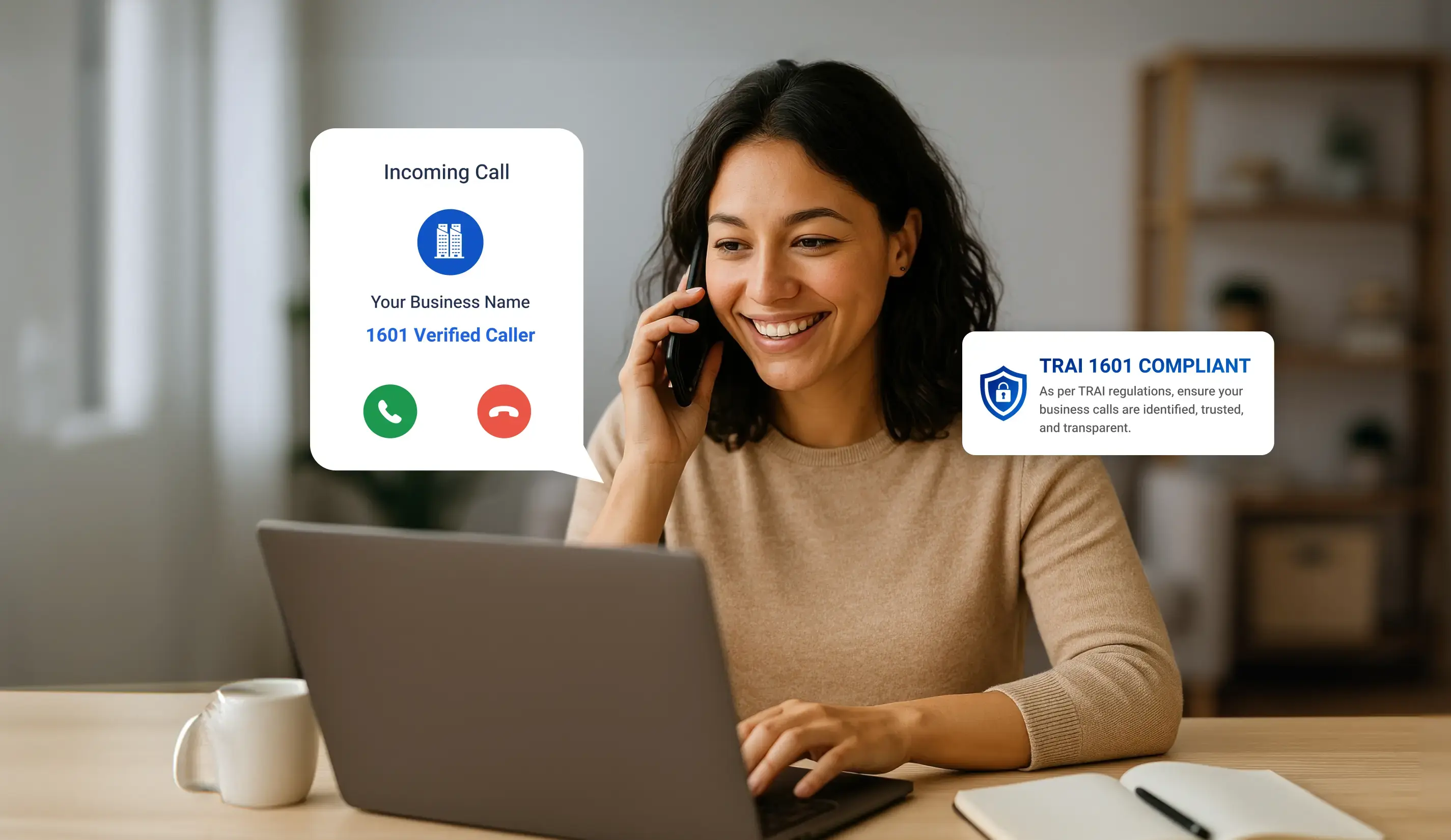
A call about a delayed parcel is not a sales call. Neither is a utility update, an address confirmation, or a call about an existing service request. Yet when all of these calls leave a business through ordinary numbers, there is little to distinguish one type of communication from another.
That distinction is becoming more important with the TRAI 1601 series. The Department of Telecommunications (DoT) allocated the 1601 numbering series, and TRAI has directed its phased implementation for service and transactional voice calls.
For these businesses, the 1601 series for businesses is intended for service and transactional calls, while promotional voice calls remain outside its scope. This means businesses need to look at not only which number they use, but also what purpose each outbound call serves.
The framework is being implemented phase-wise. Businesses should therefore understand the new requirements and review their calling setup, while waiting for operator-specific details on availability, pricing, documentation, verification, and activation.

Key Takeaways
 The TRAI 1601 series is for eligible service and transactional voice calls.
- Phase I covers utilities, courier, and logistics entities.
- 1601 series numbers cannot be used for promotional voice calls.
- TRAI requires telecom providers to verify eligible businesses before assigning numbers.
- Businesses should audit their outbound calls and separate service, transactional, and promotional communication.
- Regulatory implementation has commenced, but provider-specific pricing and onboarding details should be confirmed before adoption.
What Is the TRAI 1601 Series?
The TRAI 1601 series is a dedicated numbering series for service and transactional voice calls by eligible entities in sectors other than BFSI and government, which already use the 1600 series for similar communication. The Department of Telecommunications allocated the 1601 series, and TRAI has directed its phased implementation under the Telecom Commercial Communications Customer Preference Regulations, 2018.
So, what is TRAI 1601 series in practical terms? It gives certain businesses a distinct number identity for calls connected to an existing service or transaction rather than promotional outreach.
The 1601 number series is therefore different from an ordinary business number used for every type of outbound calling. Eligible entities must use assigned 1601 numbers exclusively for permitted service and transactional voice calls. Promotional voice calls are expressly excluded.
For businesses researching the 1601 framework in India, the key point is that the series is part of a wider effort to use dedicated numbers for different types of commercial communication.
Why Has TRAI Introduced the 1601 Series?
Eligible service and transactional calls can use the 1601 series as a distinct numbering identity. TRAI introduced the framework to make these calls easier to distinguish from promotional communications and to address concerns around the misuse of ordinary numbers.
Creating Clear Identification for Service Calls
A dedicated numbering identity can make it easier to distinguish legitimate service communication from calls made for other commercial purposes. TRAI states that the distinct identity is intended to help consumers identify legitimate service and transactional calls.
For businesses, this means 1601 service calls can have a clearly defined purpose instead of being mixed with promotional calling activity.
Supporting Trusted Business Communication
TRAI says the distinct numbering identity is expected to help combat impersonation by fraudsters using ordinary 10-digit numbers while falsely claiming to represent legitimate businesses. It also states that this identity can strengthen trust in voice-based service and transactional communication.
This does not mean TRAI 1601 numbers will automatically lead to higher answer rates or greater customer confidence. The framework simply gives eligible business calls a clearer numbering identity, which may make them easier for customers to recognize.
Improving Regulatory Classification
Businesses need to keep service and transactional communication separate from promotional outreach. Under the TRAI 1601 series rules for businesses, assigned 1601 numbers are intended exclusively for eligible service and transactional voice calls. Promotional voice calls cannot be made using these numbers.
Strengthening Customer Communication
Service communication can include calls about a delivery, an existing service relationship, or an account-related interaction. For a utility company, this might involve a service update. For a logistics provider, it could involve delivery coordination.
The aim is to give these operational calls a distinct numbering identity instead of classifying them as promotional calls.
Who Can Use 1601 Series Numbers?
Businesses that make regular calls about deliveries, service requests, or shipment updates may need to consider 1601 series numbers as part of their outbound calling setup. TRAI’s direction identifies utilities, logistics, and courier services as the initial eligible sectors.
Utility Service Providers
Under Phase I of the TRAI 1601 series rollout, utility businesses are among the sectors covered for the new numbering series. This includes electricity distribution companies, water utilities, city gas distribution companies, LPG distribution entities, and other utility service providers.
This creates a potential use case for 1601 numbers for utilities where businesses need to contact customers about an existing service relationship.
Examples may include:
- Service notifications
- Account-related communication
- Service requests
- Payment-related communication
- Complaint or service updates
However, being part of an eligible sector does not automatically make every outbound call eligible. The purpose of the individual call still matters.
For companies researching the 1601 series for utility companies, the practical step is to identify which outbound interactions qualify as service or transactional communication before assigning them to a 1601 number.
Courier and Logistics Companies
Phase I also covers courier companies, express logistics companies, parcel delivery service providers, and freight and logistics service providers engaged in delivery of consignments.
Potential use cases for 1601 numbers for courier companies and 1601 numbers for logistics companies include:
- Delivery coordination
- Shipment-related communication
- Address confirmation
- Delivery updates
- Customer service interactions
Again, these are practical examples rather than a blanket classification of every call made by a logistics business.
The TRAI 1601 series for logistics is intended for eligible service and transactional communication, so businesses should assess the purpose of each calling workflow rather than applying the number series to all outbound activity.
What Types of Calls Can Be Made Using 1601 Numbers?
The 1601 series is meant for service and transactional voice calls, not general business calling. The key question is whether the call relates to an existing service, transaction, or customer interaction rather than promoting a product or offer.
Service Calls
1601 service calls are connected to a service that the customer already uses or has requested. For example, a business may call about a utility service update, respond to a customer request, or coordinate a delivery.
Businesses planning service calls using the 1601 series should ensure that the reason for the call fits the permitted service communication framework.
Transactional Calls
1601 transactional calls relate to an existing transaction or business interaction. Examples can include order or shipment communication, transaction-related updates, or account and service information.
A business considering a 1601 series transactional calls workflow should distinguish these interactions from calls intended to promote a new product, service, offer, or campaign.
Promotional Calls
Can 1601 numbers be used for promotional calls? No. TRAI's direction states that 1601 numbering resources must be used exclusively for service and transactional voice calls and, under no circumstances, for promotional voice calls.
1600 vs 1601 vs 1400: What’s the Difference?
TRAI's current framework positions the 1601 series numbers as an additional numbering identity for eligible sectors beyond BFSI and government, while 1600 continues to serve entities covered by its existing framework. The 1400 series is distinguished as the promotional voice-calling series.
How Will the 1601 Series Affect Utilities and Logistics Businesses?
For eligible businesses, the 1601 series will affect how outbound service and transactional calls are managed. Utilities, courier companies, and logistics providers may need to check their current numbers, calling processes, and compliance requirements before adopting the series.
Changes to Outbound Calling
Businesses may need to review the numbers currently used by customer support, service, delivery, and operations teams. Calls that qualify as service or transactional communication may need to be separated from promotional activity.
Calling Process and Number Management
Businesses adopting a 1601 series number for business should plan which workflows will use the number and which will continue to use other approved numbering arrangements.
Customer Communication Strategy
Operational calls should be kept separate from marketing communication. A delivery update and a promotional offer may both be made to the same customer, but they serve very different purposes and should not automatically be treated as the same type of call.
Telecom and Compliance Readiness
Businesses will need to work with their telecom provider on eligibility, documentation, verification, number allocation, activation, and also commercial requirements. TRAI requires access providers to verify eligible entities before they can assign 1601 numbers.
Benefits of 1601 Series Numbers for Businesses
The 1601 series gives eligible businesses a dedicated identity for service and transactional calls. This can help customers recognise the purpose of these calls and help businesses manage different types of outbound communication.
Clearer Business Call Identification
Customers can more easily distinguish service and transactional calls from other types of business communication when they come from a dedicated number series. For utilities, courier companies, and logistics businesses, this can make the purpose of an incoming call clearer from the start.
Clearer Identification of Service Communication
TRAI states that the distinct numbering identity is intended to help consumers identify legitimate service and transactional calls and reduce impersonation risks.
Better Separation of Call Types
Businesses may handle service and promotional calls through the same communication setup. The 1601 series separates the two by giving eligible service and transactional calls their own number series instead of using the same numbers for promotional communication.
Improved Communication Management
Once calls are organised by purpose, businesses can structure their outbound calling workflows accordingly. Teams can identify which calls need to use 1601 numbers and keep promotional communication on the appropriate number series.
Greater Regulatory Readiness
Adopting the appropriate number series helps businesses align their outbound calling practices with the applicable commercial communication framework. It also gives teams a clearer structure for reviewing call types, numbers, and calling workflows as the 1601 series is implemented.
What Businesses Should Do Before Adopting 1601 Numbers
1. Identify Eligible Calls
Audit outbound calls and classify them as:
- Service
- Transactional
- Promotional
2. Identify Eligible Business Numbers
Review the numbers currently used to contact customers and identify which teams, departments, or workflows use each one. This gives you a clear picture of where existing numbers are being used for service or transactional communication and where a change may be required.
3. Review Your Calling Workflows
Look at how a typical customer interaction works in your business:
Customer request → agent / system call → service outcome
This helps you see where outbound calls happen and where a 1601 number would fit into the existing workflow without changing how your teams handle customer interactions.
4. Review CRM and Telephony Integration
See how the new number will fit into your current CRM and calling setup. Make sure the call records will continue to go to the right customer records. Also make sure to check any teams, queues, applications, or calling workflows that currently use the number before making the change.
5. Prepare Business Documentation
Keep the standard company documents ready along with the regulatory documents applicable to your business. For example, banks and NBFCs should provide their RBI certificate, mutual funds, AMCs, and stock brokers should provide their SEBI registration, insurance companies their IRDAI licence, and pension intermediaries their PFRDA registration certificate.
6. Confirm Commercial Requirements
The pricing and other terms for a 1601 number may not be the same as your existing business number. So make sure to confirm the applicable charges, minimum commitments, the setup costs, and other commercial requirements with their telecom provider before proceeding.
7. Plan Activation and Onboarding
After confirming the eligibility and commercial requirements, the business needs to work with the telecom provider to activate the number. The provider should confirm the next steps involved in allocation, activation, or migration so businesses can make the switch without affecting ongoing customer communication.
When Will 1601 Series Numbers Be Available?
TRAI issued its direction on August 10, 2026, and the direction came into force immediately. It states that allocation of 1601 numbering resources commences immediately and that access providers must complete onboarding and migration of eligible Phase I entities within 90 days from the date of the direction.
Phase I covers utilities, logistics, and courier services.
This means regulatory implementation has started. TRAI has directed access providers to complete the onboarding and migration of eligible Phase I entities within 90 days from the date of the direction (10 August 2026). The 1601 numbering resources are expected to become available to telecom operators and NSOs as the rollout progresses. However, this 90-day implementation window does not by itself confirm the exact date on which 1601 numbers will be available for customer onboarding through individual providers.
How TeleCMI Can Help Businesses Adopt the 1601 Series
TeleCMI provides the calling infrastructure businesses need to manage customer and service communication. As the 1601 series becomes available, eligible businesses can use these capabilities to manage their covered calls.
1601 Series Availability Through TeleCMI
TeleCMI can support the cloud telephony and calling workflows around eligible service and transactional communication. Availability of 1601 numbers through TeleCMI will depend on telecom operator availability, eligibility verification, and applicable onboarding requirements.
Business Calling Infrastructure
TeleCMI provides business communication infrastructure that can support cloud telephony, business calling, call routing, agent calling, and customer communication. These capabilities can form part of a broader setup in which eligible service calls use the appropriate numbering arrangement.
CRM Integration
TeleCMI supports 170+ CRM and business tool integrations, allowing teams to manage calling alongside customer records and their existing workflows. This can help keep call activity and customer information connected across the tools teams already use.
Call Management and Analytics
Depending on the customer's existing setup, capabilities such as call recording, call tracking, call analytics, agent performance monitoring, and customer interaction history can support ongoing management of business calls.
1601 Series Adoption Checklist for Businesses
Before adopting the 1601 series, businesses can work through the following steps:
- Confirm business-sector eligibility: Check whether your business falls under the sectors covered by the applicable phase of the 1601 numbering framework.
- Identify service and transactional calls: List the calls your business makes for service, delivery, account, support, or other transactional purposes.
- Separate promotional calls: Keep marketing and promotional calls separate from service and transactional communications, as they are subject to different numbering requirements.
- Audit existing outbound numbers: Review the numbers currently used for outbound business calls and identify where changes may be required.
- Confirm 1601 availability: Check with your telecom operator or service provider whether 1601 numbers are available for your business.
- Review pricing & commercial requirements: Check the pricing, plan, charges, and other commercial requirements that apply before proceeding.
- Prepare required documents: Keep the business registration and other documents required for verification and number allocation ready in advance.
- Complete verification: Complete the provider's eligibility and verification process before the number is activated.
- Configure calling workflows: Update call routing, outbound calling processes, and other workflows to use the appropriate number for eligible calls.
- Train sales and support teams: Make sure employees understand when to use the 1601 number and which calls should continue using other numbers.
- Monitor usage after activation: Review outbound calling activity to ensure the number is being used for the intended types of business communication and in line with applicable requirements.
Bottom Line
The TRAI 1601 series establishes a dedicated numbering framework for service and transactional voice calls by eligible entities in Phase I sectors, including utilities, courier, and logistics. TRAI's direction also makes clear that these numbers cannot be used for promotional voice calls.
For businesses, the immediate priority is to understand which calls qualify, audit existing outbound numbers, separate promotional communication, and prepare for provider-level onboarding.
The 1601 series for businesses is being implemented under a defined regulatory timeline, while commercial and customer-facing availability through individual providers still needs to be confirmed. TeleCMI plans to make 1601 series numbers available to eligible businesses as operator availability and applicable requirements are confirmed.
Book a demo to explore how TeleCMI can support your business calling requirements.
Get Your Business Calling Setup Ready for the TRAI 1601 Series

Business Cloud Telephony
170+ CRM & Business Integrations
Call Routing & Management
Call Tracking & Analytics
Frequently asked questions (FAQ)
Vignesh N

With deep expertise in cloud telecommunications, I help readers explore the latest trends in VoIP and modern business communication. At TeleCMI, I focus on educating businesses with clear, practical insights, making complex telecom concepts easy to understand. I’m passionate about helping organizations improve efficiency, enhance customer engagement, and adopt smarter communication strategies.