What is Conversational AI? Technology, Architecture, Use Cases & Future Trends

12 mins read

Posted on Mar 12, 2026

Vignesh N
SEO


Vignesh N
SEO






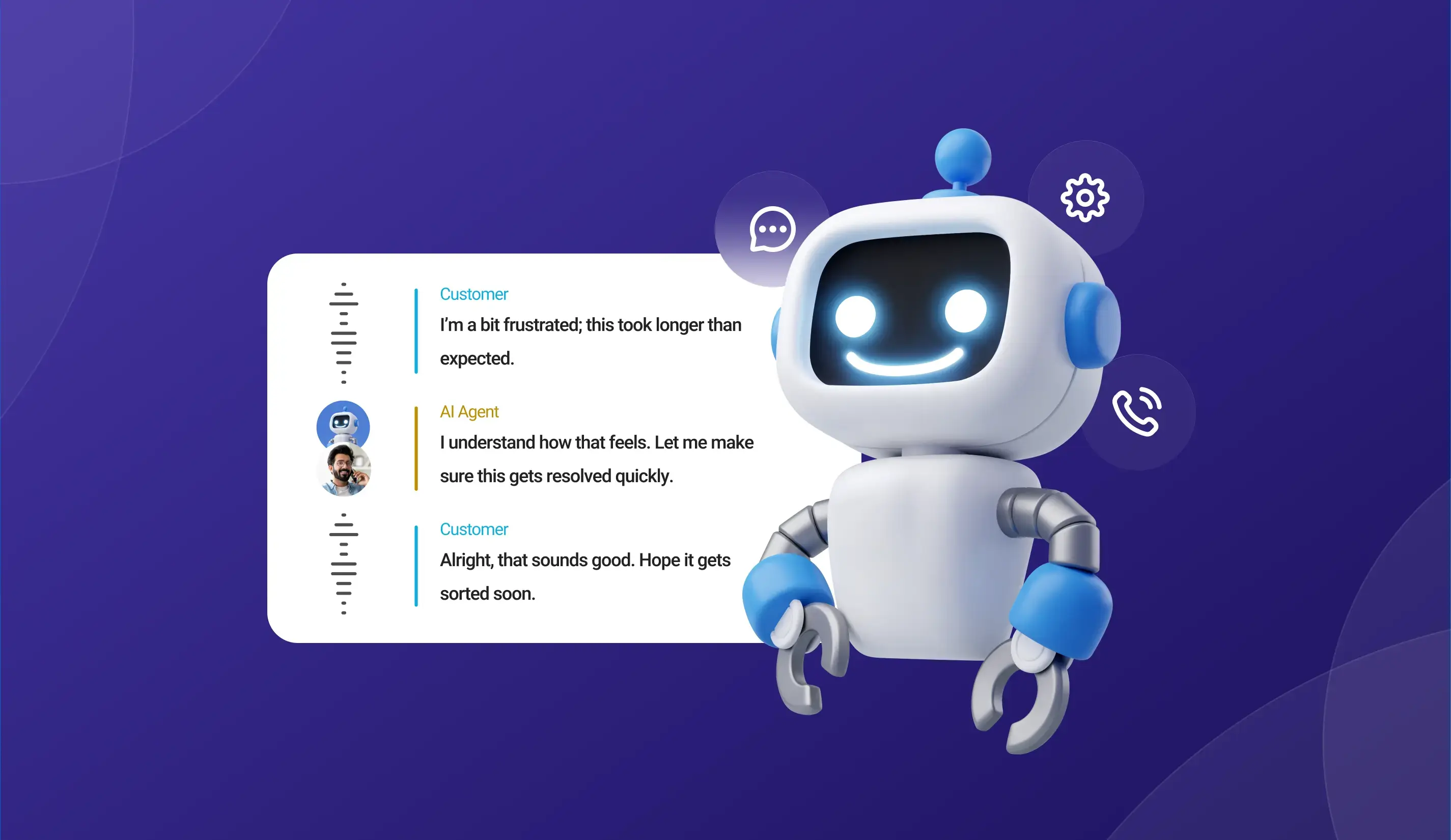
Conversational AI is a type of artificial intelligence that enables machines to understand, process, and respond to human language through text or voice. It combines technologies such as natural language processing (NLP), machine learning (ML), and speech recognition to create human-like conversations between users and digital systems.
Today, conversational AI powers many tools people use every day, from virtual assistants on smartphones to customer support chatbots on websites. Whether someone asks a smart speaker to play music, chats with a support bot, or speaks to an automated voice assistant during a customer service call, conversational AI makes these interactions possible.
For businesses, conversational AI goes beyond convenience. It helps companies respond to customer queries instantly, automate routine interactions, and deliver personalized support across multiple channels, such as chat, messaging apps, and voice calls.
As organizations continue to adopt AI-powered communication tools, understanding how conversational AI works, its key technologies, use cases, and future potential becomes increasingly important. In this guide, we will explore how conversational AI is transforming modern customer communication and how businesses can implement it effectively.

Key Takeaways
 Beyond chatbots, conversational AI understands context and intent, making the interactions more natural and human-like.
- AI enables instant responses, shorter wait times, and more time for complex issues.
- Companies benefit from cost savings, increased satisfaction, and improved problem resolution.
- AI remembers users, tailors responses, and keeps conversations relevant across channels.
- Successful adoption combines advanced AI technologies with ethical governance and ongoing learning.
What is Conversational AI?
Conversational AI is an artificial intelligence technology that uses Natural Language Processing (NLP) and Machine Learning (ML) to understand, analyse, and respond to user input, whether it’s text, speech, or voice. Instead of keypad inputs or filling out a form, these AI act like agents, offering human-like interactions across multiple channels.
Examples of Conversational AI
- Asking Siri to set reminders
- Using Google Assistant to control smart devices
- Chatting with customer support bots on websites
- AI voice agents in contact centers
Most people consider conversational AI and chatbots to be interchangeable. While both aim to interact with users, they differ in operation, functionality, and intelligence.
How Conversational AI Differs from Chatbots
Core Technologies Behind Conversational AI
The key elements of conversational AI enable it to process, analyze, comprehend, and react in a way that is natural and human-like.
- Automatic Speech Recognition (ASR): Listens to what you say, recognizes it, and translates it into text, enabling it to understand what you're commanding it to do.
- Natural Language Processing (NLP): Allowing the system to listen, understand, and respond to user queries by combining computational linguistics, rule-based modeling, and machine learning.
- Natural Language Understanding (NLU): It is a part of NLP allowing the system to comprehend not just keywords but also user intent, emotions, and meaning.
- Natural Language Generation (NLG): Unlike spoken text, NLG has a more human and natural sound to the generated response.
- Dialogue Management: Manages the flow of the conversation, keeping track of context, and determines how it should respond to the user like you.
- Text-to-Speech (TTS): Translate the generated text response into voice to make a real-time call transcription.
- Machine Learning & Data Models: Enabling the system to continuously learn from common knowledge base software, uploaded scripts and documents, and past interactions in order to adapt for future interactions through machine learning development services.
Smarter Customer Conversations with Conversational AI – Enhance Support, Automate Responses & Improve Customer Experience
Start Free TrialHow Conversational AI Works?
Understanding User Intent: When a user calls or texts your business, the AI starts listening and converts it into text using ASR.
Analysing Request: After listening, the system instantly analyzes intent, keywords, sentiment analysis, urgency, and previous interactions to understand exactly what the user is requesting using NLP techniques.
Processing Request: It processes the request, whether it's a query, appointment booking, request for action, or any other, it will understand and generate the response. The system may perform an AI Search across internal knowledge bases, past conversations, or external resources to fetch the most relevant information before generating a response. It also prioritizes, filters, and ranks retrieved data to ensure the most relevant context is used before forming a response, which improves accuracy and coherence. It can also structure and format outputs in a way that improves AI search visibility across platforms by making the content easier to index and interpret.
Generate Response: Once done, the system automatically generates the appropriate responses in text format using the NLG technique.
Respond to Receiver: The system converts text to speech via TTS for voice queries; otherwise, it shares it in text format. The process repeats until the user is satisfied with the responses.
Key Features of Conversational AI
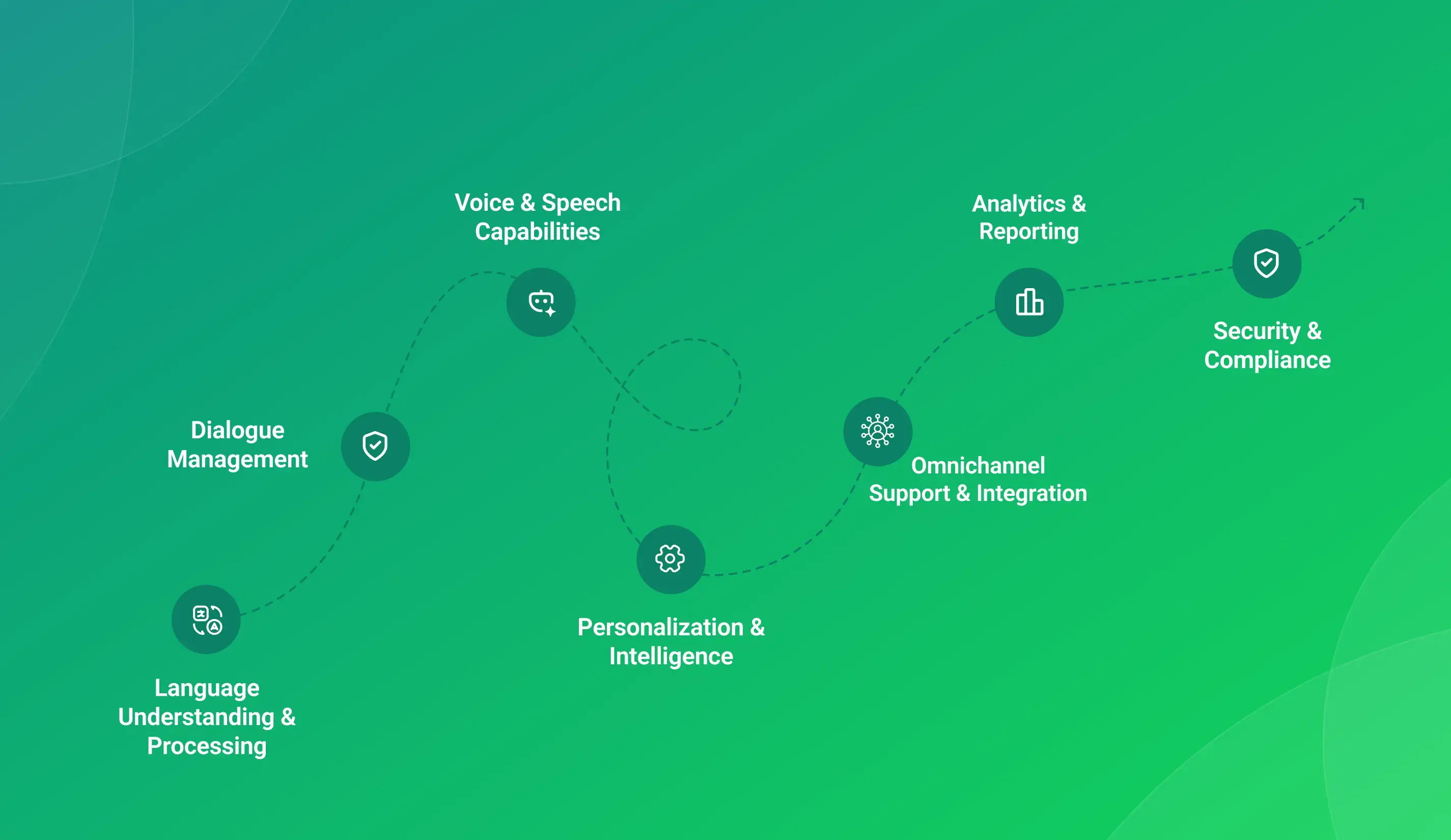
Conversational AI uses artificial intelligence, machine learning, and natural language processing (NLP) to provide human-like interactions. The essential features of conversational AI are as follows:
- Language Understanding & Processing: It is able to understand what the user wants, process the request in their own language, analyze their tone, and hold a conversation over multiple interactions.
- Dialogue Management: The system automatically handles fail overs, transfers multiple agents, routes to the right department, and guides the interaction logically from start to finish.
- Voice & Speech Capabilities: The capability to automatically convert voice messages into text or vice versa in such a way that the conversation can be smoothly continued based on the complexities of the interaction and the response to the same.
- Personalization & Intelligence: Access, analyze, and understand user preferences based on their past interactions, behavioral patterns, and history.
- Omnichannel Support & Integration: Works on web, mobile apps, social media, email, and more channels. Also integrates with CRM, ERP, databases, and marketing automation tools.
- Analytics & Reporting: Monitors inquiries, completion rates, and response quality to find patterns in user behavior and preferences.
- Security & Compliance: Compliant with GDPR, HIPAA, and other regional regulations. Offers MFA, end-to-end encryption, and role-based access control.
The Real Advantages of Using Conversational AI in Your Business
Conversational AI helps businesses build trust and deliver exceptional customer experiences across platforms. Here's a list of benefits an organization can taste while using this AI.
- Faster Customer Support: Your customers never like to wait. Whether it's a serious issue or a simple query, waiting can drain their mind and bring frustration. This system allows instant responses and easy escalations, and performs quick actions.
- Cost Efficiency: Handling high volumes of queries doesn’t require hiring more people. AI helps businesses save money while keeping quality service even during busy seasons.
- Better Customer Experience: Conversational AI makes interactions feel natural, personal, and easy, exactly what people want when they reach out. Whether it's a chat, WhatsApp, or a phone call, it ensures all interactions maintain consistency and offers context-aware resolution.
- Actionable Insights: Conversational AI provides data that businesses can actually use to improve, allowing businesses to learn from every interaction. Requirement updates, required improvements, predictions, and decision-making.
- Enhanced Brand Loyalty: Conversational AI helps businesses build relationships and trust with their customers by providing context-aware responses, automated reminders and updates, and quick responses every time.
Industry-Specific Benefits of Conversational AI
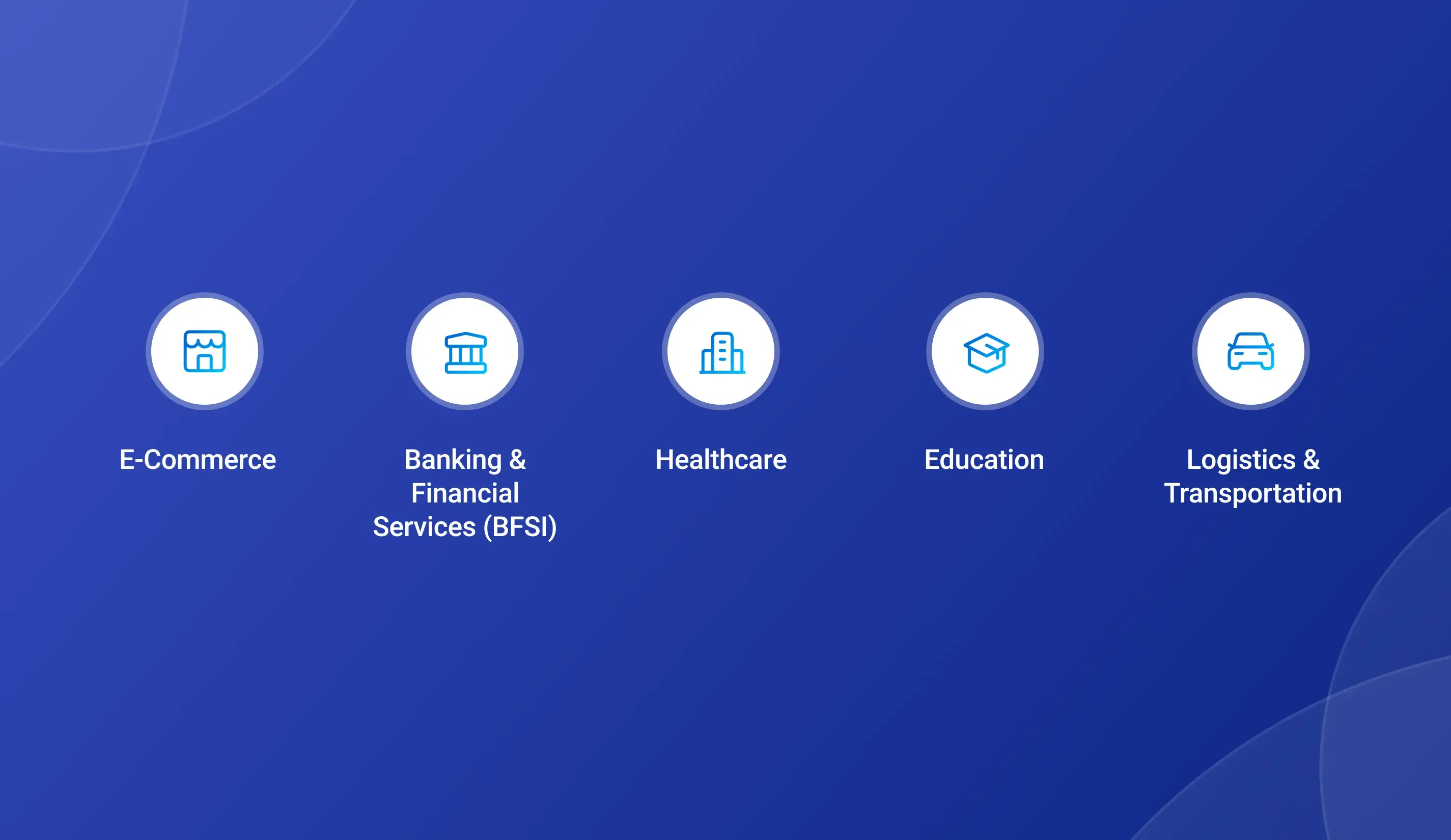
Different industries gain unique advantages based on their customer needs and workflows. Here’s how conversational AI adds value across key sectors.
E-Commerce
Enables you to provide real-time tracking, immediate order updates, tailored recommendations, and lower cart abandonment.
Banking & Financial Services (BFSI)
Provides 24/7 account support, detects fraud and notifies clients, and provides guidance on card and loan details without long wait times.
Healthcare
Improve your patient care, enhance administrative efficiency, and automate routing tasks with conversational AI solutions.
Education
Offering quick answers, helping students, and handling routine queries about exams, grades, and resources.
Logistics & Transportation
Enhancing customer communication and smooth operations, AI helps resolve shipment queries, reduce human support, and maintain service quality.
The Future of Conversational AI
More natural conversations: Conversational AI understands user tone, intent, and context, allowing AI assistants to provide more human-like interactions.
The rise of voice interaction: Businesses are beginning to adopt voice AI Agents to manage customer calls and provide hands-free experiences.
Personalized customer experiences: Based on previous data, customer preferences, and sentiment detection, the system offers tailored interactions and personalized support.
Deeper integration with business systems: Conversational AI will increasingly connect with business tools such as CRM systems, support platforms, and databases.
AI assistants for employees: AI Assists employees by helping them find information, automate routine work, and complete internal processes more quickly.
Responsible and ethical AI: As conversational AI becomes more widespread, businesses will need to ensure these systems are trustworthy and transparent.
How to Implement Conversational AI in Your Business
While introducing conversational AI into your business, the goal is not just to add another tool. The real aim is to improve how we talk to customers, reduce the pressure on support teams, and make communication faster and smoother across different channels.
Here is a simple approach we can follow when getting started.
1. Define clear goals
Before choosing a platform or building any AI system, first, you need to understand what problem your business wants to solve. Conversational AI works best when you use it for a clear purpose.
2. Start with practical use cases
It is always better to start with something that happens frequently and is simple. For instance, it is better to start with answering questions that people often ask, order tracking, service requests, appointment scheduling, and so on.
3. Choose the right conversational AI platform
The platform you choose to use is an important factor that determines how well our AI system works. It should be able to work with various communication channels such as voice, chat, and even messaging services, and also integrate with other applications. It should also be able to provide good analytical and learning capabilities so that it becomes better with time.
4. Train and refine the system
As we have already mentioned, conversational AI is only as effective as it is trained. The more real customer questions you can feed into our system, the better our system will be able to understand how real customers ask questions. Refine your system's knowledge base and make changes based on customer feedback.
5. Monitor performance and optimize
By monitoring metrics such as customer satisfaction and conversation completion, you can see just how well our system is performing and make adjustments accordingly.
Conclusion
Conversational AI technology has the ability to revolutionize the way humans interact with technology. It has the ability to enhance customer experiences, reduce operational costs, and enable efficient communication with the use of various communication channels. Some of the industries utilizing the technology include e-commerce, banking, and healthcare, among others.
The organizations at the forefront of adopting the technology stand to benefit from its use. If you are interested in learning more about how the technology can be used to enhance your customer interactions and communication, then start your free trial, and our experts will guide you on how to use the technology to offer intelligent customer interactions.
Implement Conversational AI for Smarter Customer Communication – Connect with Our Experts Today!

AI-Powered Conversations
Seamless Integrations
Enterprise-Grade Security
Frequently asked questions (FAQ)
Vignesh N

With deep expertise in cloud telecommunications, I help readers explore the latest trends in VoIP and modern business communication. At TeleCMI, I focus on educating businesses with clear, practical insights, making complex telecom concepts easy to understand. I’m passionate about helping organizations improve efficiency, enhance customer engagement, and adopt smarter communication strategies.