Best IVR Service Provider in India for Small Businesses (2026)

14 mins read

Posted on Apr 24, 2026
.webp)

Saravana Kumar
SEO


Saravana Kumar
SEO




"Most Indian SMBs don't need a ₹50,000/month enterprise telephony stack. They need something that goes live in a day, handles 200 calls without dropping one, and costs less than a team lunch."
If you're a founder, ops lead, or customer support head at an Indian SMB in 2026, here’s the main problem: the IVR market is full of providers that are either too costly, too complicated, or made for big enterprise teams of 200+. You’re likely running a small team, handling a mix of inbound support and outbound sales calls, and need something that simply works.
This guide will give you a complete clarity on the Best IVR Service Providers in India . We’ve reviewed the Indian IVR market mainly for SMBs and startups, businesses with 5 to 100 agents, budgets under ₹10,000/month, and real needs like multi-language support, CRM integration, and TRAI compliance. No fluff, no generic feature lists. Let’s dive in...
What is an IVR Service Provider in India?
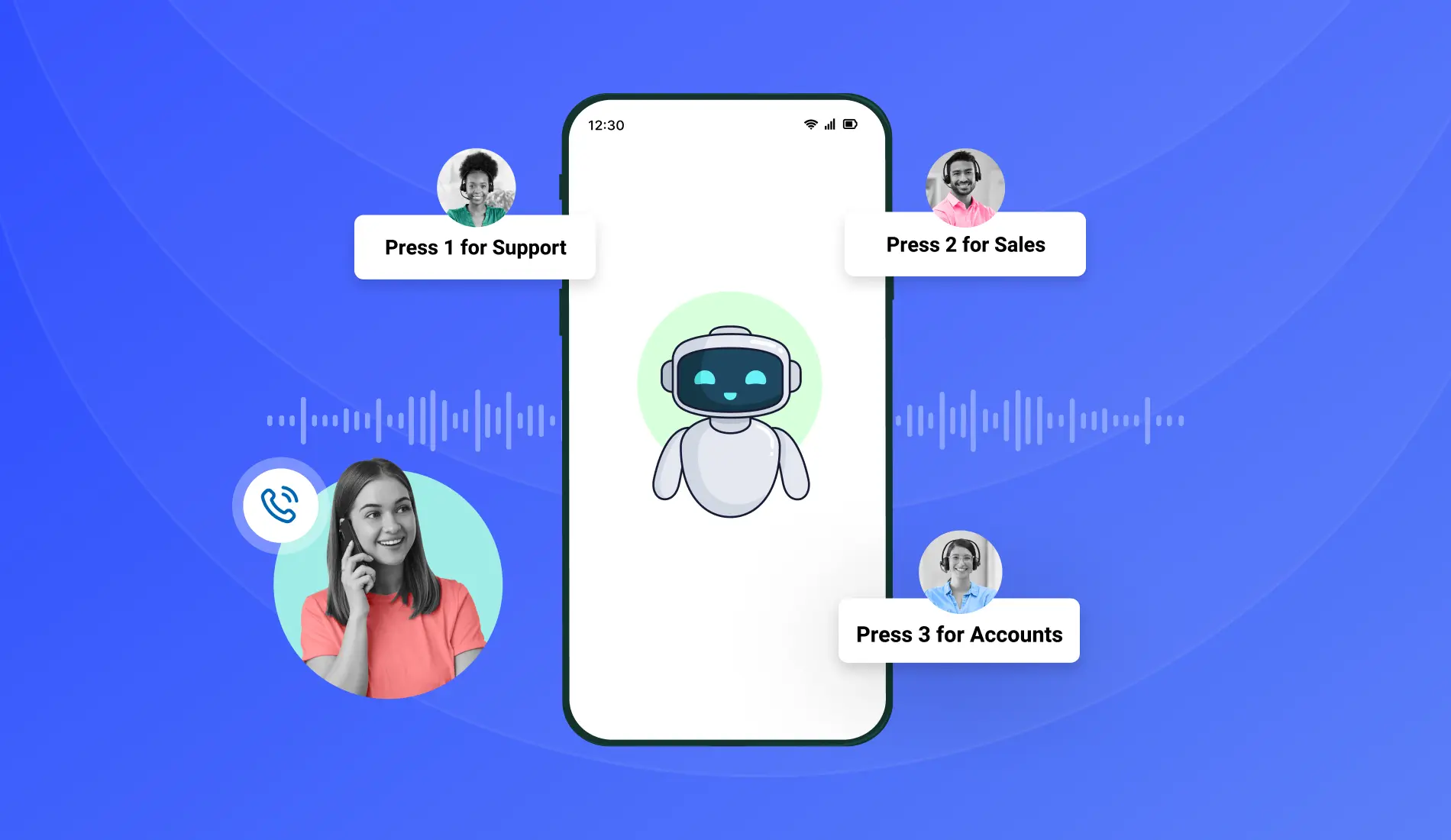
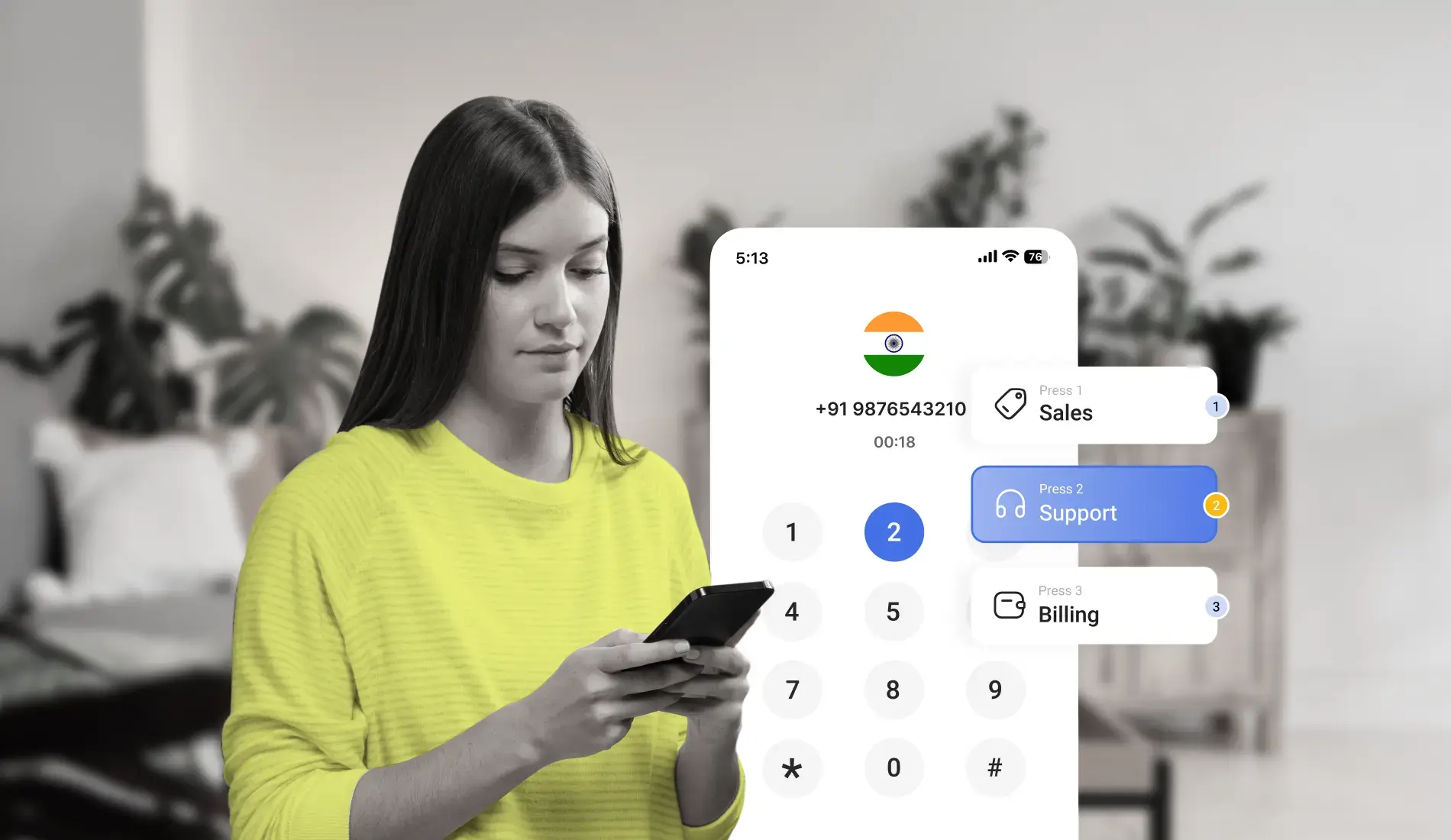
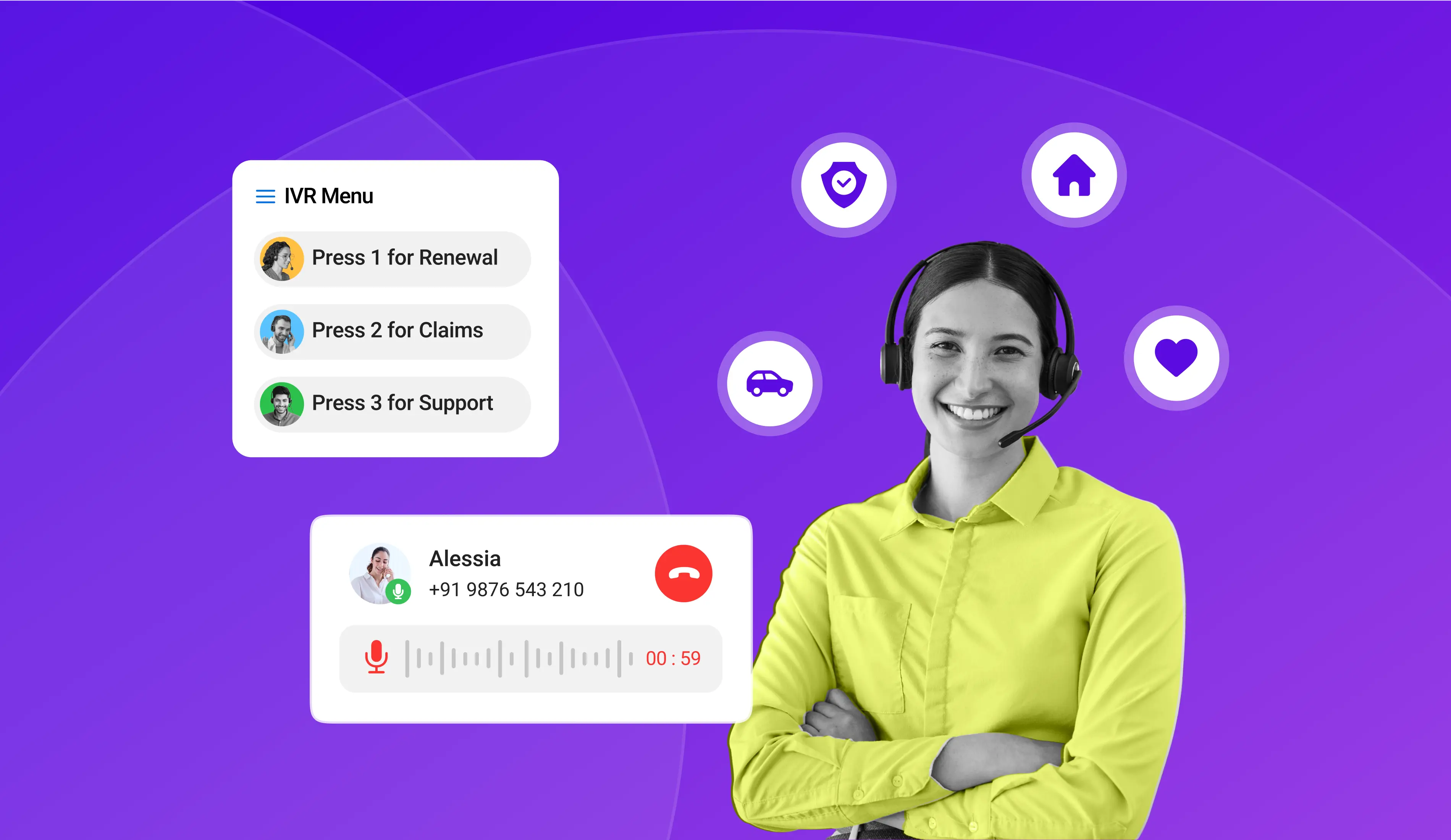
IVR stands for Interactive Voice Response. In simple terms, it’s the system that answers when a customer calls your business number, plays a welcome message, gives options like "Press 1 for Sales, Press 2 for Support" and directs them to the right team based on their choice.
An IVR service provider in India gives this system on the cloud, which means you don’t need any hardware in your office. You can set up the system on your computer and it can be ready to use the same day.
What has changed in 2026 is that these systems are now smarter.They can understand what the customer says and connect them to the right person without pressing any buttons.They can also share details about orders or appointments without needing a human agent.
For businesses, it is very important that the system supports many different languages, such as Tamil, Telugu, and Hindi.
Who Struggles with IVR in India & How to Fix It?
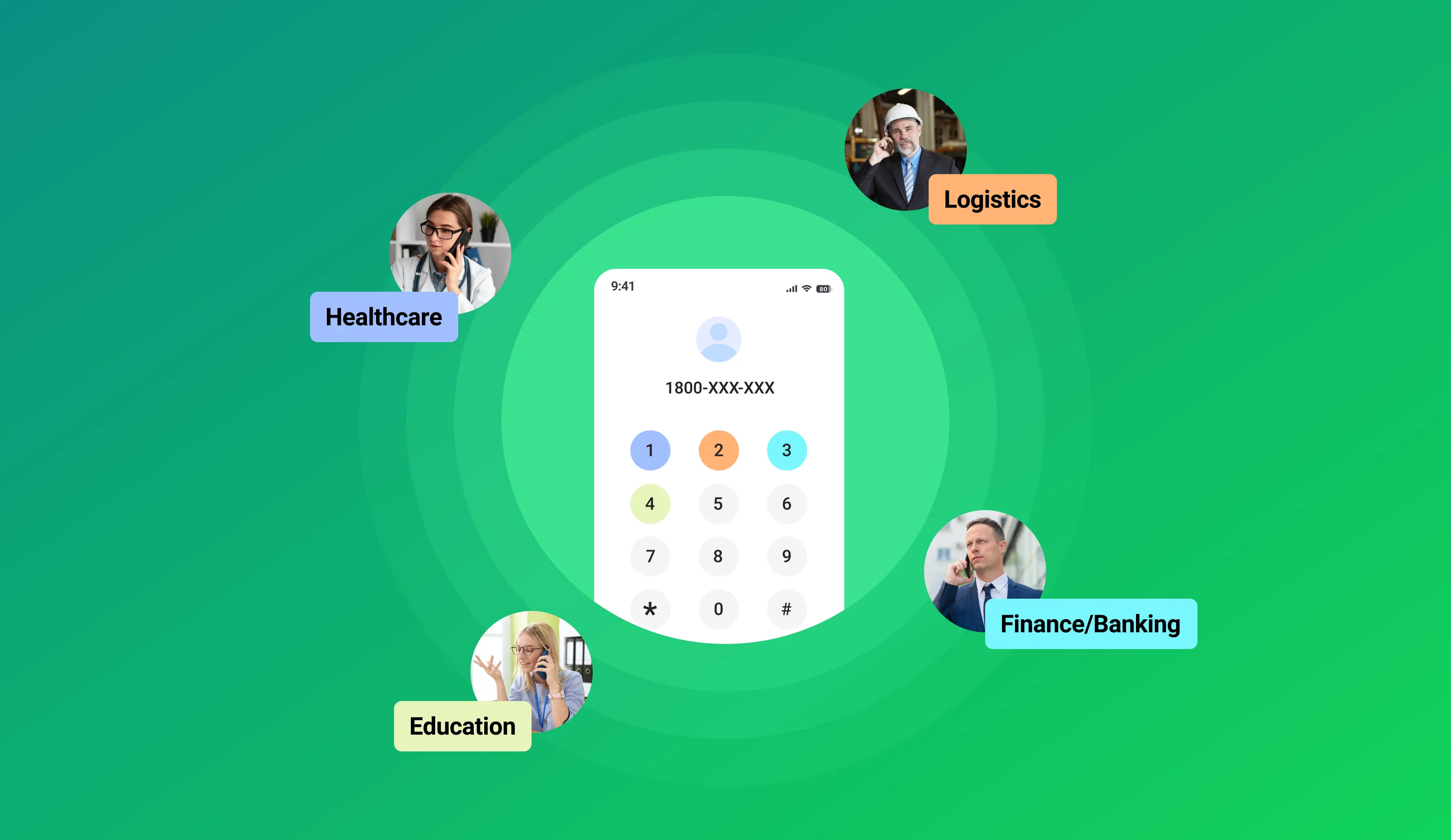
The mistake most people make is thinking IVR is one-size-fits-all. It isn't. A clinic has completely different call problems than an e-commerce company. Here's what actually goes wrong by segment and what fixed it for real businesses.
Small & Medium Businesses (SMBs)
Walk into most Indian SMBs and you'll find the same setup — one number, everyone answers, nobody knows what happened on the last call. A customer calls about an invoice, gets transferred to someone who handles support, explains the whole thing again, and gets transferred again. By the third transfer, they've either hung up or they're furious.
The real problem isn't the people. It's that there's no system directing calls where to go. Managers can't see who handled what, how long calls took, or how many people hung up before anyone picked up.
IppoPay ran into this exact wall. They're a payment infrastructure startup; their customers are small shop owners and freelancers mostly from Tier 2 and Tier 3 cities, people who need quick answers about QR payments and don't have patience for hold music. The support team was drowning in repetitive queries, missing calls, and had no visibility into what was happening. TeleCMI gave them a single toll-free number, an IVR that sorted calls by query type before any agent got involved, and call recording so managers could actually coach the team. Missed calls dropped. Resolution time improved. The support team stopped firefighting.
E-Commerce & Retail Companies
If you run an e-commerce operation in India, you already know what happens in October. Diwali hits, order volumes triple, and your support line turns into a disaster. Customers call about tracking, returns, and wrong deliveries; most of it is the same five questions asked ten thousand times.
The issue is that without any automated deflection, every single one of those calls needs a human. That's expensive, slow, and completely unsustainable during peaks.
Parryware knows this problem well. India's biggest sanitary ware brand, seven manufacturing plants, over a thousand support calls coming in every single day. They couldn't route calls properly, couldn't track which team was handling what, and had no real data on performance. After testing a few providers, they landed on TeleCMI. Multi-level IVR sorted callers before they reached agents. Intelligent routing made sure the right team got the right call. Unlimited call recording meant managers could review conversations and actually improve how the team handled things. They didn't just manage the volume — they built a support operation that could handle it without breaking.
Educational Institutions
Admissions season at any Indian coaching institute or consultancy is genuinely chaotic. The phones ring non-stop, the staff answering are the same people handling everything else, and half the callers hang up before getting through. The ones who do get through sometimes get wrong information because whoever answered wasn't the right person.
CivicCenter Academy prepares students for UPSC and state government exams. They needed something that wouldn't require a big IT setup, wouldn't cost a fortune, and could handle the volume spike without everything falling apart. TeleCMI set them up with separate call flows for different query types, recording for every call, and a system staff could use from any device which mattered because not everyone was sitting at a desk. The academy stopped losing calls during peak periods and finally had data on how each team member was performing.
VIEC, which helps students apply to universities abroad, had a similar story — growing inquiry volume, team struggling to keep up. After switching to TeleCMI, their support team's productivity doubled. Not through hiring, just through better call management.
Government and Utility Providers
Government contact centers deal with scale that most businesses can't imagine — and with constraints that make it harder. Legacy systems, rigid CRM setups, no budget for a complete overhaul.
RTGS — the Real Time Governance Society under the Andhra Pradesh government, which handles citizen grievances and school education queries — had a specific and frustrating problem. Their CRM only had one admin login. Every agent used the same ID, which meant all call data sat in one bucket. A manager trying to check how a specific agent was performing had no way to do it without buying entirely separate CRM licenses. That wasn't going to happen.
TeleCMI built a click-to-call solution that sat on top of the existing CRM. Agents could log in and make calls from within the system they already used, but now each agent's data showed up individually in TeleCMI's dashboard. Call duration, call count, status — all separated, all visible. The government didn't have to replace anything. They just got the visibility they never had.
Healthcare Providers & Clinics
A busy clinic's morning looks like this, a reception phone ringing, patients walking in, appointment reminders to send, doctors asking about their schedules. One person doing all of it. Calls that don't get answered become patients who go somewhere else or, worse, miss care they needed.
The calls themselves are mostly predictable. Appointment bookings. Doctor availability. Timings. Reports ready or not. These are questions an IVR can handle completely on its own, in the patient's language, at any hour of the day. The calls that actually need a staff member — urgent queries, prescription follow-ups — get through immediately.
TeleCMI's multi-language IVR means a Tamil-speaking patient in a Chennai clinic gets the same experience as someone calling in Hindi. And with 99.99% uptime, the system doesn't go down on a Monday morning when call volume is highest.
Advanced IVR Features for Enhanced Customer Experience
Personalized Greetings
When IVR connects to your CRM, it knows who's calling before the call connects. A returning customer gets greeted by name, maybe even with a reference to their last interaction. It's a small thing that lands well — it tells the customer they're not starting from scratch every time they call.
Multi-Language Support
India has 22 official languages. Most of your customers aren't calling in English. The IVR services that actually work for Indian businesses offer Tamil, Telugu, Kannada, Bengali, Marathi, Malayalam, and Hinglish, with voice prompts that sound like a real person recorded them, not a text-to-speech robot from 2009.
Call Routing to the Right Agent
This is where most basic systems fall. Routing isn't just about sending calls somewhere; it's about sending them to the right person. Skill-based routing means a billing query goes to the billing team, not whoever happens to be free. Time-based routing shifts overflow to a different team after hours. Priority routing moves high-value customers up the queue. When routing works properly, transfers drop, repeat explanations stop, and first-call resolution goes up.
Integration with CRM Systems
The real value of IVR isn't in the call itself, it's in what happens to the data after. When your IVR connects natively with Zoho, Salesforce, HubSpot, or Freshdesk, every call gets logged without anyone typing anything. Agents see the customer's full history before they say hello. Post-call notes flow into your pipeline automatically. No manual entry, no gaps.
Real-Time Analytics
You can't fix a call flow you can't see. A proper IVR dashboard shows you call volume by hour, where callers are dropping off in your IVR menu, which agents are handling the most calls, and how long people are waiting before they give up. That's the data that tells you what to change actually.
Why TeleCMI is the Reliable IVR Service Provider in India
Most cloud telephony providers in India were built for enterprises and then packaged down for SMBs. TeleCMI went the other direction, built for the realities of growing Indian businesses first. That shows up in the pricing, the language support, the WhatsApp integration, and the fact that their case studies read like a cross-section of actual Indian business problems, not Fortune 500 deployments.
Brands like Parryware, IppoPay, CivicCenter Academy, RTGS, Hyundai Mobis, Porter, and Foundit all use it in production. Here's what actually differentiates it:
The IVR isn't just a menu tree. TeleCMI's AI voice agents understand what a caller is saying not just which number they pressed, and can close out routine queries completely without involving a human. For support teams drowning in repetitive calls, that's a real workload shift.
The uptime is 99.99%, backed by seven data centers running 24/7. That's not a number for the sales deck, it's the kind of infrastructure that keeps a 1,000-call-per-day operation like Parryware running without a hiccup.
The CRM integrations number 170+, and they're native connections — Zoho, Salesforce, HubSpot, Freshdesk, Zendesk, Shopify, Razorpay, Intercom, Microsoft Dynamics, and more. Not webhook workarounds that break when someone updates a field.
WhatsApp is baked in, not bolted on. Indian customers use WhatsApp for everything, including support. TeleCMI handles voice calls and WhatsApp conversations from the same dashboard so agents always have full context, whether the last touchpoint was a call or a message.
Language support covers Tamil, Hindi, Telugu, Kannada, Bengali, Malayalam, Marathi, and Hinglish. For businesses with customers spread across multiple Indian states, this isn't optional.
It's fully TRAI and ULVNO compliant, important if you're in BFSI, healthcare, or any regulated space where a non-compliant phone provider creates real legal exposure.
Analytics go deep to 500+ metrics, live dashboards, IVR flow reporting, agent-level tracking. Enough to actually manage a contact centre, not just know it's running.
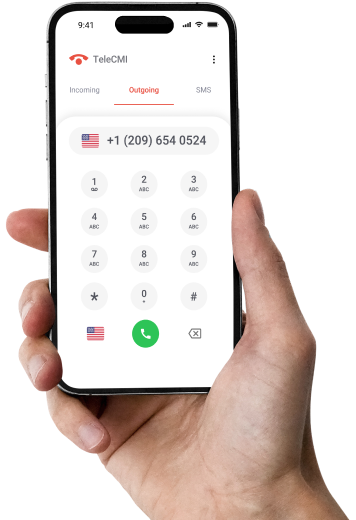
Pricing starts at ₹587/user/month on annual plans
Five agents costs under ₹3,000/month. There's a 14-day free trial with no credit card. You can explore the full platform
How to Set Up IVR in TeleCMI – Step-by-Step Guide
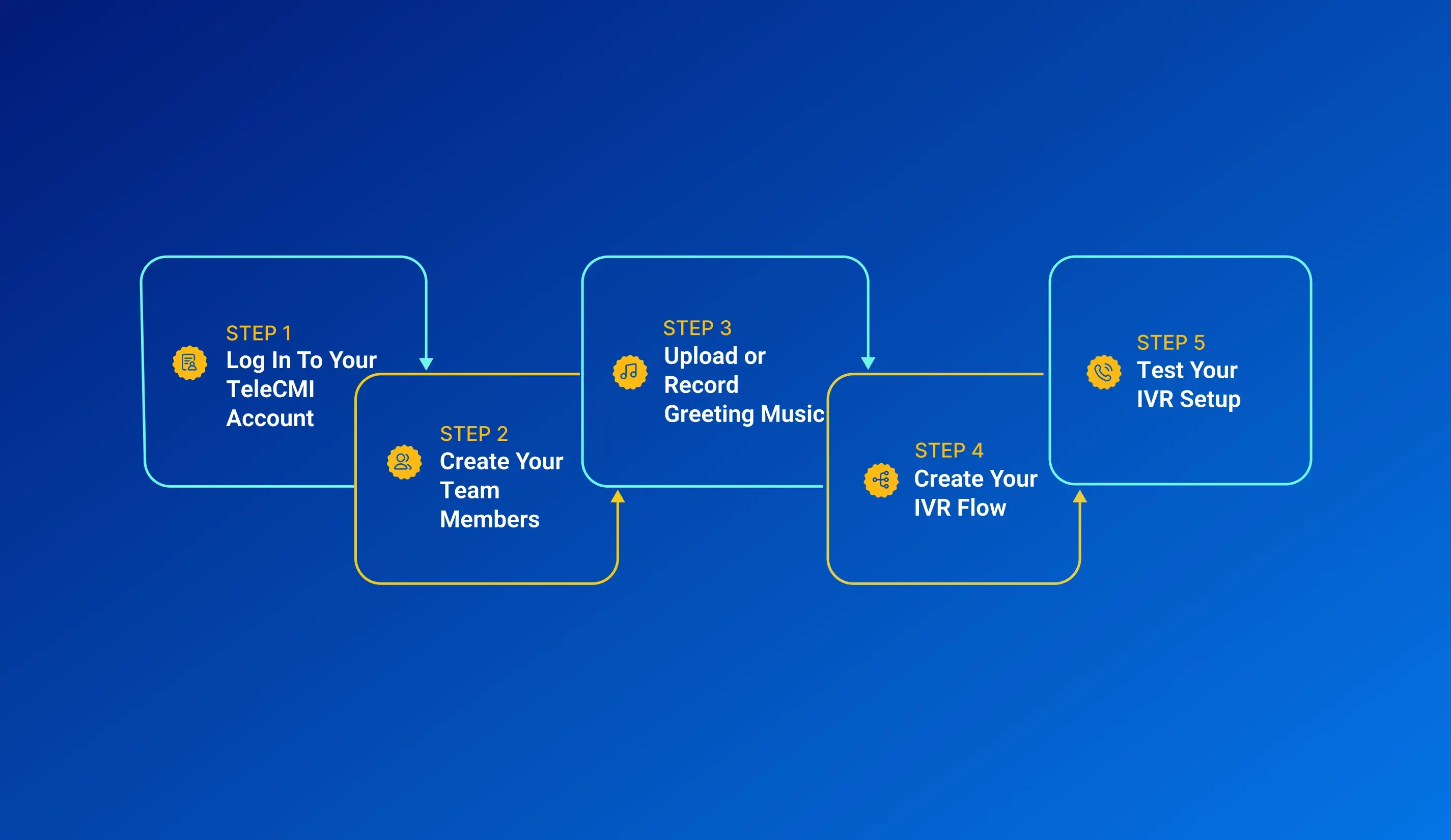
Step 1: Log in to Your TeleCMI Account
Go to telecmi.com and start your free trial — no credit card, no commitment. Once you're in, the dashboard is where everything lives: your numbers, your agents, your call flows, and your reports.
Step 2: Create Your Team Members
Head to the Users section and add your team. Name, role, department — Sales, Support, Billing, whatever structure makes sense for your business. Assign each person to a queue. This is the foundation that makes smart call routing possible.
Step 3: Upload or Record Greeting Music
In the Audio section, either upload a pre-recorded file (MP3 or WAV works) or use TeleCMI's text-to-speech to generate prompts in the language you need. Keep your main greeting short under 15 seconds. Callers who hear a 45-second greeting before they can press anything tend to hang up.
Step 4: Create Your IVR Flow
The visual IVR builder is where you map out the actual call journey. Drag, drop, connect the incoming call to greeting, greeting to menu, menu to department, department to agent queue or automated response. Add time-based rules so after-hours calls go somewhere useful instead of ringing out. Connect CRM triggers wherever you need data captured. No code is required at any step.
Step 5: Test Your IVR Setup
Before going live, run test calls through every path in your flow. Don't just test the happy path, check what happens when someone presses a wrong key, doesn't press anything, or calls at 2am. Make a real call from your own phone to check audio quality. When it all works, activate it. It goes live immediately.
Conclusion
Getting IVR right in 2026 isn't complicated. It's not expensive. And it doesn't take weeks to set up. What it does take is picking a provider that was actually built for the market you're operating in, not one that treats India as a secondary use case.
TeleCMI has the case studies, the language support, the compliance track record, and the pricing that makes sense for a team of 5 to 50 people trying to build a real customer support operation. The free trial is 14 days, no credit card, and you can have your first call flow live before lunch.
Power Every Customer Call with Smart IVR

AI Routing
CRM Sync
Multi-Language
Better Support
Frequently asked questions (FAQ)
Saravana Kumar

I’m passionate about exploring and sharing insights on modern cloud communication technologies. At TeleCMI, I focus on helping readers understand the evolving world of cloud telephony and IVR solutions in a simple yet in-depth way. My goal is to deliver genuine value by turning complex telecom concepts into clear, actionable knowledge that builds trust and drives innovation.