The 7 Best VoIP Platforms to Consider in 2026: A Practical Buyer’s Guide

12 mins read

Posted on Jan 19, 2026
.webp)

Vignesh N
SEO


Vignesh N
SEO




Most businesses do not notice when their communication tools start holding them back. Calls drop more often. Teams switch between too many apps. Customer conversations lose context as they move from one channel to another. Over time, these small issues turn into missed opportunities and slower decisions.
In 2026, VoIP platforms play a much larger role than simply enabling calls. They support remote teams, handle customer conversations across channels, and provide insight into how communication actually happens inside the business. When set up well, they remove friction. When chosen poorly, they add it.
That is why selecting a VoIP platform today is less about ticking feature boxes and more about fit. Fit for team size, workflows, and how the business plans to grow.
This article breaks down the VoIP platforms worth considering in 2026 and offers a clear way to evaluate which one makes sense for your organization.

Key Takeaway
 Modern VoIP platforms act as complete communication systems rather than simple calling solutions.
- Organizations require solutions that can integrate voice, messaging, and video communications within a single workflow.
- Reliable call quality still matters, especially as more teams work remotely and across time zones.
- AI features make it easier to handle higher call volumes, capture insights, and reduce manual effort.
- Integrations allow teams to remain on track by keeping all the information about their customers accessible to them during conversations.
- A strong VoIP platform should scale easily as teams grow, go remote, or expand into new regions.
Why Businesses Need a VoIP Platform in 2026
Before exploring the top platforms, here are the must-have criteria for selecting a VoIP solution:
- AI Capabilities
Assists in intelligent routing and transcription, as well as predictive analytics functionality that enables teams to respond faster to calls
- Omni-channel Communication
Enables voice, SMS, WhatsApp, email, and video to come together as one solution, such that a conversation is linked.
- Scalability
Can grow well even on remote, hybrid, or distributed work setups without any need for new hardware installation.
- High Reliability
Offers HD voice quality with a guarantee of uptime to facilitate uninterrupted business communication.
- Cybersecurity & Compliance
It secures sensitive information with TLS and SRTP encryption and is compliant with regulations like GDPR and HIPAA.
- Easy Integrations
Easy to integrate with the CRM system, sales solutions, and help desk software for better efficiency.
- Dynamic Pricing
Provides clear and varying rates depending on usage and growth in the company, with no surprise bills.
How to Choose the Right VoIP Platform for Your Business
- Choose Based on Team Size: The size of the team directly impacts the number of calls, call routing, management, and so on. The team size will require assistance like basic calling, voicemail, IVR, role-based access, call monitoring, performance reporting, and so on. An updated email list also helps ensure smooth communication and efficient coordination across the team.
- Choose Based on Use Case: Different teams use VoIP in different ways. Sales teams rely on call tracking, CRM syncing, and analytics, which often provide the essential data used to power a broader competitive intelligence platform. Support teams need queues, IVR, and omnichannel handling. Internal communication emphasizes reliability, clarity, and simplicity.
- Budget Considerations: Low and affordable prices are not always the best prices. Factors such as service quality, customer support, service plan options, and add-ons/customizations. Be sure to ask about the price per installation, user, additional fees, and plan upgrades.
- Required Integrations: Most of the VoIP software easily integrates with third-party software to eliminate app switching. Make sure that your agents have direct access to such key pieces of information as CRM, Help Desk, and KB. API and SDK availability would be ideal if you wanted to create your own custom workflow or internal tool.
- Level of Automation Needed: Automation can significantly reduce manual work. Features such as intelligent call routing, automatic transcriptions, call summaries, and analytics help teams respond faster and maintain consistent quality.
- Remote Team Support: A modern VoIP system must support remote or hybrid teams through cloud connectivity, mobile tools, web-based calling, and international numbers, making it ideal as a VoIP solution for remote and hybrid teams.
The 7 Best VoIP Platforms to Consider in 2026
A curated selection of VoIP platforms that deliver reliability, scalability, and modern communication features to support growing, remote, and customer-focused teams.
#1 TeleCMI
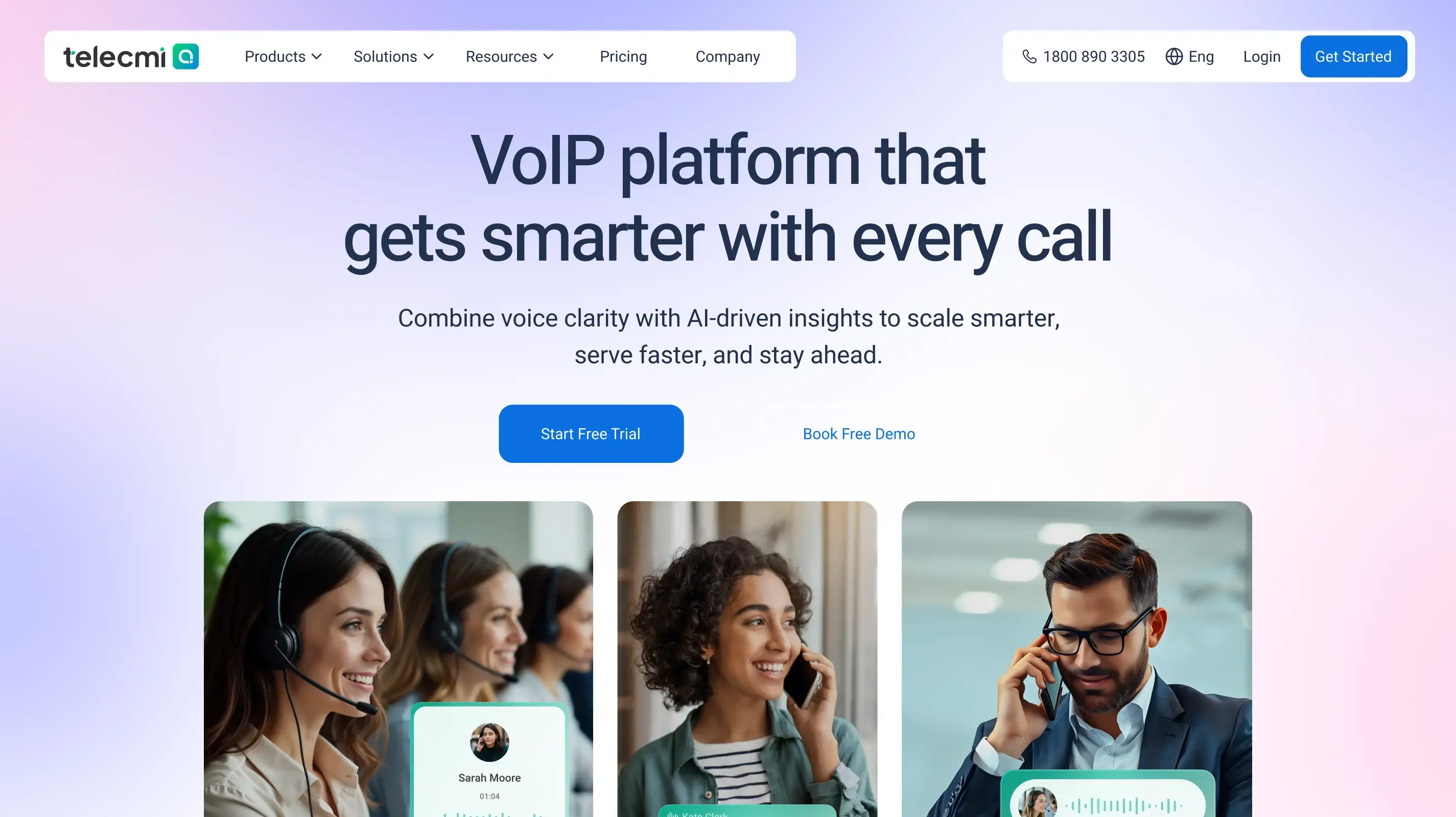
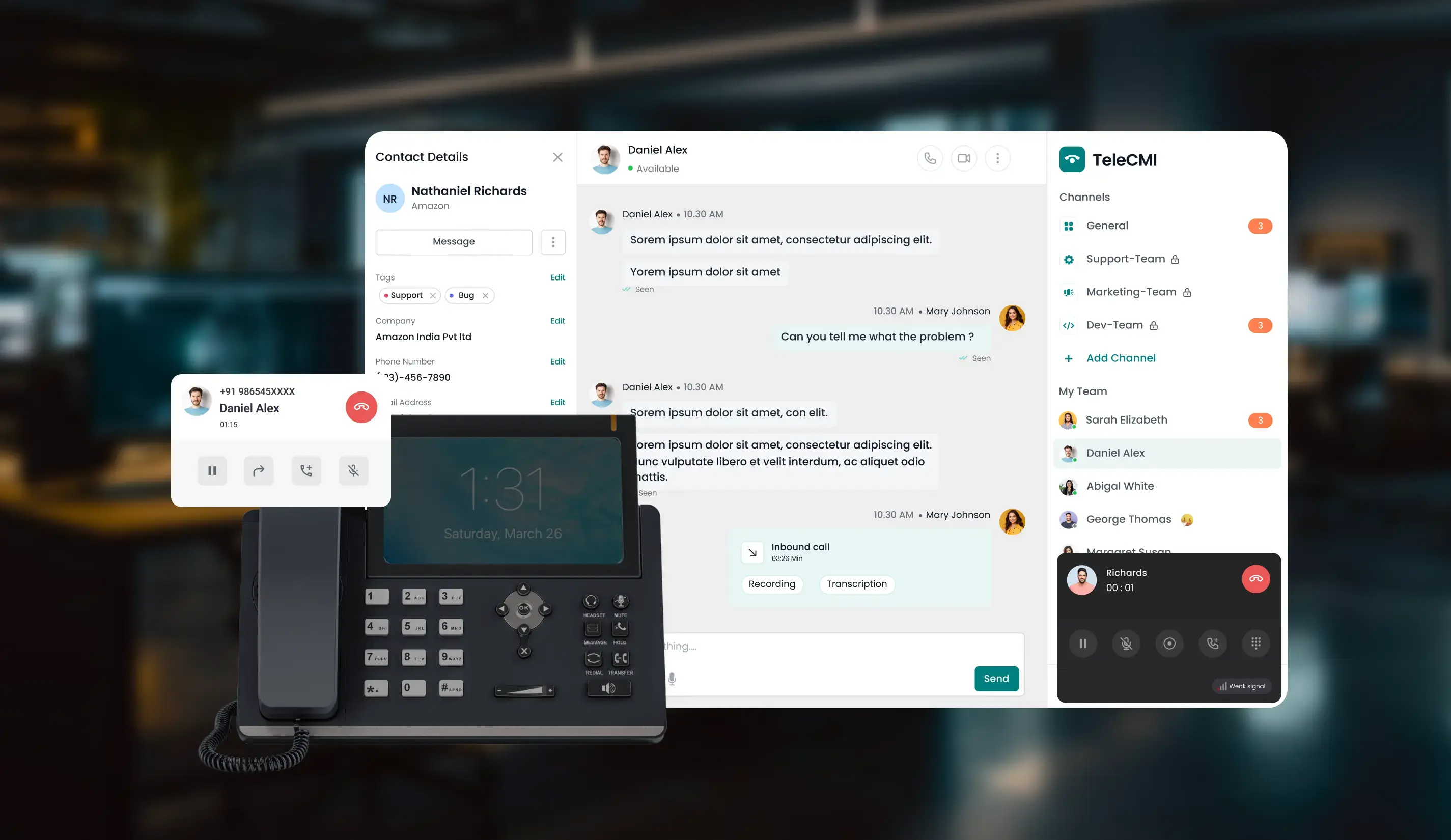
TeleCMI is designed for teams that require control, flexibility, and visibility without the hassle that comes with complicated systems. It focuses on making customer conversations easier to manage while giving teams the insight they need to improve outcomes over time. Rather than overwhelming users with unnecessary layers, TeleCMI keeps communication structured and scalable.
Key Features
- Smart call routing based on the availability of agents and call logic
- Call analytics for analysis of call volume, performance, and results in real time
- Call recording for quality monitoring and compliance
- Text messages and WhatsApp messages to facilitate multi-channel outreach
- Virtual numbers for multi-location and regional clients
- CRM integrations for maintaining the context about customers during calls
Pros
- Adapts well to fast-growing teams and changing call volumes
- Strong visibility into agent activity and call performance
- Practical automation without operational complexity
- Works well for regional and distributed teams
Best For
Growing businesses, sales-driven teams, support centers, and organizations expanding across regions.
Price
Starts at $14.99 per user/month, with customized pricing based on scale and needs.
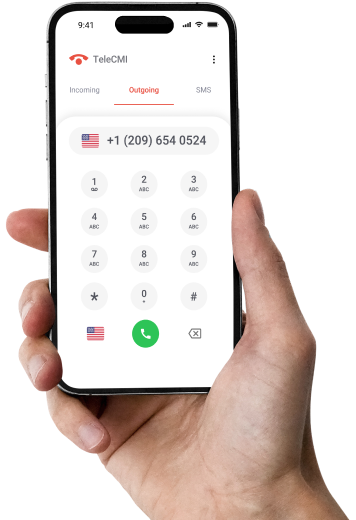
Explore a VoIP platform designed for modern businesses — try TeleCMI at no cost.
Start 14 Days Free Trial#2 RingCentral
RingCentral is the trusted choice for any organization looking for reliable and scalable communication. This platform excels in the ability to connect teams across different locations, departments, and time zones by keeping collaboration seamless even in the most complex environments. This stability, flexibility, and set of enterprise-grade features make the platform the go-to place for companies that value predictability, efficiency, and seamless teamwork at scale.
Key Features
- Unified communication for voice, message, and video services
- Centralized administration and user management
- Advanced analytics and reporting functionality
- Availability of numbers worldwide and international calls
- Wide integration ecosystem with enterprise tools
Pros
- Scaleability for large-scale performance
- Standardized for optimal communication between departments
- Robust security and compliance features
- Uptime evidence and platform maturity
Best For
Mid to large enterprises with global teams and structured communication policies.
Price
Approximately $25 per user/month
#3 Zoom Phone
Zoom Phone is a great option for businesses that are already using Zoom as their main collaboration solution. It does not introduce additional friction in meetings and calls that occur in a different environment, which makes it an attractive solution for consulting businesses, learning organizations, teams within the corporate setting, and telecommuters who prefer ease of use to telephony flexibility.
Key Features
- Cloud-based calling integrated with Zoom meetings
- Voicemail, call transfer, and call forwarding
- Mobile and desktop applications
- Centralized management through the Zoom admin console
Pros
- Rapid adoption for existing Zoom users
- Requires very little training.
- Integrated experience for meetings and calls
- Easy setup and onboarding
Best For
Teams already using Zoom that want a simple, unified calling experience.
Price
Around $10–$15 per user/month
#4 Dialpad
Dialpad puts conversation intelligence at the center of its platform. It's for teams who not only want to know that calls are happening, but also what is happening in the calls. This will help the teams learn about the activities without having to depend on automation.
Key Features
- Real-time call transcription
- AI-generated call summaries and insights
- Smart call routing and call handling
- CRM integrations for sales and support teams
- Mobile and browser-based access
Pros
- Strong conversation intelligence for coaching and QA
- Reduces manual review of calls
- Helpful for performance-driven teams
- Clear insight into what happens during calls
Best For
Sales teams, support teams, and performance-focused organizations.
Price
Typically $15–$25 per user/month.
#5 Nextiva
Nextiva is suited for businesses that place customer experience at the center of operations. Nextiva will benefit organizations that have the customer experience core to their operations. It is designed to ensure continuous operations when handling clients through calls, messages, and within an organization. A company will benefit from using Nextiva if ensuring consistency and responsiveness within an organization is of high value and if its operations do not demand much customization.
Key Features
- Unified communication across voice and messaging
- Call analytics and reporting tools
- CRM and business software integrations
- Mobile and desktop access
Pros
- The user experience is consistent and reliable
- Good balance between functionality and usability
- Dependable support and uptime
- Well-suited for customer-facing teams
Best For
Customer-focused businesses where service quality and consistency are priorities.
Price
Generally starts between $18 and $25 per user per month.
#6 8×8

8x8 is commonly known for its reliability, compliance, and globalization. It is recommended for organizations that prioritize reliability rather than innovation, where the risk associated with unavailable communication or non-compliance might be problematic for the operation of the business. It can be stated that 8x8 helps an organization manage its communication with its reliable functionality in the areas of availability, governance, and global support.
Key Features
- Cloud telephoning and contact center functionality
- Global communication coverage
- Built-in compliance and security controls
- Analytics and reporting tools
- Regulated environments support
Pros
- Strong focus on reliability and compliance
- Suitable for global and multi-region operations
- Trusted in regulated industries
- Stable performance under high usage
Best For
Regulated industries and multinational enterprises.
Price
Starts from around $15–$30 per user/month
#7 Vonage
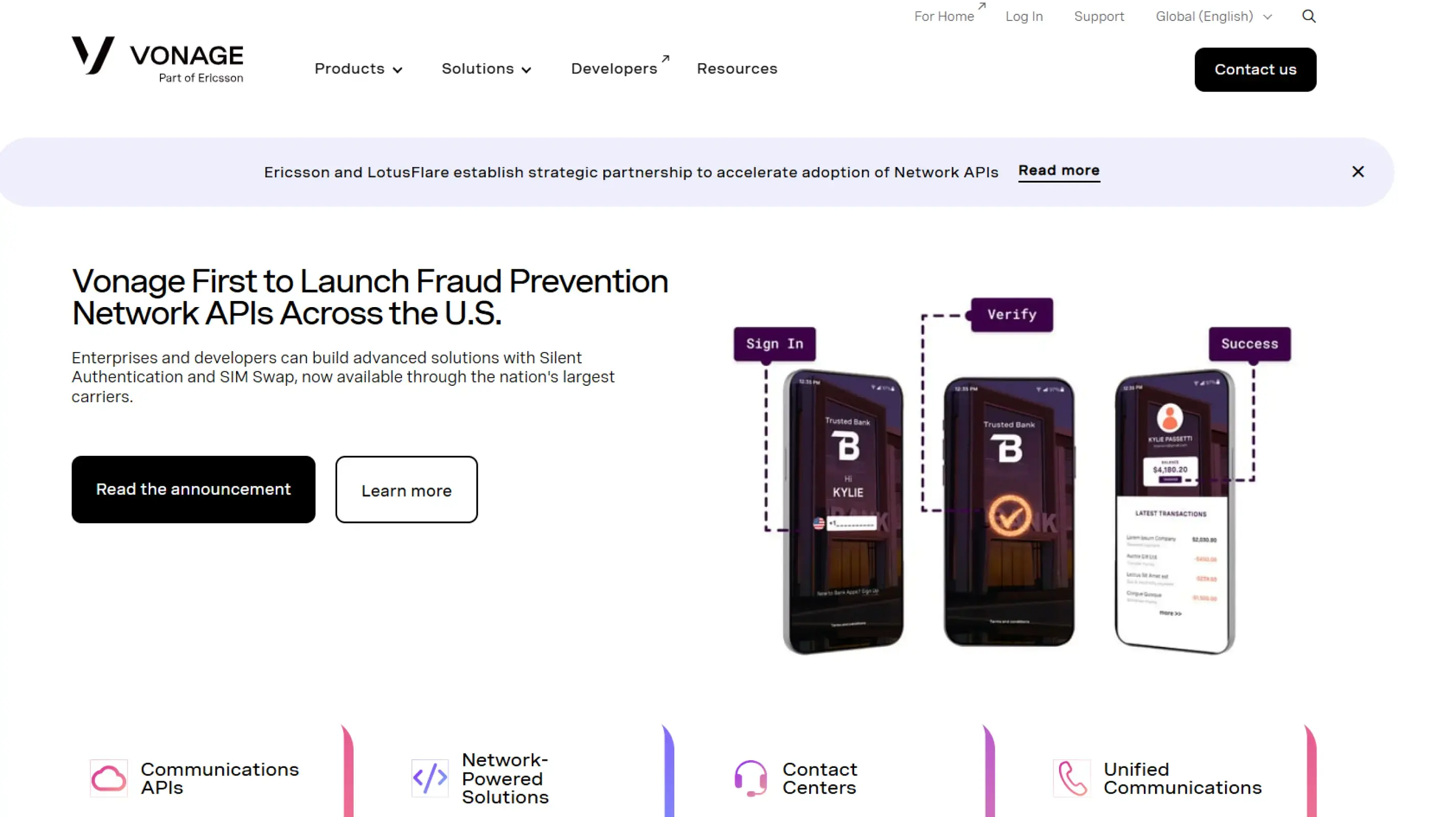
Vonage is meant for organizations that need to incorporate communications into their products or workflow, as opposed to relying on pre-configured applications. It provides extensible APIs to enable organizations to bring in voice or messaging communications.
Key Features
- Communication services like voice, SMS, and video calls
- APIs for custom communication flows
- CRM and business software integration
- Virtual Numbers And Worldwide Reach
Pros
- High flexibility for custom use cases
- Suitable for embedding communication into products
- Strong developer support and ecosystem
- Works well for tailored workflows
Best For
Product-led companies and teams with in-house developers.
Price
Usage-based and service-dependent pricing.
VoIP Platforms Comparison Table (2026)
Conclusion
Communication sits at the center of nearly every business process, yet it is often taken for granted until problems appear. As teams become more distributed and customer interactions span multiple channels, the role of a VoIP platform becomes harder to ignore.
In 2026, the right VoIP solution is one that brings structure without rigidity and insight without overload. It should help teams stay aligned, preserve context across conversations, and scale naturally as the business evolves. When that balance is right, communication feels easier and more dependable.
The platforms outlined in this list address different priorities, from enterprise stability to flexibility and automation. Choosing well comes down to understanding how your teams work, where communication breaks down today, and what will matter most as you grow.
If you are planning to modernize your communication stack or replace a system that no longer keeps up, use this list as a starting point. A good VoIP platform does not try to stand out. It simply makes workflow better.
Take your communication from basic to extraordinary — speak with our VoIP specialists now!

Expert VoIP Guidance
Trusted by Businesses
Real-Time Insights
Global Reach Options
Frequently asked questions (FAQ)
Vignesh N

With deep expertise in cloud telecommunications, I help readers explore the latest trends in VoIP and modern business communication. At TeleCMI, I focus on educating businesses with clear, practical insights, making complex telecom concepts easy to understand. I’m passionate about helping organizations improve efficiency, enhance customer engagement, and adopt smarter communication strategies.



.webp)