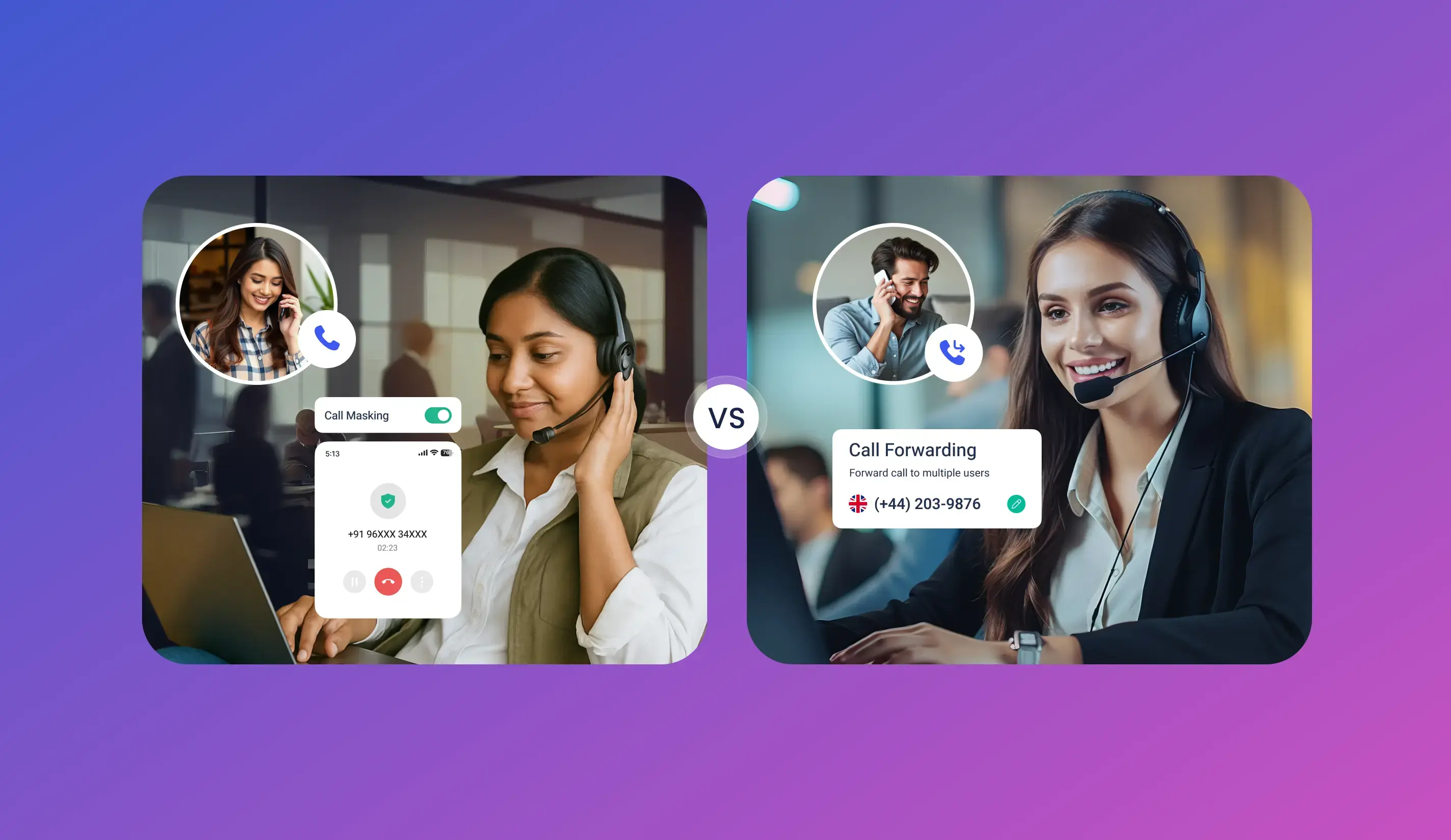
Call Masking vs Call Forwarding: What Is the Difference and Which Does Your Business Need?

14 mins read

Posted on Aug 10, 2026

Vignesh N
SEO


Vignesh N
SEO






It is easy to mix up call masking and call forwarding. Both tools manage how calls move across cloud networks and let your team handle customer calls from anywhere, not just at a physical desk. But behind the scenes, they solve entirely different problems.
The difference between call masking and call forwarding is just the privacy and reachability. Choosing the wrong option can expose customer phone numbers or prevent calls from reaching the right person.
In this guide, you'll learn how call masking and call forwarding work, when to use each, how they compare, and how a cloud communication platform can combine them to create a secure and flexible business communication system.

Key Takeaways
 Call forwarding helps make sure calls reach the right person. Call masking keeps the customer’s and agent’s phone numbers private.
- Call forwarding sends the call to another number, but the phone numbers remain visible. Call masking uses a virtual number so the real phone numbers stay hidden.
- Forwarding works right out of the box on most carrier systems. Masking relies on a cloud telephony engine to assign and manage virtual proxy lines.
- Many customer-facing teams run both together—using forwarding to reach remote staff on mobile, and masking to ensure personal numbers never leak.
What Is Call Masking?
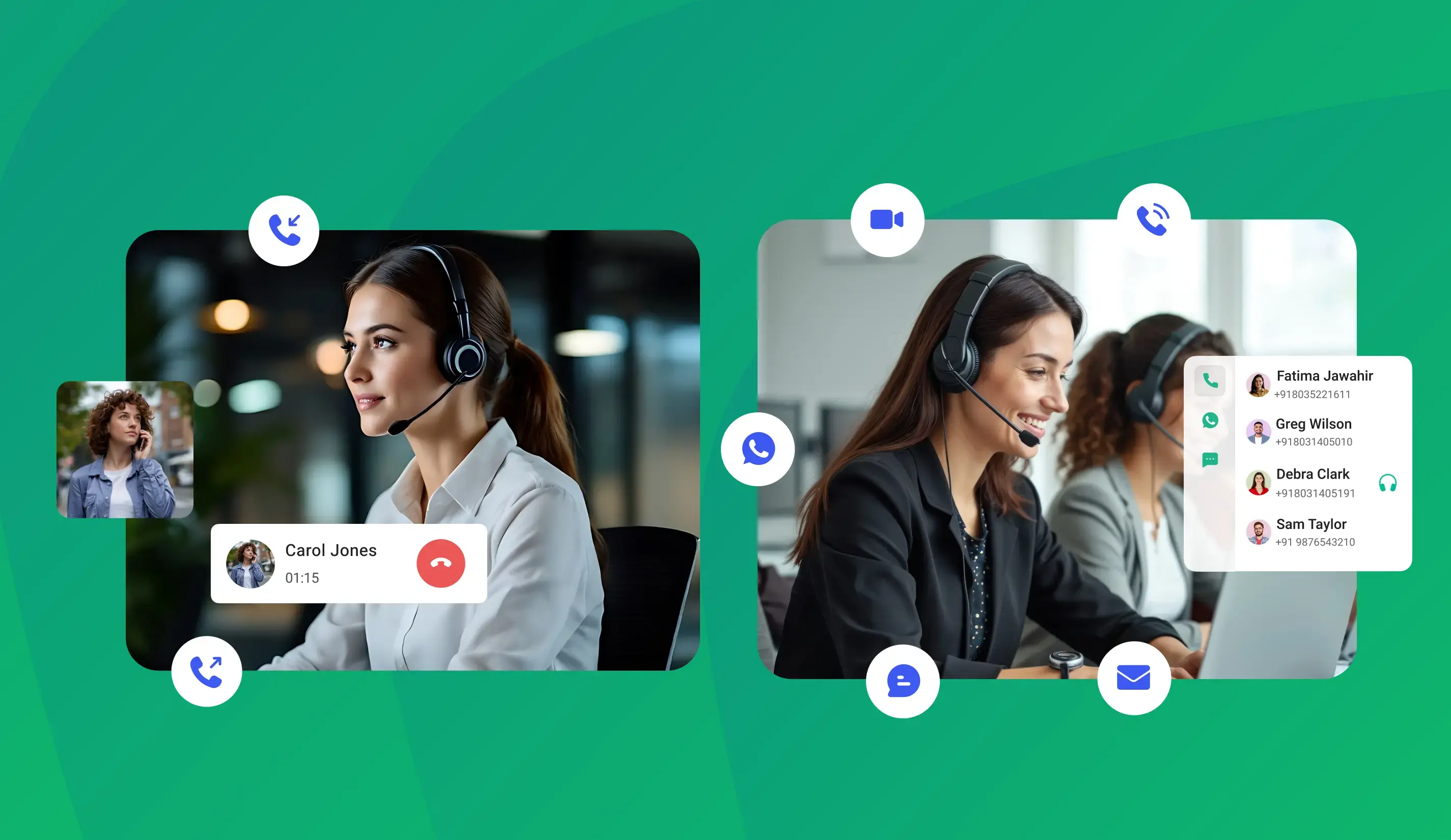
Call masking hides both callers' real phone numbers during a conversation. Instead of dialing each other directly, both people connect through a virtual number, sometimes called a proxy number.
How It Works
Call masking puts a virtual relay layer between the caller and recipient:
1. Person A starts a call through an app or by dialing a system-provided virtual number.
2. The cloud platform picks up the call, looks up Person B's actual destination, and places an outbound call to them.
3. The platform displays a proxy number on Person B's screen instead of Person A's real number.
4. Both people talk over a secure, monitored bridge. Neither side ever sees the other's personal line.
Types of Call Masking
- Static Masking: A permanent virtual business number routes to an employee's personal device, keeping all work calls under the company name.
- Dynamic Masking: Temporary numbers are automatically assigned for a specific job—like a food delivery or service ride—and are recycled as soon as the task finishes.
- Two-Way Masking: Both the caller and the recipient see proxy numbers, providing full privacy protection for both sides.
- One-Way Masking: Outbound calls display the central company number, while internal staff can see inbound customer details.
What Call Masking Needs to Work Well
Call masking isn't as simple as regular call forwarding. It runs on a cloud communications platform with built-in proxy infrastructure.
There's also a numbers side to it. Platforms handling high call volumes — think marketplaces or delivery services — need a healthy pool of virtual numbers ready to go, especially in busy regions. That way, every caller gets connected smoothly, even during peak times.
What Is Call Forwarding?
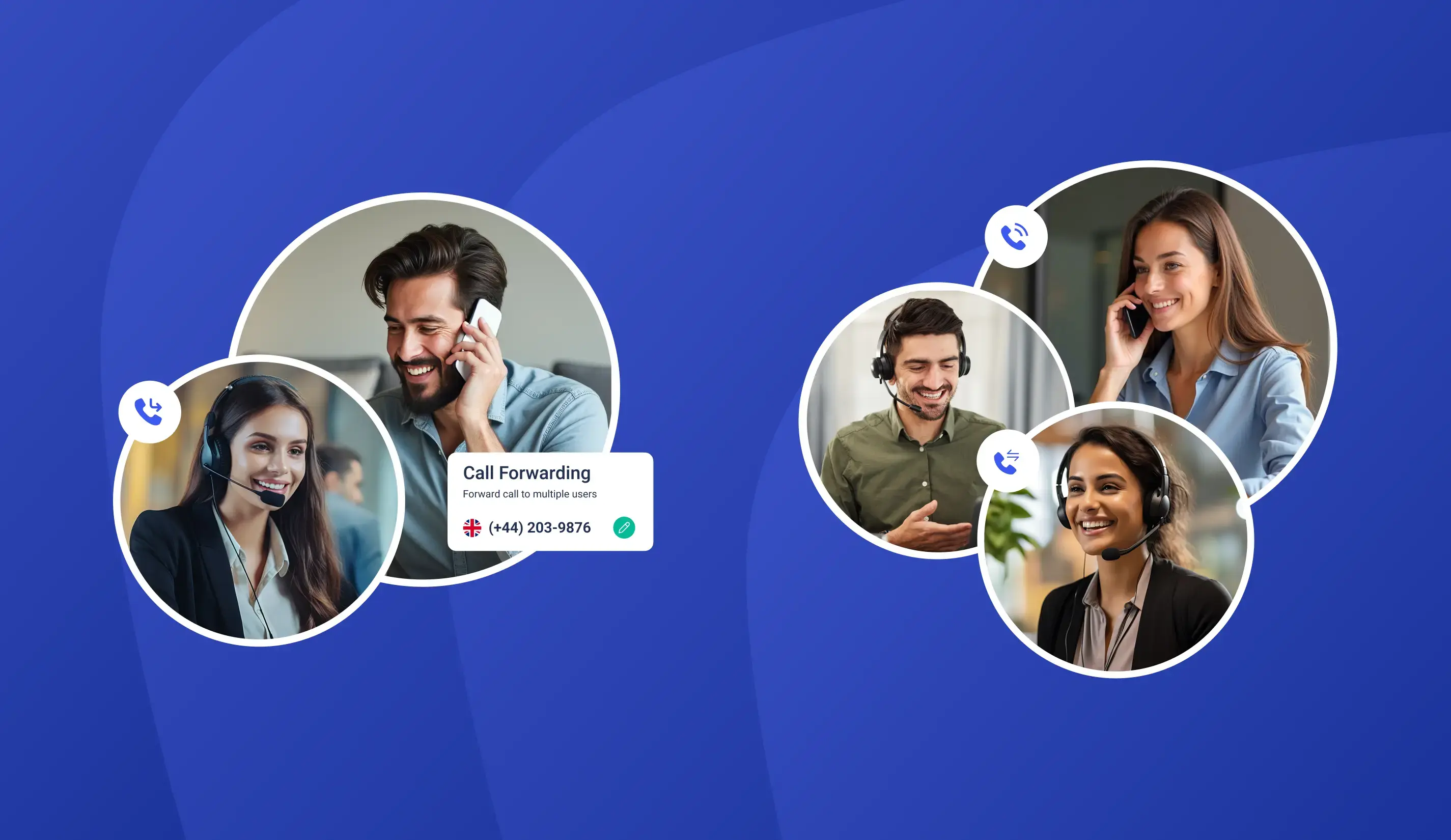
Call forwarding is a standard routing feature that automatically sends an incoming call from its original business number to a different phone or extension. It keeps your business reachable even when team members step away from their desks.
How It Works
A customer calls your business number. That call doesn't just ring one phone; it goes to another number you've set up ahead of time. Maybe that's a sales line. Maybe it's support.
Whoever answers first gets the call. The customer never notices the switch. To them, it just feels like a normal call.
Types of Call Forwarding
- Unconditional Forwarding: Every incoming call is forwarded to another number without ringing the main business phone.
- Conditional Forwarding: Calls are forwarded only under a specific condition, such as when the line is busy, no one answers after a few rings, or the primary number is unavailable.
- Time-Based Forwarding: Switches call paths based on business hours, sending late-night calls to an after-hours team or answering service.
- IVR & Skill-Based Forwarding: Uses phone menu choices to route callers to specific departments or local regional teams based on what they need.
- Smart schedule syncing: Calls route automatically to whoever's free or an agent at their desk, a mobile team member, or a backup crew, based on live calendar availability.
- Set it and forget it: Forwarding rules update automatically for holidays, meetings, and time off, so every call reaches someone ready to help.
Limitations of Call Forwarding
Forwarding keeps your team reachable, but it comes with a few trade-offs:
- No Native Privacy: If an agent takes a forwarded call on a personal phone and needs to dial the customer back, the agent's private cell number appears on the customer's screen.
- Built for inbound: Forwarding handles incoming calls. Outgoing calls from personal devices are a great fit for TeleCMI's centralized VoIP setup, which keeps caller ID consistent across the board.
- One system, one clean record: Routing everything through centralized VoIP call forwarding — rather than a mix of personal mobile lines — makes keeping call logs and quality tracking clean effortless.
Combine Smart Call Forwarding and Call Masking for Secure, Flexible Business Communication.
Start 14 Days Free TrialCall Masking vs Call Forwarding
Head-to-Head Breakdown
When weighing call masking vs call forwarding for business use, breaking down how each feature handles specific real-world tasks shows where each tool shines.
What Each One Does Best
Forwarding and masking solve two completely different things. One's about being reachable. The other's about staying private.
Take call forwarding first. Someone steps away from their desk for a meeting, lunch, wherever, and the call doesn't just sit there ringing. It moves. Straight to a mobile phone, or over to whoever's covering. Customer still gets picked up.
Masking works differently. Say a delivery driver needs to call a customer about a late order. Nobody wants that driver's personal number floating around after the fact. Masking handles that — the call connects, the conversation happens, and neither side ever sees the other's real number.
Two different jobs. Forwarding keeps people reachable. Masking keeps people private. Most cloud phone systems ultimately need both.
What the Caller and Recipient See
With call forwarding, the number that displays follows standard phone rules. An incoming customer call lands on an agent's cell phone, displaying the customer's real caller ID. But if the agent dials back directly, the customer sees the agent's private mobile line.
Masking closes that gap. Both people dial into a system line instead of each other. The caller sees a proxy number. The recipient sees a proxy number. Nobody's real digits show up on either end.
That's the real difference. Forwarding protects the call. Masking protects the number.
Where the Call Physically Goes
Call forwarding changes where a call lands. It takes a call meant for Line A and hands it off to Line B. Call masking leaves the destination alone—it simply swaps the display headers while running the audio stream through a secure proxy channel.
Technical Complexity and Data Storage
Call forwarding is straightforward and built into most traditional and digital phone networks. It does not need custom code or complex integrations.
Call masking uses cloud telephony platforms (like TeleCMI) to manage virtual number pools and route calls programmatically. Because call logs show proxy numbers rather than personal lines, personal phone data is excluded from local device histories.
When to Use Call Forwarding
Call forwarding is a dependable routing for everyday business calls. Common ways companies rely on it include:
- After-Hours Routing: Sending main office calls to an on-call team member or answering service after business hours close.
- Overflow Support: Every line's tied up, so forwarding kicks in, routing extra calls to a backup team or a partner queue instead of leaving people on hold.
- Hybrid Work: Routing office desk extensions to employees' mobile apps so remote teams stay connected anywhere.
- Multi-Branch Routing: Sending callers to the nearest open regional branch based on local operating hours and time zones.
PTO Coverage: Rerouting an absent worker's incoming calls to a teammate during vacation or sick leave.
Impact on Sales: Industry sales stats from HubSpot show that over 60% of buyers call a business during their buying search. Failing to connect on that first call leads to a 30%+ drop in sales conversions. Setting up reliable call forwarding helps catch every opportunity.
With TeleCMI's call forwarding and routing features, you can set up smart IVR menus, schedule-based rules, and multi-tier routing to keep every incoming lead connected to an open rep.
When to Use Call Masking
Privacy usually drives this decision. When a business needs to protect customer numbers, brand trust, or platform data, masking becomes the go-to fix.
- Delivery & On-Demand Marketplaces: A rider needs to call a customer about an order — running late, wrong address, whatever it is. Masking lets that happen without either side seeing the other's real number. It also keeps transactions on the platform instead of drifting into side deals over text or a saved contact.
- Telehealth & Clinics: Letting doctors and nurses call patients from personal phones while displaying the official clinic line on the patient's screen.
- Real Estate & Field Reps: Allowing real estate agents or field staff to call leads on personal devices while keeping contacts centralized under company numbers.
- Work-from-Home Support: Letting remote customer support agents make outbound resolution calls without giving away personal cell numbers.
- Finance & Collections: Displaying verified corporate numbers on outbound calls so customers recognize the call and pick up safely.
- Recruitment: Allowing HR teams to contact candidates directly without handing out private mobile numbers.
Using TeleCMI's call masking features, businesses can issue proxy lines on demand via simple APIs, protecting customer numbers while maintaining complete call records in a central dashboard.
Can You Use Both Call Masking and Call Forwarding Together?
Yes, and combining call masking with call forwarding is one of the smartest ways to handle modern business calls.
Instead of wondering whether call masking is better than call forwarding, top-performing teams use both tools together to solve reachability and privacy in one step.
How They Work Together
Imagine an online food delivery app or a ride-sharing service.
When a driver needs to call you about your order, they do not see your personal phone number, and you do not see theirs. Both of you see a standard company number on your screens.
That is call masking and call forwarding working simultaneously.
Here is the simple step-by-step process behind it:
1. You tap "Call Driver" in the app. The call goes straight to a central business number instead of the driver's personal phone.
2. The system masks the numbers. It hides your real phone number so the driver can't see it.
3. The system forwards the call. It automatically redirects that incoming call to the driver's personal mobile phone.
4. The driver answers. You both talk in real time, but neither of you ever gets the other's private contact details.
TeleCMI G2 user feedback and industry reports show that combining smart routing with number masking helps teams achieve a 45% faster response time on remote calls while eliminating private number exposures.
Quick Decision Framework
Not sure which setup fits? Here's a quick way to think about it.
- Mainly need reachability? Go with Call Forwarding. Use this when the goal is simple — get inbound calls to available staff, whether they're on mobile, working from home, or sitting at a secondary branch. No lead goes unanswered.
- Mainly need privacy? Masking's the fit. Field agents and staff calling from personal devices need those numbers covered — whether that's for privacy rules, brand protection, or just keeping transactions on your platform instead of drifting off it.
- Need both? TeleCMI's cloud platform forwards rules and dynamic masking into a single workflow — flexibility and privacy running side by side, not competing for priority.
Questions Worth Asking Your Provider
- Does it hold up across multi-step transfers, or does it drop out somewhere in between?
- Next, the numbers themselves — dynamic, two-way, and recycled automatically once a job's done?
- Can both features run in the same call without slowing anything down?
How to Choose the Right Solution: Why Businesses Need Secure Calling
Finding the best call privacy solution for your business comes down to considering how your team operates and the data standards you need to follow. Modern teams face a few common call security challenges:
- Remote calling made it seamless: When reps call customers from their own phones, masking keeps personal numbers private, and forwarding ensures every office call reaches someone.
- Privacy that builds trust: Masked, private call options give customers confidence to pick up — no personal number ever needs to change hands.
- Verified numbers, better answer rates: A recognized company number on caller ID gets picked up more — and keeps your brand looking consistent every time someone calls in.
- Secure by design: Customer numbers stay inside encrypted cloud servers, not scattered across personal call logs, so staying compliant with data protection rules is one less thing to think about.
Conclusion
So here's the short version. Forwarding gets an incoming call to someone who can actually take it instead of ringing out at an empty desk. Masking does the opposite job — it hides the rep's personal number when they're the one calling out. Neither replaces the other, and most remote or hybrid teams end up needing both.
Want to set this up for your team? Explore TeleCMI's Cloud Telephony Platform.
Need Both Call Masking and Call Forwarding? Manage Them with TeleCMI.

Call Masking & Proxy Numbers
Smart Call Forwarding
IVR & Call Routing
Centralized Call Management
Frequently asked questions (FAQ)
Vignesh N

With deep expertise in cloud telecommunications, I help readers explore the latest trends in VoIP and modern business communication. At TeleCMI, I focus on educating businesses with clear, practical insights, making complex telecom concepts easy to understand. I’m passionate about helping organizations improve efficiency, enhance customer engagement, and adopt smarter communication strategies.