What is a Cloud Telephony API? A Developer's Guide to Voice-Enabling Applications

9 mins read

Posted on Nov 01, 2025

Saravana Kumar
SEO


Saravana Kumar
SEO






Imagine this: Your development team has been tasked with adding a "Call Now" button to the website, sending instant SMS notifications, or developing a complete contact center solution.
Doing this from scratch is all about dealing with telecom carriers, complex routing, hardware, compliance issues, and ongoing maintenance, which is costly, requires multiple resources, and creates a distraction from your core product.
To simplify the process, keep teams aligned, and reduce costly investments, businesses are adopting Cloud Telephony APIs. Just as a Payment Gateway abstracts banking complexity and enables secure transactions through simple integrations, a Cloud Telephony API lets you embed voice, chat, text, video, CRM, and other communication channels directly into your system using modern, customizable APIs.
In this blog post, we'll explore what a Cloud Telephony API is, how it functions, its major features, phenomenal use cases, and how to select the best provider for your requirements so your team can spend time creating exceptional user experiences, not telecom infrastructure.
What is a Cloud Telephony API?
A cloud telephony API is a set of rules and tools that allows software applications to connect to cloud-based pbx services. It enables direct integration of voice, chat, text, video, CRM, and other platforms into your system via cloud connectivity, all accessible through code. By linking everything together via one programmable interface, it streamlines operations, enhances productivity, and offers an integrated customer experience.
Think of it like a payment API: you integrate a payment gateway with your platform using secure credentials such as keys and tokens. In the same way, with a Cloud Telephony API, you don't have to create a telecom network from scratch; instead, you just set up the necessary IDs, parameters, and endpoints in order to bridge your system and be able to place a call or send a message in no time.
- Most cloud telephony APIs utilize mature protocols like:
- SIP (Session Initiation Protocol) for voice and video calls
- WebRTC for browser-based, real-time communications
- REST APIs for seamless integration with back-end systems
To ensure reliable performance, combining API monitoring with infrastructure monitoring helps you track call quality, server health, network latency, and system uptime—giving you complete visibility across your telephony stack.
How Does a Cloud Telephony API Work?
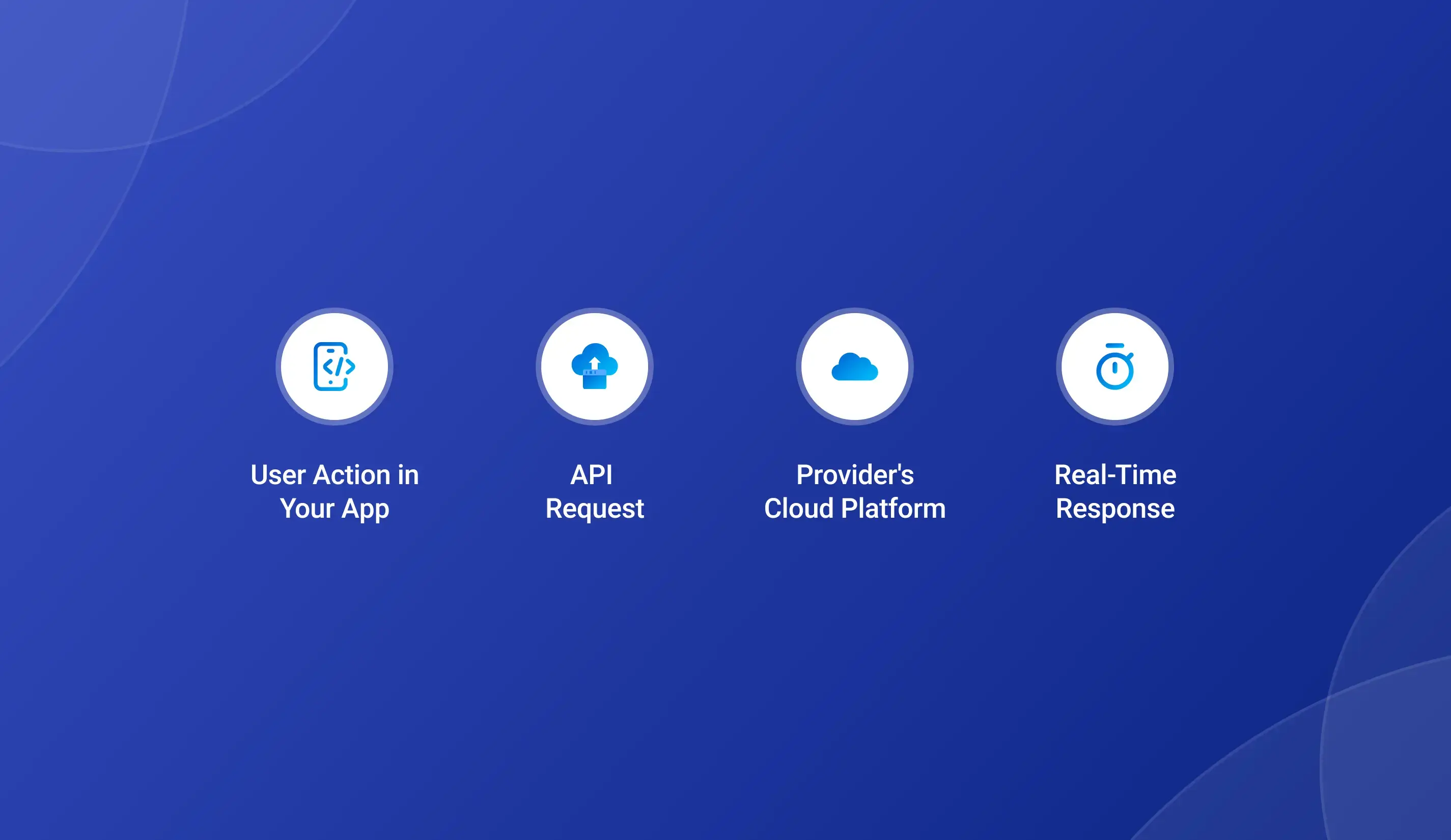
A Cloud Telephony API serves as the connector between your app and a provider's cloud communications platform. The following is a step-by-step explanation of how it works:
User Action in Your App:
A customer clicks "Call" or "Send SMS" within your web or mobile application.
API Request:
Your app makes a secure call (like makeCall or sendSMS) to the telephony API provider's servers via API keys and tokens.
Provider's Cloud Platform:
The provider handles the complex telecom logic, call routing, protocol conversion, SIP or WebRTC connection handling, and bridging to the PSTN (Public Switched Telephone Network) or VoIP endpoints.
Real-Time Response:
The API sends status updates to your app, e.g., "ringing," "in-progress," "completed," or SMS delivery receipts. You can employ these updates to render status in your UI, invoke workflows, or log analytics.
See the power of our APIs in a live environment
Have a specific use case? Speak directly with a solutions engineer to architect your communication flow
Key Features to Look For in a Cloud Telephony API
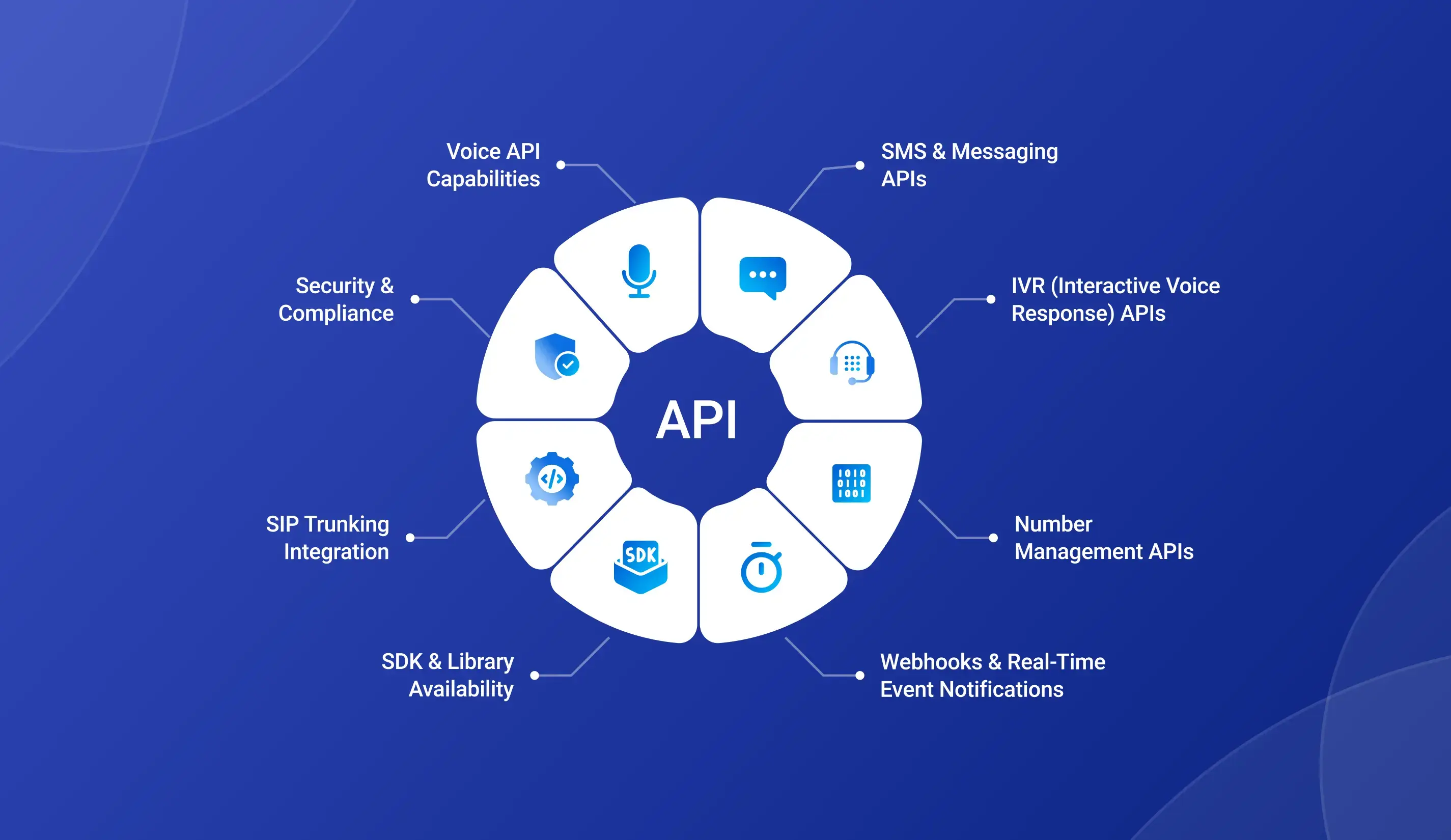
Selecting the right Cloud Telephony API is about more than simply making a call or sending an SMS. Here's a developer-centered checklist:
- Voice API Capabilities: Make and receive calls, record them, enable call forwarding, and create conference bridges. Support for click-to-call functionality is a plus.
- SMS & Messaging APIs: Send and receive text messages anywhere in the world, with features like delivery receipts, MMS capabilities, and two-way messaging support.
- IVR (Interactive Voice Response) APIs: Build programmable voice menus (press 1 for sales, press 2 for support) to create self-service experiences.
- Number Management APIs: Search, rent, and manage virtual phone numbers directly from your application. Look for support for local, toll-free, and international numbers.
- Webhooks & Real-Time Event Notifications: Receive real-time notifications regarding call status, SMS delivery, recordings, or errors to power in-app workflows and analytics.
- SDK & Library Availability: Look for SDKs and client libraries in languages like Python, Node.js, Java, and mobile SDKs to speed up development and reduce integration complexity.
- SIP Trunking Integration: Connect existing IP-PBX systems to the cloud for hybrid deployments, better cost control, and greater flexibility.
- Security & Compliance: Provide encryption, token-based authentication, and adherence to regulations such as GDPR or HIPAA (if necessary).
- Scalability & Uptime Guarantees: Choose a cloud telephony providers capable of supporting your projected call/SMS volumes at scale and having at least a 99.99% uptime SLA.
Powerful Use Cases and Applications
By integrating cloud telephony into your product or service through APIs, you can unlock seamless, scalable, and secure communication experiences that delight customers and streamline operations.
- In-App Communication: Allow your users to message, call, or chat with one another without revealing their personal numbers. Similar to ride-sharing apps, where drivers and riders communicate safely and anonymously.
- SMS Notifications: Always stay in touch with your customers through timely updates, including appointment reminders, OTPs, shipping notifications, or any important alerts.
- Automated Call-Outs: Free up your team by automating outbound calls. IVR surveys, payment reminders, or outage alerts can go out instantly and at scale.
- Contact Center-in-a-Box: Create your own CRM in a lightweight form with cloud telephony features such as click-to-call, call logging, and integrated analytics. Your team has a single view of all customer interactions in one place, without having to switch multiple tools.
How to Choose the Right Cloud Telephony API: A Developer's Checklist
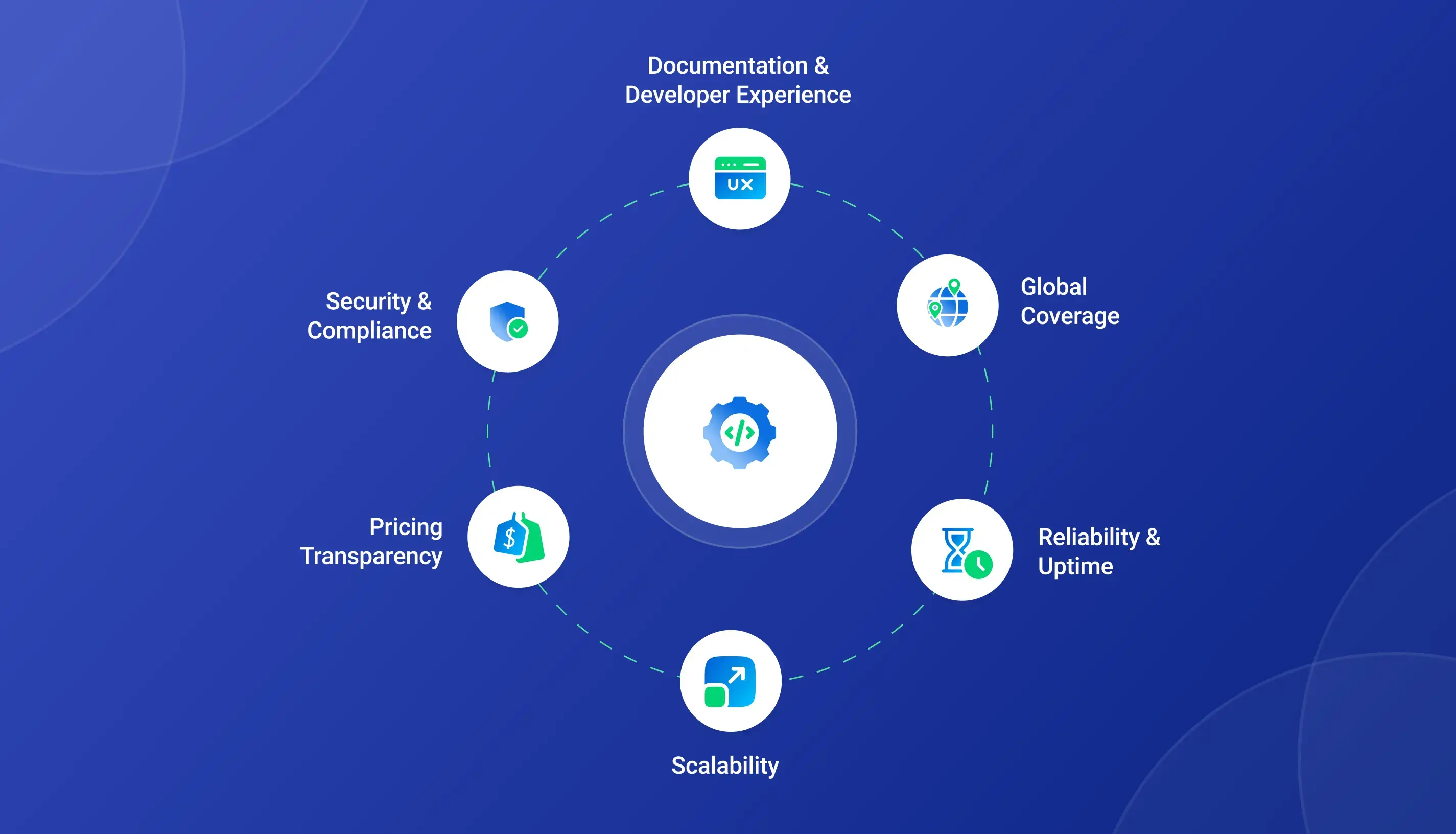
Choosing the right API partner is more than a feature comparison; it's about future-proofing your product. Use this checklist to guide your decision:
- Documentation & Developer Experience (DX): Seek clear, well-organized documentation, complete sample code, SDKs, and quick guides.
- Global Coverage: Make sure the provider can support local or virtual numbers in your desired geographies. If you're serving international customers, it's equally important to understand how international payments work so you can align your communication and billing infrastructure for seamless cross-border operations.
- Reliability & Uptime: Ensure that the provider provides 99.99% uptime SLA to guarantee constant communication.
- Scalability: Confirm the platform can handle your expected call volumes, from MVP to hyper-growth, without performance bottlenecks.
- Pricing Transparency: Review pay-per-use vs. subscription bundles, and ask about any fees hidden in the contract or minimum terms.
- Security & Compliance: Ensure end-to-end encryption and adherence to regulations such as GDPR, HIPAA, or industry-specific mandates.
Conclusion
Deploying powerful communication features in your product no longer means imposing huge infrastructure or carrier deals. Cloud Telephony APIs are now the quickest and most cost-effective means of integrating real-time communication into any product. They remove carrier negotiation complexity, hardware dependencies, and fragmented systems, allowing your team to develop, test, and grow communication experiences entirely in software.
The right API partner can accelerate your roadmap, safeguard your uptime, and deliver the scalability you'll need tomorrow. By prioritizing documentation quality, reliability, scalability, clear pricing, global presence, and compliance, you position your product for long-term success.
Frequently asked questions (FAQ)
Saravana Kumar

I’m passionate about exploring and sharing insights on modern cloud communication technologies. At TeleCMI, I focus on helping readers understand the evolving world of cloud telephony and IVR solutions in a simple yet in-depth way. My goal is to deliver genuine value by turning complex telecom concepts into clear, actionable knowledge that builds trust and drives innovation.