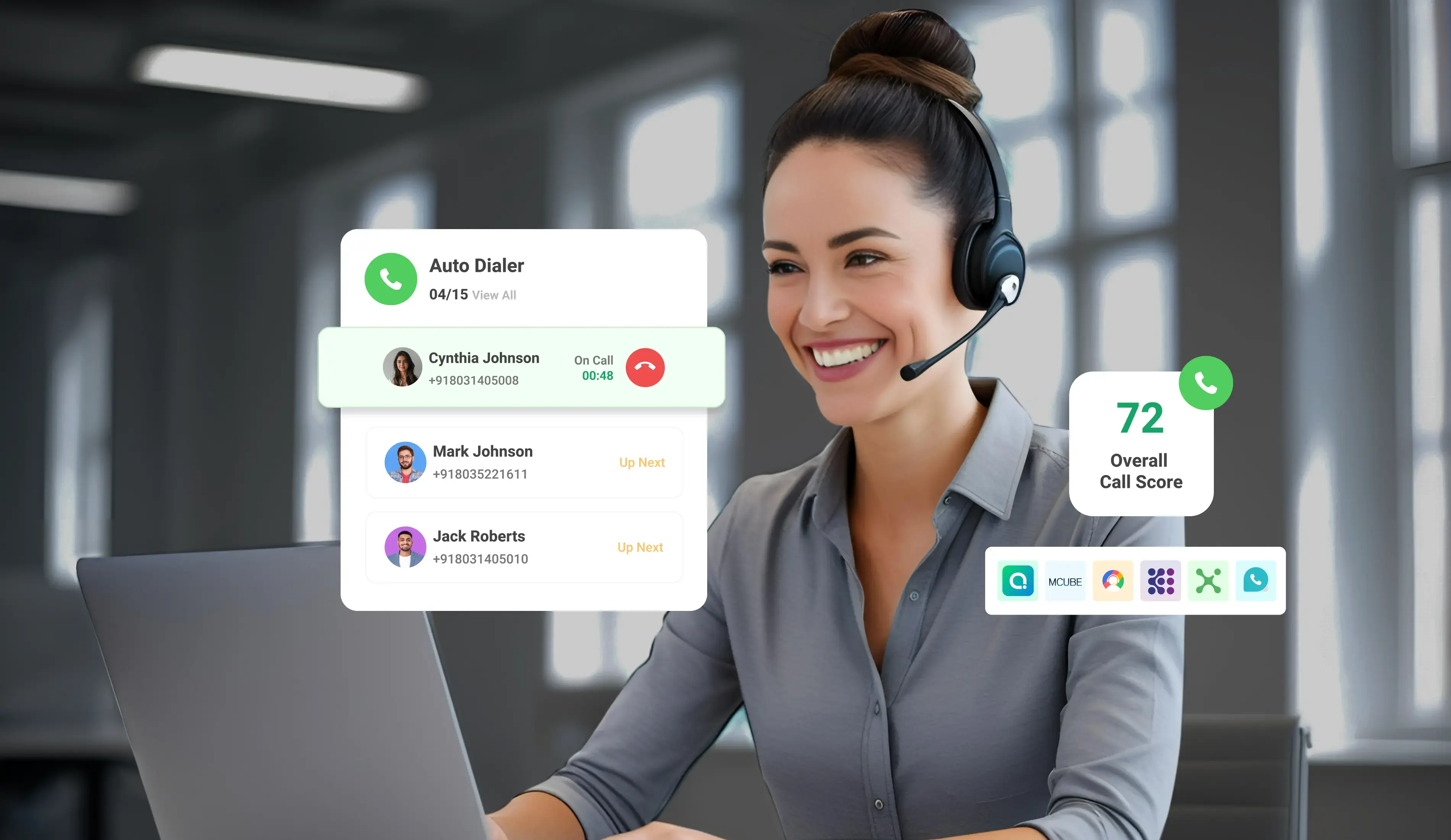
Cloud Telephony for D2C Brands in India: A Growth Communication Guide

14 mins read

Posted on Jun 02, 2026

Saravana Kumar
SEO


Saravana Kumar
SEO





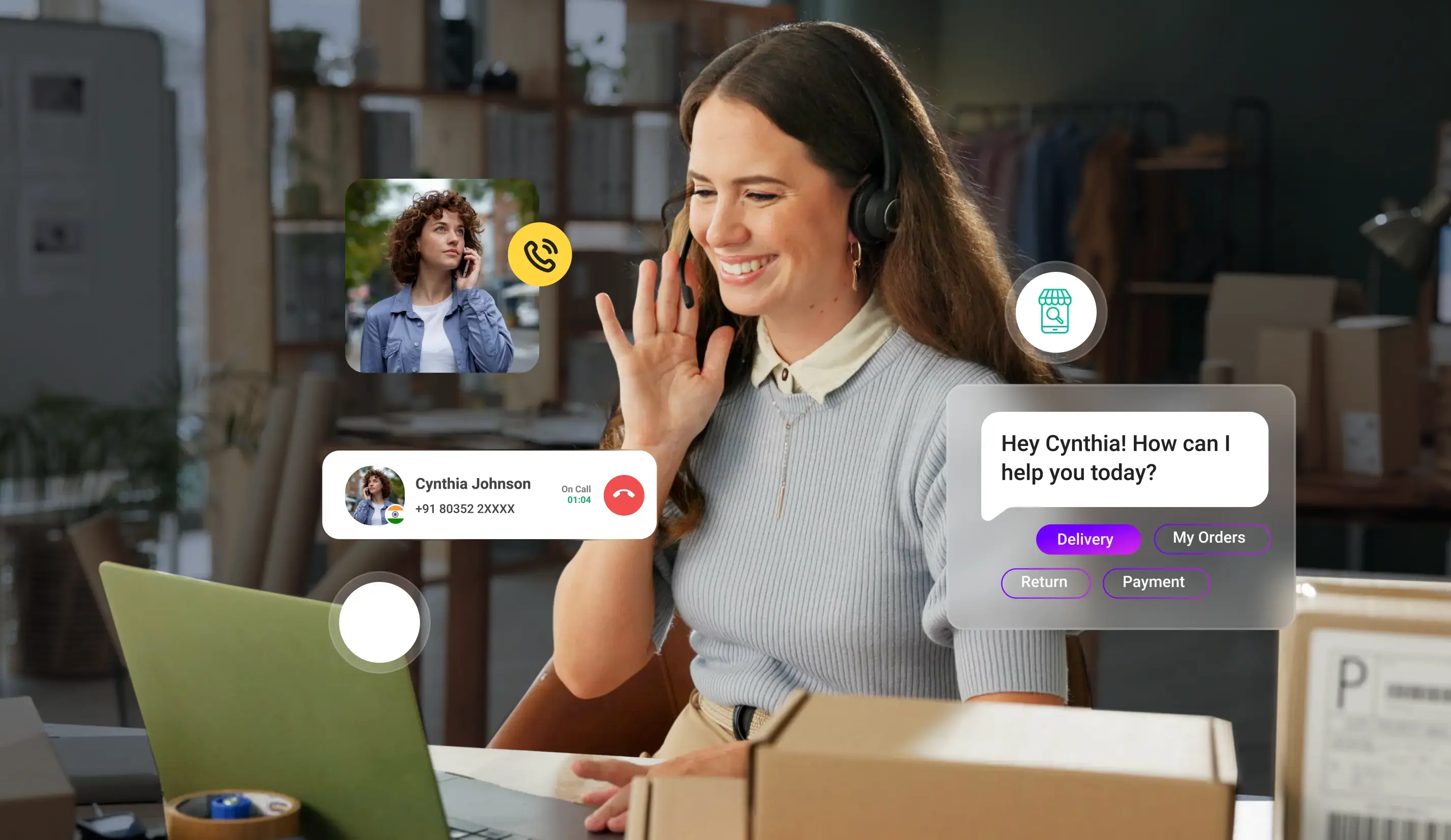
Picture this. A homegrown skincare brand from Bengaluru just ran a 48-hour flash sale. 600 orders poured in overnight. Support calls started stacking up around 9 AM: product queries, delivery ETAs, COD confirmations, return requests. By noon, three agents were juggling 80+ unanswered calls between them. A co-founder was literally picking up customer calls on a personal mobile. Somewhere in that chaos, at least 40 calls went completely unanswered. Forty potential orders. Gone.
No one on that team did anything wrong. The problem wasn't the product, the pricing, or the people. The problem was the phone infrastructure. Built for five agents. Breaking under a brand doing seven-figure monthly revenue.
That story is not unique. Ask any D2C founder who has survived a Diwali surge or a Myntra collab drop. Communication breaks before anything else does.
India's D2C e-commerce market was valued at USD 87.5 billion in 2025 and is on track to hit USD 322 billion by 2031, compounding at 24.3% per year. Thousands of brands are fighting for that growth. But what the market forecasts don't show is the customer support pile-up hiding behind every scaling operation, waiting to detonate the moment call volume triples in 48 hours.
This guide is written for founders, CEOs, CFOs, CTOs, customer success leads, and operations managers running D2C brands in India. If the team handles calls for order confirmation, delivery queries, or post-purchase support and is still using basic phone plans or personal numbers, keep reading.
Why Communication Is the Biggest Growth Bottleneck for D2C Brands
D2C brands don't compete on price alone anymore. Not really. The brand in Tier-1 cities competes on experience just as much as product. The post-purchase experience. The "where is my order" experience. The "I want to return this" experience.
Here's the uncomfortable math: a missed call in a D2C context is never just a missed call.
It's a missed COD confirmation, which means a potential RTO (Return to Origin). It's a customer who didn't get through, tried a competitor, and checked out there instead. It's a repeat buyer who expected better and quietly stopped coming back. McKinsey research is direct on this: compensating for one lost customer requires acquiring three new ones. The true cost of a missed call is way more brutal than it looks in any daily report.
Don't let another customer hang up
Learn how cloud telephony recovers lost leads. And scales your D2C brand without chaos

PwC's "Experience Is Everything" study, based on 15,000 global respondents, found that 32% of customers will walk away from a brand they love after just one bad experience. For D2C brands where customer acquisition costs are high and repeat purchases drive profitability, that number should matter to every CFO reading this.
Most early-stage D2C brands start communication the same way. One WhatsApp number. A personal phone line. Maybe a basic Tata Tele or Airtel connection. Works fine at Rs 5 to 10 lakh monthly revenue. Falls apart completely at Rs 50 lakh and above.
Teams grow. City footprints expand. Remote agents come in. Suddenly, there's no visibility into who called, who picked up, how long the wait was, or which calls were never answered. That's not a people problem. That's an infrastructure problem. And cloud telephony solution for D2C brands is exactly what fixes it.
What Is Cloud Telephony and Why Does It Matter for D2C?
A regular business phone ties a company to a location, a SIM card, and a fixed number of lines. Cloud telephony, also called a cloud phone system, runs entirely over the internet. No physical hardware. No PBX boxes gathering dust in a server room. No technician is required every time a new agent joins.
For Indian D2C brands, most orders still come through Cash on Delivery, making confirmation calls essential since a missed call often means a lost sale. Customers across Hindi, Tamil, Telugu, and other regional languages expect multilingual support, while buyers from Tier-2 and Tier-3 cities demand quick phone or WhatsApp responses before they complete a purchase. A single-line, single-language setup simply cannot keep up with this reality.
Remote teams: Agents in Chennai, Jaipur, and Hyderabad simultaneously operate under one phone system, one dashboard, and one reporting view.
High inbound volume: Cloud phone systems handle hundreds of concurrent calls without additional hardware investment. Scale up during a sale, scale back after.
CRM dependency: Every call is auto-logged against the right customer profile. No manual entry. No call data sitting isolated in a separate spreadsheet.
Multi-city presence: A brand can project local credibility across cities using Indian DID (Direct Inward Dialing) numbers while managing everything from a central dashboard.
A cloud phone system for D2C doesn't just replace a telephone line. It becomes the communication backbone of the entire operation, one that scales with the business, integrates with existing tools, and gives teams data they can actually act on before the next Diwali hits.
The 5 Biggest Communication Challenges D2C Brands Face in India
Call volume spikes during sales and festive seasons
Independence Day sale. Big Billion Days. Diwali. Valentine's Day. Republic Day.
Tier-2 and Tier-3 cities now contribute over 50% of D2C revenue in India. Festive demand no longer concentrates in metros. It comes from everywhere, all at once. A brand with five agents on a normal Monday might receive 15x the call volume during a sale week. There is no "just hire more people fast enough" solution for that window. The ramp-up time doesn't match the sale cycle.
No visibility into missed calls and lost leads
This is a silent killer. Brands often have no idea how many calls were missed. No report. No alert. A customer hung up after two minutes on hold, and no one ever found out. Gartner projects that by 2026, proactive customer interactions will outnumber reactive ones in high-performing companies. Most D2C brands aren't even capturing what's being missed, let alone proactively recovering it.
Manual COD confirmations eating agent time
India's COD return rate sits at 25 to 30%, per market data. Most D2C brands try to cut RTOs by manually calling every COD customer before dispatch. At 200 orders per day, that's a full-time job for multiple agents doing nothing but repetitive outbound calls, eight hours a day, every single day.
No CRM sync: call data and customer data living separately
A customer calls about their order. The agent has no idea about the order history, the previous complaint, or the current shipping status because the phone system doesn't talk to Shopify, WooCommerce, or the CRM in use. Every call starts from zero. The customer has to explain themselves again. They hate it.
Salesforce research puts a number on this: 83% of customers say they're more loyal to companies that provide consistency across departments, yet 65% say they often have to repeat information to different representatives. CRM-integrated telephony eliminates this entirely.
Scaling from 5 to 50 agents without infrastructure chaos
Every time headcount doubles, traditional phone setups require new SIM cards, new numbers, new hardware, and complete retraining. Slow, expensive, and messy in exactly the moments when a brand can least afford it.
How Cloud Telephony Solves Each of These Challenges
IVR for smart call routing
Interactive Voice Response (IVR) lets callers self-select their query type: "Press 1 for order status, Press 2 for returns." It routes them to the right team instantly. No agent time wasted on misdirected calls. Customers reach the right person faster. This isn't a fancy enterprise feature. It's the baseline for any brand past Rs 20 lakh in monthly revenue.
TeleCMI's multi-level IVR lets D2C brands build custom call flows that match their support structure routing COD queries to a dedicated team, escalating unresolved complaints to senior agents automatically, or pushing after-hours calls to a callback queue.
Missed call alerts and auto-callbacks
With a cloud telephony India setup like TeleCMI, every missed call triggers an automatic alert. Agents get notified. Auto-callback queues ensure the customer receives a return call without sitting on hold. The prospect or customer who couldn't get through on the first attempt gets often reached within minutes. Zero lost leads.
Outbound call automation
COD confirmations. Delivery updates. Post-delivery feedback calls. None of these require a human agent on every single call. Outbound IVR automation handles these at scale a pre-recorded or text-to-speech message confirms order details, captures a keypress confirmation, and logs the response directly back into the CRM. One agent's worth of effort scales to a thousand calls per hour.
CRM integration every call logged automatically
TeleCMI integrates with Shopify, WooCommerce, Zoho CRM, Freshdesk, and other major platforms. Every inbound and outbound call gets logged against the customer's profile automatically. Agents open a call and see the full context order history, previous interactions, and open tickets. Customers never have to explain themselves twice. That single change moves the experience from frustrating to seamless.
Scalability add agents in minutes
This is where cloud telephony for D2C brands changes the unit economics entirely. No new hardware. No new SIM card. A new agent is onboarded through the TeleCMI dashboard in minutes. During sale seasons, temporary capacity is added instantly and removed just as quickly. TeleCMI's pay-as-you-go pricing means no idle capacity sitting unused in January after the sale season ends.
Stop losing orders to missed calls
See how TeleCMI helps D2C brands automate COD confirmations, recover missed leads, and scale support during festive spikes
Real D2C Use Cases How Brands Are Using Cloud Telephony
Fashion and Apparel: handling COD confirmations at scale
A mid-sized fashion brand processing 300-plus daily orders was manually calling every COD customer before dispatch three full-time agents, four hours of their day, every day. After switching to outbound IVR automation, the same confirmations happen without a single manual call for standard orders. Agents now handle only exceptions customers who pressed the wrong key or had specific follow-up questions. Agent bandwidth freed up by over 60%.
Health and Wellness: routing product queries to trained specialists
A D2C nutraceutical brand routes supplement queries to agents trained in that product category, and standard order queries to a separate queue, using skill-based IVR routing. Customer satisfaction scores improved. Specialized agents stopped spending time answering "where is my order" calls. The entire routing logic was configured in TeleCMI's dashboard in under an hour.
Food and Beverage: recovering abandoned orders via missed call tracking
A premium snacks brand noticed high cart abandonment correlating with call drop times during peak hours. After enabling missed call tracking and auto-callback, agents were calling abandoning customers back within 15 minutes, while optimizing the WooCommerce purchase journey with a sales funnel can further help reduce abandonment before customers leave.
Electronics and Gadgets: call recording to reduce returns
An electronics D2C brand used TeleCMI's call recording feature to review what customers were saying before initiating returns. A pattern emerged quickly: most returns were "setup confusion," not product defects. A short troubleshooting IVR prompt was added to the return flow. Returns dropped. Call recordings became agent training material. Two problems solved from one feature.
Beauty and Personal Care: local presence across cities
A D2C beauty brand expanding from metros to Tier-2 cities used virtual numbers with local area codes for each city. A customer in Indore saw a local number on the incoming call. Pickup rates on outbound calls improved significantly. People are far more likely to answer a call that looks like it's coming from their own city.
Cloud Telephony During Festive Season Spikes
Every D2C operations manager has a festive season horror story. The Big Billion Days surge. The Diwali week when orders arrived faster than agents could respond. The Independence Day sale that was a revenue win but a customer experience disaster because the phone lines gave up.
Cloud telephony India changes the festive season equation fundamentally.
Temporary agent scaling. During Diwali week, a brand can add 20 agents to TeleCMI's system in a single day, with no new contracts and no infrastructure setup. After the peak, scale back just as quickly.
The Deloitte CX Study 2025 found that 92% of companies now consider customer experience a high priority. The brands that actually deliver on that during peak periods are the ones that have the infrastructure to back it up.
IVR deflection reduces live agent load by 40 to 60% during peaks
A well-configured IVR handles order status queries, delivery ETAs, and standard FAQs without a single agent involved. The calls that genuinely need human attention get through. The rest self-resolve.
Auto-callback queues
During peak periods, customers don't sit on hold indefinitely. They enter a callback queue and get called back when an agent is free. No frustration. No hang-ups. No lost orders. PwC found that 80% of consumers rank speed and efficiency as the top factor in a good experience, and a callback queue is exactly that signal sent at scale.
TeleCMI's pay-as-you-go pricing model is built for this kind of elastic demand. Brands pay for what they use, not for year-round capacity they only actually need for four or five weeks.
McKinsey research confirms that 80% of value creation by the world's most successful growth companies comes from unlocking revenue from existing customers. That starts with never missing a call, never dropping a lead, and never making a customer repeat themselves twice.
What to Look for in a Cloud Telephony Provider as a D2C Brand
Not all cloud phone systems are built for what D2C operations in India actually need. Here's what should matter when evaluating options:
CRM and OMS integration: Does it work with Shopify, WooCommerce, Zoho, or the current stack? Data silos are the enemy of good customer experience, and they cost money every single day they exist.
Elastic scaling during sales: Can temporary agents and numbers be added without long-term commitments or notice periods? Sale seasons don't wait for vendor contract cycles.
Outbound call automation: Can it run COD confirmation calls, delivery updates, and post-purchase feedback campaigns without manual agent effort?
Mobile app availability: Field teams, remote agents, and founders need to be reachable and manage calls from a phone, not just a desktop at a fixed location.
Indian DID numbers and local presence: Virtual numbers with local area codes across India's cities. For a brand expanding into Tier-2 and Tier-3 markets, this is a real trust builder that directly affects call pickup rates.
Real-time analytics and missed call alerts: The team needs to know exactly what's happening: missed calls, average wait times, agent performance, queue depths, all in real time, not in a report reviewed the next morning when the damage is already done.
TeleCMI's cloud telephony solution is built specifically for the Indian market. Multi-level IVR, CRM integrations, outbound automation, mobile app access, and DID numbers across cities, with pricing that scales with the business instead of against it.
Conclusion
Brands that invest in communication infrastructure early don't just grow faster. They retain better, recover more leads, and build the kind of repeat-purchase loyalty that compounds over time. The 2025 Deloitte Consumer Loyalty Survey found that 72% of consumers say loyalty programs and consistent brand experiences make them more likely to keep spending with a preferred brand. That consistency starts on the phone: how fast a call is answered, how well an agent is prepared, and whether a missed call gets recovered within minutes or disappears forever.
Cloud telephony for D2C brands in India isn't a luxury add-on. For any brand crossing Rs 20 to 30 lakh in monthly revenue with real call volume, it's the infrastructure decision that separates brands that scale cleanly from those that hit a communication ceiling and stall there.
Setting it up takes days, not months. And with TeleCMI, the first call through a new system can happen faster than most teams expect.
Stop missing calls. Start scaling with TeleCMI
Join hundreds of Indian D2C brands using TeleCMI to handle high-volume calls
Frequently asked questions (FAQ)
Saravana Kumar

I’m passionate about exploring and sharing insights on modern cloud communication technologies. At TeleCMI, I focus on helping readers understand the evolving world of cloud telephony and IVR solutions in a simple yet in-depth way. My goal is to deliver genuine value by turning complex telecom concepts into clear, actionable knowledge that builds trust and drives innovation.