5 Best Customer Experience Software for Contact Centers in 2026

9 mins read

Posted on Jan 09, 2026


Vignesh N
SEO


Vignesh N
SEO






In 2026, customer experience defines how businesses grow, compete, and retain customers. Customers no longer judge a brand by a single interaction or recommendation. They form opinions based on how consistent, reliable, and thoughtful responses are received across every touchpoint.
As customer expectations demand, companies have shifted their focus from traditional support resources to customer experience software that combines conversations, data, and teams. The best customer experience software will provide the clarity that firms need to understand the intentions of their customers, as well as the solutions to overcome various barriers in order to create an integrated experience.
With the ever-increasing number of CX platforms available, identifying the most suitable one is difficult. The following guide explores customer experience software and highlights the most popular CX platforms used by businesses in 2026.

Key Takeaways:
 Customer experience solutions allow organizations to handle all customer interactions in the context of an overall experience.
- It integrates workflow automation, customer context, and omnichannel engagement into a single platform.
- Customer satisfaction and resolution speed are directly impacted by features like intelligent routing, analytics, and quality monitoring.
- When choosing a CX platform for long-term growth, scalability, integration, and security are crucial considerations.
- Business size, operational complexity, and customer engagement preferences all influence the choice of CX software.
What is Customer Experience CX Software?
Customer experience software enables businesses to manage and improve customer interactions across every touchpoint. Apart from interacting with clients, the software also allows you to grasp client requirements, customer journey mapping, and team collaboration all in one place. The software makes all interactions seem like one continuous process and not separate ones. The customer experience tool also allows companies to minimize repetitive queries, resolve issues faster, and provide more personalized support. The software also provides company leadership with insight and analysis into areas that need improvement.
What are the Key Features to look for while choosing a Customer Experience CX Solution?
When choosing a customer experience CX solution, the focus should be on how well the platform supports real customer behavior and day-to-day team operations. Below are the key features to evaluate before making a decision.
- Omnichannel Customer Engagement: Omnichannel engagement ensures conversations stay connected across voice, chat, email, and messaging. Context follows the customer, so interactions feel continuous rather than fragmented.
- Unified Customer View (360° Profile): A unified customer view consolidates interaction history, preferences, and relevant data into a single profile. That is, teams can respond with understanding instead of assumptions. Repetition is reduced at each touchpoint, and accuracy is improved.
- Journey Orchestration and Workflow Management: Journey orchestration can be used for businesses that need to direct customers through predictable paths, yet be flexible at the same time. Workflow management enables the management of tasks, follow-ups, and escalations on time. Leveraging Stepper helps structure these journeys into clear, guided steps, making complex workflows easier to navigate and execute smoothly.

Insights: 3 in 10 agents cannot reliably access customer information, leading to irritated customers. - Zendesk
- Intelligent Routing and Interaction Management: Intelligent routing enables customers to be connected to the appropriate agent or resource according to their skills or availability. Intelligent routing ensures fewer transfers occur and resolves matters much faster.
- Automation and Self-Service Capabilities: Automation responds to common requests through chatbots, the IVR system, and the knowledge base. This enables the customer to quickly obtain an answer and also enables the customer service representative to deal with those situations requiring judgment and empathy.
- Analytics, Reporting, and CX Insights: Analytics turn interactions into insight. CX reporting highlights performance trends, customer sentiment, and journey gaps, helping teams improve experiences based on real data rather than guesswork.
- Quality Monitoring and Performance Management: Quality monitoring tools help maintain consistency and drive improvement. Call recordings, evaluations, and coaching features help teams maintain service standards and support agent development.
- Integration Capabilities and Open APIs: A CX solution should connect easily with CRM, support tools, and business systems. Open APIs and ready integrations prevent data silos and allow the platform to grow with changing needs.
- Scalability and Reliability: With an integrated view of the customer, the team has an integrated profile, pulling together information from interactions, preferences, and so on. Accuracy increases and repetition decreases at every touchpoint.
- Security, Privacy, and Compliance: Safeguarding customer information is crucial. Encryption, stringent security measures, and adherence to data regulations all contribute to protecting data and preserving consumer confidence.
List of Top 5 Best Customer Experience Software in 2026
1. TeleCMI
.webp)
TeleCMI is a cloud contact center platform that allows businesses to manage customer interactions across voice, messaging, and all digital channels from a single dashboard. It blends cloud telephony with modern CX tools to keep conversations smooth and coordinated across all locations.
Key Features:
- Automatically map the customer journey in the CRM.
- Provide a unified omnichannel experience and cross-functional alignment.
- Make every interaction personal with sentiment analysis and a comprehensive customer profile.
- Enhance productivity with integrated workflows that feature smart call routing.
- Real-time insights, recommend KPIs, evaluate the efficiency of teams on various projects, and generate reports.
Best For:
Small to mid-sized companies seeking a versatile and economical customer experience solution.
Pros:
- Handle interactions across channels easily.
- Flexible to adapt to various team structures with role permissions.
- Unified communications and workflow-enabling interactions.
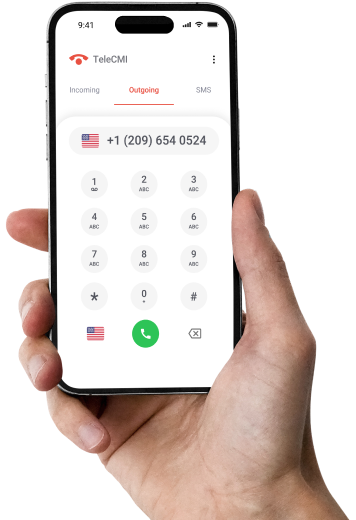
Experience how a unified customer experience Software transforms every interaction.
START 14 Days FREE TRAIL2. Nextiva
.webp)
Nextiva is a customer experience platform that combines customer information, business communications, and service operations in one solution for a better customer experience. It does this by connecting all voices, conversations, emails, and customer relationship information, essentially unifying everyone.
Key Features:
- Centralized omnichannel communication in the form of voice, chat, and email.
- Shared customer inbox with interaction history.
- Built-in CRM and productivity integrations.
- Real-time dashboards and performance tracking.
- Customizable workflows based on sales and support operations.
Best For:
Mid-sized companies that are looking for a comprehensive customer experience solution that is simple to set up and reliable.
Pros:
- Simple, intuitive interface that minimizes training overhead.
- An easy-to-use interface that reduces training overhead.
- Consistent uptime and dependable cloud infrastructure.
3. Dialpad
.webp)
Dialpad integrates intelligence and customer experience to facilitate informed, in-the-moment discussions. Its uniqueness in the market is that it provides both voice intelligence solutions and the benefit of live support during calls.
Key Features:
- Voice intelligence with insights and transcription in real time.
- AI-powered coaching for interactive dialogues.
- Consolidated contact center resources for both digital and voice channels.
- Smooth integrations between business tools and CRM.
- Conversational performance-specific analytics.
Best For:
Sales and service teams who understand the value of real-time information, agent assistance, and data within conversation in doing their job better.
Pros:
- Useful real-time assistance that improves agent confidence.
- Clear visibility into conversation trends and patterns.
- Flexible for distributed and remote teams.
4. Talkdesk
.webp)
Talkdesk offers a robust cloud-based customer experience platform suited for organizations with complex workflows and high interaction volumes. Instead of just responding to individual requests, it offers robust routing and automation options, deep customization, and tools that assist teams in coordinating journeys.
Key Features:
- Sophisticated omnichannel engagement and routing.
- Journey orchestration tools for guided experiences.
- Automation and virtual agents for routine tasks.
- Detailed performance analytics and reporting.
- Integration with CRM, helpdesk, and business systems.
Best For:
Mid-market and enterprise corporations with organized support functions and changing digital engagement requirements.
Pros:
- Deep feature set that supports growth and complexity.
- Strong scalability for increasing interaction volume.
- Tools designed for both customer care and internal optimization.
5. Genesys
.webp)
Genesys is just a conversation management tool, and it is primarily aimed at influencing the path that the customers will take during the conversation. The tool is beneficial for businesses that require intentions and forecasting. In addition, it is important for companies that handle large volumes and those offering global services.
Key Features:
- Customer journey management and orchestration.
- Omnichannel customer engagement and interaction.
- Routing and workflow automation powered by AI.
- Data management, security, and compliance at the enterprise level.
- CX insights and advanced analytics.
Best For:
Multinationals with diverse groups and clients; high demands on performance, security, and customization.
Pros:
- Strong focus on end-to-end experience design rather than isolated interactions
- Deep analytics and journey visibility that support long-term CX improvement
- Proven stability and scalability for high-volume environments
Conclusion:
Customer experience tools are an essential element of trust-building, efficiency, and ultimately, customer relationship creation on an enterprise level. In order to give customers a sense of efficiency and a human touch, effective customer experience tools in 2026 will incorporate visibility, automation, and human intelligence.
A "best" platform that works for everyone doesn't exist. Your company's size, clientele, and objectives will determine what you require. Choosing the right customer service platform can affect your brand's perception from beginning to end, regardless of whether you're a developing business, a multinational corporation navigating more challenging journeys, or somewhere in between. Organizations can change the way they provide customer service by identifying and concentrating on platforms that reflect their real customer behavior.
Take the time to evaluate customer experience software that aligns with how your customers engage today and how your business plans to grow tomorrow.
Frequently asked questions (FAQ)
See how modern contact centers deliver consistent, connected customer experiences.

Expert CX & Contact Center Guidance
Trusted by Leading Brands
Real-Time Customer & Agent Insights
Vignesh N

With deep expertise in cloud telecommunications, I help readers explore the latest trends in VoIP and modern business communication. At TeleCMI, I focus on educating businesses with clear, practical insights, making complex telecom concepts easy to understand. I’m passionate about helping organizations improve efficiency, enhance customer engagement, and adopt smarter communication strategies.


 for your Call Center and Enhance Efficiency_.webp)