How to Connect Your Multi-Location Franchise with One Phone Solution

8 mins read

Posted on May 30, 2025


Vignesh N
SEO


Vignesh N
SEO






As franchises expand into new cities, states, or regions, managing communication across multiple locations becomes increasingly complex. Each of the facilities is handling its own customer queries, orders, and services, but customers have the expectation of receiving the same level of treatment regardless of which franchise they call. If communication between the facilities is broken by the disconnection of phones, the answering of calls becomes slow, which directly impacts customer satisfaction and brand reputation.
A unified phone solution addresses this challenge by bringing every franchise location onto a single communication platform. Instead of operating in silos, franchisors gain visibility and control with a business phone system that supports daily operations.
By using a cloud-based business phone system, businesses can standardize customer interactions, simplify management, and scale communication as confidently as they scale their brand. This article discusses how multi-location franchises can integrate all their outlets into a single call solution, the importance of advanced business phone functionality, and how services such as TeleCMI fit into franchises' operating models.

Key Takeaways
 A unified franchise phone system allows you to maintain a consistent customer experience across all locations.
- Simplify franchise communication by centralizing call routing, monitoring, and reporting on a single platform.
- Increase the effectiveness of handling calls made during peak hours by leveraging virtual receptionists, call queues, and business messages.
- Standardized phone system setup makes it easier to onboard new franchise locations without added complexity or infrastructure costs
- Real-time analytics enable franchisors to track call performance and make better staffing and service decisions.
Franchise Phone System for Franchisors
Franchises are now able to manage multiple phone lines through cloud-based PBX systems. This means that all locations are connected to a single system. Therefore, all calls, data, and discoveries are easily shared between the locations.
Key benefits for franchisors include:
- Unified call routing rules across all locations
- Consistent and personalized brand greetings and IVR menus
- Information regarding missed calls, wait times, and volumes of calls
- Live monitoring of calls handled and response times
- Faster onboarding for new franchisees
Advanced Business Phone Features Designed for Franchise Operations
Modern scalable phone systems go far beyond voice calls. They combine automation, mobility, and analytics to support high call volumes and multiple locations.
24/7 Virtual Receptionist: The virtual receptionist can ensure the correct distribution of the call. It allows consumers to easily connect to the desired destination without the assistance of an actual receptionist.
Desktop and Mobile Applications: Franchise owners and staff can handle business calls on desktops or mobile devices using secure apps. This supports remote work, mobile teams, and flexible schedules.
Audio and Video Conferencing: Built-in audio and video conferencing make communication easier between franchisors, regional managers, and franchise owners without switching platforms.
Call Queuing and Ring Groups: During peak hours, calls are routed to available staff rather than voicemail, reducing missed opportunities.
Business Text Messaging: Text messaging services facilitate and automate appointment reminders, order status, and follow-up notifications.
Call Recording and Monitoring: The call recording facility is employed to ensure the achievement of the training and quality control goals/targets. The franchisor does not need to listen to the calls, only monitor the level of service delivery.
Why Franchises Need a Business Phone System
Franchises operate at scale, but customers expect personal service. Without a dedicated franchise communication solution, gaps appear quickly.
Common challenges include:
- Inconsistent customer experience across locations
- Missed calls during peak hours
- No insight into call performance
- Difficulty when scaling communications as new branches open
A franchise phone system removes these issues by allowing a mix-and-match process for a shared facility. Every outlet has its autonomy, but is still within the rules.
How Do Franchises Get Set Up with Business Phone Service?
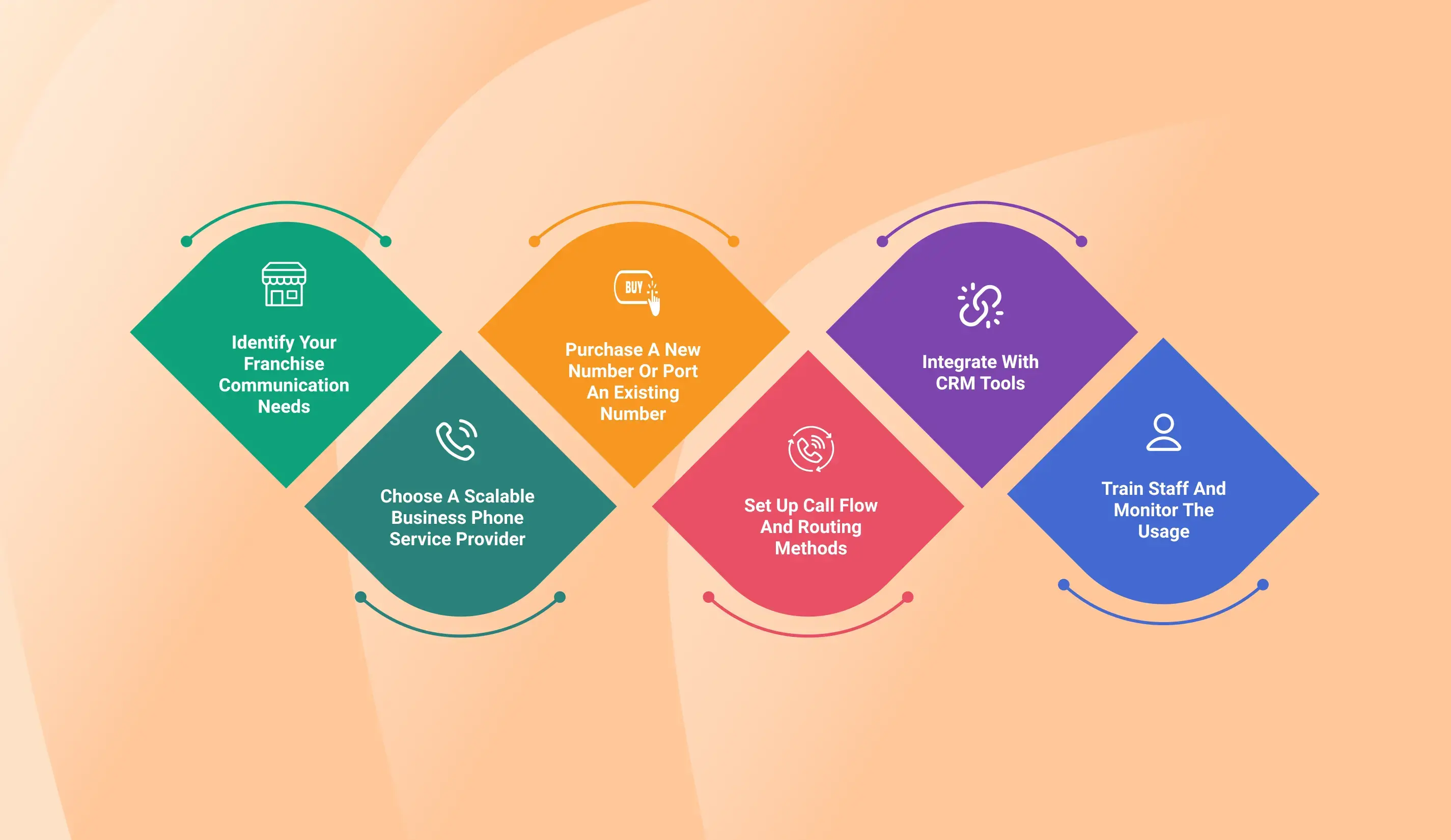
Contemporary franchise telephone systems can handle rapid growth, consolidation of control, and location-based flexibility. It involves an organized process with an operational flow that franchisors or service vendors can easily manage without causing disruptions.
Step 1: Communication and Call Flow Assessment
Starting the setup involves understanding how customers interact with the business. A franchisor typically examines the following:
- Number of existing and planned locations
- Average daily call volume per outlet
- Peak call hours and seasonal spikes
- Customer entry points such as sales, support, or bookings
This stage defines how calls should move through the system
Step 2: Designing Centralized Call Routing and IVR
Once the requirements are defined, franchisors design the call-routing logic.
This includes:
- Interactive Voice Response menus aligned with brand messaging
- Location-based routing using the caller’s location or selected options
- Escalation paths for unanswered calls
- Overflow rules during peak hours
Centralized routing ensures every customer receives a consistent experience, regardless of which location they contact. At the same time, franchisees maintain control over local staffing and availability.
Step 3: Assigning Business Numbers to Each Location
Businesses are assigned numbers in the same way as individuals. It is often assumed that franchises
- Local numbers for each store location
- Toll-free or national numbers for brand-level inquiries
All numbers operate within the same franchise communication solution. This allows franchisors to track call performance by location while maintaining a unified system. This step is especially important for franchises expanding into new cities or regions, where speed matters.
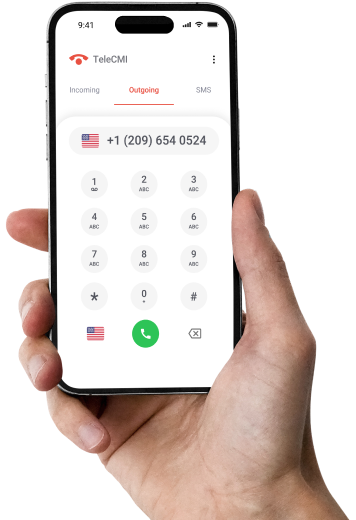
Step 4: Deploying Desktop and Mobile Applications
Modern business phone systems rely on applications rather than desk phones. Franchise staff and managers receive:
- Desktop apps for office-based teams
- Mobile apps for managers, supervisors, and field staff
Calls, messages, and voicemails are synchronized across different devices to create continuity even when employees move from one location to another or when they work from home. Such functionality is beneficial to franchises that offer different services to customers.
Step 5: Training Franchisees and Local Teams
Training is typically lightweight but structured.
Most franchises focus on:
- Handling calls and transfers
- Using call queues and ring groups
- Managing voicemail and text messages
- Understanding call recording and compliance rules
Because it is a standardized system, training documentation can also be easily shared across a variety of sites. This means a fast track to training new franchises and employees.
Step 6: Monitoring, Optimization, and Scaling
After launch, franchisors use analytics to monitor performance
Key metrics include:
- Missed call rates by location
- Average wait times
- Call volume trends
- Customer response patterns
Such findings enable the franchisor to modify employment, routing conditions, and/or assistance without having to alter the structure
When a new location opens, the installation process may include cloning a setup and assigning a new phone number. This ensures that scalable phone systems are best suited to rapidly growing franchises.
How does TeleCMI's Business Phone System Fit the Franchise Model?
Franchise businesses need communication systems that support expansion, enforce consistency, and adapt to local needs without headaches. Rather than forcing franchise owners to manage separate phone systems at each location, TeleCMI connects all franchise outlets under one unified communication platform. This alignment makes it easier to scale, monitor, and optimize call handling across the entire network.
Below is a detailed look at how TeleCMI fits into the franchise business model.
- Centralised admin control with distributed flexibility
- Location-based analytics & reporting
- Simplified process for establishing new franchises
- In-house compliance & call monitor solution
- Pricing structure suitable to accommodate the growth of the franchises
Conclusion
A unified franchise phone system brings clarity back into daily operations. It enables franchisors to maintain the level of oversight needed to safeguard business standards while allowing franchises to be more flexible in better serving their targeted regional clients. With a cloud-based setup, communication scales at the same pace as expansion, without adding complexity or operational drag.
TeleCMI makes managing multiple locations easier, increases visibility across them, and ensures a smooth addition of new franchises without affecting the existing ones. Most importantly, it ensures the brand's voice is consistent across multiple locations for each franchise. When managing multiple locations becomes a problem, a franchise business phone system offers a solution for easier, more manageable communication growth.
Power your franchise with TeleCMI's unified phone system - Talk to our experts today!

Global Connectivity
99.99% uptime
24/7 Customer Support
Connect From Anywhere
Frequently asked questions (FAQ)
Vignesh N

With deep expertise in cloud telecommunications, I help readers explore the latest trends in VoIP and modern business communication. At TeleCMI, I focus on educating businesses with clear, practical insights, making complex telecom concepts easy to understand. I’m passionate about helping organizations improve efficiency, enhance customer engagement, and adopt smarter communication strategies.


.webp)
.webp)