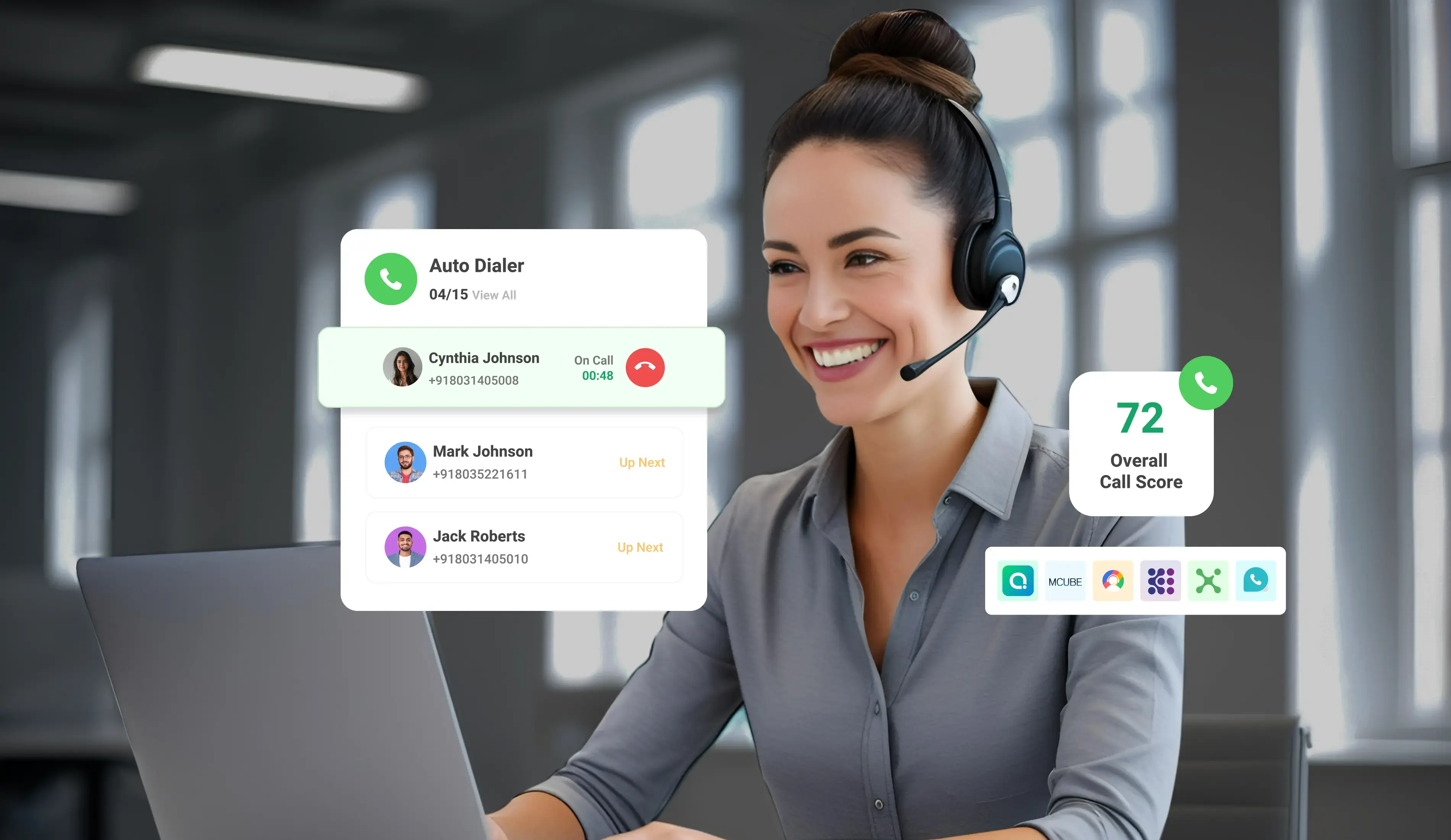
What Is a VoIP Contact Center? A Complete Guide for Businesses

7 mins read

Posted on Jul 11, 2025

Vignesh N
SEO


Vignesh N
SEO






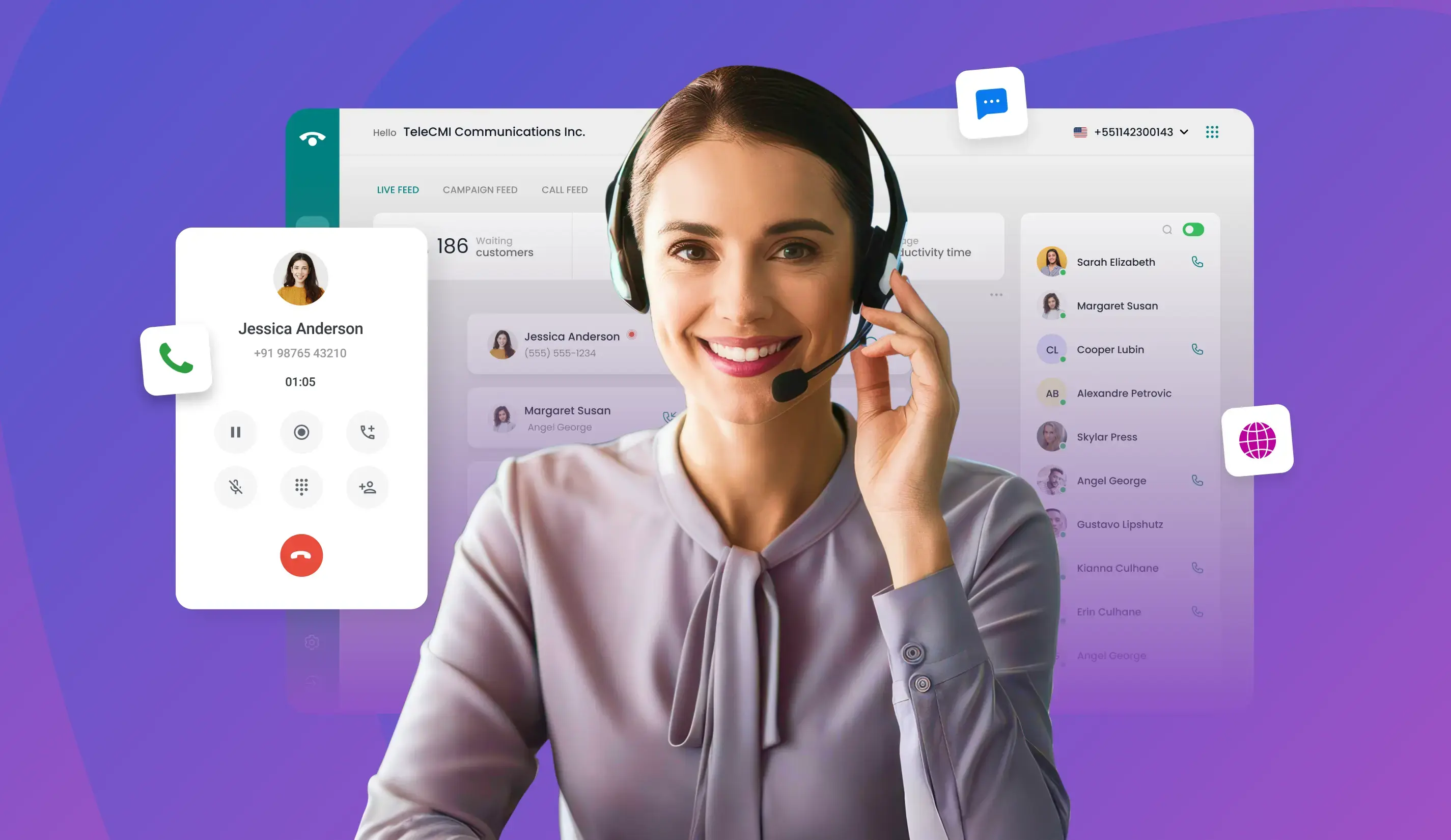
VoIP contact center is a cloud based communication platform utilised by organizations to manage inbound and outbound calls over the Internet, rather than traditional phone lines. It is a modern system for teams that handles high-volume calls, works in hybrid or remote environments, and supports multichannel interactions.
- Provide faster resolutions with a detailed customer profile.
- Stay competitive in the market with streamlined operations.
- Retained customers by customizing interactions and better CX.
- Easy to scale, flexible to manage, and boost overall productivity.
- Drive operational efficiency with AI and automation.
Have you noticed how legacy business phone systems are dragging businesses down- as newer teams using VoIP are growing faster, supporting smarter and spending less?
Dropped calls, long wait time and inflexible infrastructures continue to be a nightmare in most contact centers. Agents are tied up with several tools, managers have poor visibility and customers are frustrated. It is an arrangement that would have been effective ten years ago, but not in the current high-paced, customer-centric world.
In the meantime, companies that have adopted cloud contact center software are living a new reality. Their teams are integrated across sites, can manage call surges without mayhem, and provide individualized service with real-time data at their fingertips. They are not only cutting expenses, they are enhancing results.
This blog examines how VoIP contact centers are changing the face of communication- how they are eliminating the headaches of operations, and how they are changing the customer experience, and why it is the right time to switch.
What is a VoIP Contact Center?
A Voice over Internet Protocol (VoIP) is a technology that allows contact centers to make or receive calls, and share data over the Internet rather than traditional phone lines. Featuring call routing, call handling, analytics, and integration, these systems simplify operations and boost efficiency. These systems allow organizations to handle a large volume of calls from a unified platform to deliver personalized interaction, enhance team collaboration, and improve overall business performance.
How a VoIP Contact Center Works?
A VoIP contact center software works by transforming analog voice signals into digital signals, converting them into packets, transmitting them over the Internet, and then redecoding them into analog voice signals.
Step 1: Converting into Digital Data When an agent or customer makes a call, the voice signals are converted into digital data and organized into packets.
Step 2: Data Transmission Each data packet has a header where the previous and next packet information will be mentioned. These packets are transmitted through the Internet.
Step 3: Conversion of Analog Voice Finally, at the receiver side, the data packets are connected, redecoded, and converted into voice signals.
VoIP vs. Traditional Contact Centers
Here is the major difference between traditional and VoIP contact center solutions. By understanding both, you can gain a clear view and be guided in selecting the right one for your business.
Benefits of a VoIP Contact Center:
Implementing VoIP for your business you can simplify call operations, smoothen internal team collaboration and enhance customer experience. Here are the key benefits of a VoIP contact center in terms of finance, operation, and experience.
Remote Agent Enablement
- Teams can connect with each other from anywhere, irrespective of location, shift timing, and device.
- With instant messaging, omnichannel communication and automated sync, the system offers global team collaboration.
- Features like video conferencing, screen sharing, and omnichannel communication enable agents to connect with each other.
Improved Customer Experience(CX)
- Detailed reports, valuable insights, and real-time guidance allow agents to deliver a consistent experience across channels.
- Simplify customer support with customized IVR and automated routing based on customer intent, emotion, and department.
- Whether a customer connects through phone, email, chat, or any channel to any agent, with a 360° view of the customer, agents can maintain consistency.
CRM and AI Tool Integrations
- Seamlessly integrate with multiple CRM, ticketing systems, marketing, and automation tools to maximize the benefits of communication and collaboration.
- Get a clear picture of the customer journey, identify the areas for improvement and predict revenue mode.
- Incorporate AI tools and machine learning techniques to automate multiple flows, detect customer emotions, and reduce agent burnout.
Cost Efficiency & Flexibility
- Expand regions, departments, and agents with ease, leveraging global-enterprise security and scalable solutions.
- Flexible to support high-volume calls, seasonal demands, and a distributed workforce.
- Lowers the operational costs by reducing the tech stack, agent count and infrastructure.
VoIP Contact Centers aren't just about saving costs; it's an investment in operational agility, real-time insights, and elevated customer experiences.
Key Features to Look for in a VoIP Contact Center
Integrated with AI, automation and integrations, these VoIP contact center facilitates hybrid operations, global presence and emphasises customer emotions. Here's a list of essential features of VoIP that you have to focus on while choosing one for your business.
- Intelligent Call Routing & IVR: The system must provide customization on call routing based on your needs, including skills, intention and business hours.
- Call Recording & Quality Monitoring: Service providers like TeleCMI offer 12-month call recording, comprehensive call audits, and detailed reports for training, quality assurance, and compliance.
- Security & Regulatory Compliance: Enterprise-grade security such as end-to-end encryption, multi-factor authentication, industry-specific regulations, region-based standards, and compliance.
- Advanced Analytics & Monitoring: Trend metrics, customized dashboards, and detailed reports provide in-depth visibility, advanced insights, and analytics.
How to Implement VoIP Contact Center Software
With diverse options available in the marketplace, choosing the right one is crucial for your contact center. Consider the following factors such as evaluating the requirements, focus on features, prioritize customization, look for scalability and cost-efficiency while choosing a Voice over Internet Protocol:
- Define the Requirements: Identify the business needs and goals, including call volume, number of agents, locations, work environment, and communication requirements.
- Features to Consider: Look for essential features such as call management, AI-powered benefits, call audits, automation, and advanced analytics.
- Customization: You can customize the workflow, set up a hierarchy, and personalize greetings and reports to maximize efficiency.
- Budgeting and Scalability: Additionally, you must consider your investment cost and future scalability or downgrade options to offer a flexible solution.

Key Takeaways
 VoIP Contact Centers use internet-based telephony to manage customer interactions.
- VoIP converts voice into digital packets and transmits them over the Internet, enabling global communication.
- VoIP contact centers are cloud pbx system, cost-effective, and remote-friendly, whereas traditional setups are hardware-intensive and limited in scalability.
- Must-have features in a VoIP solution include intelligent call routing, multi-level IVR, call recording, compliance tools, and real-time analytics.
- Implementation is quick and non-disruptive, with most systems deployed within hours or days, depending on customization.
- Choosing the right provider, like TeleCMI, ensures your business gets a future-proof, secure, and scalable communication solution tailored to your needs.
Conclusion
VoIP contact centers offer more than just cost savings; they deliver the scalability, flexibility, and intelligence that any modern business needs to thrive and compete effectively. With AI-powered integrations, automation, and advanced analytics, you can simplify the calling process, enhance customer experience, and boost productivity all from one platform. TeleCMI positioned itself as a leading player in the VoIP industry, offering 12-month call recording, customized reporting, and a unified dashboard.
See VoIP Contact Center in Action

Real-time support across channels
AI-driven automation for faster resolutions
Actionable insights with detailed analytics
Frequently asked questions (FAQ)
Vignesh N

With deep expertise in cloud telecommunications, I help readers explore the latest trends in VoIP and modern business communication. At TeleCMI, I focus on educating businesses with clear, practical insights, making complex telecom concepts easy to understand. I’m passionate about helping organizations improve efficiency, enhance customer engagement, and adopt smarter communication strategies.


 for your Call Center and Enhance Efficiency_.webp)