How to Reduce Customer Support Costs and Improve CX at the Same Time

9 mins read

Posted on Jul 31, 2025

Vignesh N
SEO


Vignesh N
SEO






Most support leaders and managers often face this challenge: team expansion, layering tools, and launching new support channels, yet the Customer Satisfaction Score (CSAT) remains constant, just flat, no improvement.
This is a CX cost trap: invest in market expansion, outsource teams, and implement new dashboards, but they fail to invest in strategic systems for long-term benefits.
Adopting AI-powered Inbound call center software to automate repetitive tasks, personalize customer interactions, and reduce agent burnout.
In this blog, we'll explore how the right system can enhance your customer experience while reducing support costs.

Key Takeaways
 Reducing customer support costs does not require compromising quality or satisfaction level.
- Investing in a cloud-based solution eliminates manual repetition, errors, and keeps your teams on track.
- Integrating AI, ML, and RPA allows agents to focus on meaningful interaction by balancing workloads and optimizing workflows.
- Intelligent routing allows you to manage queues, wait times, escalations, and resource allocations.
- Offer live coaching, tailored learning, and improve retention with diverse performance metrics.
- Centralized view of customer, agents, and overall business performance.
- Reinvest the saved amounts in innovation, better customer experience, and agent productivity.
What is Customer Support Cost?
Customer support cost is the money you spend on resolving customer queries, including people, technology, and infrastructure.The expense is the combination of salary, benefits, onboarding, IT, and training, as well as hardware, software, tech stack, integration, servers, outsourcing, and building costs
Factors Influencing the Customer Support Cost:
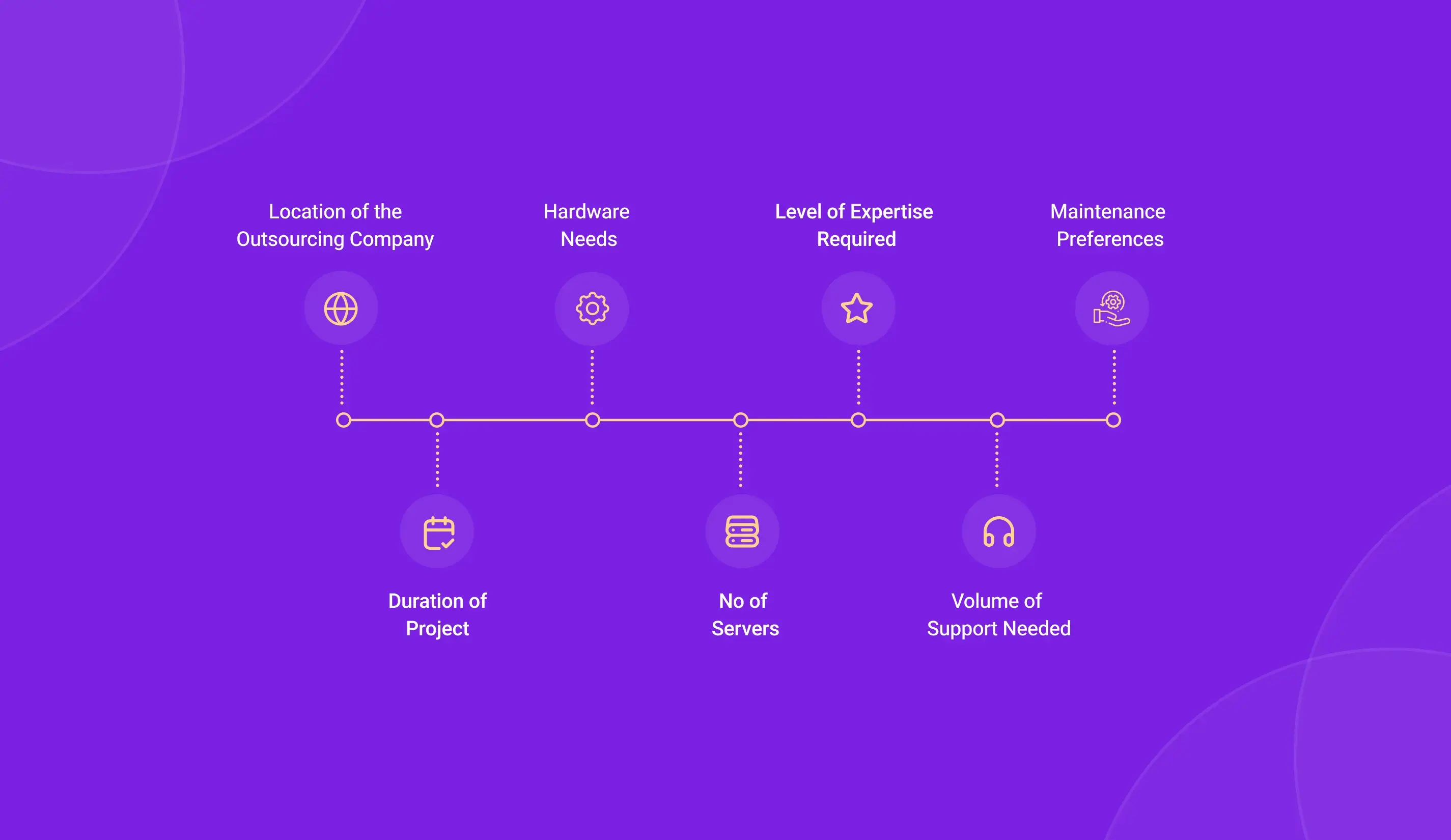
Several factors increase the cost of customer support in a call center. Here's a list of a few common factors:
- Outsourcing: Factors including region, team size, query complexity, project duration, support hours, and region-specific compliance.
- Tech Stack: Investing in diverse tools such as, help desk, ticket system, email management, WhatsApp, Live chat, and more.
- Hardware & Infrastructure: Number of servers, on-premise setup, phone lines, backup systems, data centers, and maintenance.
- Volume of Support Needed: High ticket volume, peak periods, seasonal surges, and customer onboarding without the right strategy.
- Level of Expertise Required: Hiring multiple support-related roles, including executives, operations, testing, and managers, increases the cost of human agents.
- Maintenance preferences: Frequency and updates to your support systems, documentation, or training costs are valuable.
10 Proven ways to reduce the customer support cost While Enhance CX
Increasing profits is the primary goal of any business, but reducing costs can improve the cash flow and refine investment strategies.
Here is a list of ten strategies that impact your business growth while reducing customer support costs.
1, Self-Service
Self-service allows customers to find answers to simple questions and escalate more complex queries to a human agent.
- The self-service portal features a knowledge base section, a customer portal, a customer community, and a chatbot.
- Integrate AI live chat to provide 24/7 availability, multi-lingual support, and contextual resolutions.
- Gather feedback from customers, frequent updates on the query portal, and offer easy escalation to enhance the CSAT score

According to Outgrow, 80% of consumers are more willing to use a chatbot as it quickly resolves queries or easily transfers to a live agent.
2, Automate Routine Tasks
Automating routine tasks allows agents to spend more time with customer profiles and thereby enhance personalization, upselling, and the overall customer experience by integrating AI, Robotic Process Automation (RPA), and Machine Learning.
Key Automation Includes:
- Gather meeting notes, summarize calls, provide context, update tags, automate recordings, callbacks, and timely alerts.
- Resolving issues and troubleshooting with internal escalations, personalized resolutions, and omnichannel interactions.
- Proactively reach customers with integrated WhatsApp chat to improve customer experience and engagement.
3,Invest in Agent Training
AI and call center automation handle only half of your support needs; still, humans are the ones who can emotionally connect with your customers, understand their needs, and recommend solutions.
- Create, organize, and share training materials, including various use cases, onboarding checklists, and cheat sheets, for employees.
- Integrate AI tools to detect agent capabilities, provide live coaching, and enable instant call barge and whisper.
- Provide knowledge and agents to use relevant software, platforms, inter-department dependencies, and customer expectations.
4, Skill-based Routing
Directing the customer to the right agent first can lead to faster resolution, reduce escalation, and improve satisfaction level.
Optimize skill-based routing with the following factors:
- Utilize an Intelligent multi-level IVR service to route the call to the respective agent with keypad inputs, detecting issue context and customer emotions.
- Determine the call priority based on the customer's lifetime value, outages, the nature of the issues, and customer urgency.
- Dynamically route calls based on historical data, customer feedback, agent skill set, and resolution rate.
5, Omni channel Support
Omnichannel support offers centralized visibility of every interaction that occurs across multiple channels —chat, calls, video, social media, live chat, and more
- Mapping the customer journey allows you to predict whom to target, the buyer's intention, and what to prioritize less.
- Resume conversations without losing context, regardless of the channel shift, reducing bottlenecks, frustration, and frictions.
- Manage customer data, personalize each touchpoint, and optimize business operations across regions.
6, Speech Analytics to Optimize Performance
Speech analytics helps you to monitor interactions, offer actionable feedback, and guide agents based on the insights. Also, you can identify areas for improvement to deliver a consistent customer experience.
- Gather data-driven insights from spoken languages using AI and natural language processing (NLP).
- Based on preferences, emotions, and previous history, improve service quality and resolution rates.
- Reduce compliance risks by monitoring calls and adhering to standard protocols, guidelines, and industry regulations.
7, Proactive Support to Reduce Ticket Volume
- Analyze the existing data, categorize ticket intent, and utilize AI to extract and mine the raw numbers.
- Gather the scenarios, prepare a survey form, and request that customers provide details to understand the key troubleshooting and pain points.
- Leverage chatbots to handle tier-1 tickets and implement auto-updates on self-service portals.
- Look at the metrics of self-service, resolution rates, customer satisfaction, and customer support team performance score.
- Audit and optimize the portal information, understand their requirement, categorize their preferences, and refine the strategies.
Research states that the average cost of handling a support ticket per minute is $1.60. By reducing the volume with AI and automation, support costs such as labor, tech stack, and infrastructure can be reduced.
8 , Hire Remote Call Center Agents
With personalized working space, preferred location, and flexible shift hours, remote teams can balance workload, lower attrition, and higher engagement.
- Offer 24/7 customer support based on the region and customer business hours, enhancing quick resolution, simplified customer connection, and fostering retention.
- Less investment in on-site infrastructure, hardware components, labor head, and tech stack.
- You can easily scale up or down based on your targeted location, market health, and customer base without in-house support operations.
9, Focus on the call center metrics
Tracking metrics helps you to identify trends, interaction struggles, and predict business growth. It helps you evaluate shifts, optimize the workflow, and make actionable decisions.
Important KPIs to measure in call center customer support:
- First Contact Resolution (FCR)
- Customer Satisfaction Score (CSAT)
- Average Speed of Answer (ASA)
- Agent Occupancy Rate
- Contact Volume by Channel
- Ticket Backlog
- Agent Performance Score
10, Switch to the cloud & Optimize Infrastructure cost
Transforming on-premise infrastructure to cloud-based solutions not only reduces operational and phone bill but also maximizes business benefits. It can reduce the infrastructure, labor, software, hardware, and maintenance costs.
- Cloud contact center software can be accessed from anywhere, at any time, and on any device via the internet.
- Easy to scale across borders with virtual and local numbers by upgrading the plans.
- 99.99% uptime, automated backups, enterprise-grade security, and a diverse data center, allowing you to make secure and HD voice and video calls
Explore the latest tools and tips for effective inbound call handling strategies
How to Choose the Call Center Solution that Provides Better CX While Reducing Cost?
To select a call center solution to enhance better CX while reducing cost, focus on omnichannel support, automation, and real-time insights.
- AI and Automation: The system must incorporate AI techniques, including predictive analysis, sentiment detectors, and automation techniques. It should also support integration with white label AI voice agents to enable customizable, branded voice interactions across platforms.
- Analyse Workforce Efficiency: Evaluate the workflow customization, intelligent routing, and advanced call handling to optimize the operations and boost productivity.
- Personalization & CX: Capable of delivering a personalized customer experience within a short timeframe and streamlining support interactions to boost customer satisfaction.
- Align with Business Goals: Look for a system that matches your business needs, budget and is flexible to adapt.
- Cloud-Based Solution: The system should operate on the cloud, utilizing multiple data centers and achieving 99.99% uptime
Conclusion
Cutting down customer support costs doesn't mean that you should compromise on quality or satisfaction. You can even provide high-end customer support by investing in the right VoIP for customer support team solution. You can automate routine tasks, minimize infrastructure costs, provide live training, and enhance contextual interactions.
Deliver exceptional CX effortlessly with TeleCMI AI solution

Lower Operational Cost
Improved Customer Experience
Streamlined Operations
Frequently asked questions (FAQ)
Vignesh N

With deep expertise in cloud telecommunications, I help readers explore the latest trends in VoIP and modern business communication. At TeleCMI, I focus on educating businesses with clear, practical insights, making complex telecom concepts easy to understand. I’m passionate about helping organizations improve efficiency, enhance customer engagement, and adopt smarter communication strategies.


 for your Call Center and Enhance Efficiency_.webp)