Inbound Call Handling: 7 Proven Techniques for Smoother CX

7 mins read

Posted on Nov 27, 2025


Vignesh N
SEO


Vignesh N
SEO






Every inbound call carries a customer's mood, expectations, and patience. Some callers want quick answers. Others want reassurance. A few want to feel heard. How your team handles that moment often decides whether the relationship moves forward or quietly ends.
Customer experience is not built in presentation decks or mission statements. It comes from dialogues expressed one voice at a time. Inbound calls remain among the points of contact a company possesses, even amid a landscape filled with chats, bots, and automated emails.
But most businesses fail with poor systems, unclear workflows, and outdated tools. When agents are under-supported, customer experience suffers. This blog guides you on using inbound call center software and provides tips for handling calls effectively.

Key Takeaways
 Inbound call handling is about solving problems, not just answering phones.
- Empathy and active listening calm tension faster than any scripted response.
- An integrated CRM saves time and prevents customers from repeating themselves.
- A unified communication system keeps conversations connected across channels.
- AI and analytics support agents by removing guesswork from daily work.
What is Inbound Call Handling?
Inbound call handling is the process of managing incoming calls by an organization. These are the calls initiated by the customer for help, information, support, billing clarification, or service issues. While calling, the customer's expectations are higher than the agents' responses.
It includes:
- Answering calls promptly
- Understanding the customer's issue
- Providing accurate solutions
- Recording call details
- Closing the call with clarity
Key Challenges Faced by Inbound Call Agents
Inbound support teams deal with a different level of pressure compared to other departments. Some of the most common problems agents face during incoming call handling such as:
Frustrated Customers:
Clients typically contact support after exhausting options. When they finally speak to a representative, their tolerance is often exhausted.
Limited Access to Information:
Switching between tools, screens, and spreadsheets slows response time and weakens confidence.

Did You Know? According to the PWC report, nearly 61 percent of customers switch brands after just one poor support experience.
High Call Volumes:
Busy periods result in rushed conversations, errors, and overlooked information.
Missed Calls and Long Hold Times:
Delayed call routing leads customers to hang up before connecting with a representative.
Best Tips for Inbound Call Handling to Improve Customer Experience
Tip 1: Practice Empathy and Active Listening
Prior to approving your solution or responses, customers always want to feel recognized and understood. A representative who carefully listens throughout the discussion can lessen irritation, build trust, and leave a lasting impact.
- Allow the customer to fully describe the problem before replying.
- Use cues to express understanding like "I understand" or "I see why that could be frustrating."
- Repeat or summarize the customer's concern to ensure clarity.
- Maintain a composed attitude throughout the interaction even if the client is distressed.
- Avoid using jargon or technical terms in the middle of the call.
Tip 2: Use an Integrated CRM System
Customer always gets frustration when agents ask for details every time they connect or escalate. A good Zoho crm telephony integration removes that problem entirely with detailed customer profiles, screen-pops, and context sharing. When agents have context, customers feel remembered. That builds trust quietly but powerfully.
- Show the full customer history before the call starts.
- Keep notes short but useful.
- Update records during the conversation, not after.
- Use past interactions to personalize responses.
- Reduce unnecessary questions.
Tip 3: Leverage Smart Call Routing and Self-Service
Not every call should land with the same team; a few transfers make them feel better about the company. Routing calls properly saves time for customers and stress for agents.
- Send billing questions to billing specialists.
- Route technical issues to trained support staff.
- Offer IVR only for simple actions like balance checks.
- Avoid long menus that trap callers in loops.
Tip 4: Automate Call Distribution and Callbacks
During peak hours, no one likes listening to on-hold tunes, waiting excessively, or being passed around repeatedly. However, automatic call distribution directs calls to agents, offers prompt callbacks, or occasionally AI voice assistants manage the call while maintaining a personal feel.
- Spread calls evenly across available agents.
- Offer callback options when queues get long.
- Reduce abandoned calls and improve call quality.
- Handle unlimited calls with conversational agents.
- Stop overloading your best performers.
Also Read: Explore outbound call center solutions to increase revenue for sales teams
Tip 5: Enable Multilingual Support
Support seems personal when clients are addressed in the language they naturally use. When clients find it difficult to communicate, the conversation tends to extend and become more tense than necessary.
- Add multilingual IVR to route calls by language preference.
- Train bilingual agents properly and keep instructions simple.
- Use live interpretation where needed.
Tip 6: Have a Multichannel Communication System
Customers move between channels to have a detailed conversation. But they expect you to remember the last conversation, and your system should follow them instead of forcing them to start over.
- Keep call, chat, and email records connected
- Let agents see previous conversations instantly
- Continue conversations without repeating details
- Offer consistent answers across platforms
Tip 7: Provide Continuous Training and Coaching
No agent starts perfect; even experienced ones need refreshers. Let them learn from past interactions, train them on live calls secretly, and have one-to-one sessions.
- Offer feedback after calls that helps, not criticizes
- Train not only the process but also the tone and analysis.
- Update teams with product changes and targeted audiences.
Smart Tools and Techniques That Improve Inbound Call Handling
Not every problem on a call comes from the customer. Many times, it comes from what the agent cannot see or control. The right tools remove that conflict and let agents focus on the individual instead of the system.
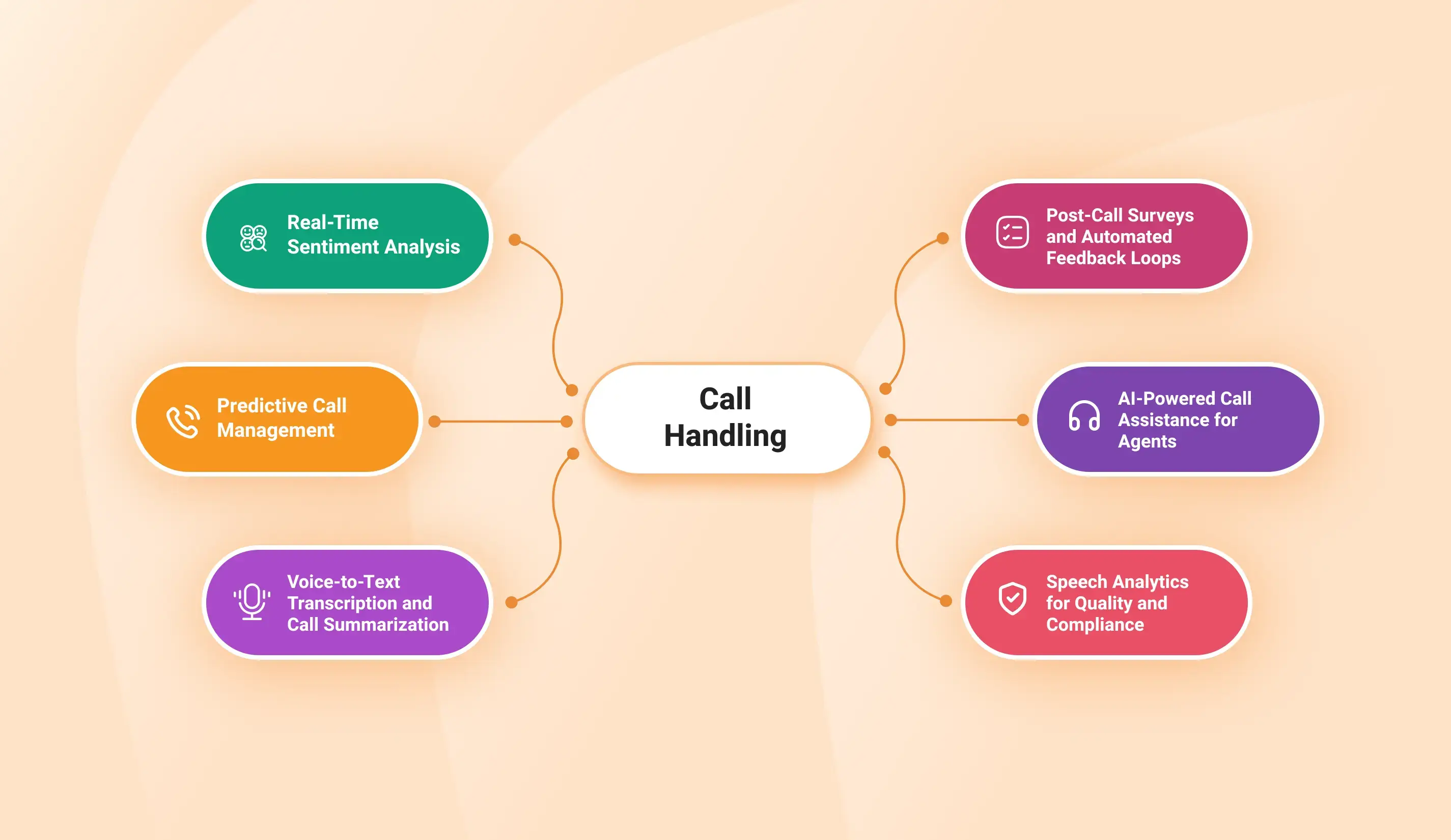
Real-Time Sentiment Analysis
It analyzes tone, pace and language usage during conversations to assess customer feelings. When irritation or stress rises the system alerts the agent or supervisor enabling them to handle the situation before it escalates into a complaint. In some cases, a stress management quiz can support agents in recognizing their own stress responses and improving control during live conversations.
Predictive Call Management
By studying past call patterns, this system predicts busy hours and sudden volume spikes. Supervisors can organize shifts ahead of time, maintaining queues and enabling agents to work without continuous stress.
Voice-to-Text Transcription and Call Summarization
Each call is instantly transcribed into text. Of relying on memory or brief notes agents and managers can easily revisit conversations. Summaries offer a snapshot of the events without requiring a replay of the call.
Are you worried about high production costs?
Check out our blog to learn how to reduce customer support costs and enhance CX simultaneously.
Post-Call Surveys and Automated Feedback Loops
Feedback is collected after a call while the experience remains recent. Gradually trends emerge indicating areas of service and where enhancements are necessary enabling teams to improve with certainty.
AI-Powered Call Assistance for Agents
During calls, agents receive quiet guidance, such as knowledge suggestions and reminders. The system does not replace the agent's judgment, but it helps answer faster and avoid mistakes.
Speech Analytics for Quality and Compliance
Calls are reviewed in bulk to detect missing information, risky phrases, and unclear explanations. This protects the business and helps maintain consistent service quality across teams.
Conclusion
Inbound call handling is not just about answering calls. It is about understanding customers, solving problems quickly, and making every conversation count. The strongest call centers are not measured by how many calls they handle, but by how well they listen, respond, and follow through. They invest in people as much as in platforms. They simplify workflows instead of adding complexity. And they equip agents with the right tools and training to do their work well.
When crafted thoughtfully, inbound operations evolve beyond a support role. They transform into a foundation of trust, loyalty, and lasting competitive edge.
Boost your call handling and start providing better CX now.

Upgrade Your Support
Streamline Operations
Empower Your Team
Frequently asked questions (FAQ)
Vignesh N

With deep expertise in cloud telecommunications, I help readers explore the latest trends in VoIP and modern business communication. At TeleCMI, I focus on educating businesses with clear, practical insights, making complex telecom concepts easy to understand. I’m passionate about helping organizations improve efficiency, enhance customer engagement, and adopt smarter communication strategies.


 for your Call Center and Enhance Efficiency_.webp)