How Much Does VoIP Cost in 2026? A Complete Pricing Guide for Businesses

8 mins read

Posted on Jan 29, 2026
.webp)

Vignesh N
SEO


Vignesh N
SEO






Effective communication drives customer engagement, boosts productivity, and enhances business growth, and VoIP has become the standard for modern organizations' communication. It replaces traditional phone lines with internet-based systems that are flexible, scalable, and feature-oriented. With many Voice over Internet Protocol (VoIP) services out there, choosing the right one for your business is a critical decision, but understanding its costs can be confusing.
From subscription plans to hidden fees, the cost of VoIP can range greatly depending upon the provider as well as the size of the business. This blog breaks down everything you need to know about VoIP costs, helping you make informed decisions that fit your budget.

Key Takeaways
 VoIP pricing ranges from $15 to $50 per user per month.
- Start-ups and SMEs will be charged lower rates, while rates will increase progressively for mid-sized teams and enterprises.
- Additional features, hardware, and integrations can increase the total monthly expense.
- Yearly payments tend to be more cost-effective on a user basis than monthly payments.
- Understanding the inclusion of hidden expenses, such as international call costs, setup fees, and taxes, is one aspect that helps with accurate budgeting.
What is VoIP & Why is it Important for Businesses?
Voice over Internet Protocol (VoIP) is a cloud-based telephone system that allows organizations to handle both incoming and outgoing calls through the internet rather than telephone lines, wires, and servers. It converts the voice into a digital signal, stores it in packets, and then transmits it over broadband connections to the receiver.
- Cost Efficiency: Lower call rates than traditional landline services and lower rates for international calls.
- Scalability: Adding or deleting users will be a simple procedure when your team is expanded.
- Flexibility: The employee is able to answer and transfer calls from anywhere, utilizing computers, cellular phones, or IP phones.
- Feature-Rich Communication: Advanced features such as call forwarding, auto-attendants, voicemail-to-email, call recording, and CRM integrations enhance productivity and customer service.
- Future-Ready Connectivity: VoIP phone systems integrate with collaboration tools, helping teams streamline workflows and stay connected in a hybrid or remote environment.
How Much Does VoIP Actually Cost?
VoIP pricing can vary widely depending on your provider, the number of users, and the features your business needs.
- Provider Pricing: Each VoIP service providers uses its own pricing model. Some keep costs low by offering limited features, while others bundle advanced tools into higher-priced plans.
Ⅰ) Startups & Small Businesses (1–20 users): $15–$25/user/month
Ⅱ) Mid-Level Teams (20–50 users): $25–$40/user/month
Ⅲ) Enterprises & Call Centers (50+ users): $40+/user/month
- Feature Add-Ons: Call recording, auto-call routing, voicemail-to-email, or call analysis tools are usually offered on a paid basis. Generally, the costs run in the range of $5 to $30 or more per user every month, based on the tools or complexity.
- Number of Phone Numbers: Direct local numbers or toll-free numbers generally cost $5–$15 per number per month, especially if you need multiple lines for different departments or regions.
- Hardware: IP Phones are available in the $150-$200 price range each. If your team uses softphone technology on computers or smartphones, you do not need to spend extra money on hardware.
- Number Porting: Transferring existing telephone numbers to the new service typically costs $10 to $30.
- Setup & Installation: One-time setup charges may be levied based on the nature of your system setup.
- International Calling: International calls are usually billed separately. Rates often range from $0.01 to $0.05 per minute for popular destinations like the US, UK, or Canada. Costs increase for less common regions.
- CRM and Collaboration Integrations: Integration of the VoIP system with CRM systems or collaboration tools can often have its benefits, but it can also have its drawbacks in the form of an additional charge of up to $10 to $50 monthly for every user or a one-time fee for the setup of the system.
- Taxes & Regulatory Fees: Local taxes, telecom surcharges, and regulatory fees are often added to your monthly bill. Depending on your location, these can increase costs by 5–20 percent.
- Maintenance and Support: Basic support is usually available. However, premium support, especially 24/7, could be an add-on for businesses, particularly those depending on telephone availability.
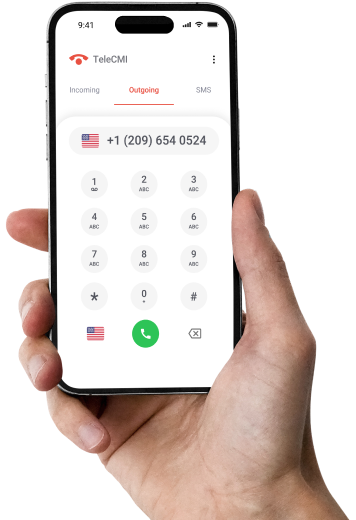
See how affordable VoIP becomes when it’s built for business growth — get started with TeleCMI today.
Start 14 Days Free TrialVoIP Pricing Comparison Table
What Are the Cost Benefits of Switching to a VoIP for Small Businesses?
Making the switch to VoIP yields more than cutting-edge communication; it also promises a better bottom line for small businesses:
1. Lower Infrastructure Costs: There are no costs for setting up and using phone lines, as the technology requires access to the Internet to work.
2. Reduced Call Costs: VoIP calls for both local and international distances are less expensive than the call charges for landline or mobile services.
3. Scalable Pricing: Only pay for what you need! Adding or removing user accounts is easy and not expensive.
4. Minimal Hardware Requirements: VoIP requires only a limited amount of hardware to run; this can generally come in the form of various systems, either in the form of softphones or various devices at home that people own.
5. Fewer Hidden Fees: As compared with traditional telephone systems, with VoIP there is a lesser chance of additional bills.
6. Integrated Tools: VoIP integrates all other tools, including CRM, collaboration, and productivity software, making the workflows smooth and less operationally expensive.
7. Remote Work Enablement: The employees would have the flexibility to conduct voice conversations from anywhere. Hence, there is no need to invest in offices.
Conclusion
VoIP has changed the dynamics of business communication, providing flexibility, scaling, and economies of operation that a landline-based phone system simply cannot match. Base prices range from $15 to $50 per month per user, but the total cost will vary based on the feature set, hardware requirements, integrations, and other potential hidden fees.
It provides businesses with an opportunity to save on infrastructure costs, assists in managing workflows, and enables a team to remotely or flexibly function without losing call quality and functionality. Therefore, opting for a plan that suits your workflow and budget will create a communication system for efficient and sustainable growth.
Reduce calling costs without compromising quality — explore TeleCMI today.

Transparent Pricing Structure
Reliable Business-Grade Calling
Real-Time Call Monitoring
International Reach Made Simple
Frequently asked questions (FAQ)
Vignesh N

With deep expertise in cloud telecommunications, I help readers explore the latest trends in VoIP and modern business communication. At TeleCMI, I focus on educating businesses with clear, practical insights, making complex telecom concepts easy to understand. I’m passionate about helping organizations improve efficiency, enhance customer engagement, and adopt smarter communication strategies.



.webp)