What is AI Assist? A Beginner’s Guide for Businesses

10 mins read

Posted on Mar 18, 2026


Vignesh N
SEO


Vignesh N
SEO





Most teams today are expected to respond faster, handle more requests, and still maintain a consistent level of service. This becomes difficult as volume grows. People end up repeating the same answers, searching for information, or switching between tools.
AI Assist addresses this problem in a practical way. It works alongside employees and helps them handle tasks with more clarity and less effort. It does not take over the job. It supports it.
This guide explains what AI Assist is, how it works, and how businesses are using it in day-to-day operations.

Key Takeaways
 AI Assist facilitates daily work by providing prompt recommendations, composing answers, and managing repetitive activities.
- It learns from historical data, comprehends conversations, and connects to business tools like help desks and CRM systems.
- In contrast to chatbots, AI Assist prioritizes assisting human agents in consumer interactions rather than taking their place.
- It can be used extensively in customer support, sales, and operations to help speed up the process and provide clarity to the conversation.
- Businesses can benefit from this, too, by responding quickly, communicating effectively, and minimizing manual intervention.
- AI Assist is becoming better, too, with its presence now being felt through voice-based tools such as AI phone assistants and call support tools.
What is AI Assist?
AI Assist is a system that helps people complete tasks by offering timely suggestions, automating routine work, and organizing information. These systems are primarily used by the support team to quickly address problems, provide context-based answers, and make recommendations for upselling.
- In a customer support setting, it can read incoming queries and suggest replies based on past conversations.
- For sales, it can highlight the next step based on customer behavior.
- In internal workflows, it can summarize updates or trigger actions.
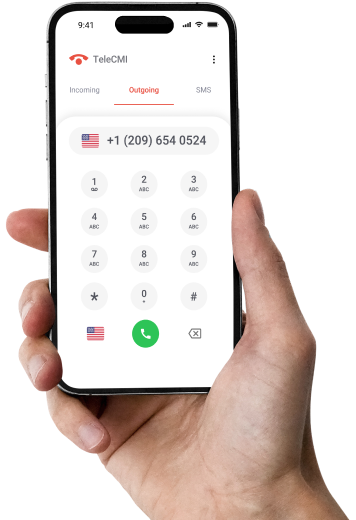
How an AI Phone Assistant Works
These AI Agents work through four stages:
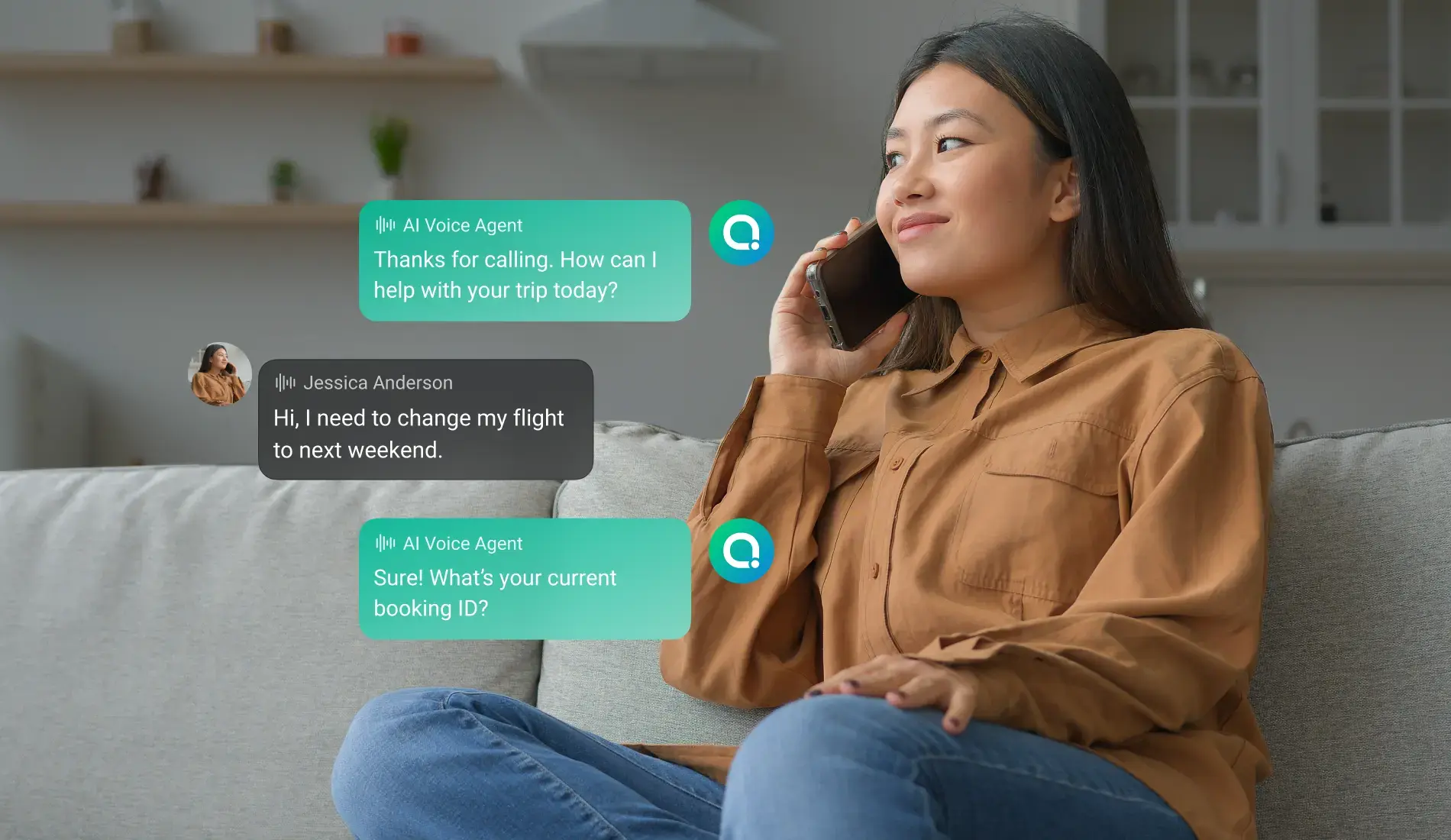
1. Speech Recognition: The system automatically listens to the phone call and converts the spoken language into text for analysis.
2. Natural Language Processing: By analysing the text, the system determines what the caller is saying and the meaning behind their words. It even understands their intent, sentiment, and context.
3. Real-Time Response Generation: Based on the analysis, the system automatically generates recommendations by gathering information, processing responses, converting language, and personalizing communication.
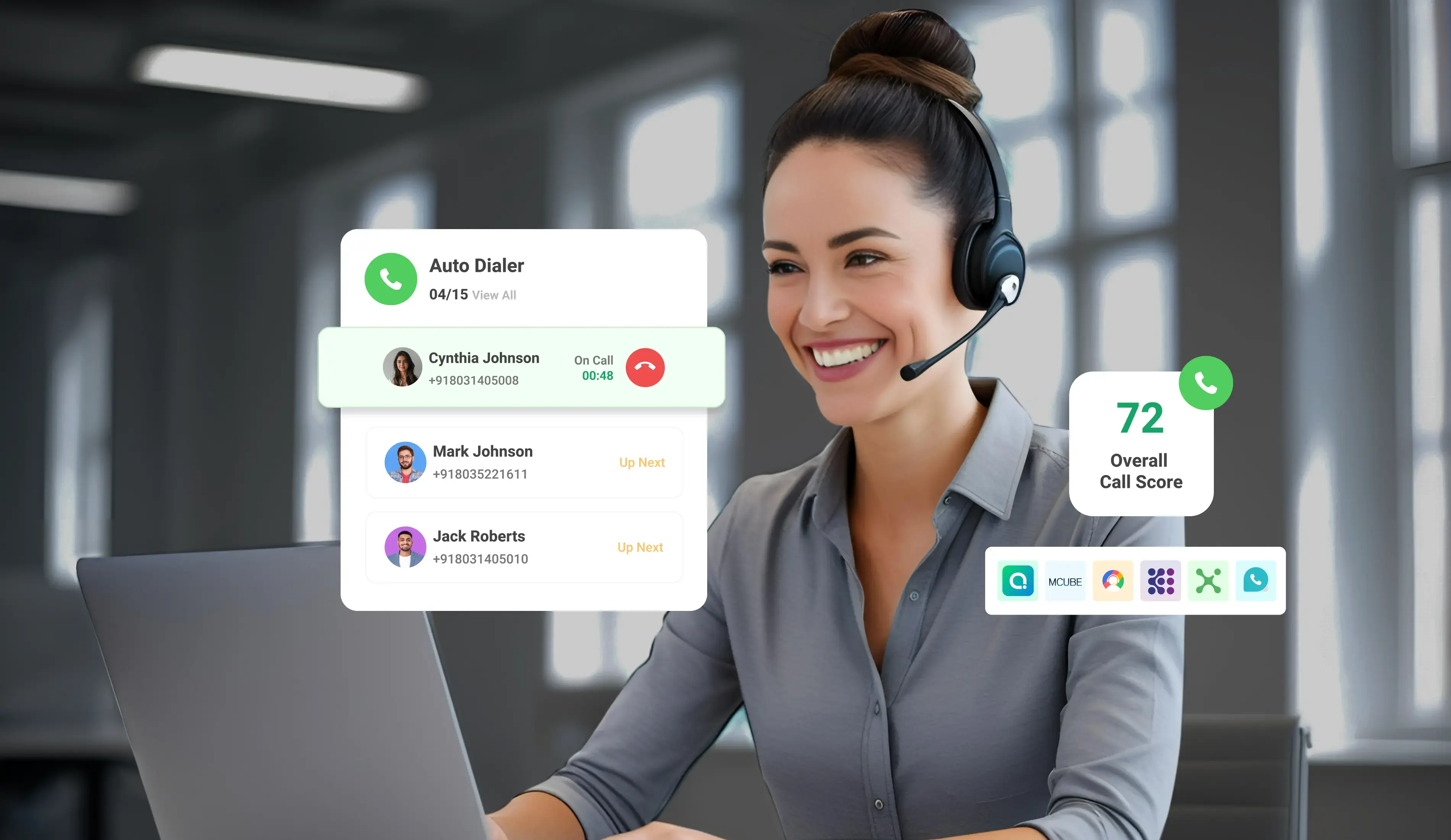
4. Integrations: It must link with existing business systems such as CRM, calendars, knowledge bases, and workflow tools to access key data, update records, automate workflows, and trigger actions.
Key Features of AI Assist in Contact or Call Center
Here's a list of core features you have to consider while investing on an AI assistant.
- Smart Call Routing: The system should not only route the call but also analyze the customer’s data and “match-make” the customer with the right agent.
- Live Co-Piloting: The agents should be prompted or suggested with knowledge base suggestions in real-time during the customer engagement. This way, the agent is able to have all the information they need without making the customer wait on the line. Platforms like RankLLM can further enhance AI search visibility by ensuring that knowledge base content is optimized for AI-powered search engines such as ChatGPT, Gemini, and Perplexity, making accurate information easier to surface when it's needed most.
- Voice-to-Text Analytics: Every single customer interaction is automatically transcribed into a searchable asset. Easily track all customer interactions and instantly search for specific keywords and trends.
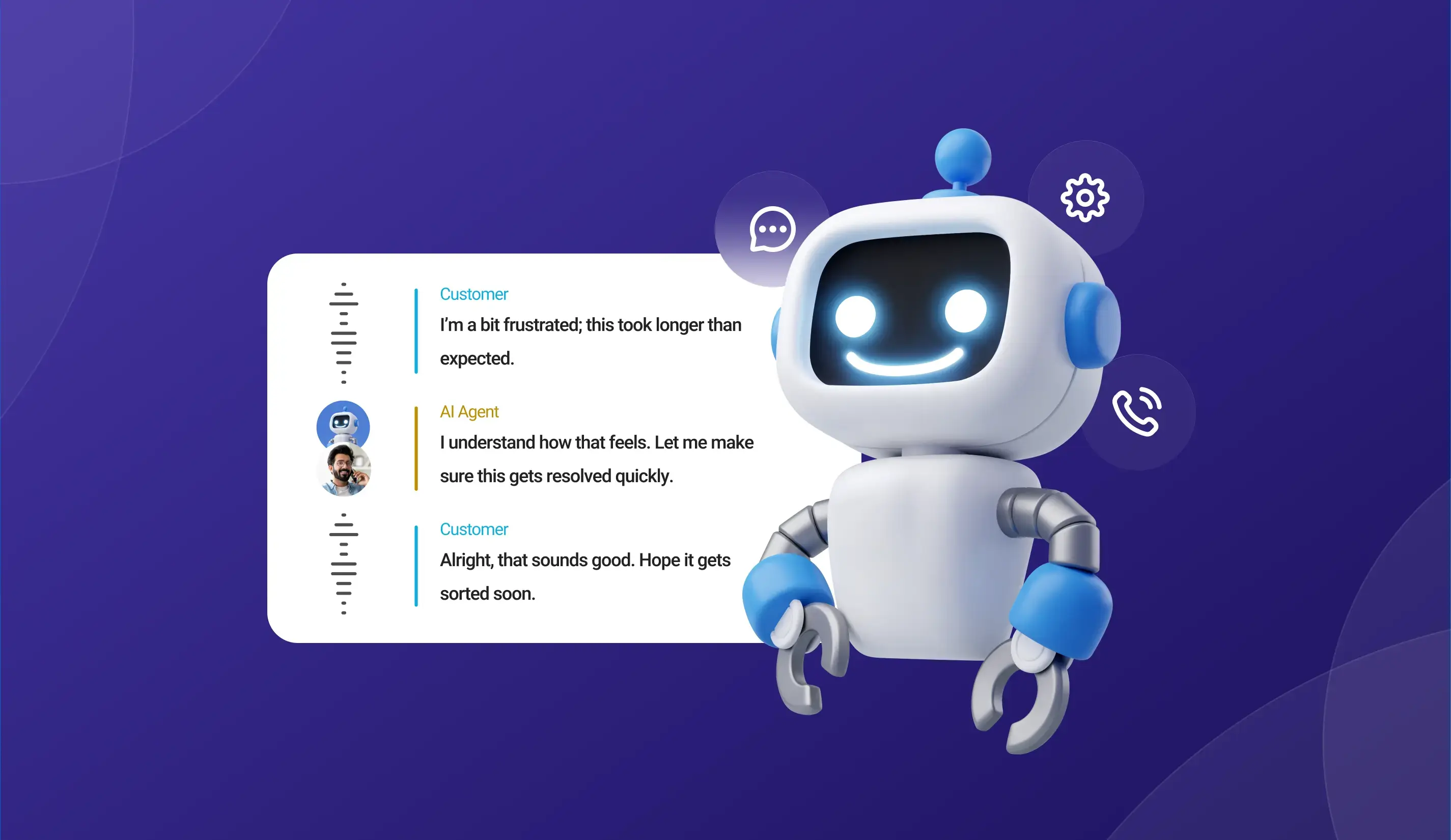
- Emotional Intelligence (EQ) Monitoring: The system "reads between the lines" of the customer's words, allowing it to sense frustration or urgency. If a call is going sour, it can automatically send a supervisor or provide guidance on de-escalation techniques.
- Instant Interaction Recaps: AI eliminates the "after-call work" (ACW) by drafting concise summaries of the problem, the resolution, and any required follow-up tasks. These summaries can be improved by checking them with an AI detector and fine-tuning any generic, low-effort phrasing before they're logged.
- Self-Service Gateways: Complex bots perform high-volume, repetitive tasks such as password reset or booking updates 24/7. Human agents are reserved for high-stakes problem resolution.
- Scalable Quality Assurance: Supervisors do not need to listen in on a sampling of only 2% of conversations to monitor quality. AI reviews 100% of conversations to ensure compliance and score quality in real-time.

Key Market Insights
● AI-assisted agents resolve 13.8% more inquiries per hour.
● Routine task automation through AI saves mid-market companies $250k annually.
● AI can correctly route 95% of incoming support tickets with 90%+ accuracy.
● AI-powered knowledge bases are 4x faster at searching documents than manual methods.
● Real-time sentiment analysis can increase sales by up to 20%.
Benefits of AI Assist for Businesses
Better Use of Time
A large part of the workday is spent repeating the same steps. Searching for past replies, writing similar responses, and updating records can take more time than expected. AI Assist reduces this load by bringing the right information forward when it is needed, making workflows smarter through advanced AI development services.
- Helps agents find answers during conversations instead of switching between tools
- Cuts down the time spent rewriting similar responses
- Frees up space for work that needs attention and judgment
Faster Customer Responses
Customers are more likely to notice delays than anything else. Even a slight delay can make a difference. AI Assist assists the team in responding with more confidence and fewer delays.
- Suggests responses instantly based on the customer’s query
- Helps maintain consistent response times, even during peak hours
- Helps minimize the need for customers to be put on hold during voice calls
Consistent Communication
It is common that, as there are more people in the team, the responses may vary in terms of accuracy as well as the tone of the response, which, as the number of people increases, creates confusion in the long run.
- Guides agents with responses that follow company standards
- Ensures similar questions receive similar answers
- Helps new team members get up to speed without guesswork
Lower Operational Pressure
The support teams may face a lot of pressure during peak hours. This is because the number of queries increases, making it hard to maintain the pace. AI Assist relieves this pressure without making things complicated.
- Manages repetitive queries that do not need human intervention
- Helps support teams during peak hours
- Reduces the need to increase the number of support teams
Better Insights for Decision Making
While AI Assist is good at handling conversations, it is also good at making sense of them. It brings patterns to the forefront that may be impossible to notice in the midst of things.
- Shows the problems customers face most often
- Shows the way conversations are handled over time
- Gives a better view of the process to be improved
A Simple Way to Get Started with AI Assist
You do not need a complex rollout to begin using AI Assist. A simple and consistent approach is much better and makes your team comfortable with the change.
Step 1: Start with one clear problem
What’s the one thing that holds you back as a team each and every day? It may be a repetitive question in your support team’s inbox or a delayed response.
Step 2: Find a tool that fits naturally
Choose a platform that aligns well with your business model and workflow. This will make it a whole lot simpler for your team to use it.
Step 3: Use your own data as a base
Conversations in the past will help the system get a sense of your tone and process, and how you typically respond to things.
Step 4: Introduce it to a small group first
Keeping things simple is much better. This allows you to test it in real-life situations and monitor how it’s helping you in real-time.
Step 5: Adjust as you go
Small improvements based on team feedback will make the system more reliable. Once you feel its use cases, expand it to users across teams without rushing.
Popular AI Assist Tools
AI Assist is not limited to one type of product. It shows up in different forms, depending on how and where it is used. Some tools are designed for business communication, while others are designed for general use. Beyond communication-focused solutions, businesses are also adopting creative AI tools such as AI image generators 2026 to streamline visual content creation, marketing campaigns, and brand assets.
- TeleCMI: It is designed for business communication and assists in managing calls and automating interactions.
- Google Assistant: Widely used, especially for voice commands, reminders, and other simple tasks that can be carried out for day-to-day activities.
- Amazon Alexa: It is popularly known for voice interactions and connects users to various devices and services.
- Microsoft Copilot: Helps users write and manage data, which is mostly used for office-related purposes with Microsoft products.
The above are examples of the environments in which AI Assist can be used. In some cases, it supports business operations. In others, it simplifies everyday tasks.
The Future of AI Assist
- AI Assist will eventually move away from simply responding to requests and begin assisting the team before the problem is ever raised.
- It will begin to understand the situation more clearly, not just the text of the request, but the context behind the request.
- Voice-based AI Assist will become more reliable for conversations and quietly assist the agent during an active conversation.
- AI Assist will become even more integrated with the tools of the day and be able to accomplish tasks with even less human intervention.
- The responses will also be more individualized, based not just on past requests but also on the actions of the individual customer.
- The team will use AI Assist, not only for requests but also for guidance, especially for deciding what the next action in the conversation will be.
Conclusion
AI Assist is finding its place in everyday business work, not as a replacement for people, but as steady support behind the scenes. It helps reduce repetition, brings useful information at the right time, and allows teams to focus on what actually needs their attention. By automating routine tasks such as call routing, basic inquiries, and documentation, AI reduces the burden on human agents and allows them to focus on complex, high-value interactions.
From reactive service hubs to proactive and intelligent support, AI Assist transforms the way call and contact centers make life easier for agents and more efficient for performance and customer engagement.
Get AI Assist for Your Business – Simplify Support & Boost Productivity Today!

Real-Time AI Suggestions
Faster Response & Resolution
Reduced Manual Workload
Seamless CRM & Tool Integration
Frequently asked questions (FAQ)
Vignesh N

With deep expertise in cloud telecommunications, I help readers explore the latest trends in VoIP and modern business communication. At TeleCMI, I focus on educating businesses with clear, practical insights, making complex telecom concepts easy to understand. I’m passionate about helping organizations improve efficiency, enhance customer engagement, and adopt smarter communication strategies.