What Is an Auto Dialer and How Does It Work?

14 mins read

Posted on Apr 08, 2026

Saravana Kumar
SEO


Saravana Kumar
SEO




"If your agents are spending half their shift listening to dial tones, busy signals, and voicemails — you're not running a call center. You're running an expensive waiting room."
Here is the reality of manual dialing: the average call center agent manually dialing through a contact list spends only 10–15 minutes of every working hour in actual conversation. The remaining 45–50 minutes disappear into ringtones, busy signals, voicemail prompts, and the seconds wasted locating and dialing the next number. That is a 75–80% productivity loss before a single word is spoken to a customer.
For a small contact list, this approach was efficient. But when you have 100+ volumes of contacts for a single agent, it becomes operationally unsustainable. Call centers that continue relying on manual dialing are not just losing productivity: they are paying agents full wages to do work a machine could handle in milliseconds.
Auto dialer software was created to bridge the productivity gap. This guide includes everything: what auto dialers are, how auto dialers work with a step-by-step explanation, the four different types of auto dialers, the benefits of auto dialers, the rules and regulations of auto dialers, and how to choose an auto dialer software.

Key Highlights & Data Points
 An auto dialer is a software solution that automates a company's outgoing calls by eliminating the need for manual dialing and for agents to connect to live calls.
- The global value of the auto dialer software market in 2025 is $4.8 billion, and it is expected to reach $ 25.52 billion by 2030, growing at nearly 42.3 CAGR.
- A modern auto dialer is a system integrated with the CRM system, senses the receiver’s emotion, assists agents, provides real-time analytics, and automates call recording and summarization.
- Predictive dialers account for 34% of the total auto-dialer market share, the largest segment in terms of revenue.
- North America is the highest contributor to the auto dialer market in terms of revenue, at 38%, whereas the Asia-Pacific market is growing at a CAGR of 17+%.
What is an Auto Dialer?
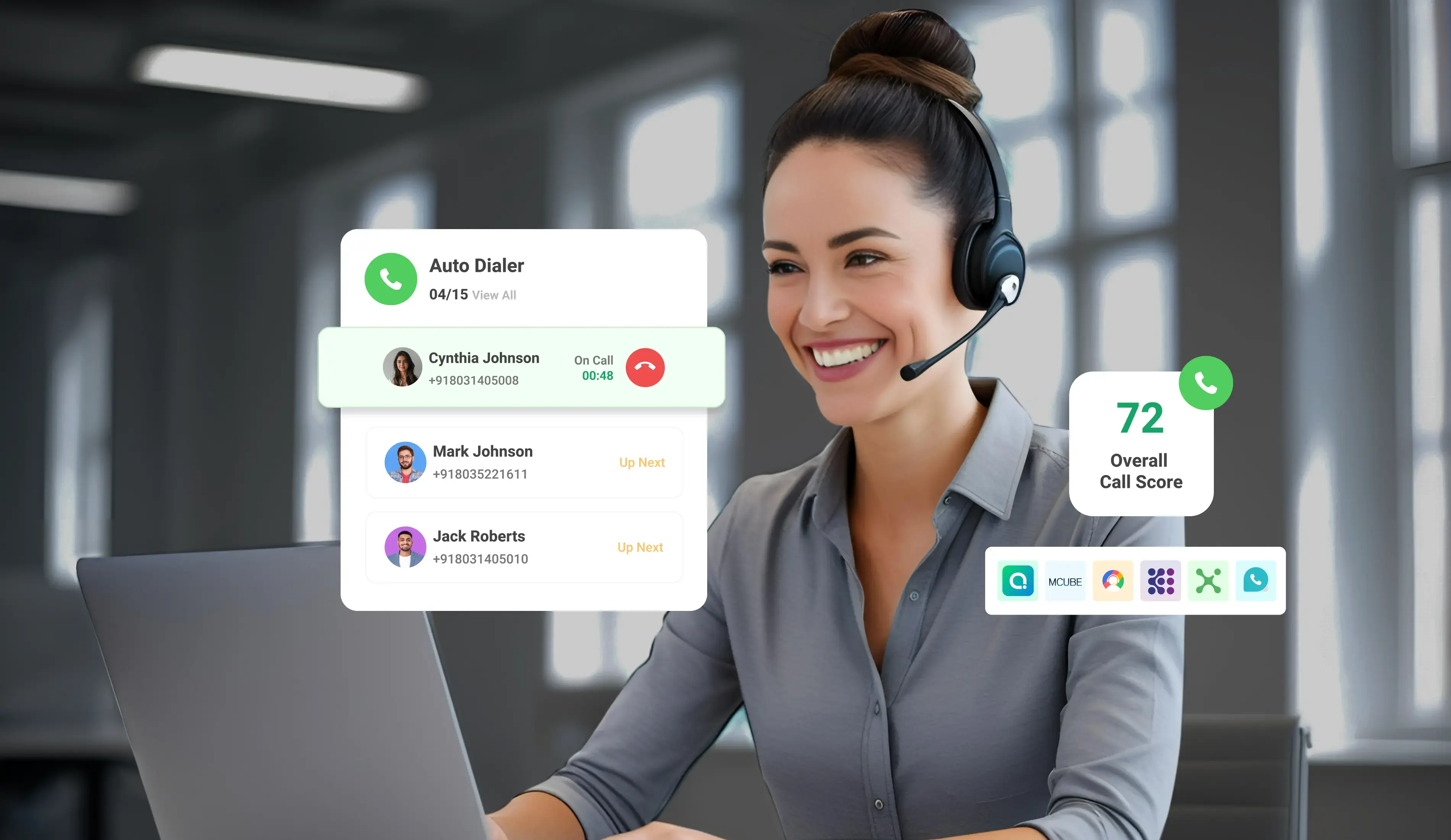
Auto dialer is a software application that allows a representative to make outgoing phone calls using a list of contacts. It does not require the representative to make the actual phone calls. Once the phone is answered by a live person, the auto dialer connects the phone call to the representative or a voice message, depending on the configuration.
The key feature of an auto dialer is intelligent filtering. An auto dialer is not a simple dialer that dials faster. An auto dialer filters out non-productive outcomes before they waste the representative's time. The non-productive outcomes include a busy signal, a phone that is not answered, a phone that is disconnected, a voicemail, etc. Live, confirmed human outcomes are provided to the agents.
A modern auto dialer is not just for dialing phone calls. It is a comprehensive platform that is used for integrating CRM, receiver emotions, agent recommendation, real-time analytics, auto-recording, auto-summarization, and outbound calling.
Manual Dialing vs. Auto Dialing: At a Glance
The performance difference between manual dialing and auto dialing is not marginal; it is fundamental. Here is a direct comparison based upon the factors that have the greatest direct impact upon call center operations and costs.
How an Auto Dialer Works (Step-by-Step)
Here's exactly what happens when an auto dialer runs a campaign:
1. Begin uploading your contact list in CSV format, via your existing CRM integration, or via an API connection. Input team details, campaign information, and timing.
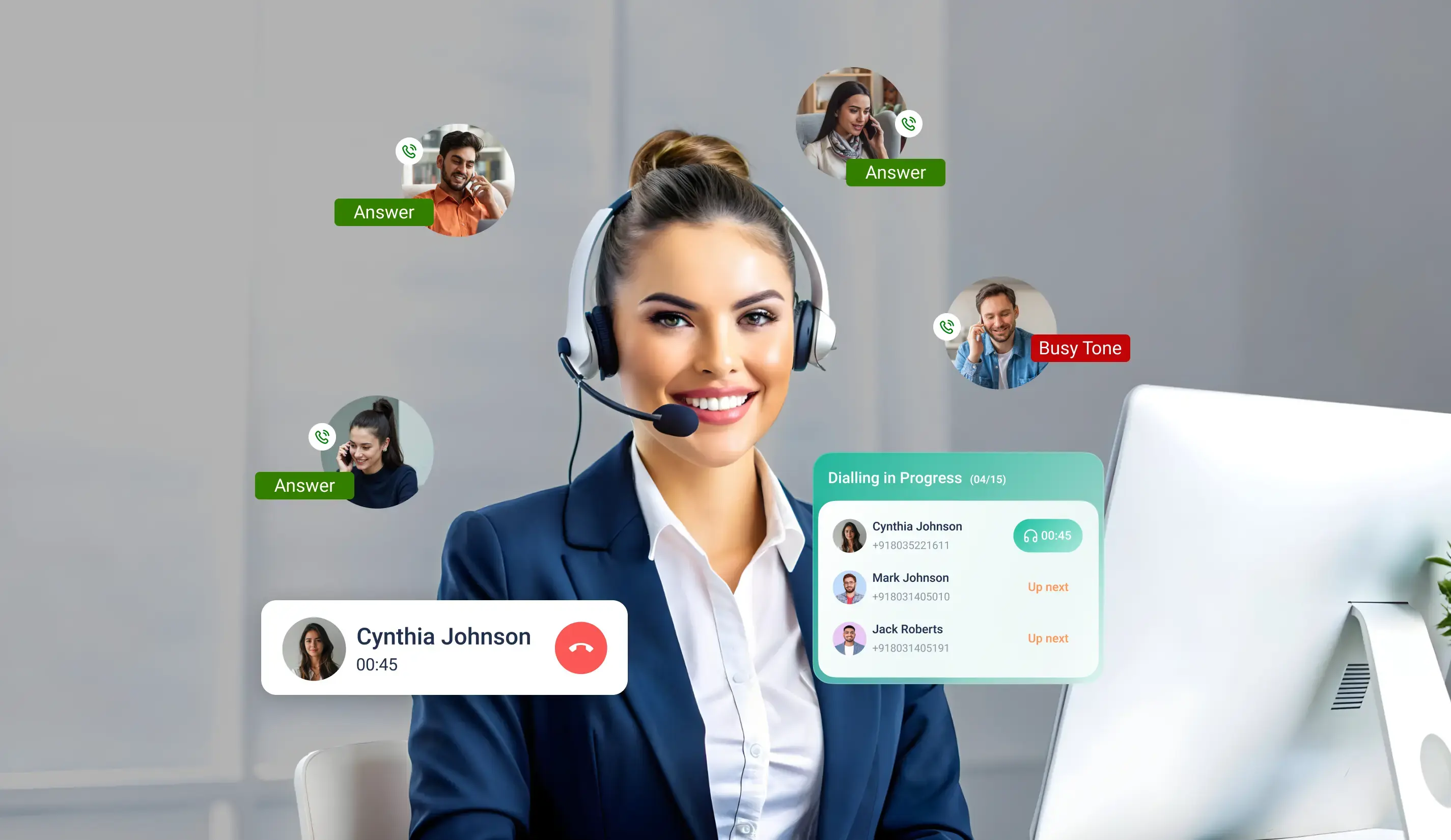
2. The auto dialer software dials the number with the type of dialing chosen, whether it is predictive dialing or progressive dialing. It checks if there are any violations of DNC and whether it is within the correct time zone.
3. By using Answering Machine Detection (AMD), it is determined whether a human answered the call or just an answering machine. If a human answered, it is connected to the agent within a second or two. The agent’s screen also displays the name, account history, and CRM information.
4. If it is a busy signal, an unanswered line, or an answering machine, it simply disconnects and dials the next call.
5. Supervisors receive real-time monitoring with live displays of connect rates, agent talk time, call lengths, etc.
Types of Auto Dialers
There are two types of auto dailers
Predictive Dialer
Uses algorithms to dial multiple numbers simultaneously, predicting agent availability and call answer rates in real time.
Talk time: 40–50 min/hour
Min. team: 15+ agents
Best for: High-volume B2C campaigns — telemarketing, debt collection, mass surveys, political GOTV, insurance outreach.
Progressive Dialer
Makes the next call as soon as an agent hangs up. Dials only one number at a time per agent.
Talk time: 30–40 min/hour
Min. team: Any size
Best for: Healthcare, financial services, customer support follow-up, and any environment where abandoned calls are a legal concern.
Benefits of Using an Auto Dialer
The case for adopting an auto dialer is backed by clear, measurable outcomes. Each of the benefits has actual figures to prove the effectiveness of using an auto dialer.
- Dramatically More Talk Time: Auto dialers increase the talk time of agents from 15-20 minutes/hour to 40-50 minutes/hour. Higher Productivity per Agent: Businesses report 200–300% efficiency improvements. Agents handle 100–300+ calls per day vs. 40–80 with manual dialing.
- Significant Cost Savings: With the assistance of an auto dialer system, it is possible for the business to make the same number of calls with fewer agents. The cost of operation also comes down as the agents become more productive.
- Improved Agent Morale: The absence of drudgery caused by dialing, busy signals, or voicemails improves the morale of agents. Several businesses have reported lower agent turnover rates with the implementation of auto dialer systems.
- Real-Time Analytics: With real-time analytics, it is possible for businesses to make real-time decisions. Live metrics are made available through real-time analytics, including connect rates, agent talk time, abandon rates, ROI, etc. A VoIP ROI Calculator can also help businesses evaluate the potential financial returns of their communication investments.
- Built-In Compliance Tools: The system can automatically check against DNC lists, restrict calls by time zone, control the rate of calls, and handle customer consent.
- Seamless CRM Integration: Auto recording the call in the CRM system, tracking the disposition of the agent, and creating follow-up tasks. The CRM system will be updated without the need to manually do it.
- Better Customer Experience: With progressive dialers, the agent is fully aware of the customer information before the call is connected. The consumer will be provided with a more informed agent interaction experience rather than the agent frantically searching for information in the middle of a phone call.
Key Features to Look For in Auto Dialer Software
Not all auto dialer platforms are equal. When evaluating solutions, prioritize these core capabilities:

Automatic Dialing
The auto dialer will automatically dial phone numbers from a pre-prepared list of contacts. This will save agents a lot of manual work and allow them to focus on more important phone calls.
Smart Call Routing
When a phone call is connected, the dialer will route the call to the agent. This will ensure a smooth flow of phone calls, eliminating waiting times.
CRM Integration
The dialer connects with customer management systems. Agents can view customer details, past interactions, and notes during the call.
Call Recording
Conversations are recorded for quality monitoring, staff training, and compliance. Managers can review calls to understand performance and improve service.
Analytics and Reporting
The platform collects data on call activity, answer rates, and agent performance. These reports help teams measure campaign results and make better decisions.
Campaign Scheduling
Users can schedule calling campaigns and organize contact lists in advance. The system can also manage retries for unanswered calls.
Voicemail Detection
The dialer can detect when a call reaches voicemail. It can either skip the call or leave a pre-recorded message automatically.
Do Not Call Compliance
The system checks numbers against Do Not Call lists. This helps companies avoid restricted contacts and follow telemarketing regulations.
Local Caller ID
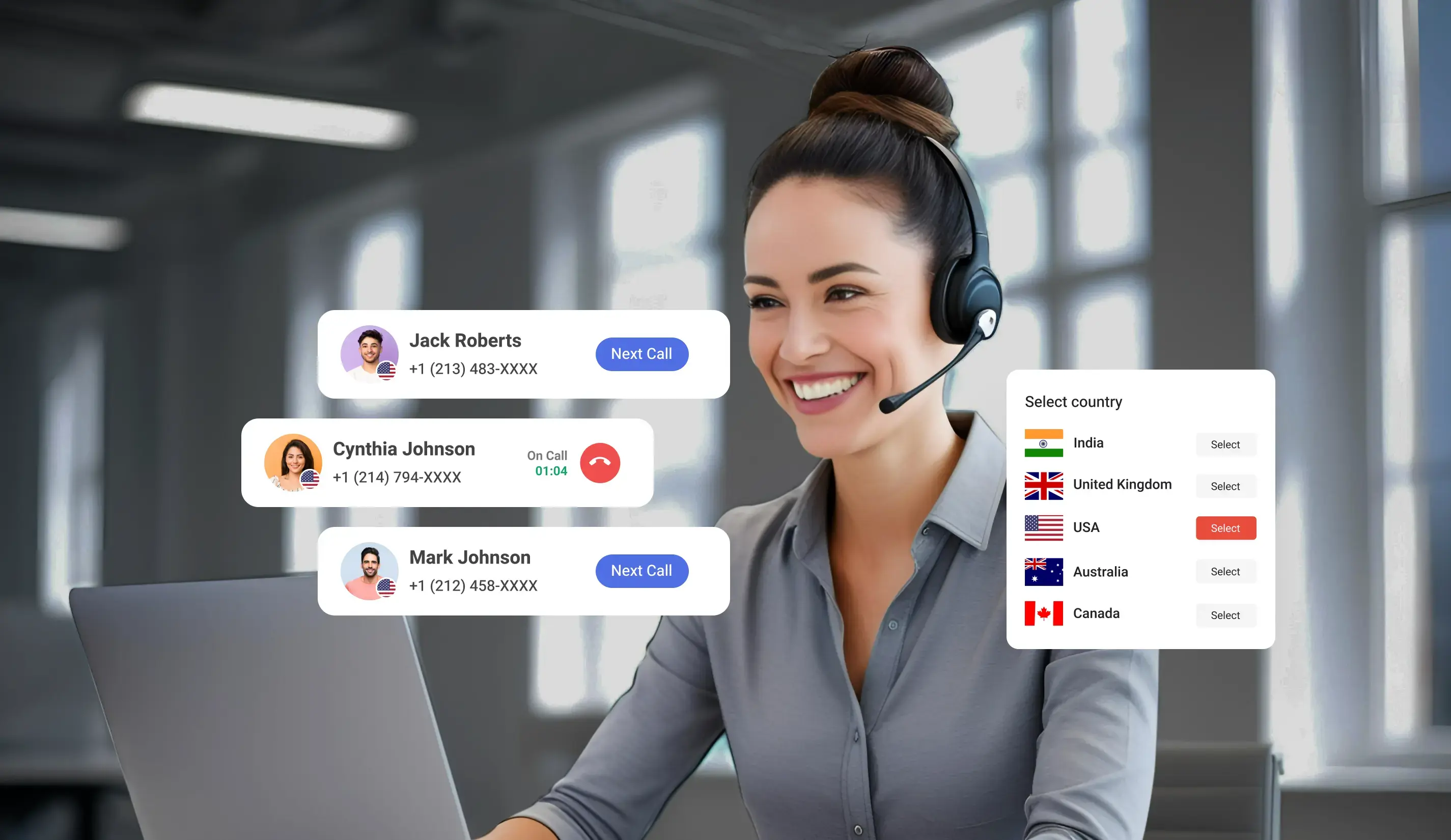
The dialer can display a local phone number to the recipient. Calls that appear local are often more likely to be answered.
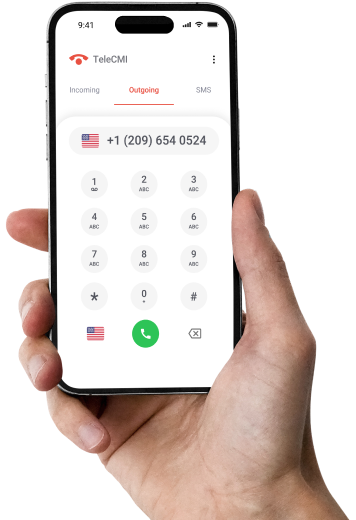
Transforms outbound calling from a manual, inefficient process into a high-performance operation
Explore Auto DialerCompliance and Security
An auto dialer should reflect responsible communication practices. The focus is not only on technology but also on protecting customers and maintaining trust.
GDPR
Applies to any organization contacting EU residents. Consent must be freely given, specific, informed, and unambiguous. Customers hold the right to erasure. Data must be handled securely with access restricted. Fines up to 4% of global annual revenue for violations. GDPR requires organizations to implement strict data protection and privacy controls across all personal data processing activities.
HIPAA
Patient information accessed via auto-dialed calls, scheduling, follow-up, and billing must comply with HIPAA Privacy and Security Rules. Recording of phone calls with protected health information must be stored with special restrictions.
PCI-DSS
If agents record payment card information during dialed calls, the PCI DSS must be implemented. The platform must be PCI compliant, and the recording of phone calls with card number information must be encrypted with strict access restrictions according to the latest PCI standards.
Industries That Use Auto Dialers
Auto dialer software is an inter-industry technology. Any organization that has a high volume of outbound dialing efforts, regardless of industry, can take advantage of this technology.
Financial Services and Banking
Banks and financial institutions rely on regular communication with customers. Auto dialers help teams manage tasks such as:
- Payment and collection follow ups
- Loan application updates
- Account renewal reminders
- Fraud alert notifications
- Outreach for new financial products
Healthcare
Healthcare providers often need to contact patients for routine communication and follow up care. Dialing systems help staff reach patients efficiently while keeping schedules organized.
Common uses include:
- Appointment reminders
- Prescription refill alerts
- Post treatment follow ups
- Insurance verification calls
- Preventive care outreach
Real Estate
Real estate agents work with large lists of potential buyers and sellers. Consistent outreach helps maintain relationships and uncover new opportunities.
Auto dialers support activities such as:
- Qualifying property leads
- Scheduling property showings
- Following up with interested buyers
- Reconnecting with expired listings
Insurance
Insurance companies depend heavily on customer communication throughout the policy lifecycle.
Dialers are often used for:
- Policy renewal reminders
- New prospect follow ups
- Claims status updates
- Cross sell and upsell outreach
Telemarketing and Retail
Retail and direct sales teams often run outreach campaigns to promote products or reconnect with past customers.
Typical campaigns include:
- Product promotions
- Seasonal sales announcements
- Customer win back efforts
- Loyalty program invitations
Education
Schools and universities frequently communicate with students, parents, and alumni. Outbound calling supports both administrative and engagement activities.
Examples include:
- Follow-ups with prospective students handled by an Enrollment agent
- Tuition payment reminders
- Alumni fundraising campaigns
- Event invitations and announcements
Political Campaigns
Large scale communication is essential during election cycles. Campaign teams often rely on automated dialing to reach voters efficiently.
Common uses include:
- Voter outreach efforts
- Public opinion surveys
- Donation requests
- Volunteer recruitment
IT and Telecommunications
Technology companies use outbound calls for both customer engagement and business development.
Auto dialers assist with:
- SaaS trial follow ups
- Customer upgrade offers
- Post support satisfaction surveys
North America holds the largest market share in the global auto dialer software market, accounting for over 38% of total revenue in 2024.
Understanding the ROI: A Practical Scenario
10-Agent Outbound Team: Manual vs. Auto Dialer (Monthly Estimates)
Modeled from: Intelligent Contacts (2023), Fact.MR (2024), ComputerTalk (2024), JustCall (2025). Actual results vary by campaign type and configuration.
Cost Considerations
The value of an auto dialer system cannot be gauged on the basis of its price. Before going ahead with a cost analysis, businesses need to answer a few practical questions about using such a system.
Key questions to consider:
1. What is the current time spent by agents on dialing calls and waiting for them to connect?
2. Will the auto dialer allow for a higher number of conversations on a daily basis?
3. Does the auto dialer allow for a higher list size to be handled by a team of agents?
4. Is there be a clear view of all aspects of the auto dialer?
5. Will it save your business from inefficiencies like repeated dialing or follow-up calls?
6. How easily can it be integrated with your current tools like CRM software?
7. Does it allow your business to scale with your growth plans for increasing outreach?
8. Will it increase your team's productivity enough to offset the overall cost of using it?
Pricing Model of Auto Dialers
Most providers offer one of the following pricing structures.
Subscription pricing
Cloud dialers often charge a monthly fee per user or per agent. This model works well for businesses that want predictable operating costs.
Usage-based pricing
Some platforms charge based on call minutes or the number of calls placed. This approach suits companies with fluctuating campaign volumes.
Implementation costs
Businesses may need to consider setup fees, CRM integration work, and training for agents and managers.
Conclusion
The traditional manual dialing was the foundation of an outbound calling process. With the growth of customer lists, the process was inefficient and labor-intensive. The auto dialers changed the traditional manual dialing process by introducing automation into the dialing process. This ensures that the customer service representatives talk more with customers and spend less time waiting for connections.
The auto dialer is the core of the calling process for organizations with an outbound calling strategy. With CRM integration, analytics, and regulatory features, it helps organizations operate more efficiently in their calling campaigns. The choice of auto dialers is based on the type of business, campaign objective, and features that can support the business processes. With auto dialers, organizations can leverage maximum productivity, connect more calls, and have a more efficient outbound calling strategy in place.
Ready to Replace Dial Tones with Real Conversations?
Zero manual dialing. High conversion. Increase in ROI
Frequently asked questions (FAQ)
Saravana Kumar

I’m passionate about exploring and sharing insights on modern cloud communication technologies. At TeleCMI, I focus on helping readers understand the evolving world of cloud telephony and IVR solutions in a simple yet in-depth way. My goal is to deliver genuine value by turning complex telecom concepts into clear, actionable knowledge that builds trust and drives innovation.