What is Post-Call Analytics? The Modern Approach to Conversation Intelligence

11 mins read

Posted on Nov 21, 2025

Vignesh N
SEO


Vignesh N
SEO






Every customer conversation contains valuable insights about expectations, emotions, and unmet needs. However, many organizations still rely on manual quality checks. As a result, most customer feedback goes unnoticed, causing businesses to miss opportunities to improve retention, revenue, and compliance.
Post-call analytics closes this gap by analyzing every call and turning customer conversations into actionable insights.
Every call contains signals such as emotions, keywords, and customer intent. Together, these signals provide valuable feedback that businesses can use to improve performance.

Key Takeaways:
 Full-call visibility strengthens quality assurance and reduces manual workloads.
- Emotion and sentiment insights deepen customer understanding.
- Early detection enables one to recover quickly from dissatisfaction.
- Predictive analytics reduces churn and enhances customer lifetime value.
- Automated scoring and coaching accelerate agent development.
- Seamless intelligence workflow with CRM and BI tool integrations.
What is Post-Call Analytics?
Post-call analytics uses AI and natural language processing (NLP) to analyze conversations after a call ends. This allows businesses to analyze every interaction across different languages, tones, and contexts.
Here's how it works conceptually:
- AI listens to customer and agent interactions.
- Speech recognition converts conversations into text.
- Tone, intent, and emotion are interpreted by language models and sentiment engines.
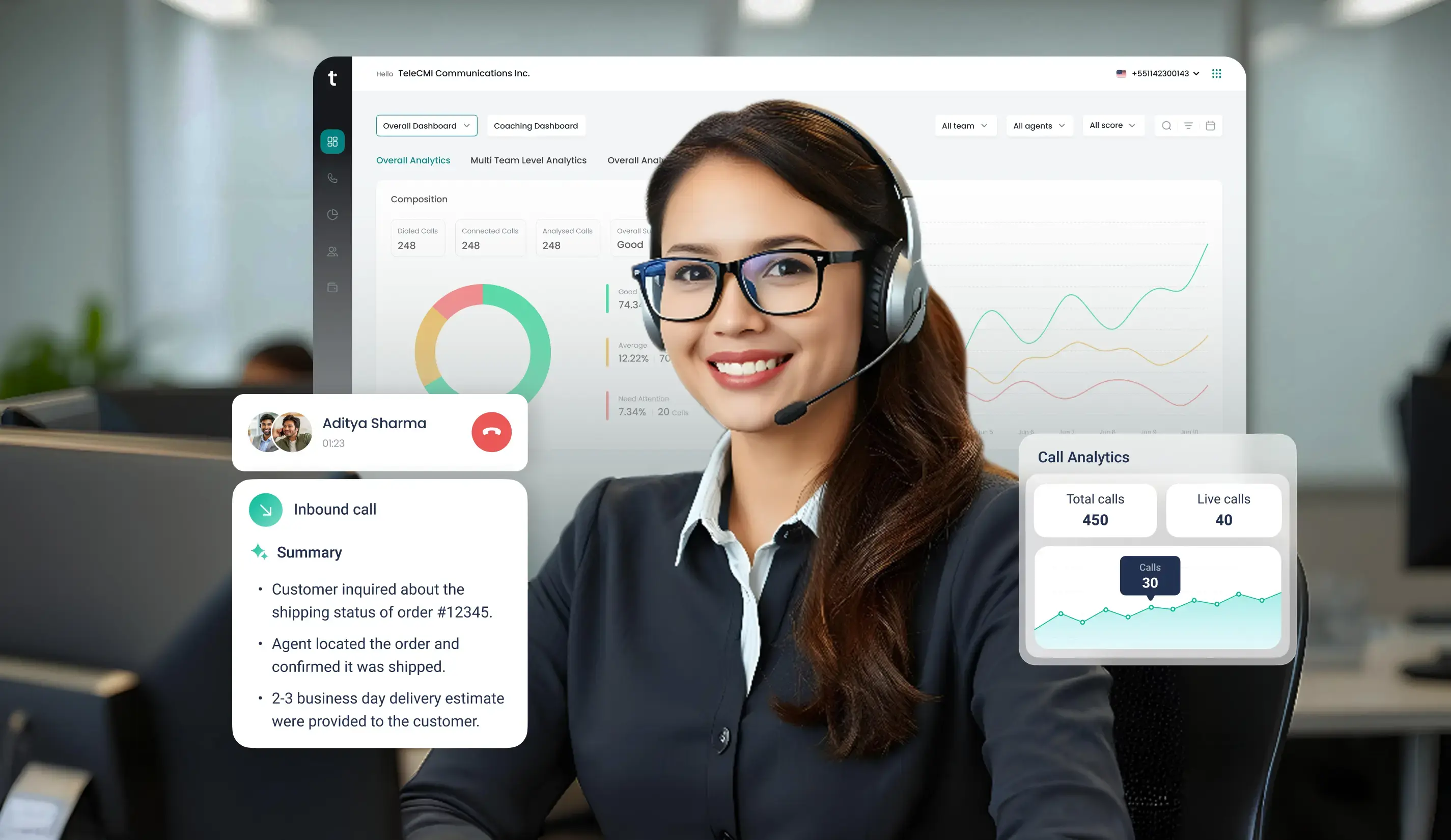
- Dashboards visualize patterns that show risk, opportunity, and performance indicators.
- Insights flow into operations for coaching, product decisions, and proactive customer engagement.
It helps businesses identify trends, improve performance, and make better decisions using conversation data.
Why Businesses Need Post-Call Analytics
Each call carries data on buying intent, dissatisfaction, compliance risk, or product feedback. Here's how it changes the game for modern businesses:
Customer Retention:
Customers often express frustration through their tone, word choice, and emotions rather than directly stating their dissatisfaction. Post-call analytics helps teams identify these warning signs and take action before customers leave. It detects raised tone, repeated issues, or words like "again," "still waiting," or "cancel."
How It Helps:
- Analyzes the tone and sentiment to pinpoint unhappy customers.
- Automatically notify teams when customer retention action is required.
- Predicts churn patterns for proactive engagement.
Enhance Operational Efficiency:
Instead of spending long hours reviewing random calls, supervisors can focus on coaching insights, compliance improvement, and workflow optimization by automating quality monitoring across 100% of interactions, generating instant reports and agent scorecards.
- Automates QA, scoring, and reporting for every call.
- Cuts manual review time by up to 90%.
- Provides agent-level dashboards for targeted coaching.
Revenue Growth:
Customer conversations often reveal sales opportunities. Statements such as "I'm looking for better options" can indicate upsell or cross-sell opportunities. Post-call analytics identifies these opportunities and shares them with the appropriate teams.
- Detects upsell and cross-sell signals in real time.
- Integrates insights directly with CRM systems.
- Identifies these cues and routes them to the right teams
Compliance & Risk Control:
A single compliance mistake in regulated industries can result in financial penalties and reputational damage. Automated analysis helps businesses identify compliance risks across all recorded conversations.
- Flags non-compliant or misleading agent statements.
- Ensures 100% call audits for full transparency.
- Maintains digital trails for regulatory reporting.
CX Improvement:
Sentiment analysis and emotion detection help businesses better understand customer experiences and improve service quality.
- Tracks customer sentiment and agent empathy consistently.
- Identifies top-performing communication patterns.
- Reduces repeat calls and boosts CSAT scores.
Business Intelligence:
Post-call analytics converts voice data into actionable insights that support marketing, product development, and customer experience initiatives. These insights help businesses understand customer needs, behavior, and brand perception.
- Reveals emerging issues before they trend.
- Connects sentiment with revenue and NPS metrics.
- Powers data-driven CX, marketing, and product strategies.
How Post-Call Analytics Work
Post-call analytics turns moments into measurable intelligence in a five-stage process:
Capture:
Every inbound and outbound call is automatically recorded and securely stored. This provides complete visibility into customer interactions and supports compliance requirements.
Transcribe:
AI-powered speech recognition converts conversations into searchable text, regardless of accent or speaking style. The result is a searchable record that can be analyzed for trends and insights.
Analyze:
Using NLP and sentiment analysis works in post-call analytics, the system identifies customer intent, emotional tone, risks, and opportunities. Tasks that once required hours of manual review can now be completed automatically within minutes.
Visualize:
Insights are displayed in dashboards that highlight sentiment trends, agent performance, and compliance metrics. This clarity of view helps the team make real-time, evidence-backed decisions with confidence.
Act:
The final step is turning insights into action. The integration with CRM and performance systems allows for real-time coaching, automated alerts, and trend-based forecasting, helping businesses improve performance and decision-making.
Solving Real Business Challenges with Post-Call Analytics
From customer experience to compliance, sales to product innovation, this technology empowers all teams with the insights they need to make better, faster, and more confident decisions.
Here's how different business functions benefit:
For CX Teams:
Supervisors gain a complete view of the customer journey and can identify what worked well and what needs improvement. AI spots negative sentiment, frustrations, or confusion even when customers don't complain. Agents could thus receive data-driven feedback to reduce bias, and supervisors could henceforth provide personalized coaching.
For Sales:
Post-call analytics captures buying signals automatically and helps sales teams act on them before competitors. It can detect prospects' language, purchase readiness, and product curiosity, and it surfaces calls to find where the agent missed a chance to offer related services or upgrades.
For Compliance:
It continuously monitors conversations to support compliance efforts, making sure every customer interaction meets legal, ethical, and organizational standards. It automatically flags non-compliant statements, data violations, or misrepresentations.
For Product Teams:
For product teams, Post-call analytics aggregates this hidden feedback to help product teams make smarter, evidence-based decisions. AI identifies common requests, complaints, and usability issues while tracking customer sentiment trends. This continuous insight loop enables ongoing AI optimization, allowing models and workflows to be refined based on real user interactions and emerging behavioral patterns.
How Post-Call Analytics Drives Measurable Business
Value:
By turning unstructured voice data into actionable intelligence, organizations can make smarter, quicker, and more profitable decisions. Let us look at some of the ways in which different industries are already benefiting through measurable business outcomes.
Banking & Financial Services:
Post-call analytics lets banks and NBFCs audit 100% of calls, find opportunities for cross-sell, and identify emotional indicators leading to customer churn.
How It Delivers Value:
- It can detect early signs of dissatisfaction or defection in both credit card and loan servicing calls.
- Automatically flags risky or non-compliant agent statements.
- Identifies missed revenue opportunities for cross-selling personal loans or cards.
Telecom:
With post-call analytics, they make sense of millions of support interactions to surface emotion trends, service pain points, and root causes of dissatisfaction.
How It Delivers Value:
- Identifies high-frustration segments, such as billing confusion or network complaints.
- Helps improve agent empathy and consistency in tone.
- Automates QA to give 100% review coverage versus traditional random sampling.
E-commerce:
Post-call analytics allows VoIP for e-commerce businesses to understand their customer emotions, intent and make agents take timely action to reduce churn.
How It Delivers Value:
- Identifies early refund or cancellation intent in post-delivery calls.
- Outlines regular dissatisfaction trends relative to products or logistics.
- Empowers retention teams with personalized coaching and follow-up scripts.
Healthcare:
Healthcare organizations use post-call analytics to review patient interactions, improve communication quality, and support compliance requirements.
How It Delivers Value:
- Empathy and reassurance in each patient call are measured.
- Identifies any potential for miscommunication in treatment explanations or appointment coordination.
- Provides performance coaching for non-clinical staff based on sentiment data.
Insurance:
The insurance industry is based on clarity, compliance, and credibility. It ensures that every discussion on claims, explanation of policy, or renewal calls is transparent and consistently done to minimize friction and risk.
How It Delivers Value:
- Detects misleading language or potential compliance violations in calls.
- Pinpoints emotional spikes that may indicate fraudulent intent or dissatisfaction.
- Supports training programs for claim agents to improve tone and empathy.
Hospitality & Travel:
Post-call analytics allows travel agencies to track guest emotions, analyze their satisfaction and identify service gaps across booking, compliance, and feedback for hotels, airlines and agencies.
How It Delivers Value:
- Triggers frustration, such as disputes on pricing, errors in booking, and delays.
- Highlights high-performing service patterns for agent training.
- Integrates with CRM systems for proactive guest recovery.
Manufacturing & Logistics:
Automatic analysis of calls allows manufacturing companies to gain clarity on interaction between all B2B verticals, allowing them to understand operational queries, vendor coordination, and issue resolution across distributed teams.
How It Delivers Value:
- Flags recurring issues in order, delivery, or support communications.
- Measures tone and clarity in B2B client interactions.
- Feeds operational dashboards for better decision-making.
Integration with the Digital Ecosystem
Post-call analytics delivers its greatest impact when it’s fully connected to the existing customer experience ecosystem. It offers real value when information flows seamlessly across your organization's digital ecosystem.
CRM Integration:
The integration of post-call analytics with CRMs such as Salesforce, HubSpot, and Zoho telephony integration means that every conversation would update automatically to the customer record. Teams receive AI-generated summaries that highlight customer intent, sentiment, and recommended next steps.
BI Dashboards:
By linking post-call analytics to BI tools such as Power BI or Tableau, leaders can visualize trends in emotion, call outcomes, and agent performance over time. This creates an executive-level view of what customers feel, not just what they say.
Contact Center Platforms:
Post-call analytics integrated with cloud telephony or contact center platforms such as TeleCMI, Genesys, Avaya, or Five9 allow for real-time action instead of just post-call reporting.
Data Governance & Ethical AI:
Post-call analytics platforms should follow strong data governance, compliance, and ethical AI practices.
The Next Evolution of Post-Call Analytics
The next generation of post-call analytics is no longer just "after the call." It brings together real-time insight, multiple communication cues, and predictive intelligence to help teams engage more thoughtfully, make smarter decisions, and stay ahead of customer needs.
1. Real-time Coaching with Emotion Detection: Supervisors get live alerts on active calls to direct agents toward empathy, accuracy, and compliance.
2. Multimodal Analytics: Combining the call data with chat transcripts and video meetings gives organizations a 360° view into the sentiment, urgency, and satisfaction of customers across platforms.
3. Predictive NPS: AI can predict customer satisfaction scores even before surveys have been sent, by assessing tone, keyword frequency, and historical context. The result is that CX leaders can take proactive-not reactive-actions in the management of loyalty.
4. Voice Biometrics + Sentiment Fusion: Voice biometrics coupled with emotion analysis creates an improved fraud prevention. Systems can identify not only who is calling but also how they feel-a critical factor in detecting coercion or social engineering attempts.
5. Generative AI: In conjunction with post-call analytics, call summaries, next steps, and even customer insights, can be written automatically inside CRMs.
Conclusion:
Every customer call contains valuable information about customer expectations and experiences, and experience. However, these stories have been buried beneath the sea of thousands of recordings over the years, waiting to be heard. That's changed with post-call analytics, though. Post-call analytics turns conversations into insights that support better business decisions.
With the analysis of 100% of customer interactions, enterprises no longer rely on guesswork or partial feedback. Instead, they take action on verified, data-backed insights in decisions over how they sell, support, and serve. Automated quality monitoring, predictive insights, and coaching tools help teams respond faster, personalize interactions, and reduce customer churn.
The future belongs to organizations that can listen deeply, respond accurately, and act effectively and with post-call analytics, be assured that you will achieve it all and help your organization thrive. With your free trial, see how every conversation can guide your agents toward better customer handling through meaningful insights, performance patterns, and real-time improvement cues.
See Post-Call Analytics in Action:

Full-Call Visibility & Automated Quality Monitoring
Real-Time Sentiment, Emotion & Intent Detection
AI-Powered Coaching, Compliance Alerts & Predictive Insights
Vignesh N

With deep expertise in cloud telecommunications, I help readers explore the latest trends in VoIP and modern business communication. At TeleCMI, I focus on educating businesses with clear, practical insights, making complex telecom concepts easy to understand. I’m passionate about helping organizations improve efficiency, enhance customer engagement, and adopt smarter communication strategies.