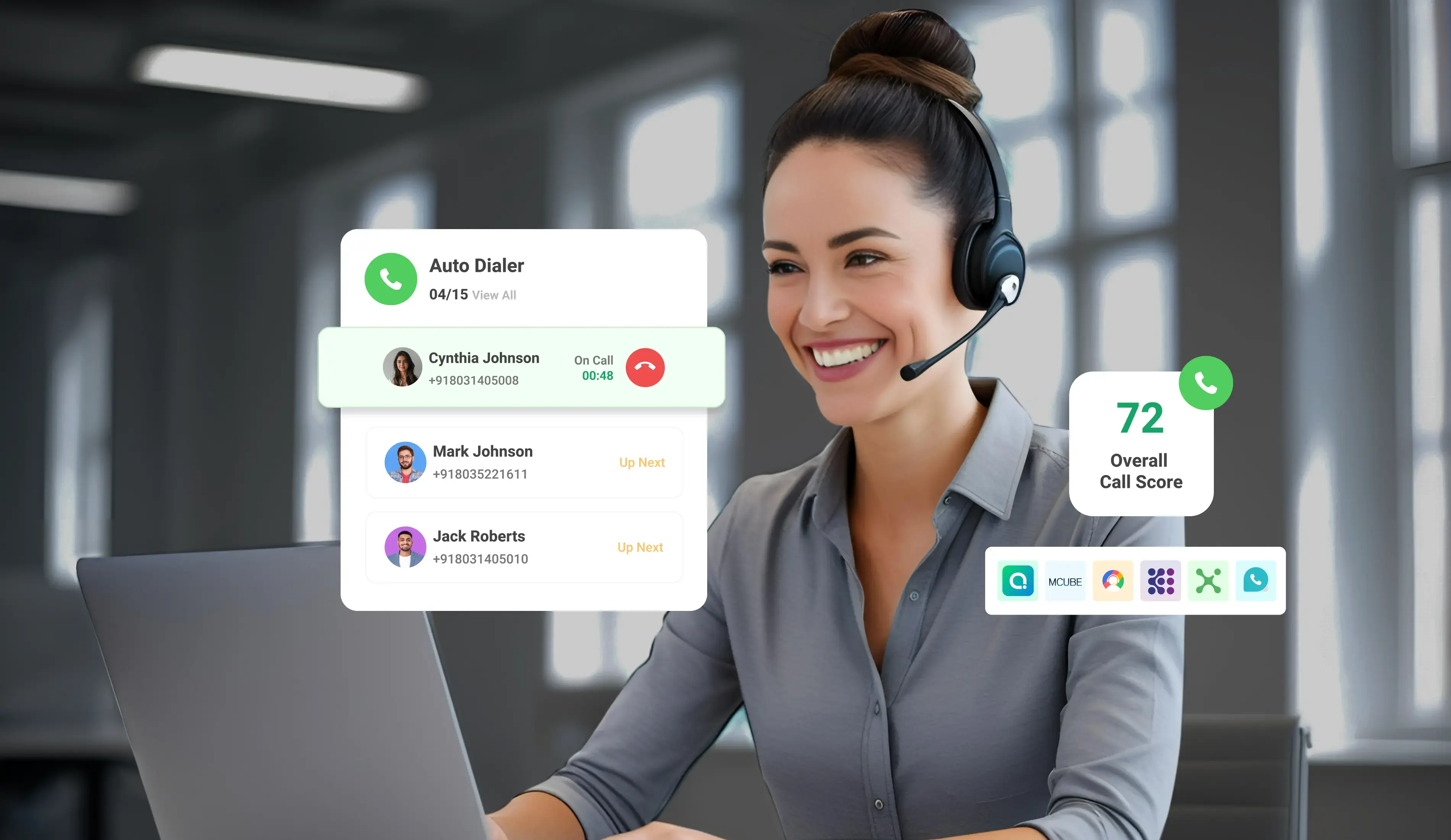
Why Customers Keep Calling Repeatedly and How IVR Breaks the Follow-up Cycle

6 mins read

Posted on Feb 22, 2026
 (1).webp)

Saravana Kumar
SEO


Saravana Kumar
SEO






Repeated calls aren’t rude customer behavior; they're a broken communication loop. When customers lack confirmation, update or closures, customers are left with no choice but to call again and again to get an idea of the query status.
For example, a customer calls with a question. They get a response, but the issue isn’t fully clear. Later the same day, they call again. And the next day, they call once more. It repeats until they get clear visibility.
Agent-only organizations are reactive and respond to calls only after they occur. In contrast, organizations that use IVR and automation are proactive, providing real-time status updates, notifications, and evidence of action even before the customer has a reason to answer the call.
By shifting from a reactive to a proactive communication approach, organizations not only reduce repeat calls but also increase trust, confidence, and efficiency in the resolution process. In this blog, we will discuss what leads to repeat calls, how IVR helps to address this issue, and the impact on TeleCMI.

Key Takeaways
 Repeat calls are often a sign of communication gaps rather than customer behavior.
- Avoid repeated calls using smart IVR and automation
- Standardized call handling and proper follow-ups helps agent to win customer trust.
- Avoid multiple calls for the same issue with timely SMS and callbacks.
- Analytics can be employed to improve processes and the customer experience.
- Why Customers Call Back Again and Again
Why Customers Call Back Again and Again
One of the main reasons customers repeatedly call is an unresolved issue. This not only causes frustration and lowers satisfaction but also increases operational costs.
Lack of Confirmation Erodes Trust
Customers are often left with promises such as “we’ll get back to you.” However, when follow-ups are not made or issues are not resolved, customers tend to lose faith and may eventually switch to a competitor.
Missing Updates Increases Redial
Customers usually call businesses for updates, not to have a conversation. They want to know the status of their orders, complaints, or support requests. When the information is not readily accessible or when follow-ups are not made, customers tend to call back again, and the cycle continues.
Inconsistent Responses Across Agents
Each new agent a customer interacts with may necessitate a new story. Inconsistent or incomplete responses may necessitate a new call to resolve the inconsistencies, thus initiating a cycle of repeat calls.
Other factors that may contribute to repeat calls include poor communication, lack of knowledge, unrealistic expectations, and unawareness of self-service capabilities.
How to Break the Follow-Up Loop Using Intelligent IVR
Customers who are not aware of the status of their order, complaint, or service request tend to call back, sometimes repeatedly, just to get the information they need. An intelligent IVR system can unwind this follow-up loop by providing real-time status information, consistent treatment by agents, and notifications without making the customer experience more frustrating.
IVR as a Real-Time Status Engine
Modern IVR systems can pull live data from CRM platforms and communicate it directly to the customer. Instead of waiting on hold or calling back, customers hear updates like: “Your ticket is under review” or “Your request was resolved today at 3 PM.”
In this way, the system eliminates the uncertainty of waiting and provides customers with no reason to redial, thus ending the cycle of repeated calls.
Sticky Agent for Consistent Resolution
Returning customers to the same agent is beneficial because the agent is already aware of the customer’s background, thus avoiding the need for a repeat explanation. This not only increases the efficiency of the resolution process but also prevents frustration for the customer.
Reduce Repeat Calls with Smart IVR
Provide status updates, callbacks, and consistent routing before customers redial
Virtual Hold and Callback Options
Long wait times are a major driver of repeat calls. Customers who abandon the line or redial immediately put additional pressure on the system. IVR service that offer callback or virtual hold options allow customers to choose when they are contacted. This not only eases queue congestion but also prevents repeated attempts, creating a smoother experience for both customers and agents.
Automated SMS for Proof of Action
Even brief automated messages can have a big impact. An IVR-triggered SMS confirming a ticket number, providing a status update, or outlining next steps gives customers visible proof that action is underway. In many cases, a single message can prevent one or two follow-up calls per customer, offering reassurance and reducing repeat contact.
Measuring the Impact Using TeleCMI Analytics
TeleCMI analytics offers valuable information that can be used by businesses to evaluate performance, maximize IVR solutions, and enhance the overall customer experience
.
Repeat Call Rate (RCR)
The Repeat Call Rate measures customers who make calls on multiple occasions within a short period of time. By examining the RCR, businesses can determine trends and categorize calls based on the following factors:
- Issue type
- Time gap between calls
- Resolution status
This allows organizations to pinpoint which problems are driving repeat contacts and take targeted action to resolve them more effectively.
Average Handling Time vs. Real Resolution
Having a low Average Handling Time(AHT) is not necessarily a sign of high-quality service. The customer may have a short call, but the problem may not be fully resolved. With IVR pre-qualification, customers are served well, and this results in:
- Shorter calls
- Higher resolution rates
- Improved customer satisfaction
The aim is not only to be fast but also to resolve effectively, thereby avoiding follow-up calls.
Optimizing IVR with Real Data
Analytics help you uncover where customers get stuck in the IVR system, and reviewing that data helps you simplify IVR menus, remove dead-end options, and improve call flow logic. It makes the system easier to navigate, reduce frustration, and help customers reach the right resolution faster, lowering the chance of repeat calls.
Conclusion
In the end, repeat calls are not a reflection of impatient or difficult customers. They are a signal that communication has broken down somewhere along the line. By using proactive solutions like intelligent IVR, automated notifications, and consistent agent handling, organizations can give customers the clarity and confidence they need. Each update, SMS, or callback is not just a technical touchpoint. It is a way to reassure customers that their concerns are being taken seriously.
When communication is smooth, the cycle of repeat calls will naturally decrease. Customers will feel heard, agents will work more effectively, and businesses will earn both trust and loyalty. Addressing the issue before it leads to a call is what will change the customer experience from frustration to satisfaction.
Make Repeat Calls a Thing of the Past

Automate status updates
Enable sticky agent routing
Offer virtual hold & callback
Track repeat call rates with analytics
Frequently asked questions (FAQ)
Saravana Kumar

I’m passionate about exploring and sharing insights on modern cloud communication technologies. At TeleCMI, I focus on helping readers understand the evolving world of cloud telephony and IVR solutions in a simple yet in-depth way. My goal is to deliver genuine value by turning complex telecom concepts into clear, actionable knowledge that builds trust and drives innovation.