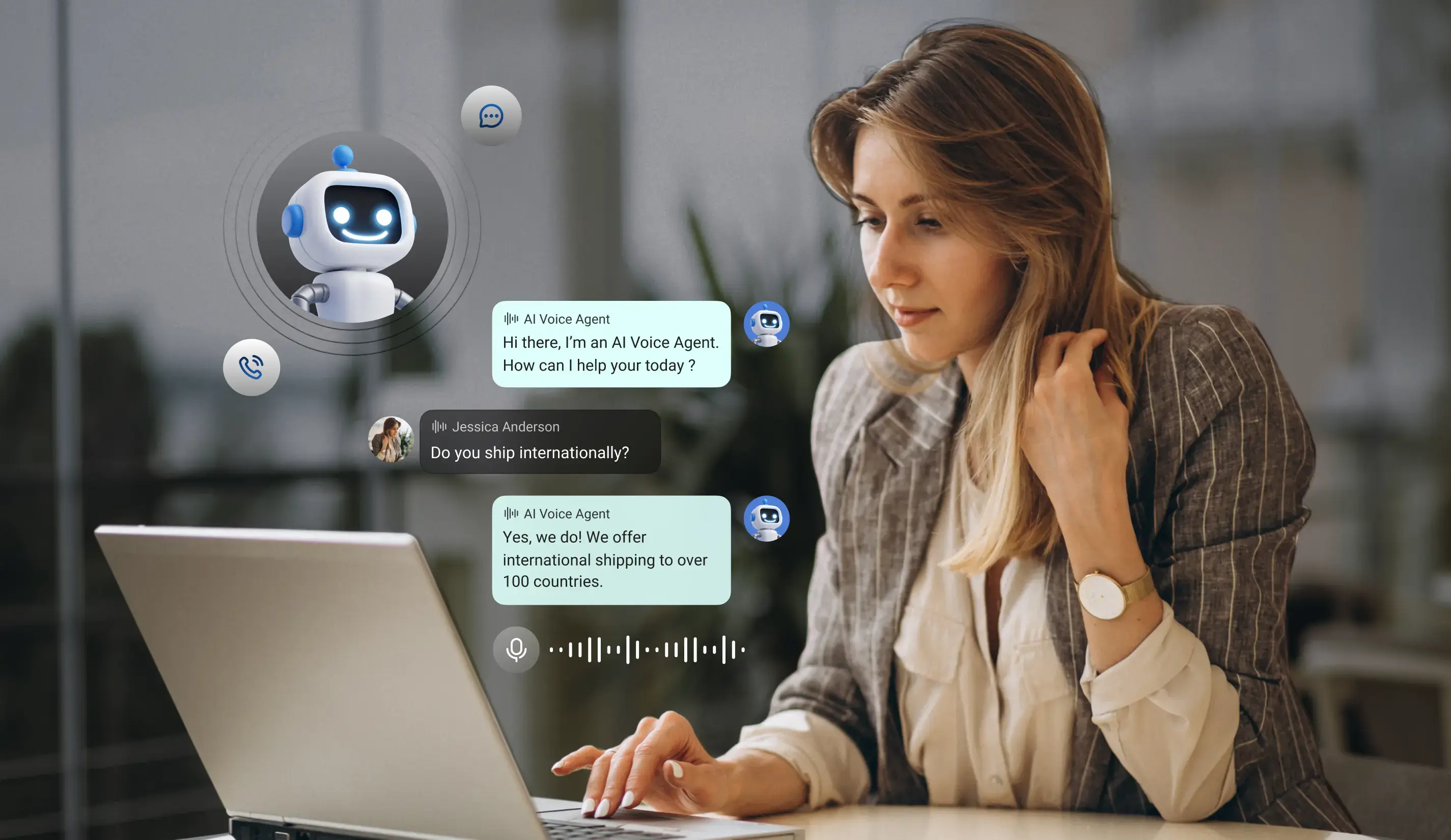
Why the Best Customer Experience May Be AI + Human, Not AI vs Human

8 mins read

Posted on Aug 25, 2026

Saravana Kumar
SEO


Saravana Kumar
SEO






“Can AI handle this?” For a growing number of customer service teams, that may be the wrong first question. The better question is “Does this conversation need a human?”
A customer checking an order status does not need to wait for a human agent. But a customer disputing a financial charge, dealing with a sensitive issue, or asking for an exception may need someone who can understand the situation and make a decision.
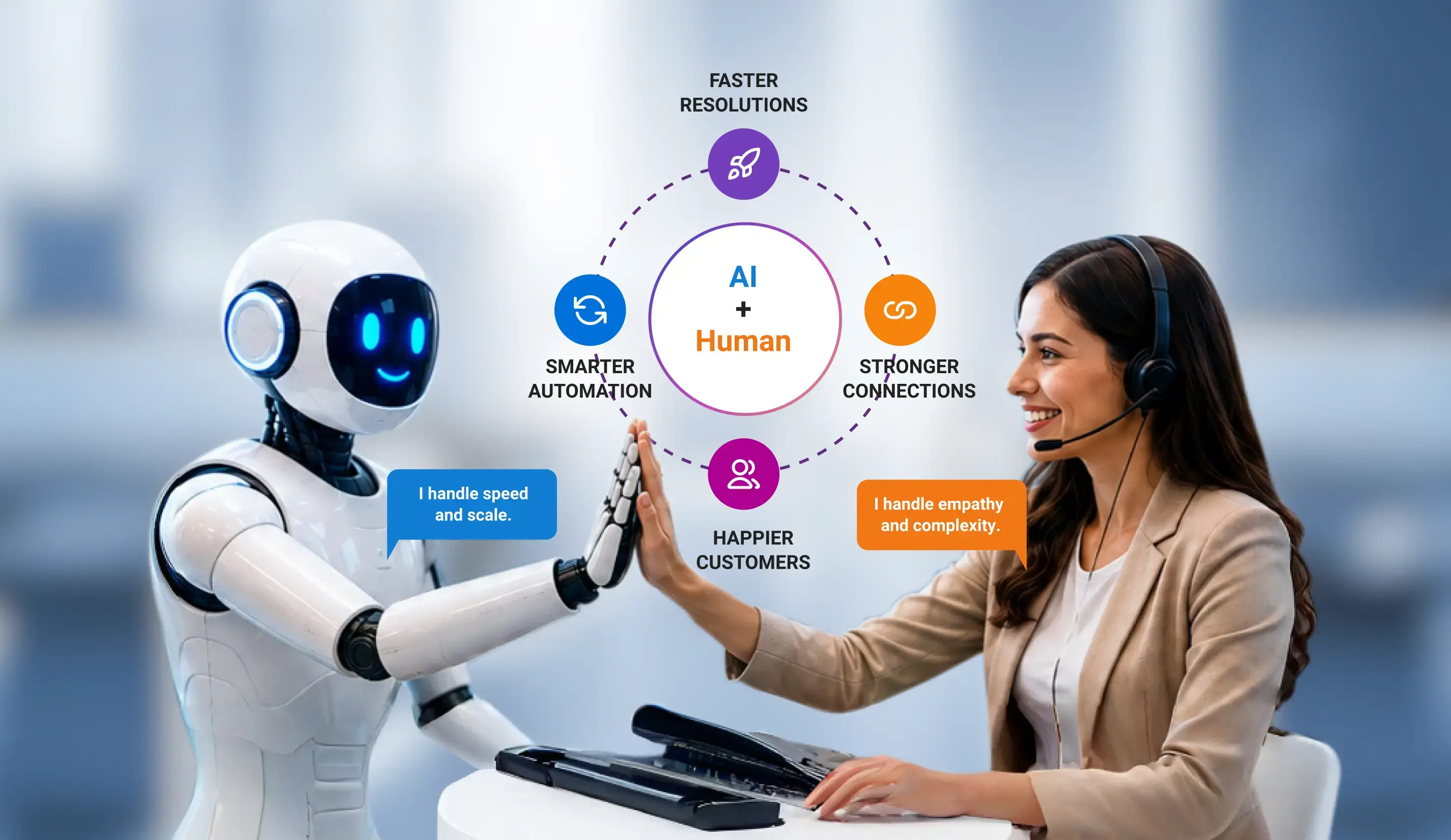
That is why the AI customer experience conversation should not be about choosing between people and technology. AI can take care of routine interactions quickly and at scale. Human agents can step in when a conversation needs judgment, empathy, or context. So a better approach is to connect both, so each customer gets the right kind of support for their situation.

Key Takeaways
 AI works well when calls are predictable and volume is high.
- Human agents are still needed when the particular situation needs a human judgment or empathy.
- AI and human agents work better together when the handoff is smooth and the relevant customer context is carried over.
- AI can help agents with context, information, summaries, and repetitive work.
- Better CX comes from knowing what to automate, what to escalate, and when.
AI vs Human Customer Service - Is It Really a Choice?
Businesses often treat AI vs human customer service as a choice between efficiency and empathy. In reality, they are better suited to different kinds of work.
AI works well for predictable tasks such as answering common questions and handling self-service requests. Human agents are more valuable when a call involves a complaint, an unusual problem, an emotional situation, or a decision that needs human judgment.
The question is where each creates the better outcome, and how the experience moves between them.

Gartner reports that 87% of customers say companies using GenAI for customer service must provide access to a human agent. Automation can be useful without becoming the only door customers can use.
Where AI Improves the Customer Experience
AI is most useful when the interaction is predictable, information-driven, and doesn’t need human judgment. It can help with:
- Faster responses: Customers can get answers right away instead of waiting for an available agent.
- 24/7 availability: Routine requests can be handled outside business hours.
- Repetitive queries: FAQs and common requests can be answered consistently.
- Self-service: Customers can find information or complete simple requests on their own.
- Consistent responses: Standard questions can receive the same accurate information every time.
- High-volume periods: AI can handle spikes in demand without creating longer queues.
- Faster information retrieval: Customers can get relevant information without an agent manually searching for it.
Where Human Support Still Matters
Human involvement becomes more valuable when a conversation requires context, judgment, or a personal response. This is especially true for:
- Complex problems: Issues that do not have a clear or predictable solution may need deeper investigation.
- Complaints and escalations: Customers may need someone who can understand the situation, make a decision, and take action.
- Emotionally sensitive situations: When a customer is frustrated, worried, or upset, being heard and reassured can matter just as much as resolving the issue.
- High-value customers: Important relationships may benefit from direct human attention.
- Financial or high-risk issues: These situations can require careful judgment and accountability.
- Situations requiring judgment: Exceptions and unusual cases are difficult to handle with fixed responses.
- Relationship-driven interactions: Some conversations depend on trust, understanding, and personal connection.
The Handoff Between AI and Humans Is the Real CX Challenge
A poor AI-to-human handoff can undo everything that came before it. A customer explains the issue to AI, asks for an agent, and then has to start again. That feels like a transfer, not support.
A good handoff should give the human agent the conversation history, information already collected, caller intent, and relevant context before they take over. The customer can then continue the conversation instead of starting from the beginning.
AI should prepare the human agent, not simply transfer the customer. Better context can change how the interaction feels.

Bring AI and Human Support Together
Let AI handle routine interactions while your team focuses on conversations that need judgment, empathy, and context
What Should AI Handle and What Should Humans Handle?
The question is not simply, “Can we automate this?” It is whether automation makes sense for that particular conversation. Complexity, risk, customer expectations, and business value should guide that decision.
AI Should Augment Human Agents, Not Just Replace Them
The bigger opportunity in AI customer service is helping agents do more with less administrative work. AI can bring customer context and relevant information to the agent, suggest responses, generate call summaries and notes, automate follow-ups, and surface conversation patterns for coaching.
That changes the role of AI from agent replacement to agent augmentation. Instead of taking the conversation away from people, AI can handle the background work so agents can spend more time listening, solving problems, and making better decisions.
The Risks of an AI-Only Customer Experience
AI can create problems when automation becomes the goal rather than a way to improve the customer experience. Common risks include:
- Customers can get stuck in endless chatbot loops.
- Some may struggle to reach a human when they need one.
- AI can provide incorrect or incomplete responses.
- Poor escalation can leave agents without enough context.
- Customers may have to repeat information they already provided.
- More automation is not always better. If AI keeps customers away from human help when they actually need it, efficiency can come at the expense of the experience.
Note: A high AI containment rate does not automatically mean a better customer.
Building a Hybrid Customer Experience Strategy
Begin with calls that are easy to predict and carry a little risk. Then set clear points for bringing in a human agent when the conversation becomes complicated, emotional, sensitive or when the customer asks for one. The handoff should also carry the information already collected.
A practical model should be like this.
AI → Human Handoff → Human + AI Assistance → Continuous Improvement
Give agents AI tools that can quickly pull up information, suggest responses, summarize calls, and handle follow-up work. Then review the conversations where AI struggled to see what can be improved.
That creates human + AI customer service around the customer journey, rather than around the technology.
The Future of Customer Experience Is AI + Human
The bigger opportunity in AI customer service is helping agents do more with less administrative work. AI can bring customer context and relevant information to the agent, suggest responses, generate call summaries and notes, automate follow-ups, and surface conversation patterns for coaching.
A field study of more than 5000 customer-support agents found that AI assistance increased the number of issues resolved per hour by approximately 14%. The point is not simply to automate the agent's role. But to give them a better support while they handle the conversation. That shifts the focus from agent replacement to agent augmentation.
The value of AI does not remove the need for human support. 87% of customers say having the option to speak with a human agent is essential when a company uses generative AI for customer service.
Where TeleCMI Fits
TeleCMI provides the cloud telephony platform and APIs that businesses need to build their own AI voice agents or connect the AI agents they already use. Its real-time AI streaming capabilities and telephony layer help bring automated and human-led calling together, so conversations can move between AI and people while maintaining the infrastructure, context, and visibility needed across the customer journey.
Wrapping Up
AI can take care of the calls that are simple and repetitive. Human agents can focus on the conversations that need a more thoughtful response. Bringing both together is what makes the model work.
Make AI Work With Your Customer Service Team
TeleCMI provides the telephony infrastructure and APIs businesses need to connect AI-powered voice interactions with human-led conversations
Frequently asked questions (FAQ)
Saravana Kumar

I’m passionate about exploring and sharing insights on modern cloud communication technologies. At TeleCMI, I focus on helping readers understand the evolving world of cloud telephony and IVR solutions in a simple yet in-depth way. My goal is to deliver genuine value by turning complex telecom concepts into clear, actionable knowledge that builds trust and drives innovation.