How Sentiment Analysis Improves Call Center Quality Assurance

12 mins read

Posted on Aug 06, 2026

Vignesh N
SEO


Vignesh N
SEO






Maintaining consistent service quality is one of the biggest challenges for contact centers. Customers expect every interaction to be helpful, professional, and empathetic, but traditional quality assurance (QA) processes make it difficult to measure every conversation. Most call centers review only 2-5% of their recorded calls. As a result, important customer issues, coaching opportunities, and performance trends often go unnoticed.
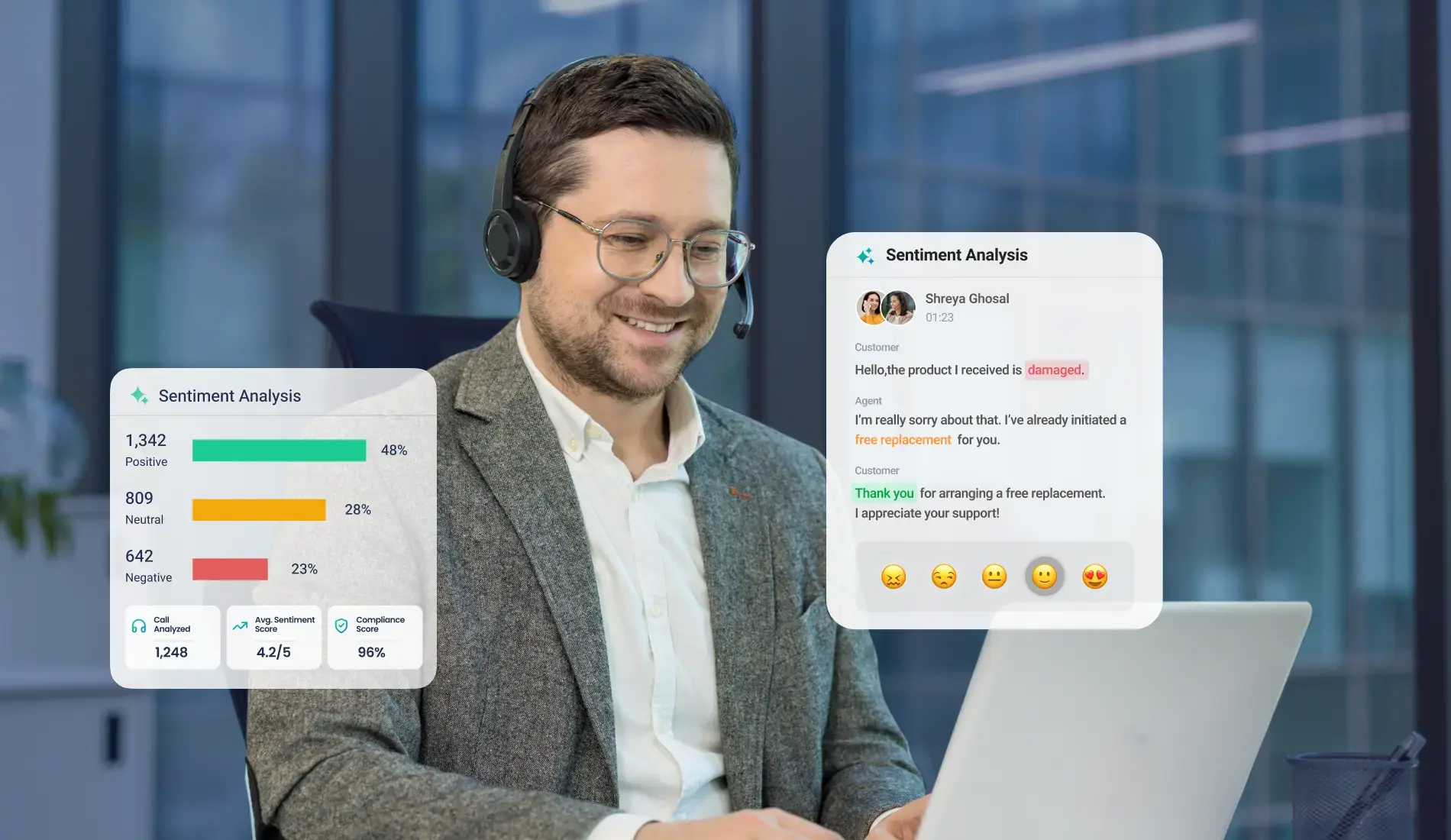
This is where sentiment analysis changes the way quality assurance works. Instead of relying on random call sampling, sentiment analysis evaluates every customer interaction to understand how people feel throughout the conversation. By analyzing customer tone, language, speaking patterns, and emotional shifts, it helps quality teams identify frustrated customers, recognize successful agent behavior, and provide faster, more targeted coaching.
Let's look at how sentiment analysis improves call center quality assurance and gives teams complete visibility into every customer conversation.

Key Takeaways
 Total QA Coverage: Remove the random 2% spot-checks. Review 100% of conversations automatically to spot hidden issues across contact center sentiment analysis.
- Smarter Than Keyword Lists: Combines Natural Language Processing (NLP) with acoustic tracking—listening for pitch changes, speech pace, and dead air to capture true caller emotion.
- Dual-Perspective Tracking: Keeps tabs on caller frustration and agent stress levels at the same time, helping stop customer churn while cutting agent burnout.
- Real-Time and Post-Call Insights: Gives supervisors live whisper-coaching tools during active calls while building solid long-term data for your sentiment analysis metrics.
What Is Sentiment Analysis and How Does It Work in a Call Center?
Sentiment analysis in call centers refers to smart software that reads written text or listens to spoken audio to figure out how callers and agents feel throughout a chat. Rather than waiting around for survey responses after the fact, call center software sentiment analysis evaluates emotional context instantly while the conversation unfolds.
How Dual-Channel Voice Analysis Works
Instead of running a single merged audio track through a transcriber, the system separates the conversation into two distinct channels:
1. Customer Channel Tracking: Tracks non-verbal acoustic signals live—watching for sudden pitch shifts, volume spikes, words per minute, and awkward silences.
2. Agent Channel Tracking: Uses Natural Language Processing (NLP) to review word choices, sentence phrasing, adherence to script guidelines, and general delivery tone.
3. Sentiment Engine Analysis: Blends vocal signals and text data together to build an ongoing emotional score for the call.
4. Automated Follow-Up Actions:
- In-the-Moment Support: Sends quick notifications to team leads or displays on-screen tips for the rep whenever caller frustration ticks up.
- Post-Call Operations: Generates an objective performance score right after the call ends and saves the sentiment breakdown into your CRM.
How Voice Sentiment Analysis Works
Right from the greeting, voice call sentiment analysis processes both sides of the call using Natural Language Understanding (NLU) and Automatic Speech Recognition (ASR):
- Dual-Track Audio: Keeping rep and customer voices separate prevents overlapping speech from throwing off score accuracy.
- Acoustic Signal Processing: Looks well beyond words on a page by measuring volume spikes, vocal pitch, speaking rhythm, and long pauses.
- Emotional Mapping: Scores every segment of the conversation by tagging the key moments as positive, neutral, or negative.
What It Catches Beyond Simple Keywords
Basic keyword tools only flag words like "cancel," "supervisor," or "bad." Advanced AI-powered sentiment analysis tools read true context and tone:
- Frustration and Escalation Spikes: Catch the decibel jumps and rushed speech patterns.
- Dead Air and Hesitation: Identifies long silence gaps caused by agent confusion, slow database tools, or customer hesitation.
- Cross-Talk and Interruptions: Detects when both parties talk over each other—a clear sign tension is rising.
- Sarcasm and Vocal Strain: Picks up on phrases like "Oh, wonderful service" by reading flat pitch and strained delivery.
- Agent Fatigue: Monitors the agent voice patterns over long shifts to catch burnout early.
Keyword Monitoring vs. Sentiment Analysis
Why Sentiment Analysis Matters in Customer Experience (CX)
Traditional manual QA leaves massive blind spots that hurt customer retention and operational flow:
- Most QA leads listen to only 2% to 5% of total calls, as a result, letting over 95% pass by completely unexamined. Looking at software benchmarks on G2’s Call Center Software Category, manual sampling routinely misses widespread customer trends.
- Picking calls at random misses both your biggest wins and your worst fires. You end up penalizing a solid rep for one off-day, while subtle bad habits slip under the radar everywhere else.
- Evaluation notes often reach agents weeks after an interaction finished. Industry statistics from Zendesk’s Customer Service Statistics confirm that slow fixes to bad service experiences drive customers straight to competitors.
- Two QA managers frequently rate the same recording differently depending on their personal preferences.
Using sentiment analysis in post-call analytics customer experience setups solves these flaws by applying clear, automated grading across 100% of customer touchpoints.
Manual QA vs. Sentiment Analysis QA
How AI Sentiment Analysis Improves Call Center Quality Assurance
Switching to sentiment analysis software solutions turns manual spot-checking into an automated QA framework that covers your entire team:
1. 100% Conversation Auditing: Grades every call automatically so nothing is skipped from your QA team.
2. Immediate Feedback Loops: Flags negative emotional turns fast, letting supervisors coach reps while the conversation is still fresh in their minds.
3. Automated Compliance Verification: Checks whether agents state required disclosures and compliance phrases on every call without fail.
4. Stronger Customer Retention: Spotting unhappy callers quickly means sentiment analysis improves customer satisfaction across every main touchpoint.
5. Lower QA Overhead: Takes repetitive listening work off QA managers’ plates so they can focus on hands-on coaching.
6. Clear Operational Insights: Converts daily speech logs into readable reports highlighting product bugs, confusing policies, or common caller complaints.
Real-Time vs. Post-Call Sentiment Analysis
Support teams generally set up sentiment tools in two main ways:
Real-time guidance gives reps helpful support right when conversations get tough. Data published in Salesforce’s State of Service Report shows that teams with live assistant tools resolve caller problems faster and have lower handle times. Feedback on Capterra’s Call Center Software Reviews also shows that live sentiment prompts lower rep stress during difficult calls.
Key Use Cases: Customer Support Teams Using Sentiment Data
1. Customer Support and Retention
By using sentiment data, customer support teams by using sentiment data can track First Call Resolution (FCR) right alongside emotional changes. If a caller starts out calm but ends up angry, the system marks the call for quick review so managers can see where things went wrong.
2. Sales & Revenue
Pricing reveals, and product demos are where deals die. Just thinking about why the deals were not closed, the sales team can exactly identify moments of friction during demos and adjust their strategy before the next call.
3. Collections & Compliance
Collections teams need to be firm when speaking with customers. Automated monitoring helps to check whether the agents include the required payment disclaimers or information during calls by helping them to identify compliance gaps before they lead to complaints or penalties.
How to Implement Sentiment Analysis in Your Call Center QA Workflow
1. Connect Your Communication Channels: First, make sure you have API access enabled on your cloud phone platform. Next, connect your call system (like TeleCMI) and messaging feeds to the sentiment platform, ensuring dual-channel audio recording is turned on.
2. Establish Clear Metrics and Thresholds: Set up the markers you want to track for sentiment analysis metric scoring—such as Net Sentiment Score (NSS), cross-talk limits, dead air alerts, and mandatory script checks.
3. Run a Short Calibration Pilot: Test the AI platform along with the QA team for a few weeks. Compare its scores with manual reviews and make any necessary adjustments before rolling it out across the team.
4. Train Supervisors on Targeted Coaching Workflows: Move your managers away from random call sampling toward reviewing AI-flagged calls. Show team leaders how to use sentiment trend lines during 1-on-1 coaching sessions.
5. Automate Feedback Loops and CRM Syncing: Feed sentiment scores straight into platforms like Salesforce or HubSpot. Send automated daily sentiment summaries to reps so they can self-assess their calls.
According to Forrester, combining speech analytics with regular coaching helps reduce agent attrition and shortens the time taken for onboarding. You can see feedback in TeleCMI's G2 reviews, where customers report better quality monitoring after adopting automated Q.A.
What to Look for in Contact Center Sentiment Analysis Tools
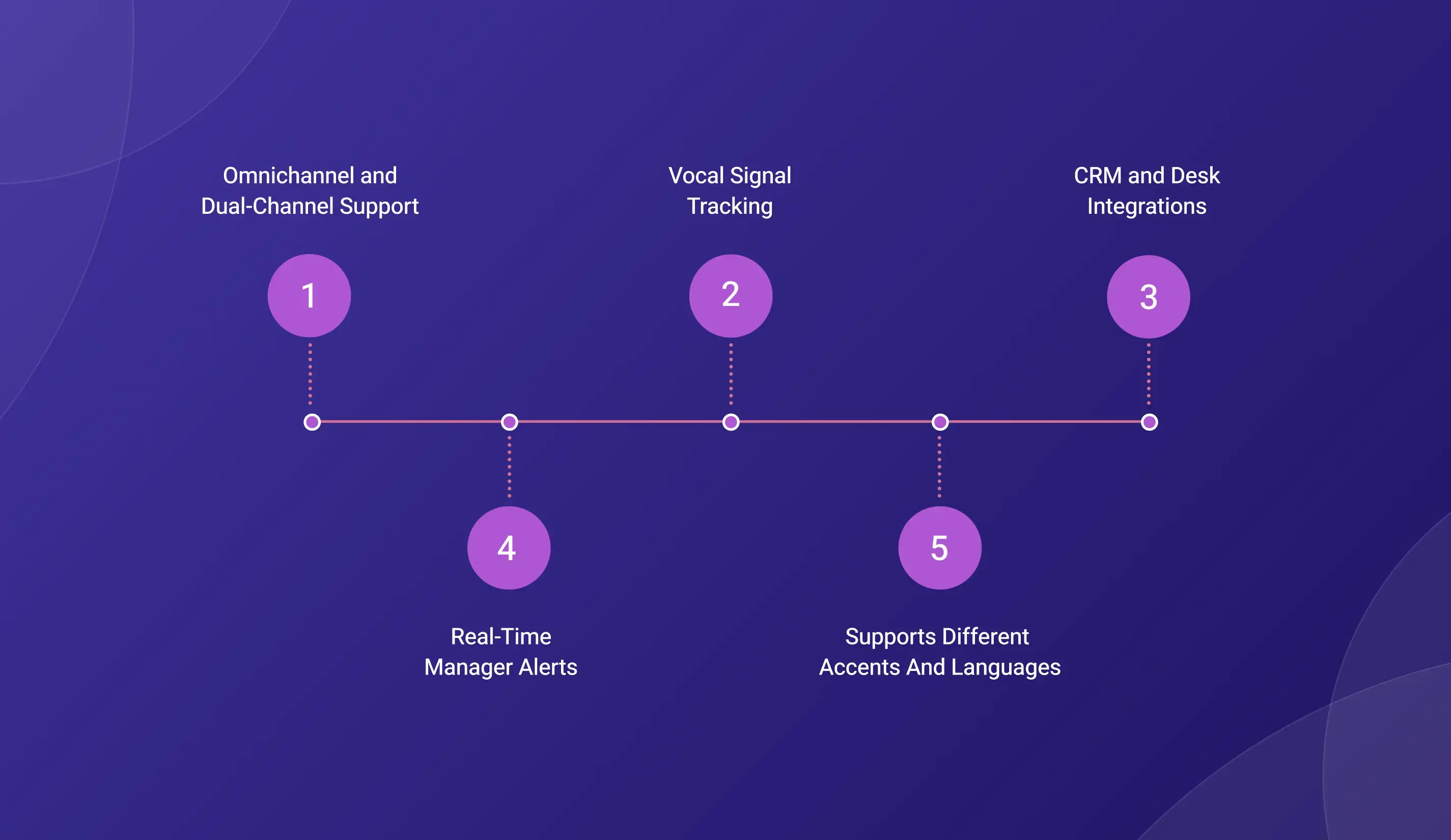
When comparing different sentiment software options, prioritize these features:
- Omnichannel and Dual-Channel Support: Evaluates voice, chat, and email messages, keeping caller and rep streams totally separate.
- Vocal Signal Tracking: Along with the standard text scripts, it also reads pitch, volume shifts, and dead air.
- CRM and Desk Integrations: Syncs sentiment logs directly into customer records inside Salesforce, HubSpot, or Zendesk.
- Real-Time Manager Alerts: Supervisors receive instant alerts when customer sentiment drops during a live call, allowing them to step in if needed.
- Supports Different Accents and Languages: Understands regional accents, local expressions, and multilingual conversations with high accuracy.
Understanding the Limits of Sentiment Analysis
Sentiment analysis is a valuable QA tool, but it's important to understand where it works well and where human judgment is still needed.
- Sarcasm and Regional Language: Some expressions, local slang, strong accents, or sarcasm can be difficult for any AI system to interpret correctly. Newer platforms handle these situations better by combining voice analysis with language understanding, but occasional errors are still possible.
- Not a Replacement for CSAT Surveys: Call sentiment helps you understand how a conversation went, but it doesn't replace customer satisfaction surveys. For example, a customer may be unhappy with a company's policy yet satisfied with how the agent handled the call.
Conclusion
If you're reviewing only a handful of calls each week, you're probably missing patterns that affect the customer experience. The same issue may come up again and again without anyone noticing because it never appears in the sample.
Sentiment analysis gives the quality analysts a much broader view. Instead of looking at a few conversations, they can understand what is happening across every call. That makes it easier to spot coaching needs, identify compliance issues, and catch problems before they become larger concerns.
It doesn't replace quality analysts. It gives them better visibility, so they can spend less time searching for issues and more time improving customer interactions.
This version avoids common AI-writing patterns such as repetitive structure, marketing language, and generic claims, making it read more like natural human writing.
Transform Contact Center Quality Assurance with TeleCMI AI Analytics.

AI Sentiment Analysis
Automated QA Monitoring
Live & Post-Call Insights
Built for Modern Contact Centers
Frequently asked questions (FAQ)
Vignesh N

With deep expertise in cloud telecommunications, I help readers explore the latest trends in VoIP and modern business communication. At TeleCMI, I focus on educating businesses with clear, practical insights, making complex telecom concepts easy to understand. I’m passionate about helping organizations improve efficiency, enhance customer engagement, and adopt smarter communication strategies.




.webp)