How Sentiment Analysis Works in Post-Call Analytics

16 mins read

Posted on Aug 31, 2026

Vignesh N
SEO


Vignesh N
SEO






“The call was resolved, so why did the customer still sound frustrated?”
A QA manager looking at a completed call may see that the agent followed the process, gave the right information, and closed the interaction correctly. But somewhere between the first complaint and the final “thank you,” the customer's tone changed several times.
That is difficult to capture from a call recording alone. Listening to one conversation can reveal what happened. Listening to thousands can reveal whether the same pattern keeps happening.
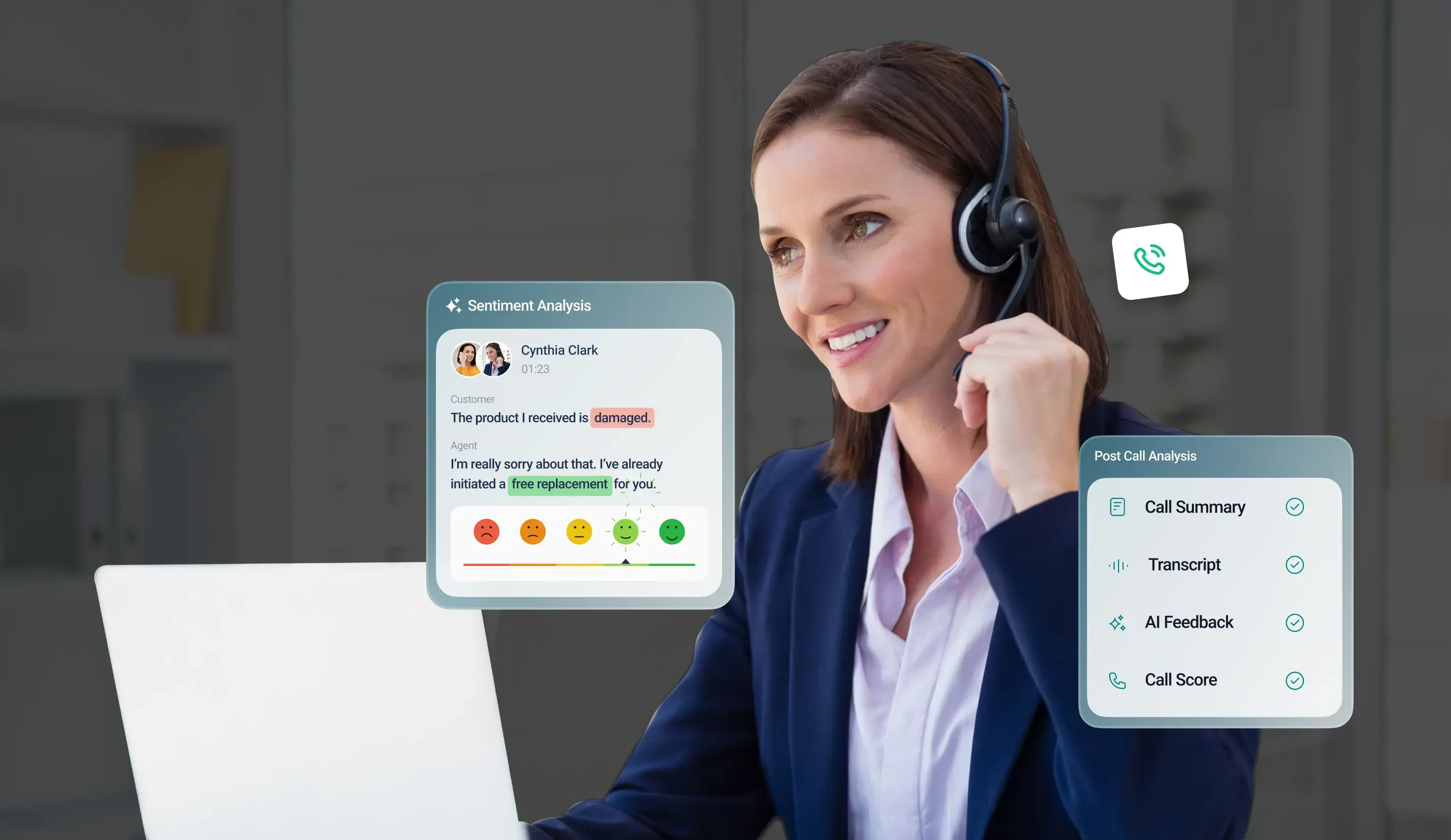
This is where post-call analytics becomes useful. Once a conversation is transcribed, AI can examine the language, context, and shifts in tone to identify sentiment patterns that would be difficult to track through manual reviews. Sentiment analysis in post-call analytics helps teams understand whether conversations were broadly positive, negative, neutral, or mixed and, more importantly, where that sentiment changed.
This article explains how sentiment analysis works in post-call analytics, what signals influence it, how sentiment scores are interpreted, and how teams can turn those patterns into action.

Key Takeaways
 Sentiment analysis looks at the tone of a conversation to identify whether the customer's response is positive, negative, neutral, or mixed.
- Post-call analytics use transcripts, language patterns, and conversation context to understand the sentiment expressed during the call.
- A sentiment journey can reveal more than a single final score because customer attitudes can change during a call.
- Sentiment becomes useful when teams apply it to CX, coaching, quality, sales, retention, or operational decisions.
What Is Sentiment Analysis in Post-Call Analytics?
Sentiment analysis is the process of analyzing a conversation to determine whether the language and interaction patterns express a positive, negative, neutral, or mixed attitude. In a customer call, it looks at signals such as the words being used, the context around those words, changes in tone, and the way the conversation develops to estimate the overall sentiment of the interaction.
Sentiment analysis in post-call analytics runs after the call, using the transcript to understand what the customer and agent said and the context around it. This helps identify whether the overall conversation leaned positive, negative, neutral, or somewhere in between.
Sentiment is different from emotion. Sentiment describes overall polarity or attitude, while emotion detection may look for more specific signals such as frustration. Intent answers a different question like, what is the customer trying to accomplish?
A system may therefore identify customer sentiment analysis, agent sentiment, or sentiment for the conversation as a whole. These outputs should be treated as estimates based on conversational evidence, rather than a definitive reading of someone's feelings.
How Sentiment Analysis Works After a Call
Post - call sentiment analysis follows a very simple process:
Call ends → Recording/transcript is processed → Conversation is analyzed → Sentiment is identified → Insights are generated → Team reviews the findings
1. Call completed
The analysis begins after the conversation is finished. The system can work with the call recording and transcript to review what happened, saving teams from having to manually listen to every completed call.
2. Speech is converted into text
Speech-to-text transcription converts the conversation into a written transcript. This gives the system a searchable version of what the customer and agent said, making the conversation easier to analyze alongside other call data.
3. The conversation is analyzed
NLP looks at the language used during the call, including words, phrases, and statements, while also considering what was said around them. Context matters here. The meaning of a phrase can change depending on the conversation. So the system looks at the issue being discussed, the customer's responses, and how the interaction happens.
4. Sentiment is identified
The analysis then identifies sentiment signals across the conversation and classifies them as positive, negative, neutral, or mixed. Sentiment can be assessed across individual parts of the call as well as the interaction overall, making it possible to identify shifts in customer or agent sentiment.
5. Insights are generated
The analyzed sentiment becomes part of the post-call output, alongside information such as the transcript, summary, call score, topics, and other conversation insights. This gives teams more context than a recording or transcript alone.
6. Teams take action
The value comes from what the teams do with the insights. A supervisor may review a call where the customer's sentiment turned negative, while a QA team can look into repeated complaints or a manager can identify how an agent successfully handled a difficult conversation.
This is the basic process behind sentiment analysis in call analytics.

Trust Factor
“Sentiment analysis uses natural language processing (NLP) and machine learning (ML) technologies to train computer software to analyze and interpret text in a way similar to humans. The software uses one of two approaches, rule-based or ML - or a combination of the two known as hybrid.” - IBM
What Does Sentiment Analysis Look For?
Sentiment analysis is not simply a matter of counting positive or negative words. It can pick up on complaints, appreciation, objections, repeated questions, escalation-related language, and the responses around them.
A word by itself does not always tell you much. “Great, another delay” is a good example. In this, the word “Great” sounds positive until you consider the rest of the sentence. That is why sentiment analysis looks at the surrounding words, what was discussed earlier, and how the conversation develops instead of judging each word separately.
This is why call sentiment analysis is more useful when it considers the conversation as a whole rather than just looking at the individual phrases. It can look at what came before, how the agent responded, and whether the customer's tone changed as the call continued.
In practical terms, customer sentiment in calls is one signal among several. Topics, intent, keywords, resolution, and the flow of the conversation provide the surrounding evidence needed to interpret that signal properly.
How Sentiment Scores Are Interpreted
A conversation does not always have one consistent tone. Sentiment analysis can classify the call as positive, neutral, negative, or mixed and show where the customer's sentiment changed along the way.
For example, a customer calling about a delayed order may start calmly. Then become frustrated after explaining that the promised delivery date has passed, and then feel more positive once the agent confirms a new date:
Beginning: Neutral → Delivery issue discussed: Negative → New delivery date confirmed: Positive
Looking at that change in sentiment tells you more than a single “positive” label. The customer could have been frustrated for much of the call and only felt better once the issue was resolved.
The reverse can happen too. A conversation may begin positively, then become negative after a transfer, unexpected charge, or unresolved question.
There is no universal sentiment scale that means exactly the same thing across every platform. Teams should therefore focus on trends and patterns within their own analytics environment rather than treating a score as an objective measurement of emotion.
Analyze Every Conversation to Uncover Customer Sentiment, Agent Gaps, and CX Opportunities.
Start 14 Days Free TrialSentiment Analysis vs Emotion, Intent and Speech Analytics
These terms are related, but they answer different questions.
These signals are often more useful together than separately. For example, a call can show negative sentiment, a billing-related intent, and repeated mentions of “refund.” The sentiment tells you how the interaction is going, while intent and keyword analysis provide more context about what is causing the conversation.
The wider context makes AI-powered call analytics more useful because sentiment is only one part of what happens in a conversation. With sentiment analysis for call centers, teams can look at the sentiment alongside the events and responses that shaped the interaction.
Customer Sentiment vs Agent Sentiment
Sentiment can be examined from both sides of a conversation. Looking at the customer alone shows the customer's response, while agent-side analysis can provide context about how the interaction was handled.
Looking at both sides can help supervisors distinguish a difficult customer interaction from a difficult interaction that was also poorly handled. This makes sentiment analysis for contact centers more useful for coaching and quality review.
How Businesses Use Post-Call Sentiment Insights
The practical value of post-call sentiment analysis comes from using it to decide which conversations, issues, and patterns deserve attention.
- Customer Experience
Teams can spot negative interactions, recurring complaints, and service issues without having to go through hundreds of recordings themselves. Customer sentiment analysis can also show where customers are repeatedly running into the same problems.
- Agent Coaching
Managers can prioritize conversations for review and compare how agents handle difficult situations. They can also use strong calls to show the team what worked well.
- Quality Assurance
Instead of selecting calls randomly, QA teams can use sentiment analysis software to identify conversations with unusual sentiment changes, complaints, or other review signals. AI-assisted analytics can support broader interaction coverage.
- Sales
Sales teams can see where prospects become more engaged, raise objections, or change their tone during a call. For example, if the conversation takes a negative turn when pricing is mentioned, the admin can review that part of the call to understand why.
- Retention
When the same customer repeatedly has negative interactions, it may be worth taking a closer look. That does not automatically mean they will leave, but it can give teams an early signal that something needs to be addressed.
These are practical benefits of sentiment analysis in post-call analytics: the technology helps narrow a large volume of conversations into patterns people can investigate.
How Sentiment Analysis Can Improve Customer Experience
Looking at individual calls can help find problems, but customer sentiment analysis makes it easier to see recurring patterns across a larger set of conversations. If customers consistently become frustrated during billing discussions, transfers, or a particular process, teams can investigate what is driving that frustration.
It can also reveal approaches that customers respond well to. A useful explanation or successful resolution can become a practical example for agent training or script changes.
The real value comes from acting on these findings. Teams can improve processes, coach agents, refine scripts, or investigate recurring complaints. That is how sentiment analysis improves customer experience: by connecting conversation patterns to specific business actions rather than treating sentiment scores as reports to file away.
Trust Factor
This broader use of AI in customer interactions is already gaining traction among CX teams. Nearly 85% of customer experience leaders use AI interaction analytics for customer service, while 58% use it for sales.
Limitations of Sentiment Analysis
Sentiment analysis is useful, but it is not a perfect measurement of how somebody feels.
Sarcasm is one obvious problem. "Fantastic, I waited an hour" may look positive if the system focuses too heavily on individual words. Context can also change the meaning of an otherwise neutral statement.
Transcription quality can affect the result too. Misheard words, accents, background noise, overlapping speech, and differences between languages can all change what the system picks up from a conversation.
There is also the problem of mixed feelings. A customer could be frustrated by a billing error but pleased with the way the agent resolved it. So one overall label may not capture that difference.
For this reason, AI sentiment analysis for customer service calls should be treated as an indicator rather than an absolute measurement. It can point teams toward conversations worth reviewing, while human judgment still matters when the situation is unclear or particularly sensitive.
What to Look for in Post-Call Sentiment Analytics
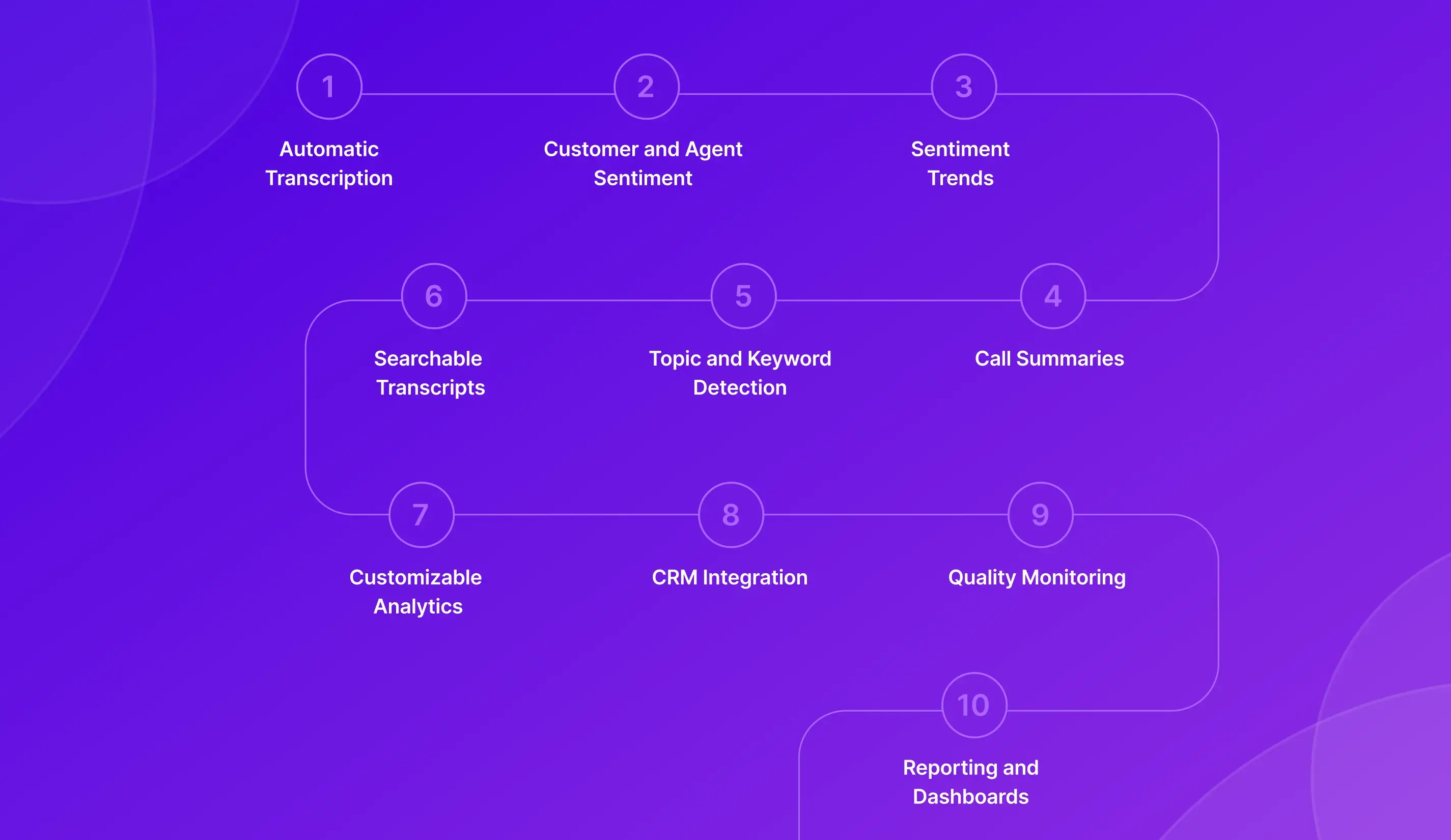
If you are comparing post-call analytics platforms, start with the features that make conversations easier to understand and review:
- Automatic Transcription: Turns calls into searchable text so teams do not have to listen to every recording.
- Customer and Agent Sentiment: Shows how sentiment comes through from both sides of the conversation.
- Sentiment Trends: Helps teams see how sentiment changes across calls and over time.
- Searchable Transcripts: Makes it easier to find specific calls, phrases, or recurring issues.
- Topic and Keyword Detection: Helps surface common topics, complaints, products, and important terms.
- Call Summaries: Gives teams a quick view of what happened without replaying the entire call.
- Customizable Analytics: Lets teams focus reports on the metrics and conversation patterns relevant to them.
- CRM Integration: Brings call insights into customer records and the workflows teams already use.
- Quality Monitoring: Helps managers spot conversations that may need a closer look or follow-up coaching.
- Reporting and Dashboards: Makes recurring trends easier to track across teams and time periods.
- Security and Privacy Controls: Helps protect recorded calls, transcripts, and customer information.
It is not really about having the longest list of features. Good sentiment analysis software should make it easier for teams to review conversations, spot patterns, and decide what needs attention.
For teams evaluating sentiment analysis for call centers, the ability to connect sentiment with transcripts, topics, outcomes, and existing workflows is particularly important.
From Sentiment Scores to Actionable Insights
The useful progression is:
Call Recording → Transcription → Sentiment → Pattern Detection → Insight → Action
A recurring negative response to billing may signal a problem with the process, while negative sentiment after transfers could suggest that calls are not reaching the right team. On the other hand, consistently positive responses to an agent's approach can be useful for coaching. Repeated frustration around one product issue can also help product teams decide where to look first.
This is where, how to analyze customer sentiment from calls becomes a practical business question rather than a technical exercise. Teams need to connect the sentiment signal with what customers were discussing and what happened next.
The value of call sentiment analysis is not the score itself. It is what the business does with the pattern that the score helps reveal.
Where TeleCMI Fits
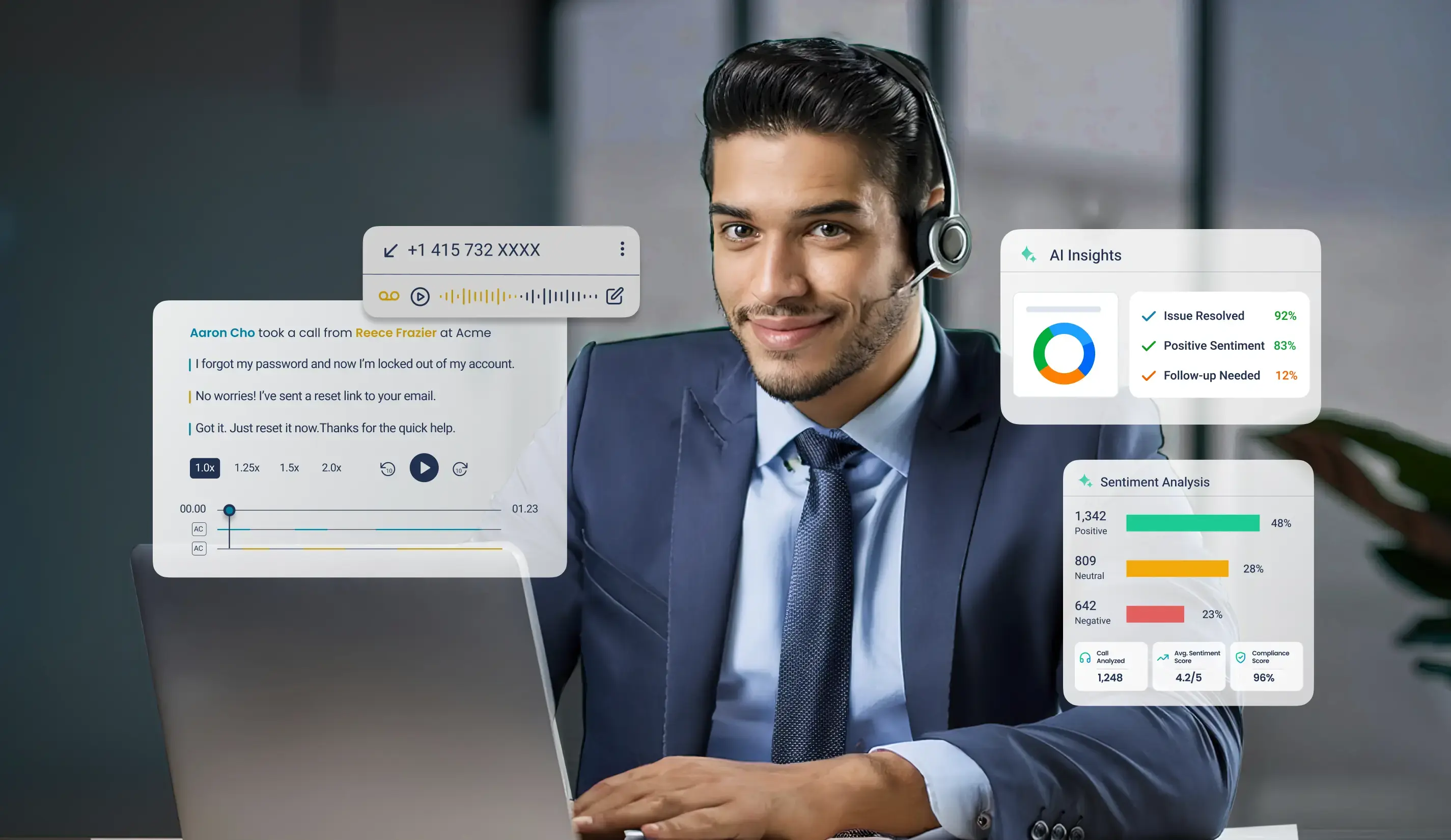
Once calls are completed, the challenge is turning those recordings into something teams can actually use. TeleCMI's Post-Call Analytics brings that layer into the existing call workflow, using AI to analyze conversations for customer sentiment, call scores, transcripts, topics, call moments, AI feedback, and summaries.
It can review conversations in different languages and contexts and bring important parts to the surface. That makes it easier for teams to understand customer concerns, see how agents are performing, identify objections or missed opportunities, and decide where coaching or follow-up is needed.
That gives teams a clearer picture of what is happening across their calls and makes those conversations easier to search, review, and act on.
Wrapping Up
Sentiment analysis in post-call analytics helps turn completed conversations into structured information about customer and agent interactions. Its real value appears when sentiment is combined with transcription, context, topics, outcomes, and human review.
Businesses do not need to manually listen to every call to find every pattern. With the right workflow, analytics can surface where attention is needed and give teams evidence for better decisions. TeleCMI Post-Call Analytics brings these conversation insights together, helping teams turn customer calls into information they can review, understand, and act on.
Ready to Improve Agent Performance and Customer Experience with AI Call Analytics?

Sentiment Analysis
Call Score & AI Feedback
Conversation Transcripts
Topic & Call Moment Detection
Frequently asked questions (FAQ)
Vignesh N

With deep expertise in cloud telecommunications, I help readers explore the latest trends in VoIP and modern business communication. At TeleCMI, I focus on educating businesses with clear, practical insights, making complex telecom concepts easy to understand. I’m passionate about helping organizations improve efficiency, enhance customer engagement, and adopt smarter communication strategies.



.png)