Best Conversational AI Platforms in 2026: Compared & Ranked

17 mins read

Posted on Aug 06, 2026


Vignesh N
SEO


Vignesh N
SEO





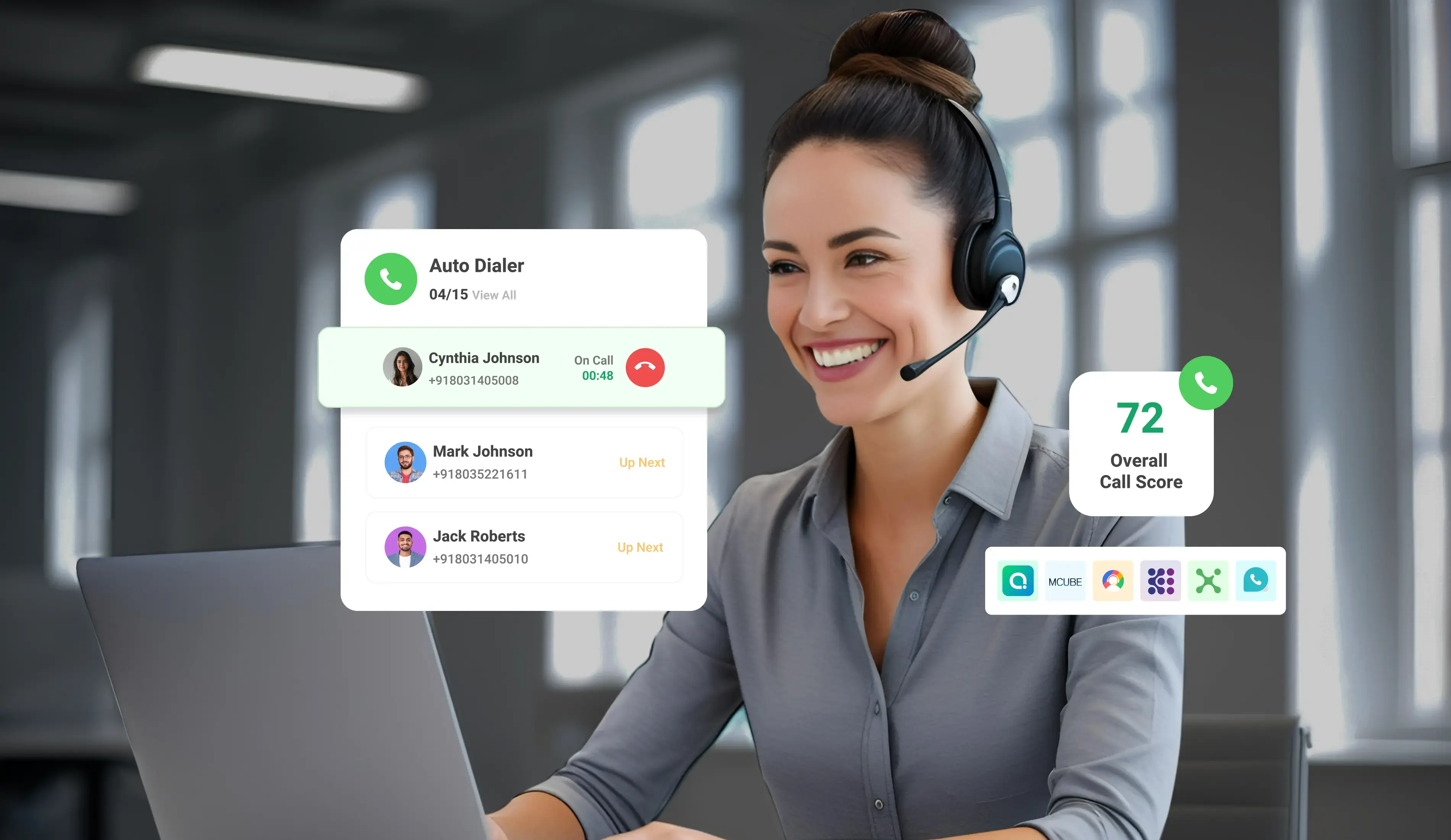
Conversational AI has moved beyond being an experimental technology. In 2026, businesses are using AI agents as part of their daily operations — answering customer enquiries, qualifying leads, resolving support requests, routing conversations, and managing outbound campaigns without requiring a human agent for every interaction.
The global conversational AI market is projected to grow from $17.7 billion in 2026 to $78.9 billion by 2033, with a CAGR of 23.8%. This growth reflects how businesses are adopting AI-powered conversations to improve customer experience, reduce operational workload, and scale communication.
In this guide, we compare the best conversational AI platforms in 2026, explain what each solution does best, and highlight where each one fits. You will also learn how to choose the right platform based on your business size, communication channels, technical requirements, and customer engagement goals.

Key Takeaways
 Conversational AI manages automated customer communication on voice, text, and chat platforms.
- Instead of forcing users through rigid menu trees like traditional IVR, conversational AI grasps what the customer wants and provides direct, natural answers.
- Some platforms focus on voice automation, while others are designed primarily for chat-based customer support.
- The right platform depends on how your customers prefer to communicate, your industry, and the level of automation you need.
- Businesses should evaluate AI accuracy, integrations, deployment effort, scalability, and pricing before choosing a platform.
What Is a Conversational AI Platform?
A conversational AI platform is software that allows computers to understand, process, and respond to human conversations in real time. It can interact with customers over phone calls, live chat, websites, messaging apps, and other digital channels using natural language instead of relying on fixed scripts.
Standard IVR menus and rule-based chatbots lock customers into a strict path, such as pressing numbers or typing exact keywords. But Conversational AI works differently. It understands the user's goal, picks up on context, clears up ambiguity with follow-up questions, and gives direct, natural answers.
Conversational AI generally falls into two categories: voice or text. Voice platforms manage incoming and outgoing phone calls using automated AI agents. Text setup covers live chat on your site along with messaging channels like WhatsApp and SMS. A few platforms cover both to keep all customer conversations under one roof.
Companies are jumping on conversational AI because the tech has gotten remarkably accurate over the last few years. Today's systems can easily clear out routine questions on their own, keeping response times fast. This lets support teams focus on the tricky, high-stakes issues.
Forecasts put the conversational AI market at $17.7 billion in 2026 and project it to reach $78.9 billion by 2033. Numbers like that show how quickly businesses everywhere are adopting AI for daily customer chats and calls.
How Does Conversational AI Platform Work?
A conversational AI platform listens to or reads a customer's request, identifies the intent using natural language processing, and decides the most appropriate response. It can answer common questions, retrieve information from connected business systems, complete tasks such as booking appointments or checking order status, or transfer the conversation to a human agent when needed. As it handles more interactions, the platform continuously improves conversation quality using analytics and conversation data.
How Your Business Can Benefit From a Conversational AI Platform
Customers expect quick answers no matter when they get in touch. A conversational AI platform helps businesses meet those expectations while improving operational efficiency.
- Provide customers with instant responses around the clock instead of limiting support to business hours.
- Reduce repetitive work by automatically answering common enquiries, qualifying leads, and routing conversations to the right team.
- Give customers a better experience by reducing hold times and skipping extra transfers.
- Free up sales and support reps for high-value conversations by automating everyday tasks.
- Scale customer communication during seasonal demand or business growth without increasing staffing at the same pace.
How We Evaluated These Top Conversational AI Platforms
Instead of looking at these platforms like developers, we evaluated them based on how they actually perform for businesses day-to-day. We focused on speech accuracy, multi-channel support, software integrations, deployment effort, straightforward pricing, and scalability. This approach highlights platforms that solve real operational issues without requiring an entire tech team to run them.
The Ranked List - 10 Best Conversational AI Platforms in 2026
1. TeleCMI (Best for Voice-First Business Communication)
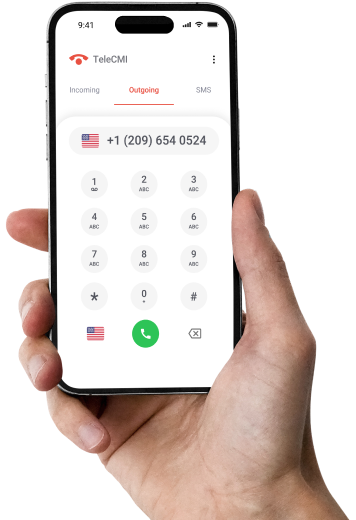
TeleCMI is designed for businesses where customer conversations happen primarily over phone calls. Instead of adding AI as a separate application, it provides a platform where businesses can build and deploy their own AI Voice Agents using a no-code interface. You can configure the AI agent to answer FAQs, qualify leads, schedule appointments, route calls based on customer intent, or transfer conversations to a live agent whenever needed.
Businesses can also enable AI Call Routing, AI IVR, auto call summaries, sentiment analysis, AI reports, and connect with 170+ CRM and business applications. Since these capabilities work natively within TeleCMI's cloud phone system, businesses can introduce conversational AI without rebuilding their existing communication stack. It is a strong choice for SMBs, contact centers, and enterprises, and holds a 4.8/5 rating on G2.
2. Dialogflow (Google)
Dialogflow is Google’s platform for building automated voice and chat agents across websites, messaging apps, and phone lines. Its main strength lies in intent recognition and flexible agent design. It offers high flexibility for the development team to custom-build AI agents. But setting it up requires coding skills, so non-technical teams may struggle to use it on their own.
3. Amazon Lex
Amazon Lex is AWS’s conversational AI service for building custom voice assistants and chatbots. It uses the same technology behind Alexa. It connects directly with Amazon Connect and works well for companies already built on AWS. It is highly scalable, but it isn't something a non-technical team can deploy. The setup requires AWS development skills to deploy and the usage-based billing can get pricey as your conversation volume grows.
4. IBM Watson Assistant
IBM Watson Assistant handles customer service for companies operating under tight regulatory rules. It works well for banks and healthcare organizations that handle sensitive customer data every day. The downside is that it takes significant technical effort to deploy, and the pricing puts it out of reach for companies with smaller budgets.
5. Intercom (Fin AI)
Fin AI focuses on resolving repetitive text queries in Intercom’s messaging widget. It scans your internal knowledge base to answer basic customer requests automatically. The platform is a good fit for SaaS companies and e-commerce businesses with high chat volumes. But its voice capabilities are limited compared to platforms designed for phone-based customer interactions.
6. Zendesk AI
This is designed for teams already using Zendesk. So it just upgrades standard Zendesk accounts with automated email and chat management. Existing customers can turn on smart ticket routing and auto-replies without changing their daily workflow. The main drawback is that the add-on pricing structure can add up quickly as you keep hiring more support agents.
7. Drift (Salesloft)
Now owned by Salesloft, Drift runs AI chat on B2B websites to qualify leads automatically. It handles incoming site traffic, asks qualifying questions, and books sales calls without an agent needing to step in. While it connects seamlessly into CRM systems like Salesforce, it is strictly built for web messaging and won't help if you need phone support.
8. Yellow.ai
Yellow.ai is an all-in-one messaging and VoIP platform that handles customer support across WhatsApp, email, web chat, and phone lines. It has strong adoption across India and Southeast Asia, mainly because it natively supports regional languages like Hindi, Tamil, and Telugu. That makes it a great pick for companies with a multilingual customer base. The custom enterprise pricing makes it hard for smaller businesses to adopt.
9. Haptik (Jio Platforms)
Owned by Jio Platforms, Haptik handles text-based support and customer acquisition (heavy focus on WhatsApp). It helps consumer brands and online retailers across India to manage customer support and run automated sales workflows. It works great for businesses serving Indian consumer markets. But if your company primarily needs advanced phone support or global voice coverage, you may want to look elsewhere.
10. BotSpace
BotSpace is built specifically for D2C and ecommerce brands, connecting directly to Shopify so its AI agent resolves order tracking, returns, and product questions using real-time store data. BotSpace is narrower by design - its AI Voice Agent handles COD verification and cart recovery calls, addressing the exact "collections and payment reminders" use case described earlier in this guide, tied directly to ecommerce order data rather than a general-purpose CRM connection.
Top Conversational AI Tools 2026 Compared
Conversational AI for Voice vs Text - Which Does Your Business Need?
The best conversational AI platform depends on how your customers usually contact your business. Some organizations rely mainly on phone calls, while others interact through chat, email, or messaging apps. Understanding your primary communication channel will help you choose the right solution.
- Voice-first businesses
Companies in logistics, finance, real estate, and healthcare still rely heavily on phone calls. For these businesses, AI Voice Agents, AI IVR, and AI Call Routing would give a much better customer experience than chatbots. TeleCMI is purpose-built for this category, allowing businesses to build AI Voice Agents directly within their cloud phone system while integrating with CRM and business applications. It also complements text-based conversational AI platforms by managing voice interactions, while chat-focused tools continue handling website, email, and messaging conversations.
- Text-first businesses
If you run a SaaS product or e-commerce shop, your customers likely prefer reaching out via live chat, email, or messaging. Auto-responding to common questions, connecting your help center docs, and routing WhatsApp messages will save your team much more time than setting up complex voice systems.
- Omnichannel businesses
Businesses that communicate through both phone and digital channels should choose a platform that supports voice and text together or combines specialized voice and chat platforms through reliable integrations.
A Salesforce survey found that 38% of customers trust AI to create personalized recommendations, but only 17% of them are comfortable enough to let it make financial decisions. This shows that people are happy to let automation handle simple and repetitive requests. But they want a human to step in when money or important decisions are on the line.
Voice vs Text vs Omnichannel Comparison
Use Cases - Where Conversational AI Delivers the Most Value
- Inbound call handling - AI answers incoming calls, understands the customer's intent, provides answers to common questions, and routes complex enquiries to the right department or agent without unnecessary transfers.
- Lead qualification - AI handles the initial chats or calls with prospects by asking targeted questions to spot serious buyers. Once it verifies their interest, it books a demo with agents. This can save your sales team from chasing cold leads.
- Appointment scheduling - AI books, reschedules, and confirms appointments around the clock. Whether you run a healthcare practice, salon, or school, it takes care of calendar management automatically so staff don't have to spend all day on the phone.
- Order status and tracking - Customers can ask about delivery updates through voice or chat, while the AI retrieves real-time information from connected order management or CRM systems and responds instantly.
- Customer onboarding - Instead of leaving new sign-ups to figure things out on their own, AI guides them through initial setup and account verification. Getting people up and running automatically means fewer basic help tickets for your staff and less confusion for new sign-ups.
- Collections and payment reminders - Instead of relying on scripted robocalls, AI Voice Agents can make natural outbound reminder calls, answer payment-related questions, and direct customers to secure payment channels when required.
What to Look for When Choosing a Conversational AI Platform
Choosing the best conversational AI software is about finding one that matches your business needs, not simply the one with the most features. A directory of AI tools can make it easier to explore different options before deciding which platform best fits your requirements.
Does it support the channels your customers actually use? - Choose a platform that supports the channels your customers prefer, whether that's voice, chat, WhatsApp, or all three. A leading conversational AI platform should fit your communication strategy.
How accurate is the NLP on real-world conversations? - The platform should understand natural speech, different accents, and customer intent to improve resolution rates.
Does it integrate natively with your CRM or require a third-party connector? - Native CRM integrations help AI access customer information and reduce implementation effort.
Can non-technical teams configure conversation flows without developer support? - Business users should be able to update conversation flows, FAQs, and routing rules without coding.
Is pricing based on usage or per seat? - Understand whether pricing scales by calls, messages, API usage, or users to avoid unexpected costs.
Does it support Indian regional languages? - If your customer base is spread across India, having reliable support for regional languages is non-negotiable for keeping conversations natural and accessible.
What happens when the AI cannot resolve the query? - The platform should transfer conversations to a live agent while preserving the conversation context.
According to Forrester, one in four brands is expected to achieve a 10% increase in successful self-service interactions by the end of 2026. The report also notes that 78% of AI decision-makers trust AI-generated outputs, encouraging wider adoption of intelligent chatbots and AI Voice Agents.
For businesses where phone calls remain the primary customer channel, TeleCMI's conversational AI for business is purpose-built for voice automation. Businesses can build AI Voice Agents within their cloud phone system and enable AI IVR, AI Call Routing, real-time transcription, call summaries, and CRM integrations without deploying a separate AI platform. Its 4.8/5 G2 rating further reflects strong customer satisfaction.
Future Trends for Conversational AI Platforms in 2026 and Beyond
AI isn't just taking care of basic tasks anymore; it's becoming central to how companies talk to their customers. According to Gartner, conversational AI deployments in contact centers are expected to reduce agent labor costs by USD 80 billion by 2026, showing how businesses are using AI to improve efficiency while supporting growing customer demand.
- Voice AI is set to handle the front lines of phone support. AI agents will answer calls, filter leads, and clear routine questions, looping in a human agent only when a problem needs actual judgment.
- Conversations will sound more natural as advances in natural language processing help AI understand context, follow-up questions, and customer intent more accurately.
- Regional language support will continue to improve, enabling businesses to serve multilingual customers more effectively across voice and chat.
- Human and AI collaboration will become the standard, with AI handling repetitive tasks while agents focus on complex or sensitive conversations.
- Unified customer communication platforms will gain popularity, allowing businesses to manage voice, chat, WhatsApp, SMS, and other channels from a single platform instead of using disconnected tools.
- According to Juniper Research, chatbots are expected to save retailers USD 439 million annually by 2026, while retail sales driven by chatbot interactions are projected to reach USD 112 billion, highlighting the growing business impact of conversational AI.
- By 2030, the conversational AI market is expected to top $32.62 billion. This surge stems from businesses doubling down on AI to handle their daily customer communications.
Bottom Line
The best conversational AI platform software depends on how your customers prefer to communicate and the level of automation your business needs. Voice-first businesses should prioritize platforms with strong AI calling capabilities, while digital-first organizations may benefit more from chat-focused solutions. By evaluating your communication channels, integration requirements, and ease of deployment, you can choose a platform that improves customer experience while supporting long-term business growth.
Ready to Launch AI Voice Agents with TeleCMI's Conversational AI Platform?

No-Code AI Agent Builder
AI Voice & Call Automation
99.99% Uptime SLA
170+ CRM & Business Integrations
Frequently asked questions (FAQ)
Vignesh N

With deep expertise in cloud telecommunications, I help readers explore the latest trends in VoIP and modern business communication. At TeleCMI, I focus on educating businesses with clear, practical insights, making complex telecom concepts easy to understand. I’m passionate about helping organizations improve efficiency, enhance customer engagement, and adopt smarter communication strategies.




.webp)