What Is AI IVR and Why Businesses Are Switching in 2026

8 mins read

Posted on Jan 24, 2025

Saravana Kumar
SEO


Saravana Kumar
SEO






Have you ever found yourself in the endless loop of a phone menu, continousluy repeating into the phone, trying to get a representative, and a robotic voice cheerfully offers options you don’t need?
Yeah, we have all been there.
Traditional IVR (Interactive Voice Response) has always been the gatekeeper of the customer support lines, but to be frank, it is not relevant to what customers are expecting. A system initially designed to reject calls and automate simple tasks has become a system that is frequently viewed as a frustrating maze of button presses and dead ends.
Fortunately, this is changing. And AI is leading the charge.
When artificial intelligence is integrated into the IVR calling systems, that ancient robotic menu becomes something much more human-like, something that can really listen, understand, and react to what customers say. In this blog, we are going to deconstruct how AI is transforming IVR as we know it and how companies can finally provide voice experiences that people will not want to hurl their phones.
Key Takeaways
 AI IVR uses speech recognition, NLU, and machine learning to understand and respond naturally to callers.
- Replaces static menu navigation with conversational, human-like interactions.
- Offers faster resolutions, reduced abandonment, and scalable call handling.
- Supports multi-language,zoho telephony integration, and context-aware routing.
- Key use cases include automated order tracking, appointment booking, and fraud detection.
- Future trends include voice biometrics, emotion recognition, and omnichannel integration.
- TeleCMI’s AI IVR offers a visual flow builder, real-time routing, and seamless integration for smarter voice automation.
What Is an AI IVR?
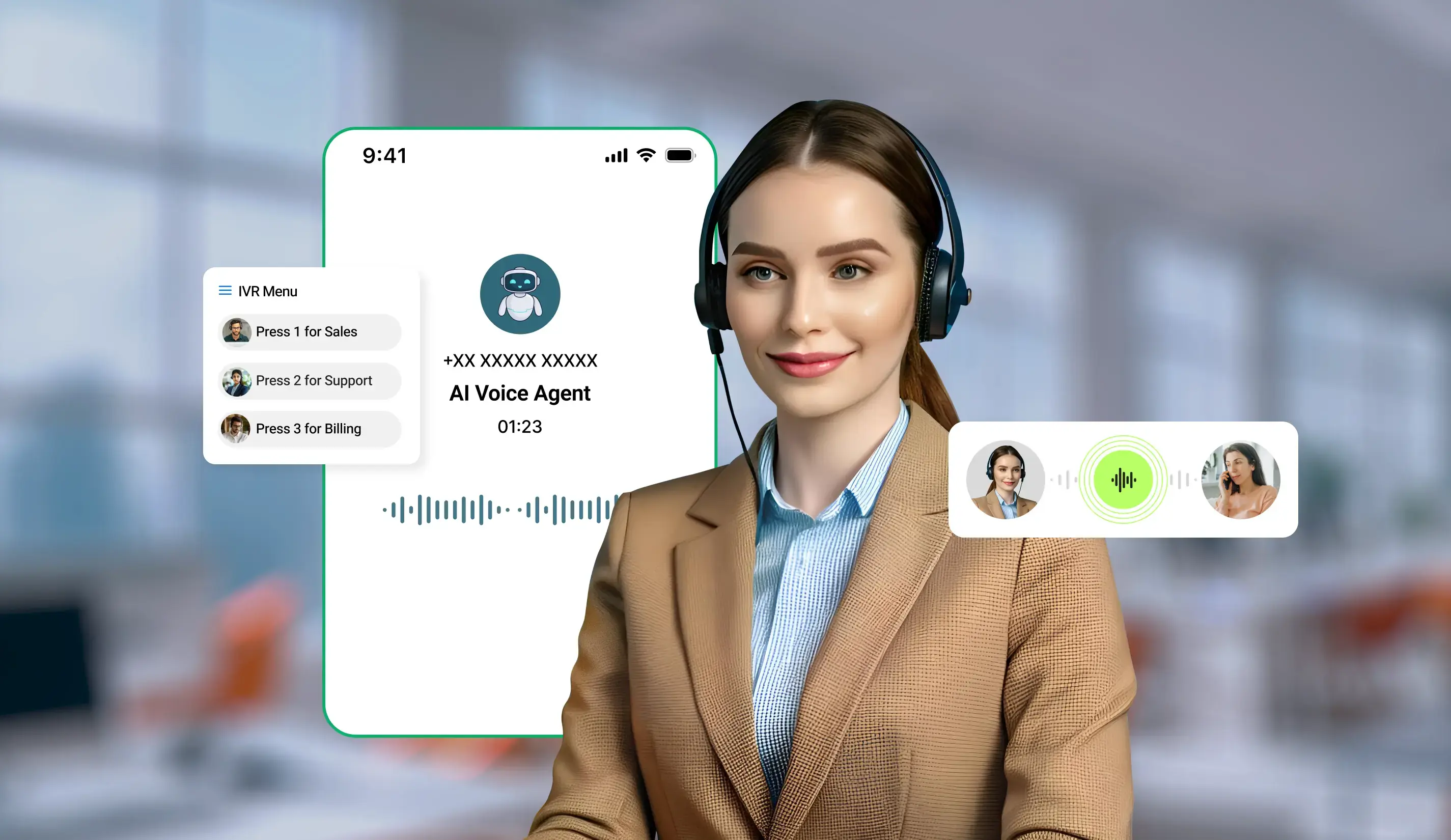
AI IVR represents the next-generation of interactive voice response that leverages artificial intelligence, natural language understanding (NLU), and machine learning to communicate with callers in a more human and intuitive manner. Rather than requiring users to push buttons and work through fixed menus, AI IVR enables callers to talk normally, and it even listens to them.
When a customer says, I want to track my order or Where is my package, the system understands the intent, retrieves the necessary information from backend systems, and responds accordingly. This conversational, contextual, and adaptive process offers valuable operational insights for ai leaders who are responsible for improving customer experience and streamlining communication workflows through technologies like a cloud PBX phone system.
Yes, AI IVR is still automated, but much less robotic.
How AI-Powered IVR Works
Here’s a peek under the hood of a modern AI IVR system:
- Speech Recognition: Converts spoken language into text in real time.
- Natural Language Understanding (NLU): Interprets the meaning behind the caller’s words.
- Intent Detection: Figures out what the caller wants based on language patterns.
- Contextual Awareness: Leverages historical data and ongoing conversations.
- AI Routing Engine: Routes the caller to the right place; human or automated, based on all the above.
Everything works together in milliseconds to deliver faster, more relevant responses; a structured artificial intelligence program.
helps teams implement and govern these pipelines.
Key Features of AI IVR
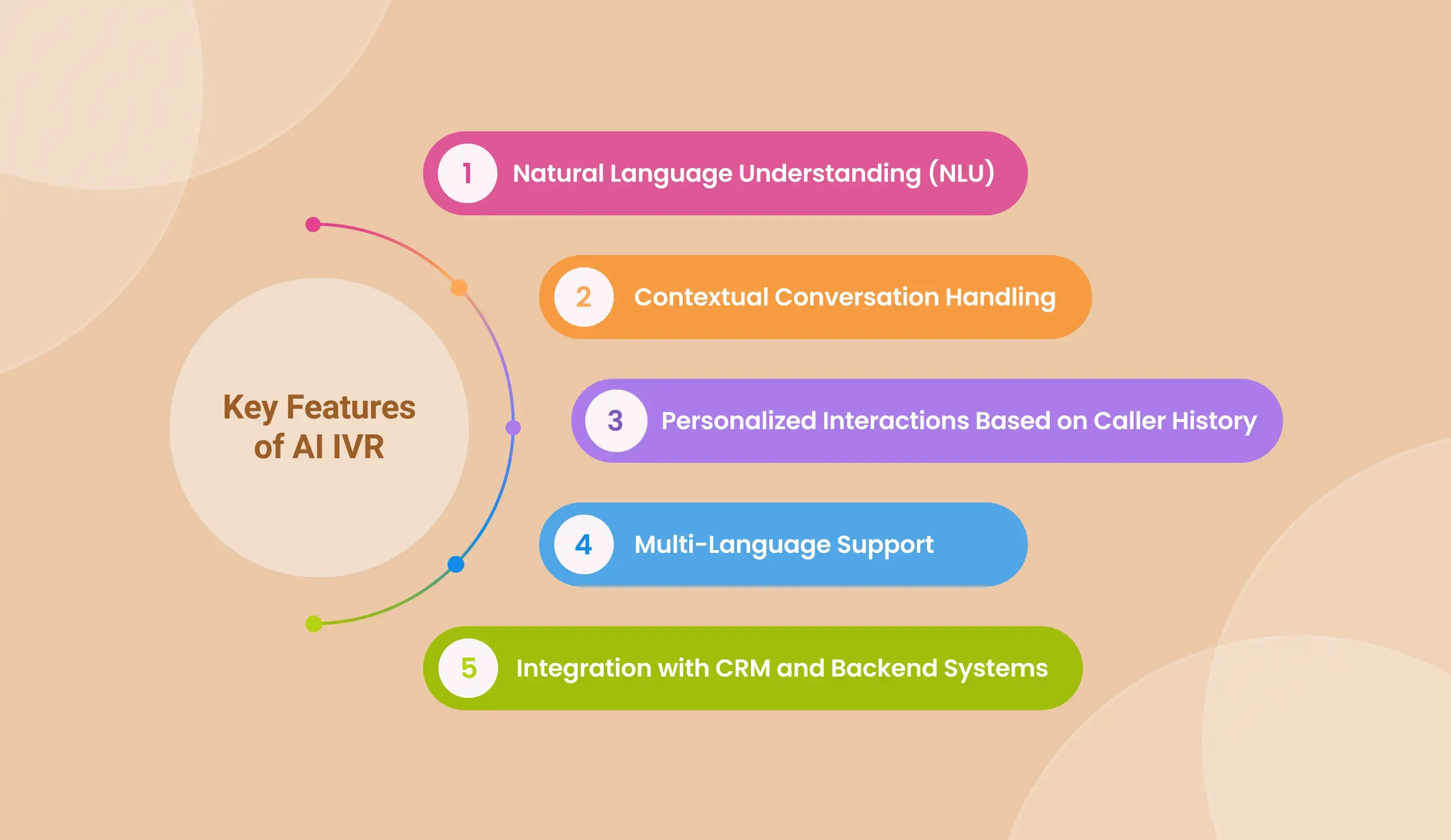
1. Natural Language Understanding (NLU)
Farewell to strict menus like press 1, press 2. NLU allows customers to speak in their own words, and the system understands it anyway, even when they are rambling or using other words. This enables more human interactions and flexibility.
2. Contextual Conversation Handling
AI IVR does not consider each call as a new one. It is able to recall what a customer has called about in the past, monitor unresolved tickets or continue a conversation in the middle. That is context, and it makes all interactions smarter.
3. Personalized Interactions Based on Caller History
Regular customers or customers with high values do not want to be treated as strangers. AI IVR works with your CRM to provide personalized greetings, quicker routing, and even special treatment to VIPs.
4. Multi-Language Support
Your customers speak English, Hindi, Spanish or Tamil, AI IVR understands. The modern systems accommodate various languages and dialects to make sure that no customer is left behind.
5. Integration with CRM and Backend Systems
AI IVR can draw information about your CRM, order management systems, or support platforms to provide real-time answers such as tracking an order or updating an account.

According to Microsoft
Cloud communication and AI continue to reshape how organizations collaborate and serve customers.
Benefits of AI IVR Over Traditional IVR
- A More Natural Experience: Customers are not required to memorize menu trees or to use complicated inputs anymore. They talk in a natural way and are comprehended immediately.
- Faster Resolutions; Simple requests such as tracking an order, booking an appointment or checking the status of an account can be answered within a few seconds- without the involvement of a human agent.
- Lower Abandonment Rates: Customer drop-offs are caused by long menus and long hold times. Cloud IVR service enhances the interaction and minimizes frustration, retaining the customers on the line.
- Scalable Call Handling: Just received a call surge? AI IVR does not get overloaded. It can easily scale up during peak seasons or during marketing campaigns.
- Advanced Analytics: Monitor the sentiment of callers, call patterns, frequent intentions, and abandonment points. Such insights can be used to streamline scripts, flows, and even business processes.
Top Use Cases of AI IVR
➤ Customer Support with Complex Query Handling
AI IVR is capable of managing the frontlines, such as answering frequently asked questions, gathering data, and escalating complicated cases to live agents as required. It even trains agents with history of conversation.
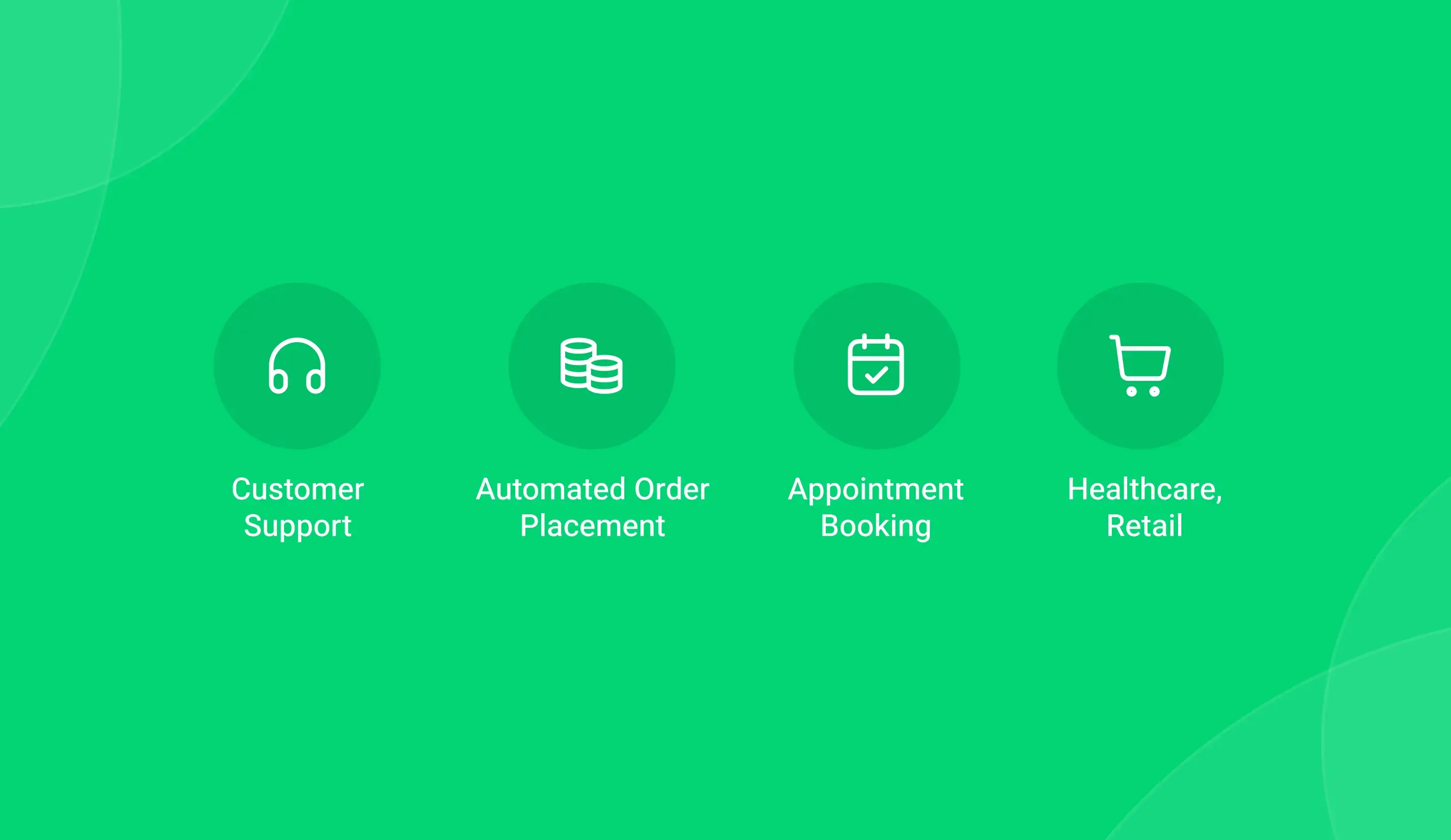
➤ Automated Order Placement and Tracking
Ideal in e-commerce and retail, customers can make, change, or follow orders by just talking. No agent required.
➤ Appointment Booking and Reminders
Any business that provides services can automate the whole process of appointments, rescheduling, reminders, such as healthcare clinics, beauty salons, etc.
➤ Fraud Detection and Security Checks
AI IVR, when used with voice biometrics, can identify the user and detect suspicious activity to avoid fraud.
➤ Virtual Assistants for Banking, Healthcare, Retail
Voice assistants powered by AI can give customers real-time information about bank balances, insurance claims, prescriptions, or return policies.

See How AI is Transforming Call Center >> ai call center software
Challenges in Implementing AI IVR
1. Initial Setup Complexity
System training, data source integration, and workflow design also need planning and time.
2. Data Privacy and Security
The information that may be processed by AI IVR systems is usually sensitive. Strong security measures and adherence to such regulations as GDPR or HIPAA are necessary.
3. Need for Quality Data
The smarter the data that AI learns, the smarter it is. The system should be trained using clean representative datasets to obtain accurate intent detection and routing.
IVR Service Provider" class="text-lg sm:text-2xl text-[#2b2e33] font-bold font-heebo pt-10">Why Choose TeleCMI as Your AI IVR Service Provider
TeleCMI makes building AI IVR easy, even for fast-moving teams. Here’s what sets us apart:
- Visual IVR Flow Designer: Create smart call flows with drag-and-drop simplicity.
- Speech Recognition with Multi-Language Support: Handle diverse callers with ease.
- Real-Time AI Routing: Match callers to the right outcome or agent every time.
- CRM and Backend Integration: Sync call logic with your sales and support tools.
- Omnichannel Platform: Voice, chat, WhatsApp, and SMS - all from one workspace.
For businesses of all sizes in every industry, TeleCMI enables smarter customer conversations at scale. No long queues. No confusing menus. Just faster, more human interactions.
Future Trends in AI IVR
➤ Voice Biometrics
There is an increase in authenticating users through their voiceprints. It introduces a smooth but safe layer to customer communication.
➤ Emotion Recognition
Future AI IVRs will identify frustration or urgency in the tone and speech patterns and escalate calls — a capability increasingly enhanced by AI development services.
➤ Deeper Omnichannel Integration
Look forward to more integration of IVR WhatsApp, chatbots, email, and messaging platforms- a truly unified customer experience.
Conclusion
AI IVR is no longer a future concept but a current requirement by businesses that want to offer quicker, more human, and intelligent voice experiences. With the ability to do away with fixed menus and replace them with natural dialogs, TeleCMI's AI IVR gives your support teams the power to answer queries faster, minimize call abandonment and personalize the experience in bulk.
No matter how many calls you receive, how many languages your customers speak, or how you want to optimize your CX with automation and analytics- AI-powered IVR can transform your business communication.

Explore AI-Driven IVR and Boost Your Customer Experience
➣ Reduced Wait Times ➣ VIP Routing ➣ Multilingual Assistance
Frequently asked questions (FAQ)
Saravana Kumar

I’m passionate about exploring and sharing insights on modern cloud communication technologies. At TeleCMI, I focus on helping readers understand the evolving world of cloud telephony and IVR solutions in a simple yet in-depth way. My goal is to deliver genuine value by turning complex telecom concepts into clear, actionable knowledge that builds trust and drives innovation.