What is Enterprise Communication? A Full Business Guide

9 mins read

Posted on Jun 24, 2025


Vignesh N
SEO


Vignesh N
SEO






"91% of the employees believe that ineffective communication is the main cause of most workplace failures."
Whether you are managing internal teams across geographies or connecting with global customers, the way your organization communicates directly influences everything from productivity to profitability. However, setting up effective enterprise communications via proven enterprise communication tools can help address these common challenges.
But before that, let's understand what enterprise communication is, why is it important, key benefits and challenges, and future trends.
What is Enterprise Communication?
Enterprise communication includes the practices and tools companies use to share information and collaborate both internally and externally. An enterprise communication system integrates all these tools and applications.
An enterprise communication solution manages the below essential business apps into one:
Voice: Business voice functionality, including telecommunications and advanced call routing capabilities.
Video: One-to-one and team video conferencing for meetings, training, and customer support.
Messaging: Unified text messaging (SMS) plus real-time engagement for fast answers.
Contact Center: An app that provides your team with omnichannel tools to support customers.
CRM: A salesforce can easily access and manage its pipeline and customer data.
Analytics: Create actionable dashboards based on the underlying data found in communication services.
APIs: Push or pull business data securely across one or more communication platforms.
Enterprise communication system provides you access to a lot of team collaboration features to communicate with your in-house and remote teams. It even automates manual tasks for more simplifies processes.
Why You Need Enterprise Communications?
Enterprise communications offer more advanced, distributed workforces to collaborate, communicate, and simplify workflows for greater efficiency. Some of the important reasons why enterprise communications are essential include:
- Remote and hybrid work is the new norm
- Customer expectations are rising across all channels
- Teams require real-time collaboration tools
- Business agility depends on scalable and secure infrastructure
An enterprise-grade solution ensures that your business remains efficient, agile, and responsive, regardless of where your teams or customers are located.
Benefits of a Robust Enterprise Communication Strategy
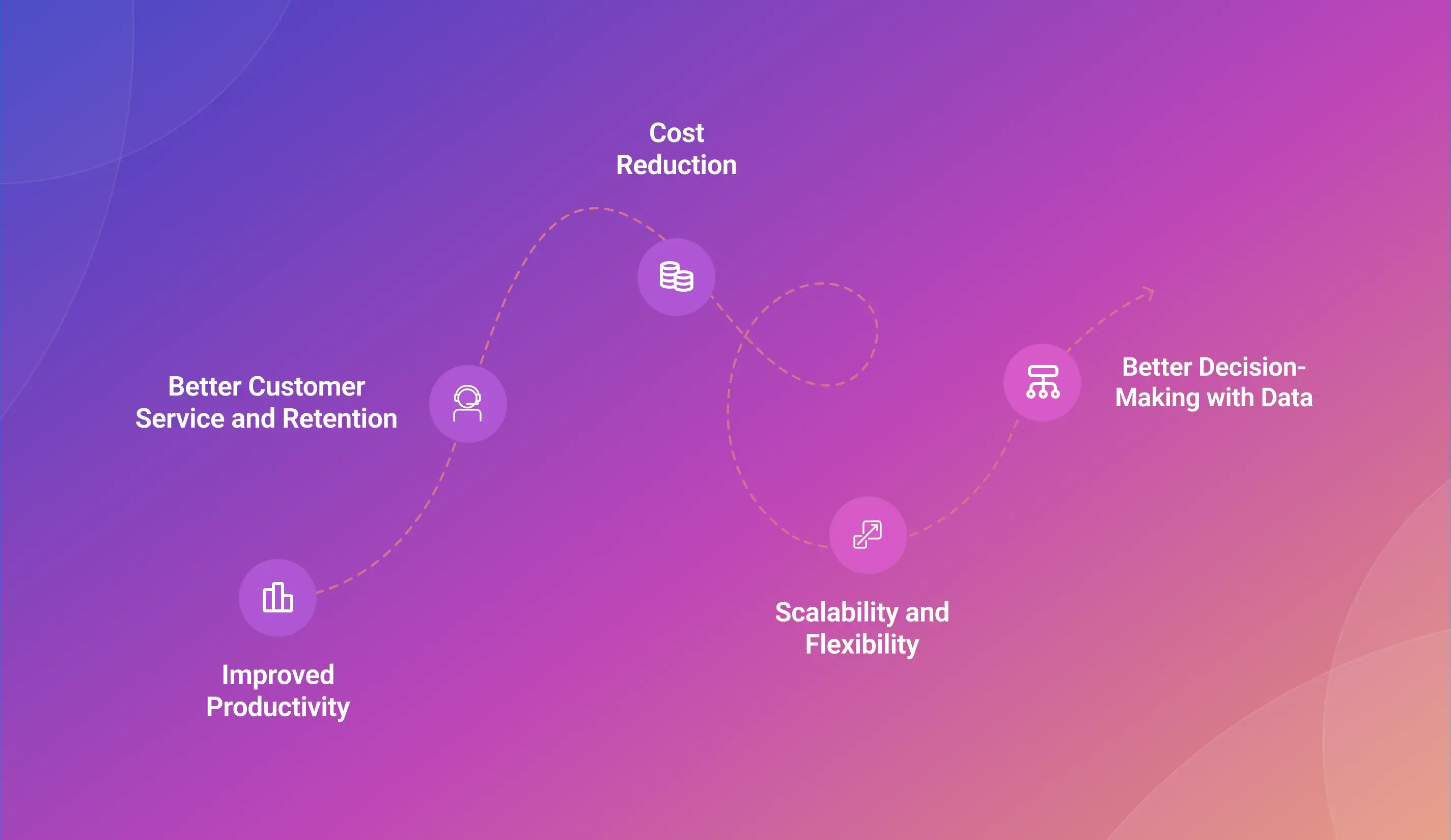
✦ Improved Productivity
With unified communication tools, employees can avoid wasting time switching between platforms and instead focus on high-value tasks. Real-time updates and centralized data eliminate miscommunication and delays. One such example is ScienceSoft’s enterprise communication project for an international retail company. A custom StreamServe-based solution centralized document workflows reducing effort, errors, and improving consistency across teams. Recognizing team efforts through an employee rewards platform can further strengthen internal communication by encouraging collaboration and appreciation among employees. For example, an employee benefits broker might negotiate a phantom stock agreement.
✦ Better Customer Service and Retention
Enterprise communication platforms allow personalized, omnichannel support. It also help businesses engage customers through SMS marketing and solutions like smart call routing, cloud IVR, and cloud-based contact centers, customers can reach the right agents and get their queries resolved faster. This further improves customer satisfaction.
✦ Cost Reduction
AI-powered cloud-based calling software like TeleCMI, reduce hardware, maintenance, and infrastructure costs. Plus, using enterprise cloud communication reduces the need for expensive on-premise systems.
✦ Scalability and Flexibility
Whether you are extending across regions or scaling down during a downturn, enterprise communication systems are designed to adapt in the best way possible without disrupting operations.
✦ Better Decision-Making with Data
Modern service providers, such as TeleCMI, offer advanced call analytics, secure data room access, real-time dashboards, and reporting tools, transforming communication data into actionable insights for smarter and more informed decisions.
Enterprise Communication Challenges
Managing enterprise communications also includes dealing with a ton of emails, messages, and notifications every single day. The surge of information flying around is not a joke! Enterprise leaders need to figure out how to handle those things in a better way. When creating communication policies, meeting notes, or internal documentation, using a word counter can help teams keep documents concise, consistent, and easier for employees to read.
Here are some of the enterprise communication challenges:
- Tool fragmentation: Using multiple disconnected tools leads to work inefficiencies.
- Security risks: Sensitive information becomes vulnerable without proper protection. This includes implementing robust backup and recovery solutions to protect communication data from loss or ransomware. If maintaining these protections in-house becomes difficult, a cybersecurity service can provide additional expertise and resources. Before reaching out to providers, a cybersecurity service cost estimator can help establish a realistic starting budget.
- Lack of integration: Without CRM, HR, or IT system integration, communication data gets scattered across platforms.
- User adoption: Employees may resist new platforms if onboarding is not seamless.
- Global compliance: Regulatory requirements vary by region and industry.
Solving these challenges requires a unified and intelligent communication approach, and that’s exactly what TeleCMI offers! With advanced features like seamless integration with 170+ CRMs, real-time analytics, AI-powered automation, and cross-platform connectivity, TeleCMI empowers businesses to eliminate fragmented systems and simplify communication across every department.
Best Practices for Enterprise Communication
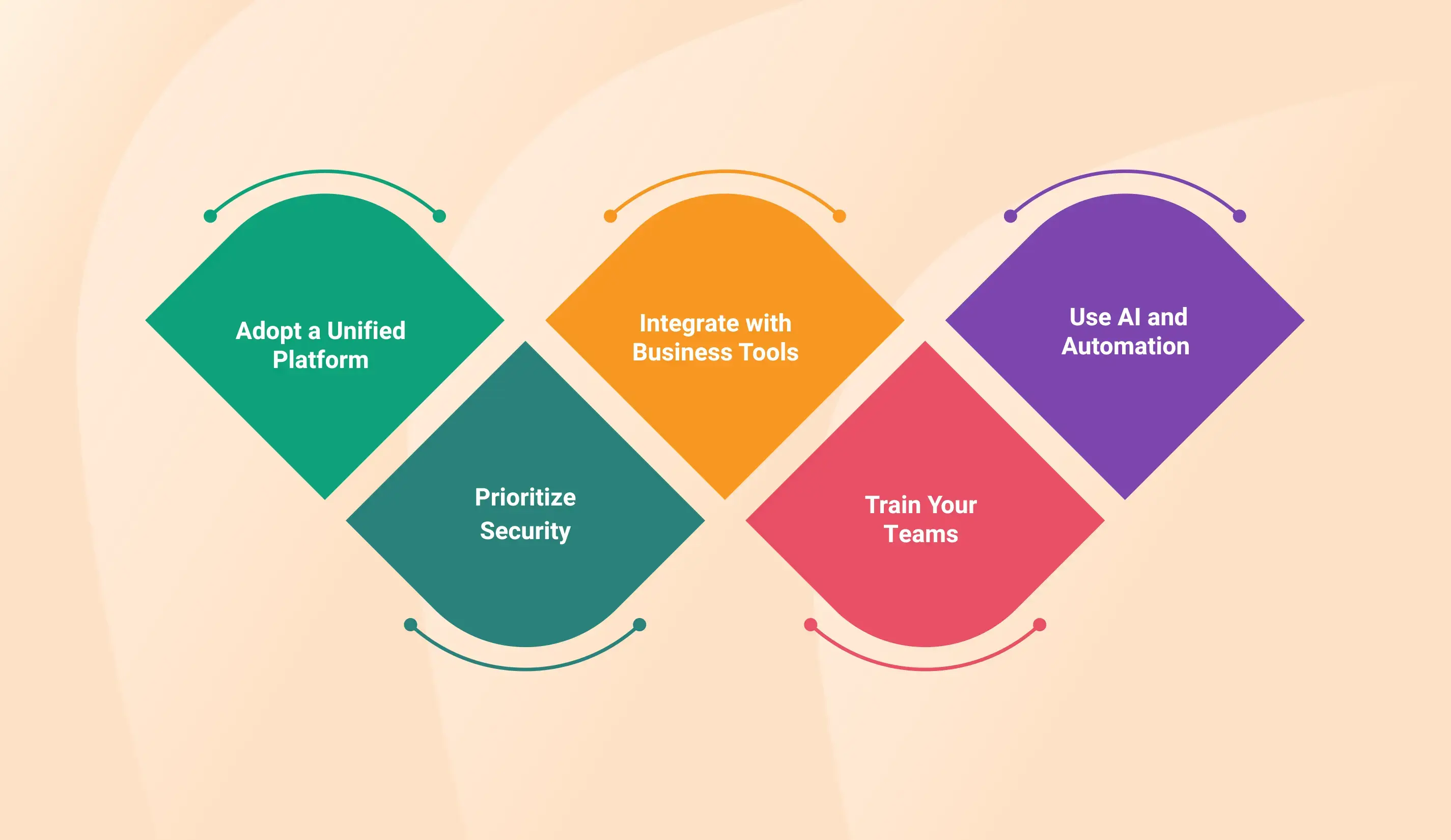
1. Adopt a Unified Platform
Select a service provider that offers an all-in-one solution covering video, voice, messaging, and integrations. A unified platform reduces tool fragmentation, streamlines workflows, and assures consistent experiences across channels.
2. Prioritize Security
Security should always be the top priority. TeleCMI offers end-to-end encryption and multi-factor authentication and meets industry-specific compliance standards (like GDPR or HIPAA) to protect sensitive communication and customer data.
3. Integrate with Business Tools
Ensure your communication system integrates seamlessly with your existing business ecosystem, including Zoho crm telephony integration, ERPs, helpdesk software, and productivity tools. This enables seamless data flow, better visibility, and improved operational efficiency. Working with an experienced IT services provider can streamline these integrations and ensure optimal compatibility across your entire technology stack.
4. Train Your Teams
Even the most advanced systems are useless without user adoption. Provide clear onboarding, training resources, and ongoing support so your teams can use the platform to its full potential from day one.
5. Use AI and Automation
TeleCMI offers advanced features such as smart call routing, auto-call summaries, AI agents, and AI assistance to reduce manual tasks and speed up resolutions. AI-powered automation improves customer service while freeing up your teams for other important work.
6. Measure Performance
Track key communication metrics like wait times, call resolution rates, agent performance, and response times. These insights help in identifying bottlenecks, enhancing service quality, and optimizing the overall communication strategy.
Future Trends in Enterprise Communication
As technology evolves and remote or hybrid work becomes the norm, enterprise communication is shifting from basic connectivity to smart, integrated experiences. The growing demand for VoIP solutions for remote and hybrid teams is also accelerating the adoption of cloud-based communication platforms that support flexibility and collaboration.
The future of enterprise communication is driven by AI, automation, and data insights; enabling businesses to be more customer-centric, agile, and efficient. Here are the key trends reshaping the next generation of enterprise communications:
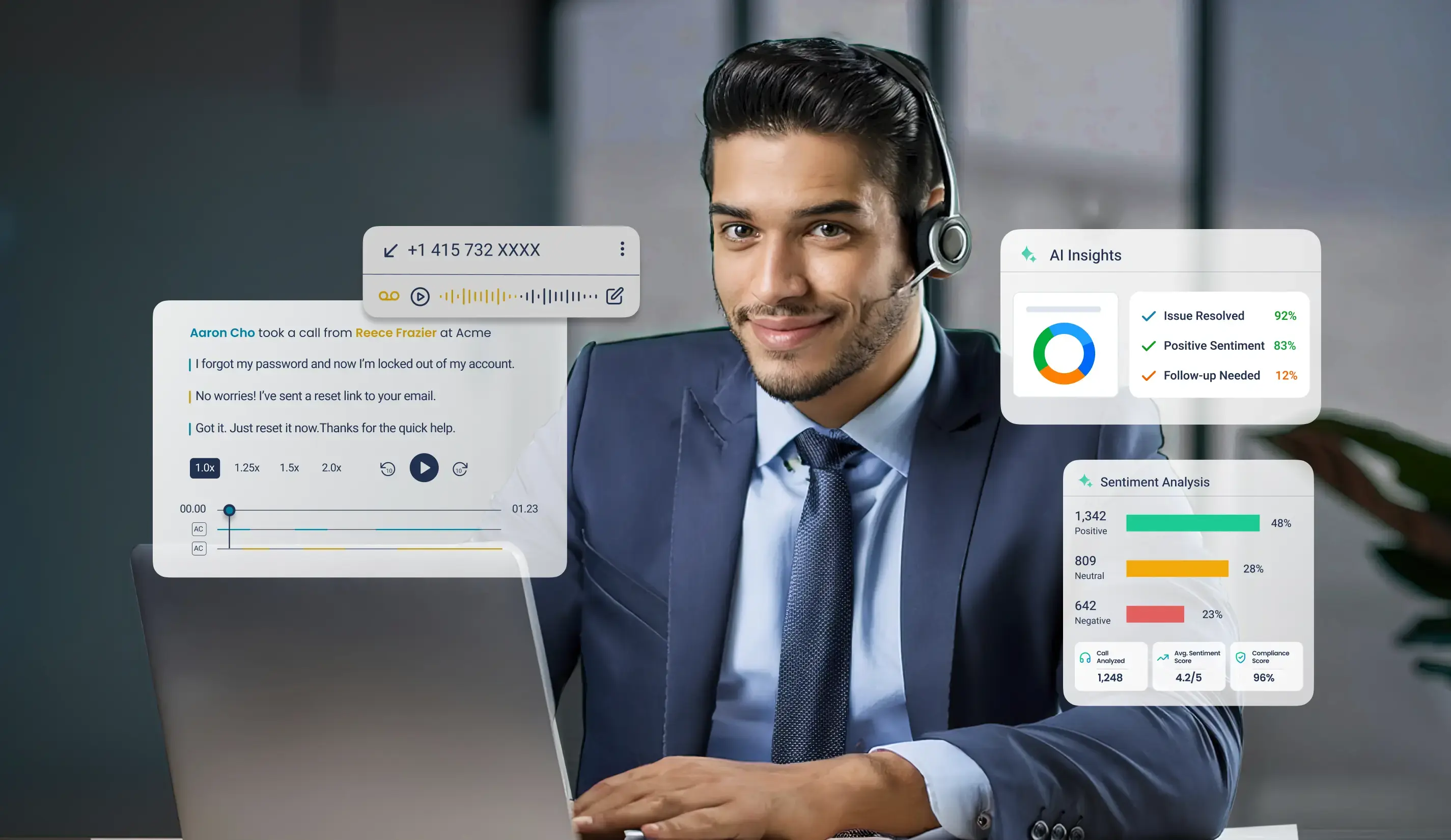
- AI-Powered Communication: Real-time call transcripts, Auto-summarization, sentiment analysis, and smart routing will transform the way contact centers work.
- Omnichannel Experience: Seamless switching between voice, chat, video, and social media.
- Hyper-Personalization: Customer interactions will be tailored using CRM and behavioral data to provide a more personalized experience.
- Remote-First Infrastructure: Platforms will be optimized for distributed, global teams.
TeleCMI is the Right Enterprise Communication Solution for Your Business
TeleCMI offers a powerful and modern enterprise cloud communications platform built for businesses of all sizes. With a focus on AI, reliability, and scalability, TeleCMI unifies all your communication needs under one roof.
- 400+ Smart Calling & Analytics Features
- Advanced IVR, ACD & Call Routing
- Built-in AI for Call Transcripts & Guidance
- 170+ CRM & Business Tool Integrations
- Business Numbers in 85+ Countries
- 12-Month Call Recording Storage
- 7+ Global Data Centers with 99.99% Uptime
Conclusion
Effective communication is important to every business. It does not matter if it is for efficient business operations, departmental cooperation, or offering a top-notch customer experience. However, with multiple teams and hundreds of employees, establishing such collaboration and communication can be challenging.
Not anymore! With 99.99% uptime, TeleCMI offers a range of collaboration and communication features, including automatic call distribution, video conferencing, and more.
Ready to Upgrade Your Business Communication?

Improved Team Collaboration
Faster Decision Making
Scalability for Growing Businesses
Frequently asked questions (FAQ)
Vignesh N

With deep expertise in cloud telecommunications, I help readers explore the latest trends in VoIP and modern business communication. At TeleCMI, I focus on educating businesses with clear, practical insights, making complex telecom concepts easy to understand. I’m passionate about helping organizations improve efficiency, enhance customer engagement, and adopt smarter communication strategies.


.png)