IVR Full Form: How Interactive Voice Response Works and Why It Matters

7 mins read

Posted on Jun 11, 2025

Saravana Kumar
SEO


Saravana Kumar
SEO






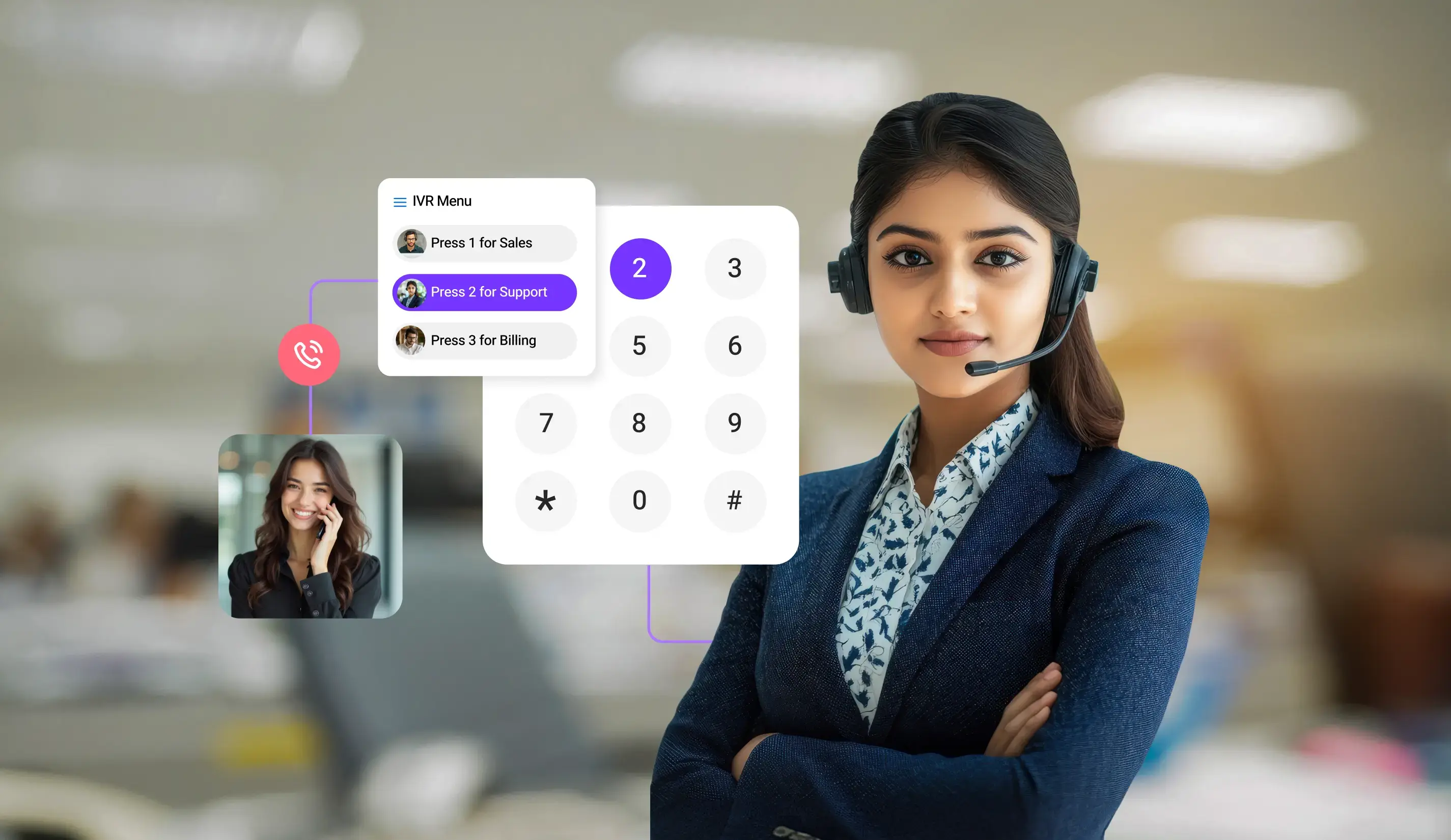
"Press 1 for Payment-related queries."
"Press 2 for Account Information."
"Press 3 to Talk to one of our Representatives."
Well, that's what goes on behind the IVR system workflow! And it does much more than just guide callers through the customized menu. It is often one of the very first brand impressions that your customers receive.
But why does all this matter so much?
Because your customers want freedom! In fact, 80% of the customers look for more customized self-service options, and many are even calling for a more smarter solution to be incorporated.
A well-designed IVR phone system does not just route callers to the right agent or department; it understands the needs and even boosts your team's efficiency.
In this blog, we will learn about what IVR is, how does it works, its benefits, common uses, and some future trends to look for.
So, what are we waiting for? Let's begin exploring!
What is IVR?
When any customer reaches out to a contact center, they do not speak directly to the agent or representative! To make sure that they are directed to the right agent for their query, it is likely that the first thing they will hear is the interactive voice response (IVR).
IVR is an automated system that businesses use to interact and gather information from callers. With IVR, customers hear to an automated greeting and then get to engage with the pre-recorded messages that will assist them with their issues.
The option chosen by the caller, decides the best actions of the IVR. It then routes the caller to the right agent to assist them with their issues, or if its less complex, the IVR itself provides information and deals with the incoming calls without directing the call to any live agent.
How Interactive Voice Response (IVR) Works?
Previously, IVR systems required their own separate hardware, database, and manager to function properly. However, nowadays, Interactive Voice Response (IVR) comes as a part of the advanced AI-powered cloud pbx solution like TeleCMI.
Let's break down how IVR works:
 Works_.webp)
- Caller Dials the Business Number
The whole process starts when a customer calls any business number that is connected to the IVR system.
- IVR Presents an Interactive Menu
The automated IVR system greets the caller with an already customized voice command. For example;
"Thank you for calling TeleCMI!
'Press 1 to for sales'
'Press 2 for support'
'Press 3 for renewals and upgrade'
'Press 4 for Finance'.............."
- Caller Provides Input (DTMF or Speech Recognition)
The caller can either press a number on their phone keypad (DTMF) or speak what they want. TeleCMI's advanced IVR system uses speech recognition to understand the caller's spoken words.
- Call Routing or Self-Service Assistance
According to the caller's input, the system either routes the call to the right agent or offers self-service options like getting order status or making any sort of payment.
- Call Handling and Resolution
If the customer's issue can be resolved via automation, the IVR system will provide the required information or perform the requested action. Otherwise, the call gets routed to the best-suited human agent with the context passed along.
- Call Completion and Feedback
After the issue is resolved, IVR software even sometimes offers an option to rate the service or drop feedback while closing the loop on the interaction.
Simplify Call Handling with Smart IVR
Discover how IVR can reduce wait times, route calls efficiently, and enhance customer satisfaction.
Benefits of IVR for Businesses
- Improved Customer Service
With IVR, customers do not have to wait for a representative or press a series of numbers to navigate complicated phone trees. They can simply say what they want. The phone system then decides whom they want to talk to and directs them to the most relevant person.
- Cost Savings
Since a call to the live agent usually costs more than a call handled by an Interactive Voice Response (IVR) system, businesses save a lot of money, the total amount driven by the percentage of calls managed by IVR. The self-service and smart call routing features of IVR can reduce additional staffing costs and overall operational costs.
- 24/7 Availability
Since IVR is an automated system that enables callers to interact with a computer program instead of any human agent, it will be available 24/7 whenever a customer needs any help.
- Higher Efficiency
Agents spend less time on basic inquiries and more time on complex issues, improving productivity and first-call resolution rates.
- Personalization
Advanced IVR systems can pull out caller data to personalize greetings and route calls according to customer history or preferences.
Common Use Cases of IVR
Interactive voice response (IVR) solutions have been used across various industries. Let's delve more deeply into the use cases:
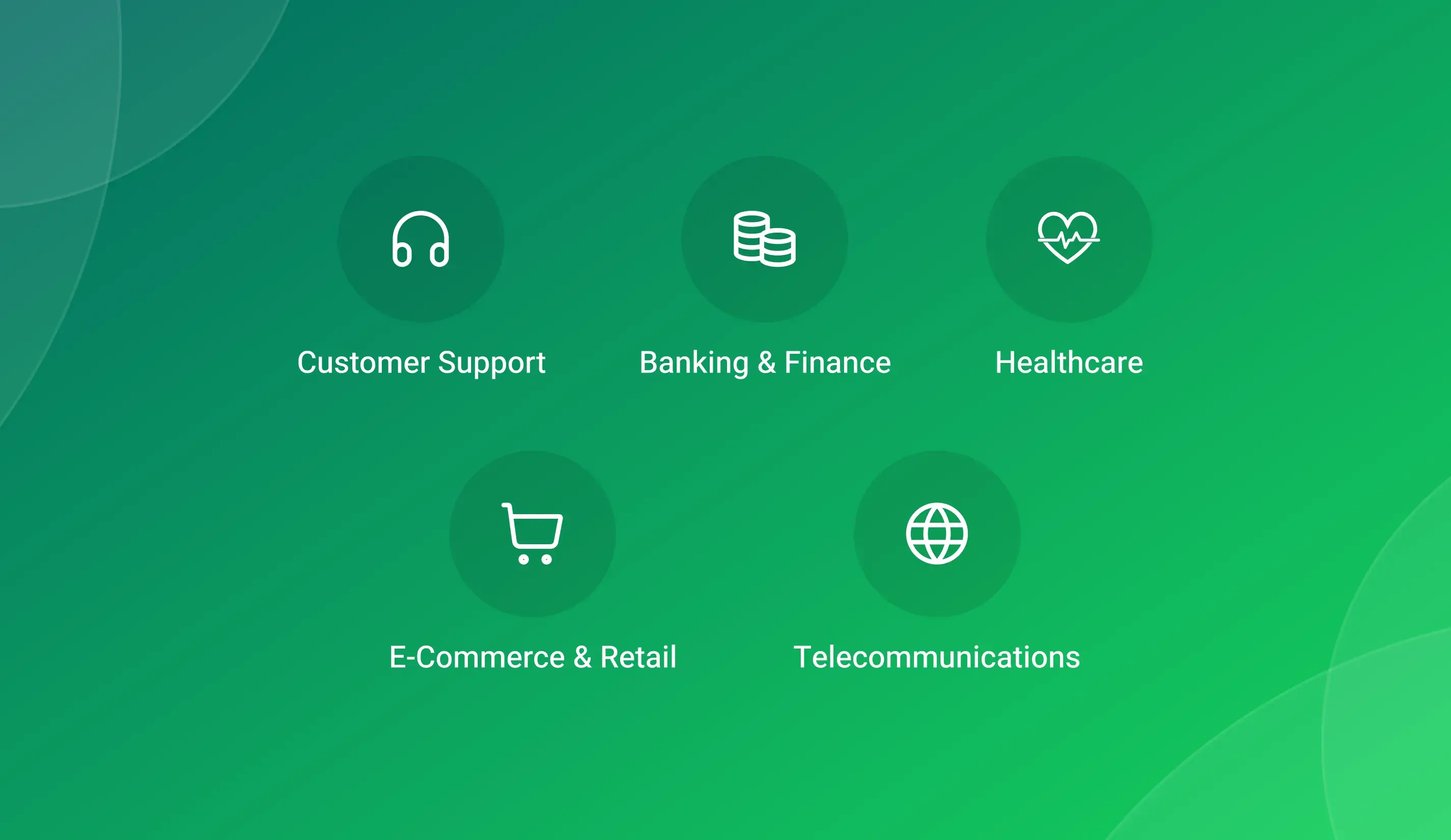
1. Customer Support
Route calls automatically according to the customer issues and enables quick access to FAQs or any sort of status updates.
2. Banking & Finance
Allow users to check account balances, report issues about lost cards, or make transactions without any sort of human assistance.
3. Healthcare
Help patients book appointments, get test results online, or receive reminders for upcoming appointments, visits, or medication.
4. E-Commerce & Retail
Automate order tracking, returns, and delivery updates for seamless post-purchase experiences.
5. Telecommunications
Manage balance inquiries, recharge options, plan upgrades, and more with the help of self-service Interactive Voice Response (IVR).
Future Trends in IVR Technology
As the technology is evolving, so does the IVR solution. Here is what you can expect in the upcoming years;
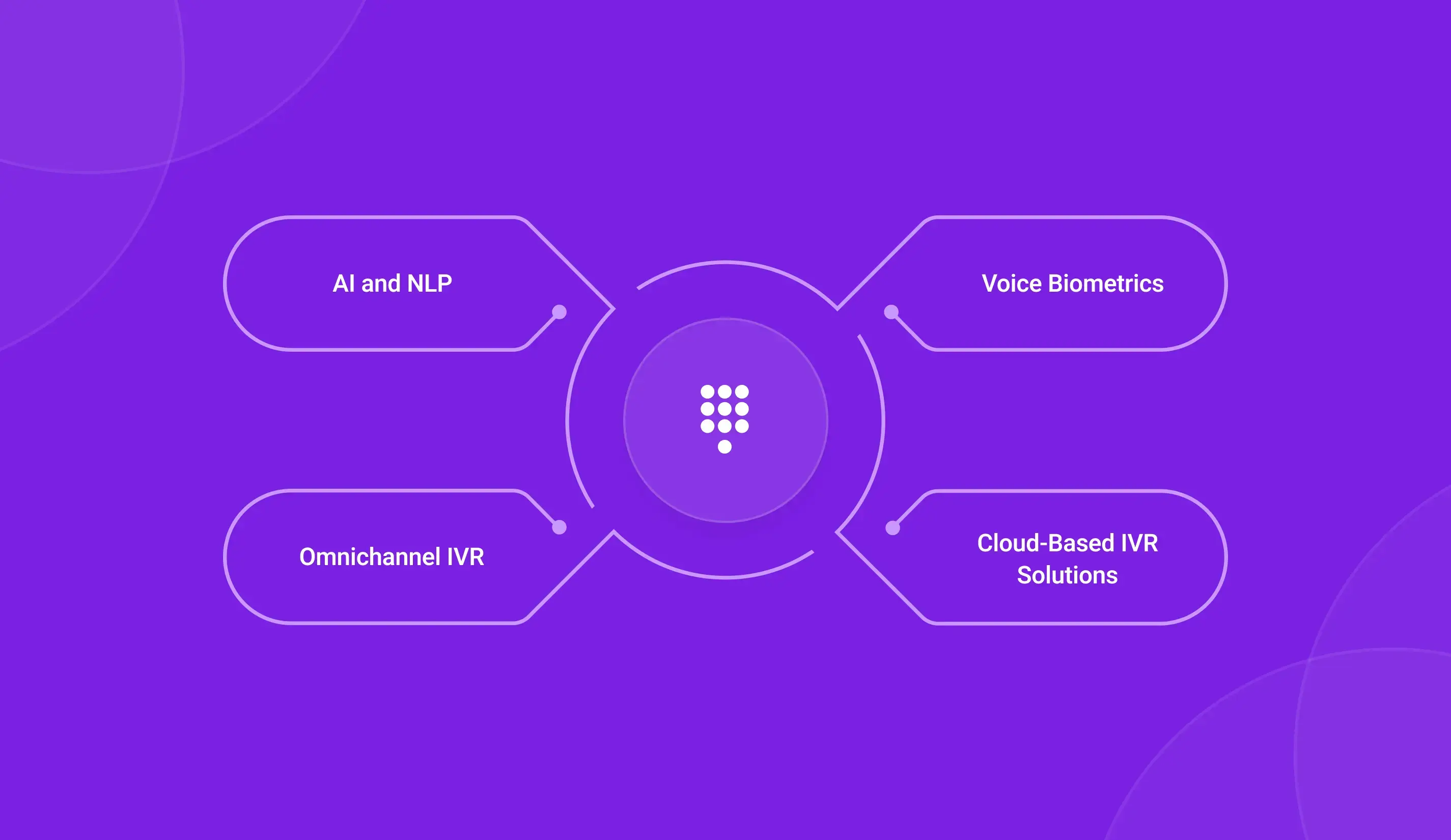
- AI and NLP (Natural Language Processing)
AI-powered IVR systems utilize NLP (Natural Language Processing) to understand natural speech, enabling more human-like conversations without requiring users to press any buttons.
- Omnichannel IVR
I will search the web to gather the latest insights on how business phone systems are integrating IVR solutions with chat, SMS, and social media to offer consistent customer experiences across multiple channels.
- Voice Biometrics
Authentication via voiceprints will eliminate the need for PINs or security questions, making IVR more secure and user-friendly.
- Cloud-Based IVR Solutions
Cloud-based IVR service offer greater scalability, faster setup, and seamless integration with CRMs and other business tools, making them ideal for fast-growing businesses.
Conclusion
From smart call routing to offering self-service options, IVR plays a crucial role in today's modern communication landscape.
Now, with AI and more advanced technologies, IVR has become faster, more conversational, and easier to integrate with other business tools. Businesses can now automate processes, simplify business communications, and enhance customer experience with modern IVR systems.
TeleCMI offers an intelligent, dynamic, AI-powered IVR solution that integrates with your CRM. In this way, your agents have access to rich data, enabling them to predict customer needs and deliver exceptional experiences accurately.
Automate Your Customer Experience with Smart IVR

Effortless Call Routing
24/7 Availability
Seamless Integration
Frequently asked questions (FAQ)
Saravana Kumar

I’m passionate about exploring and sharing insights on modern cloud communication technologies. At TeleCMI, I focus on helping readers understand the evolving world of cloud telephony and IVR solutions in a simple yet in-depth way. My goal is to deliver genuine value by turning complex telecom concepts into clear, actionable knowledge that builds trust and drives innovation.