Solving Language Barriers in Customer Calls: A Guide for Growing Businesses

10 mins read

Posted on Dec 19, 2025

Saravana Kumar
SEO


Saravana Kumar
SEO





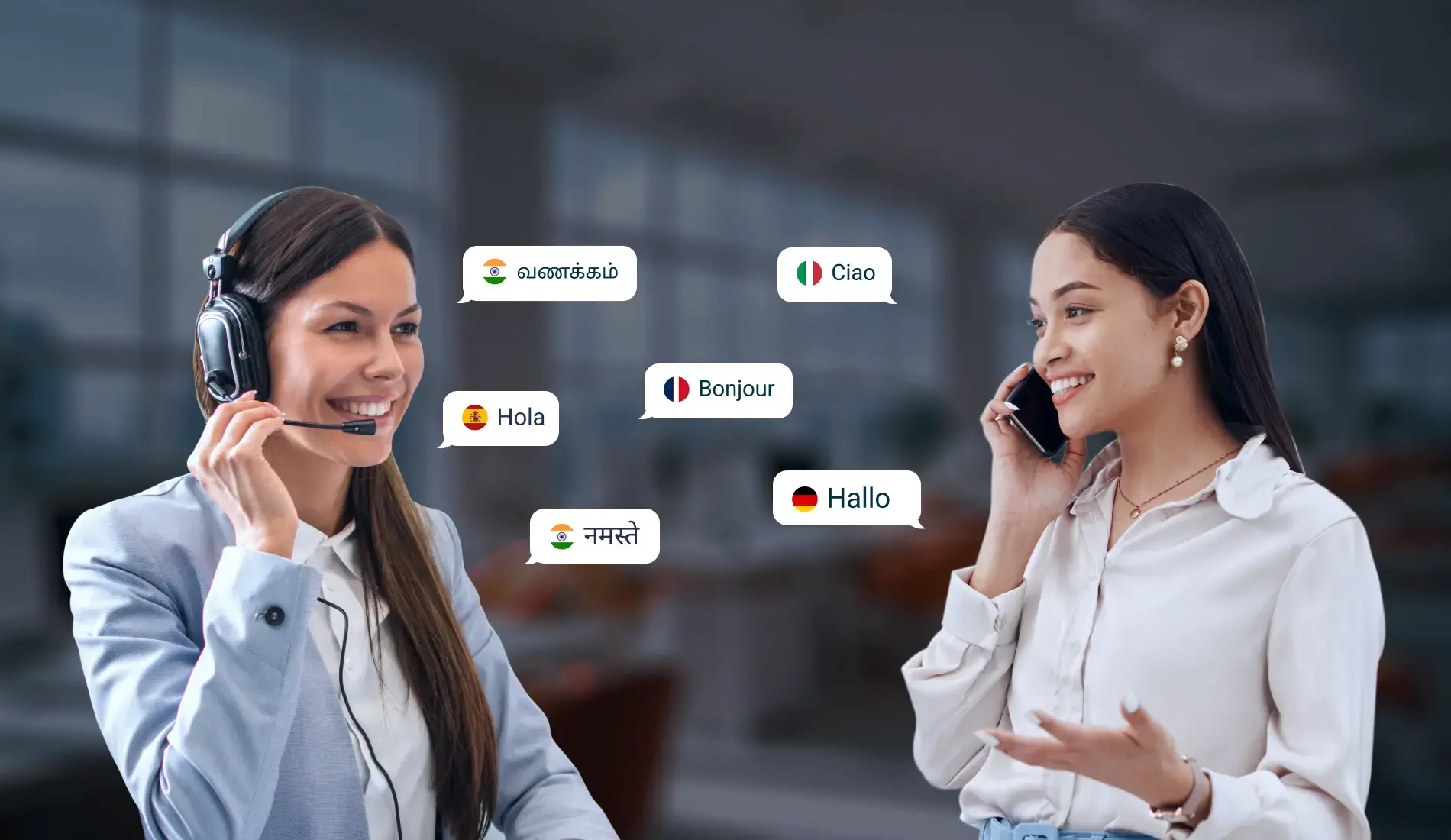
Most customer calls begin with a simple intention help, provide feedback, or explore new opportunities. When both people speak the same language, the conversation moves easily. Questions are clear. Answers make sense. The call ends quickly.
Things change when language gets in the way.
As businesses grow across cities and states, especially in India, callers bring different languages with them. Many want to explain their issue in the language they use at home. When they cannot, the call becomes uncomfortable.
On the other side, support agents try their best. They repeat questions. They guess what the customer means. They worry about giving the wrong information.
This is how language barriers quietly damage customer calls. Not through anger, but through confusion, hesitation, and fatigue. For growing businesses, addressing language early is essential to maintaining clear, confident customer communication.
In this blog, we’ll explore how language barriers create serious problems in customer calls and outline practical ways to address them.

Key Takeaways
 Customers feel more confident and valued when they can speak in their own language.
- Miscommunication causes extended call time, overwhelmed agents, and lost business opportunities.
- Language-based IVR routing ensures the right people are reached from the start.
- Sticky Agent routing enhances continuity and eliminates redundant explanations.
- Call notes and translation aids enable teams to handle complex communications efficiently.
- Pre-recorded multilingual messages are helpful in minimizing the workload of the agents and making the communication.
- The language-specific call-backs exhibit respect and call abandonment prevention.
- Organized communication builds trust, and trust leads to increased customer satisfaction
Why Language Barriers Cause Major Problems in Business Calls
Language gaps in customer calls do more than slow the conversation. They change how people feel, how well information spreads, and how much confidence customers have in your business.
Problem 1 – Miscommunication Leads to Wrong Information
When the caller and agent do not share a common language, misunderstandings happen. Customers may hear incorrect pricing, unclear product steps, or incomplete instructions. Agents may think they have answered clearly when the customer has not fully understood. These small errors can turn into bigger service issues later, especially when agents haven’t been trained on structured listening, which a communication skills course covers well.
Problem 2 – Customers Feel Ignored or Unvalued
Most Indian consumers prefer to have conversations in their regional language. It will allow them to communicate their concerns in the language they feel most comfortable. Being unable to do so will make them feel distant from the other people they are talking to. They will not feel their concerns have been heard.
Problem 3 – Support Teams Get Overloaded
Language gaps increase the time agents spend on each call. They repeat questions, clarify misunderstandings, and slow down the call just to make sure everyone is on the same page. This drains team productivity and lowers the number of customers each agent can serve.
Problem 4 – Lost Business Opportunities
Prospective customers who struggle to communicate comfortably tend to disconnect earlier. They may not return or complete a purchase. These missed opportunities are rarely tracked as language issues, yet they silently shrink conversion and retention.
An indoor Navigation system helps eliminate this friction by guiding users clearly through complex spaces, improving confidence, engagement, and completion rates.

A principle from the U.S. Digital Government states: 'How clearly and effectively a business communicates shapes how customers experience its reliability and professionalism.
How to solve language barriers using a cloud Telephony in your business communication
Solution 1: Use IVR to Route Calls Based on Language
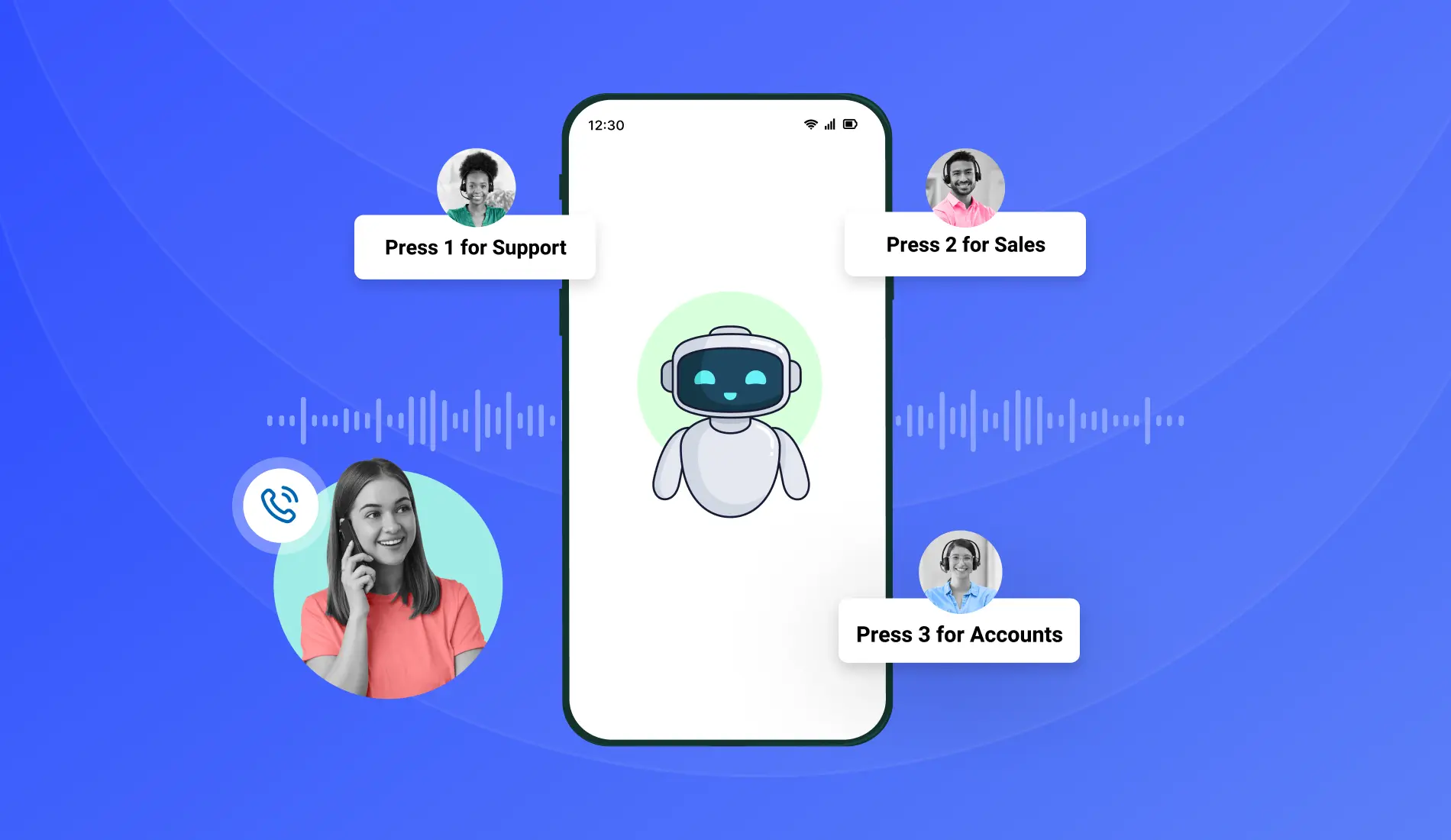
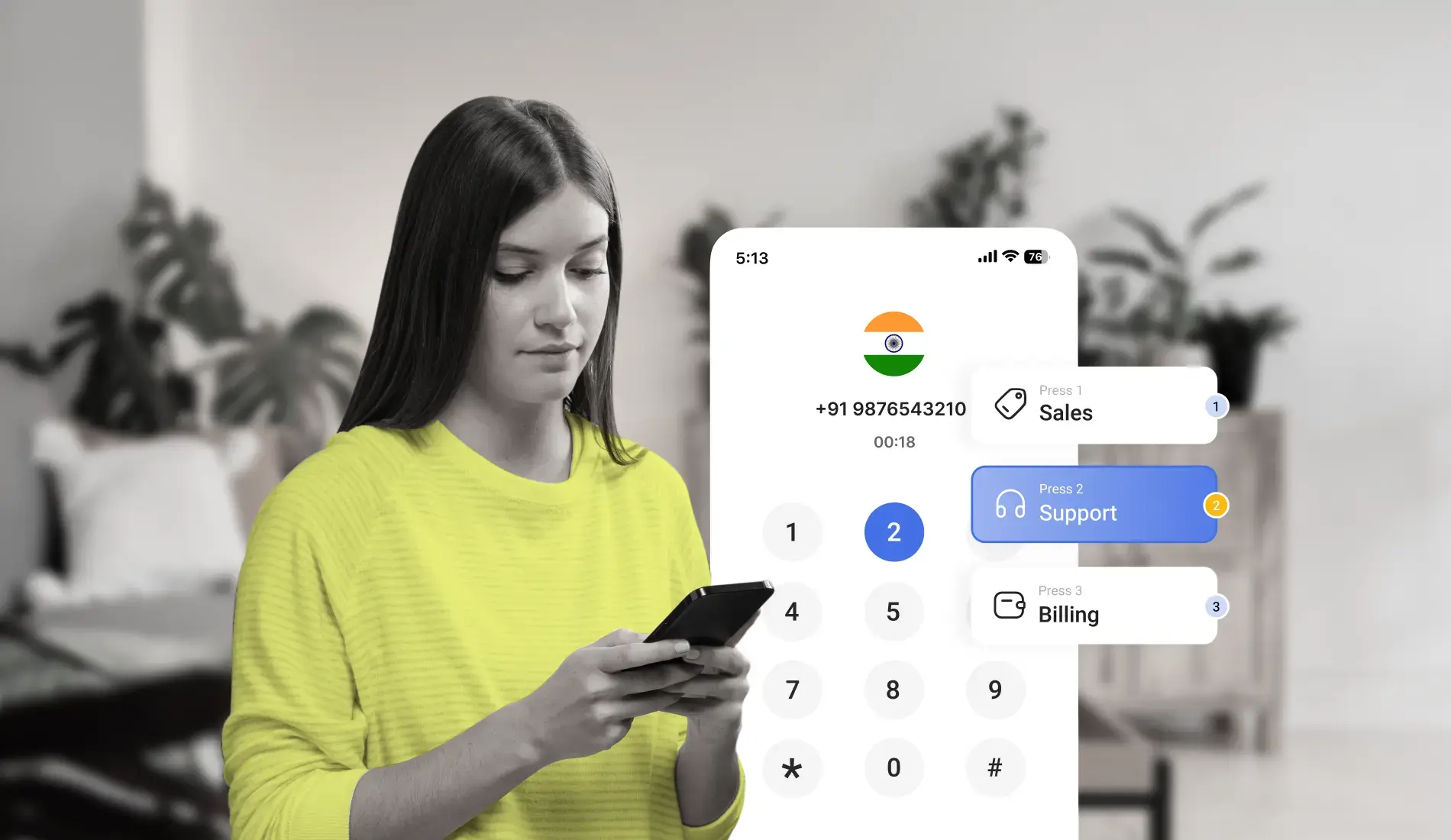
One of the simplest ways to reduce language friction is to handle it at the very start of the call. An IVR system can ask callers to choose the language they are most comfortable with before they speak to an agent. The prompt is straightforward and familiar.
- Press 1 for Tamil
- Press 2 for Hindi
- Press 3 for English
Once the caller selects an option, the system routes the call to an agent who speaks that language fluently. This small step changes the tone of the entire conversation.
The customer does not have to adjust or struggle. The agent does not have to guess or clarify basic points.
Benefits
- Calls are resolved faster because explanations are clear from the start.
- Misunderstandings are reduced, which lowers repeat calls and follow-ups.
- Customers feel more comfortable and respected.
- Agents handle calls more efficiently without constant repetition.
- The business comes across as organized and professional.
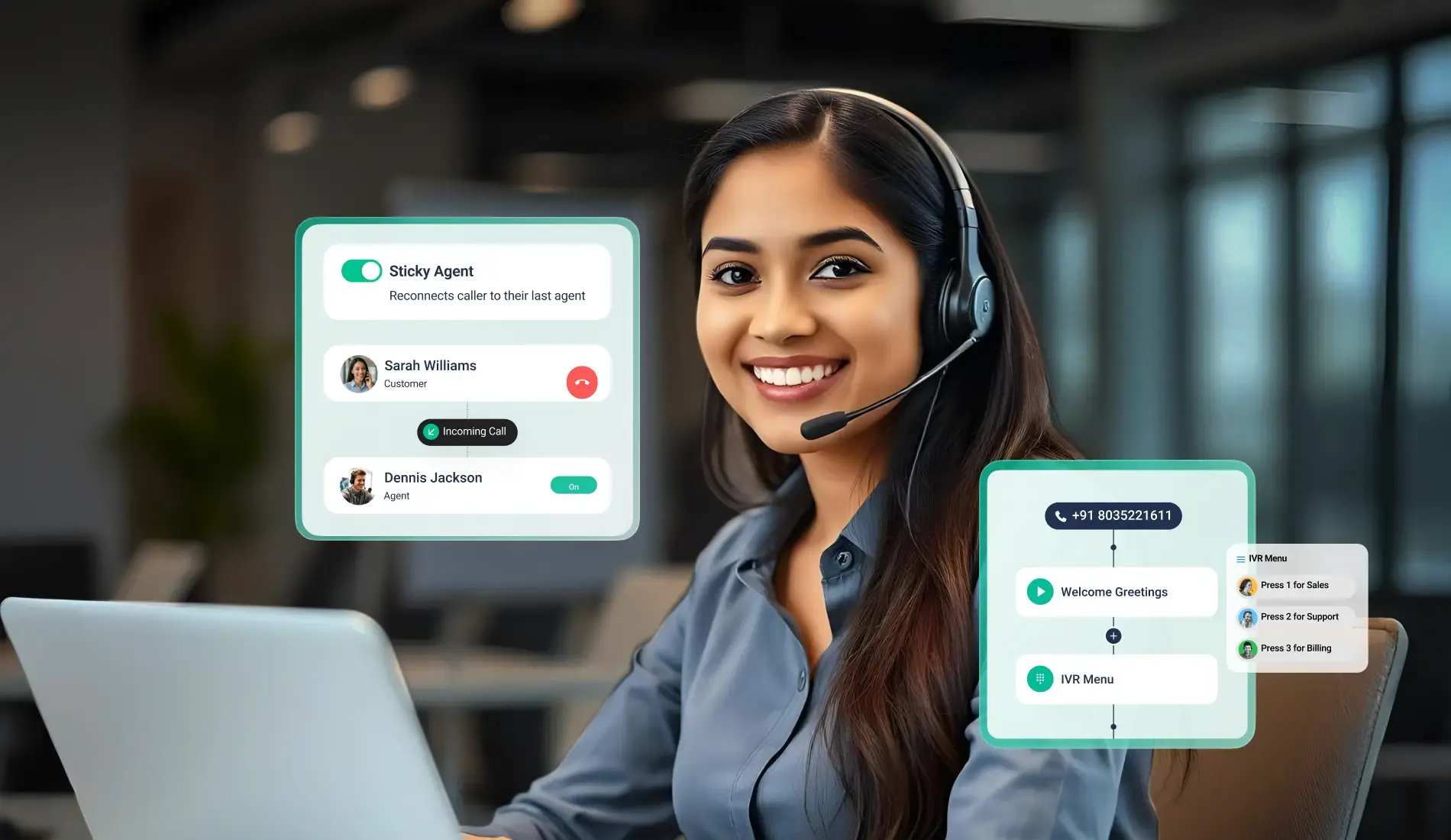
Solution 2: Use Sticky Agent Routing So Customers Always Connect to the Same Person
Sticky Agent routing is designed to bring continuity into customer calls. When a customer calls again, the system automatically connects them to the same agent they spoke with before.
From the customer’s point of view, this feels natural. They are not starting over. They are continuing a conversation.
This matters for two important reasons.
- Customers do not have to repeat themselves: The agent is already aware of the background information of the customer. This will include previous conversations, outstanding issues, order information, and language preference. The call gets straight to the point without going over old ground. Frustration will be reduced, and this will make conversations simpler.
- Language barriers fade on their own: If a Hindi-speaking customer was helped by a Hindi-speaking agent on the first call, Sticky Agent routing ensures future calls reach that same agent. There is no need to explain language preferences again or worry about being transferred to someone else.
Sticky Agent Routing transpires when support calls are used to forge continuous relationships. Businesses can foster a seamless, human touch by enabling continuous conversations among the same voices.
Solution 3: Use Call Notes and Translation Tools for Complex Conversations
A support team can never support all languages. The important part is how these are dealt with in a support conversion.
When an agent is unable to comprehensively grasp a customer’s language, organization becomes vital. Taking notes during a call can help capture critical information, such as a customer’s problem, vital instructions, and follow-ups. Translation aids can be used to clarify meanings or specific terms when a talk becomes complicated. The call can be escalated to an individual who speaks the customer’s language if needed.
Furthermore, this method will not present a possibility of missing information and will reduce the need for follow-up calls.
Benefits
- Precludes information from being missed or misunderstood
- Reduces repeat explanations and follow-up calls
- Enhances understanding in case of handoffs/escalations
- Assists in teamwork with a common context
- Assists in arriving at accurate resolutions and less aggressive discourse
Ready to break language barriers?
Deliver inclusive support, faster resolutions, and exceptional experiences for every customer
Solution 4: Create Pre-Recorded Messages in Multiple Languages
Many customer calls are about the same basic questions. Order status, operating hours, payment steps, or simple service instructions rarely change, yet they take up a large share of agent time.
Pre-recorded messages in multiple languages clearly and consistently handle these queries. When customers hear information in a language they understand, they do not need to wait for an agent or struggle to interpret instructions. The message is calm, clear, and repeatable.
This approach lightens the load on support teams while improving clarity for callers. It is especially useful for businesses with limited staff or high call volumes, and it continues to work even when agents are unavailable.
Benefits
- Easier responses to frequently asked questions
- Transparent and consistent information provided to each caller
- Lessens pressure on support teams
- Accommodates smaller or leaner teams
- Can be used during non-working hours
Solution 5: Offer Call-Backs in the Customer’s Preferred Language
There will be times when no agent is immediately available in the language a customer selects. Handling this instance is very important, as it makes a lasting impression.
Instead of being required to wait or continue communication in a foreign language while waiting for a human representative to become available to take their call, an automatic callback system offers the caller options. The preference is then recorded, and an agent who speaks the same language is called to contact the customer once an agent is available.
This simple gesture shows respect for the customer’s time and comfort. It prevents frustration at a critical point in the conversation and reassures the caller that they will be heard properly, not hurried through.
In business terms, it also helps preserve the quality of the leads. When customers recognize that they are being taken into account, they are much more likely to proceed to the next step.
Benefits
- Shows respect for the customer’s language preference
- Avoids frustration during peak hours
- Reduces call abandonment
- Creates a more professional experience
- Helps retain high-quality leads
Case Study
A growing e-commerce company in South India began receiving customer calls from Karnataka, Tamil Nadu, and Andhra Pradesh. As demand increased, so did the variety of languages spoken on support calls. Before language routing, agents struggled to understand callers. Customers repeated themselves, calls took about 40 percent longer, complaints increased, and many callers dropped off early.
After adding IVR language selection, customers reached the right agent immediately. Miscommunication reduced, call times shortened, support pressure eased, and customer satisfaction improved.
Business Communication Checklist
As your business grows, language differences can quietly affect call quality and customer satisfaction. Use this checklist to identify if language barriers are impacting your support:
- Customers speak various languages: The calls originate from different locations.
- Miscommunication: Customers and agents are unable to connect, leading to misunderstandings.
- Long call handling times: Long calls require more explanation, so handling times are longer.
- High drop-off rates: Callers hang up before finding a solution to their problems, often in frustration.
- Repeating questions: Agents ask the same questions due to misunderstandings.
- Frustrated or confused callers: Customers exhibit signs of frustration or confusion when receiving calls.
- Untrained or struggling agents: Support staff cannot explain clearly, especially when there is a linguistic gap.
Conclusion
Language is not a secondary detail in customer calls. It shapes how comfortable people feel, how clearly problems are explained, and how much trust they place in your business.
In a country as linguistically diverse as India, growth naturally brings language complexity. When that complexity is ignored, customer calls become longer, harder, and less effective. When it is handled well, calls become smoother, more personal, and far more productive.
Cloud telephony solutions such as Language-Based IVR, Sticky Agent Routing, Multi-Language Recording, and Callback Solutions enable organizations to extend support to customers in mediums and languages they trust and are familiar with. These solutions do not compete with customer support; rather, they improve it.
Businesses that address language barriers early protect customer relationships, reduce pressure on support teams, and create a communication experience that scales with growth rather than breaking under it.
Support every customer in their preferred language effortlessly

Global reach
Faster support
Clear communication
Happy customers
Frequently asked questions (FAQ)
Saravana Kumar

I’m passionate about exploring and sharing insights on modern cloud communication technologies. At TeleCMI, I focus on helping readers understand the evolving world of cloud telephony and IVR solutions in a simple yet in-depth way. My goal is to deliver genuine value by turning complex telecom concepts into clear, actionable knowledge that builds trust and drives innovation.