Top 10 VoIP Solutions for Small Businesses (2026 Guide)

15 mins read

Posted on Apr 08, 2026


Vignesh N
SEO


Vignesh N
SEO




Small Business communication is transforming from static desk phones to dynamic, cloud-based hubs. In India we see the VoIP market grow from USD 4.33 billion in 2024 to a projected USD 10.94 billion by 2033. Also, this transformation isn’t only for large tech companies; small businesses are moving away from traditional copper wires to cloud based systems which provide better value, easier installments, and enterprise grade features.
However while making the switch to VoIP is a breeze, what really presents a challenge is in choosing the right provider.
In this guide we break down the top 10 VoIP solutions for 2026 which we will use to help you find a reliable and economic way to handle business calls. If you are a single founder in need of a professional number or a team looking to integrate calls with your CRM we compare real pricing, setup speed, and must have features like IVR and call recording.

Key Takeaways
 The VoIP market is growing at 10.85% CAGR, making cloud solutions a strong long-term choice
- Most SMB plans range from $12–$30 per user/month
- IVR, call recording, CRM integration, and uptime are essential features
- Some providers charge extra for analytics and reporting
- Many providers offer free trials—testing call quality is important
- G2 ratings below 4.4/5 should be reviewed carefully
What Is a Small Business VoIP System?
VoIP System convert voice into data packets and thus allow small businesses to use professional phone lines through their laptops, mobiles, or browsers which in turn saves them from expensive hardware.
Through the cloud which is the medium we are using, teams are able to immediately access enterprise level features such as automated attendants, call recording, and real time analytics at a much lower cost then traditional options.
In the digital space we see instant scalability which in turn allows you to add or remove users via a dashboard as your business grows.
It functions as a central point for communication which also ties in with CRMs to report and improve on all customer interactions which in turn gives better service.
How to Choose the Best VoIP Solution for Small Businesses in 2026
There is no single best option. The right choice depends on team size, call volume, and tools.
1. Call Quality & Uptime: Choose VoIP service providers with 99.9% uptime and HD voice. Always test from your location.
2. CRM Integrations: Check if it works with tools like HubSpot, Salesforce, or Zoho.
3. Pricing Transparency: Review what each plan includes. Some features are only in higher tiers.
4. Ease of Setup: A good system should go live quickly without complex setup.
5. Scalability: The system should support team growth without high costs.
6. Support Quality: Check reviews for support speed and reliability.
Why Trust This VoIP Comparison
Each provider in this guide has been carefully evaluated against six consistent criteria, creating a reliable and unbiased comparison you can confidently use to make decisions.
- 10 VoIP tools reviewed end-to-end
- 6 evaluation criteria applied consistently across all providers
- G2 ratings cross-referenced from verified user reviews
- 2026 pricing verified against live provider pages
- SMB lens: teams of 1–100 users, not enterprise deployments
Comparison Table: Top 10 VoIP Solutions for Small Businesses
Use the table for an initial filter of providers before going in to read the full reviews. All prices are per user/month and are annual unless noted.
Top 10 VoIP Solutions for Small Businesses — Full Reviews
Finding the best VoIP for small business needs more than just comparing prices.
With so many VoIP providers for small businesses, choosing the right solution can be confusing.
In this guide, we’ve reviewed the best VoIP solutions for small business, focusing on features, pricing, ease of use, and scalability. Whether you're looking for a cloud-based VoIP solution or exploring voice over IP solutions for small business, this list will help you find the right fit.
From startups to growing teams, these VoIP solutions for small business are designed to improve communication, reduce costs, and support long-term growth.
1. TeleCMI
.webp)
Best for SMBs and startups needing strong calling + CRM
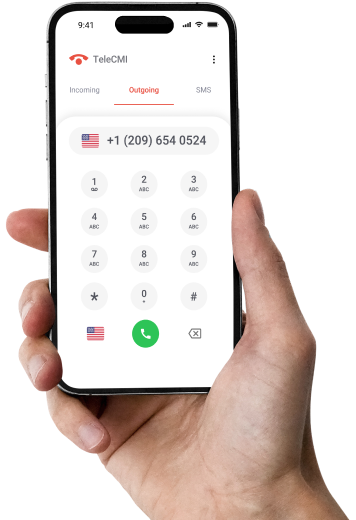
TeleCMI is a cloud-based VoIP phone system built on WebRTC. Calls can be made from a browser or app without hardware. It includes IVR, call recording, analytics, and CRM integrations. Setup takes about 10 minutes.
It also offers global infrastructure with 7+ data centers and virtual & toll-free numbers in 150+ countries, making it a strong choice for businesses that need reliable international communication.
Pros
- High call quality
- Simple dashboard
- Strong analytics
- CRM integrations
- Quick setup
- Global number availability (150+ countries)
- Toll-free number support
- Reliable infrastructure with multiple data centers
Cons
- The mobile app is currently under development
Explore a modern VoIP solution built for small businesses — try TeleCMI at no cost.
Start 14 Days Free Trial2. RingCentral
.webp)
Best for all-in-one UCaaS — voice, video, messaging, and fax
RingCentral is a strong choice for teams that want to bring voice calls, video meetings, team messaging, and even fax into one platform. It is stable, trusted, and can scale from 5 to 5,000 users — but this level of maturity often means pricing can rise quickly as you add more features and users.
Pros
- Complete feature set
- Strong apps
- Reliable uptime
- Scales well
Cons
- Advanced features need higher plans
- Limited international minutes in the base plan
3. Nextiva
Best for SMBs wanting voice, SMS, and chat in one place
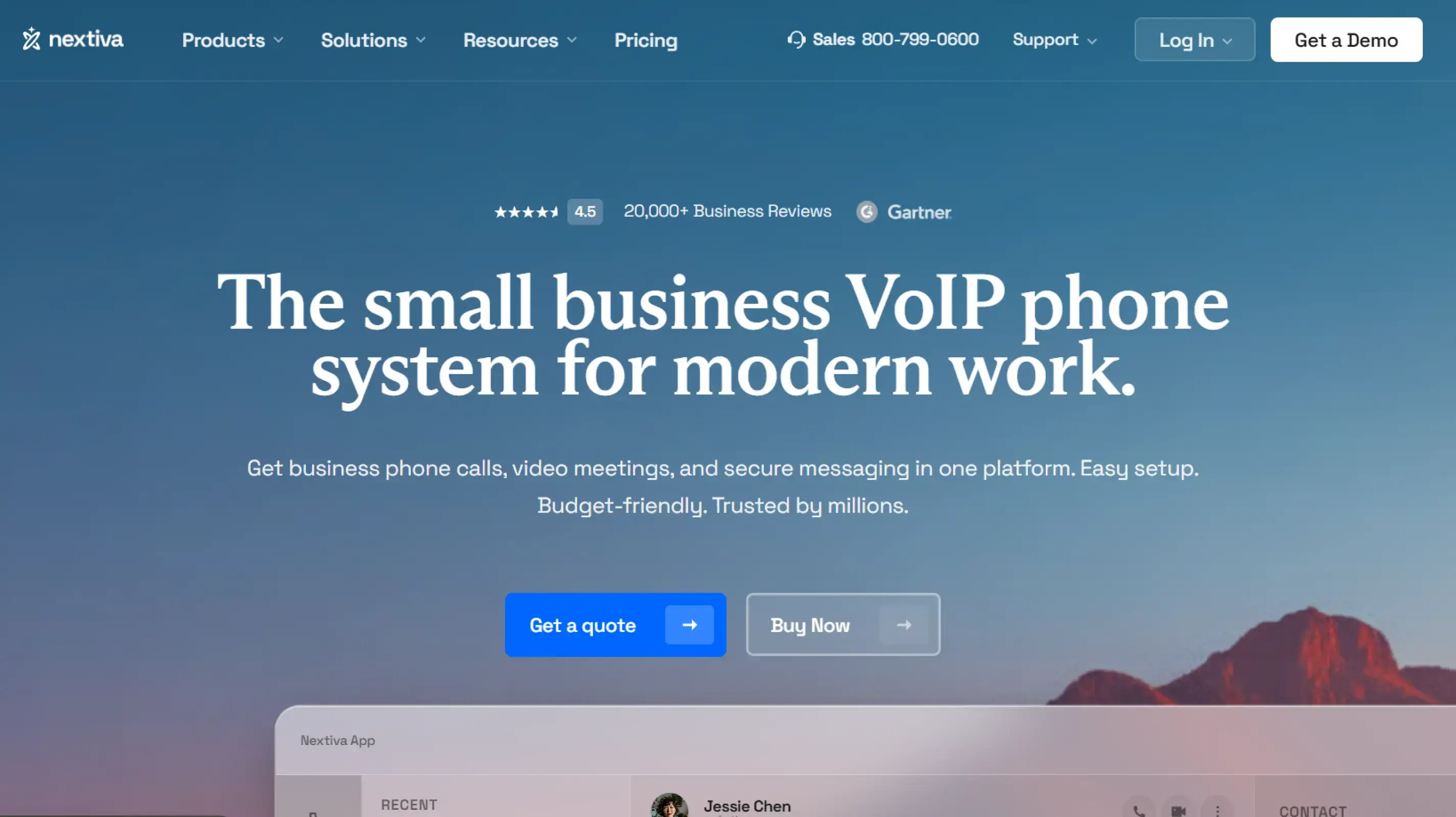
Nextiva positions itself as a full business communication platform — combining VoIP calls, SMS, and live chat in one place. It works well for teams handling both phone and chat support and needing one system to manage everything. Reporting and analytics are strong even in basic plans.
Pros
- Affordable entry plan
- Strong support
- Good analytics
- Reliable uptime
Cons
- Higher plans are expensive
- Contact center tools in top tier only
4. 8x8
Best for global teams
8x8 has a strong global network, making it a good option for businesses with teams or customers in different countries. Its X Series plans combine VoIP, video, and contact center features, helping teams manage both internal communication and customer support without extra tools.
Pros
- Strong global coverage
- Good feature bundle
- Competitive global pricing
Cons
- Billing can be unclear
- Support may vary
- Higher plans are costly
5. CloudTalk
Best for AI-driven sales teams
CloudTalk is an AI-powered cloud phone system built for sales and support teams. It offers smart dialers, AI voice agents, sentiment tracking, and numbers in 160+ countries, making it useful for SMBs where calls drive revenue. It has a clean interface and quick setup — but costs can rise with AI add-ons.
Pros
- AI dialers and voice tools
- Global numbers
- Strong reporting
- Easy interface
Cons
- No video or email
- Add-ons increase cost

Considering CloudTalk for your business?
Compare TeleCMI vs CloudTalk to evaluate features, pricing, integrations, and support before making your decision.
6. KrispCall
Best for budget-friendly teams
KrispCall is an affordable and easy-to-use VoIP software designed for small teams. It offers essential calling features along with integrations, making it a good choice for businesses that want a simple setup without high costs.
Pros
- Low pricing
- Easy setup
- Good integrations
- Useful core features
Cons
- Limited advanced features
- UI can improve
7. Vonage Business Communications
.webp)
Best for mobile-first teams
Vonage has been in the UCaaS space for many years, and its Business Communications platform works well for mobile-focused teams that depend on CRM tools. Many plans include unlimited calling and texting, which is useful for high-volume teams. Multi-level IVR in higher plans supports small support teams.
Pros
- Unlimited calling and texting
- Strong mobile experience
- Good integrations
Cons
- Higher plans cost more
- Setup can be complex
8. Dialpad
.webp)
Best for AI-powered remote teams
Dialpad stands out because of its built-in AI features — including live call transcripts, real-time sentiment tracking, and automatic meeting summaries included in many plans instead of paid add-ons. For remote teams with many calls and meetings, this reduces manual follow-up work.
Pros
- Built-in AI features
- Unlimited calling (select plans)
- Clean interface
Cons
- Pricing varies by region
- AI setup may take time
9. QUO
Best for small startups
QUO is built for lean teams — it bundles US/Canada calls, texts, and a shared inbox into one clean app with AI automation that works out of the box. For a 2–10 person startup that needs a professional business number with shared visibility and basic automation, QUO is hard to beat at this price point.
Pros
- Unlimited calling and texting
- Shared inbox
- Simple setup
- AI features included
Cons
- Limited advanced features
- Notification issues sometimes
10. Aircall
Best for support teams
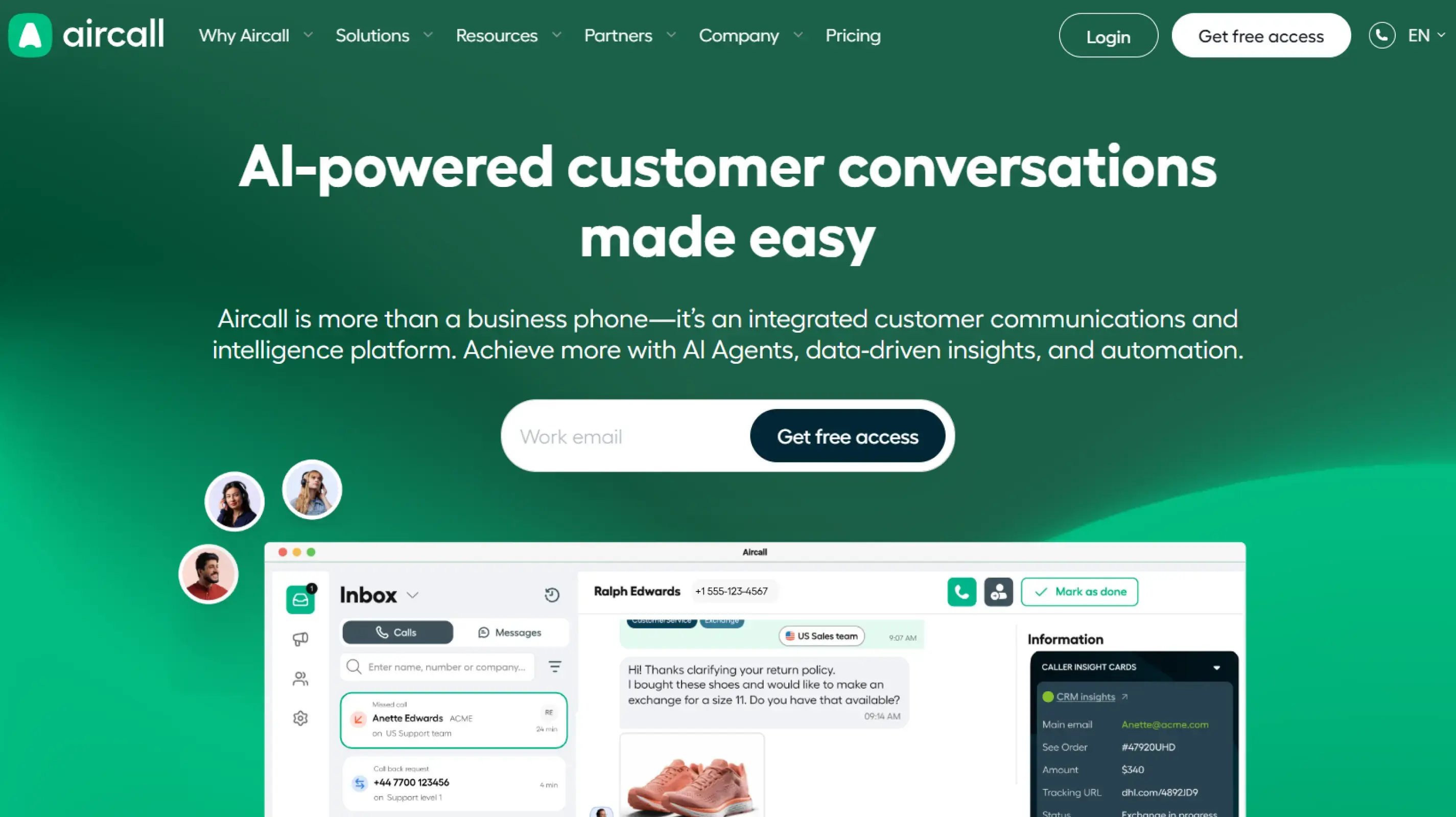
Aircall's strength is integration depth — Salesforce, HubSpot, Zendesk, Intercom, and 100+ other tools connect natively, making it a favorite for support teams that live in their helpdesk. Setup is genuinely fast, and call quality is consistent. The catch: no free trial and a starting price of $30/user/month make it one of the most expensive entries in this list.
Pros
- Strong integrations
- Easy setup
- Consistent call quality
Cons
- No free trial
- Higher pricing
- Advanced features cost more
VoIP Pricing Guide for Small Businesses
Comprehending how VoIP pricing breaks down will help you not overpay or under spend. In 2026, this is what you can expect at each budget level:
Bespoke SLAs, dedicated infrastructure, custom integrations, and white glove onboarding. Most providers we see do this for 50+ seat customers.
Pro Tip:
Always ask about annual vs. monthly billing differences, most providers offer 15–25% savings on annual plans. Also verify what 'per user' actually means: some platforms count every extension as a separate user seat, which can inflate your real cost.
Benefits of VoIP for Small Businesses
If you're considering VoIP for small business, understanding the real benefits can help you make the right decision. Modern voice over IP solutions for small business go beyond basic calling—they reduce costs, improve flexibility, and support business growth.
In this section, we’ll break down how the best VoIP solutions for small business help teams communicate better, scale faster, and deliver a more professional customer experience.
- Lower Call Costs
VoIP is much cheaper than traditional phone lines. Most small businesses save 40–60% on calling costs, especially if they make frequent outbound calls.
- Global Calling Made Easy
With access to virtual and toll-free numbers in multiple countries, you can build a local presence anywhere. Plus, global data centers ensure better call quality and low latency, no matter where your customers are.
- Real-Time Analytics
Track call activity, team performance, and wait times instantly. Even small teams can make faster, data-driven decisions.
- CRM Integration
Call logs, recordings, and customer details sync automatically with your CRM. Your team always has full context before every conversation.
- Easy to Scale
Add or remove users in minutes. No hardware. No delays. You only pay for what you use.
- *Professional Customer Experience-
IVR, call routing, and smart queues help you handle calls efficiently. Even a small team can deliver a smooth, enterprise-level experience.
Why This Matters
Modern VoIP is not just about making calls. It helps you reduce costs, expand globally, and improve customer experience, all from one system.
That’s where platforms like TeleCMI stand out, combining global infrastructure, virtual numbers, and automation to help businesses scale faster without complexity.
Strategic Implementation: Avoiding Common VoIP Procurement Pitfalls
Selecting a VoIP provider is more than a line-item expense; it is a critical infrastructure decision. Choosing a VoIP provider isn't about finding the 'best' one on the market—it’s about finding the one that aligns with your specific CRM, region, and team size.
When evaluating vendors, ensure your team avoids these common operational blind spots:
- Prioritizing Initial Outlay Over Total Cost of Ownership (TCO): A low entry price often masks the true cost. If a plan requires a tiered upgrade within six months to access essential features like CRM integration or call recording, the "most affordable option" option becomes the most expensive.
- Geographic Latency and Routing Infrastructure: Voice quality depends heavily on regional routing and infrastructure. A platform that performs well in one region may still face latency issues in markets like Southeast Asia or India.Providers with distributed data centers and localized routing can deliver more consistent call quality across regions. Always test call clarity from your primary business location during the trial phase to ensure reliable performance.
- Integration Deadlocks: A VoIP system that functions in a silo forces manual data entry. If the platform does not natively sync with your CRM (Salesforce, HubSpot) or Helpdesk (Zendesk), you incur a "productivity tax" through lost time and degraded data integrity every day.
- Premature Contractual Commitment: While annual billing offers significant discounts, avoid long-term commitments until the system has been stress-tested in a live environment for at least 14 days. Monthly billing is a strategic premium that preserves your agility during the validation phase.
- Underestimating Implementation Bandwidth: "Plug-and-play" is often a marketing term. A professional rollout, including IVR mapping, user permission, and number porting which requires a dedicated 48-to-72-hour window to ensure zero disruption to client communications.
- The 99.9% Fallacy: In a 24/7 business cycle, 99.9% uptime still allows for approximately 8.7 hours of annual downtime. Review historical uptime data and verify the Service Level Agreement (SLA) to understand your rights to compensation during service interruptions.
Final Recommendation
The optimal VoIP solution is defined by three pillars: consistent team adoption, seamless CRM integration, and a transparent scaling model.
After evaluating 10 leading providers in 2026, TeleCMI offers the most compelling balance of enterprise-grade call infrastructure and SMB-focused value at $14.99/user/month. Its rapid deployment and actionable analytics suite provide a high-performance foundation for growing teams.
However, no documentation can replace internal validation. We recommend utilizing the free trials identified in this guide to test these systems on your local network before finalizing a procurement decision.
Experience better call quality, faster setup, and built-in CRM integration.

Trusted by 3500+ Businesses Worldwide
Virtual Numbers in 150+ Countries
Reliable Support from VoIP Experts
Frequently asked questions (FAQ)
Vignesh N

With deep expertise in cloud telecommunications, I help readers explore the latest trends in VoIP and modern business communication. At TeleCMI, I focus on educating businesses with clear, practical insights, making complex telecom concepts easy to understand. I’m passionate about helping organizations improve efficiency, enhance customer engagement, and adopt smarter communication strategies.



.webp)