Call Barging Explained: How Teams Use It to Improve Performance

8 mins read

Posted on Jan 30, 2026

Vignesh N
SEO


Vignesh N
SEO





Customer conversations can shift in seconds. A single incorrect response, a tone, or an overlooked detail can rapidly escalate a normal call into a major issue. At the time, support teams need to respond promptly, keep confidence, and resolve issues while on the call.
0 exists for exactly these moments. It enables supervisors to join calls not after issues have occurred but while there is still an opportunity to resolve them. Whether the aim is to assist a new agent calming a customer or stop the spread of incorrect information, call barging ensures management is involved at crucial moments.
In this guide, we will explain what call barging is, how it works inside a contact center, and why so many teams depend on it to deliver better customer support.

Key Takeaways:
 Call barging permits supervisors to enter calls and converse with both the agent and the customer.
- It differs from monitoring, whisper coaching, and call takeover, with each fulfilling a distinct support function.
- Supervisors may. Observe initially, provide discreet coaching, or participate in the call based on the demands of the situation.
- Call barging improves training, strengthens confidence, and helps resolve problems faster.
- Immediate action stops errors from evolving into problems.
- Customers benefit from faster answers and stronger support when leadership steps in.
- When introduced properly, call barging feels supportive rather than intrusive.
What is Call Barging?
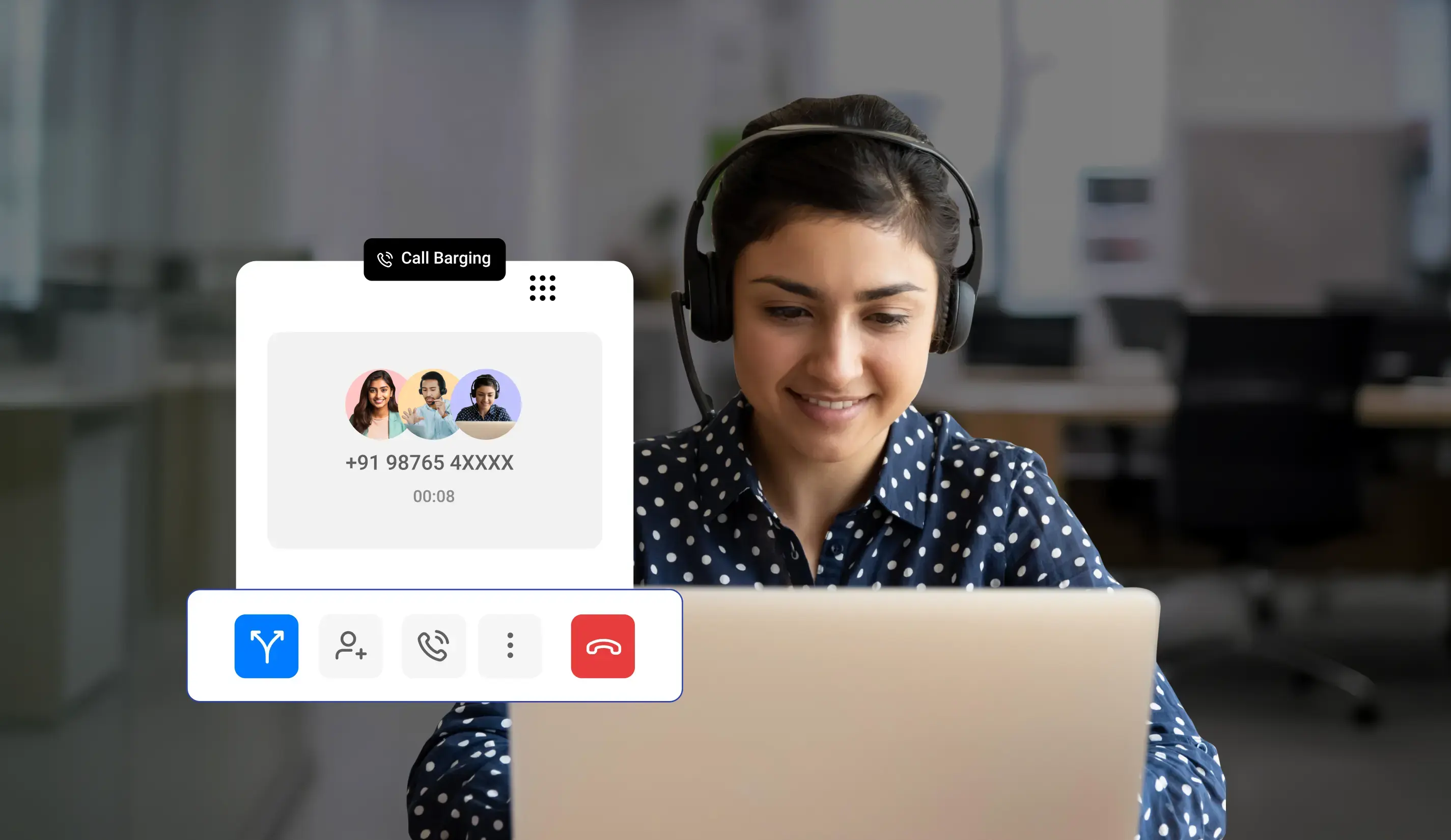
Call barging in the contact center allows a supervisor or authorized user to join in an active call between an agent and a customer. Once the supervisor joined the call, the communication became a triangle among the agent, the customer, and the supervisor. They can join the call to avoid miscommunication, achieve faster resolution, deliver empathetic interactions, or address an upset caller who wants to speak with someone of higher authority.
How Call Barging Works?
Call barging works as a controlled way for supervisors to join in a live call. Here are the steps on how it particularly happens:
1. A call is in progress: An agent is already speaking with a customer through the phone system. The call appears as “live” on a supervisor dashboard.
2. The supervisor monitors the call: The supervisor can listen silently without joining. This allows them to grasp the circumstances and determine if assistance is required.
3. The system provides action choices: From the dashboard, the supervisor may select one of the following options:
- Stay in listening mode
- Whisper to the agent only
- Barge into the call
- Take over the call entirely
4. The supervisor activates “barge in”: When barge in is selected, the supervisor is added to the call just like a third person joining a conference call. From that moment on, both the agent and the customer can hear the supervisor.
5. The supervisor interacts with both parties: They are able to clarify specifics, assist the customer, answer questions, or fix mistakes promptly.
6. The supervisor exits the call once the issue is settled: After the matter is managed, the supervisor is able to leave. The conversation might proceed between the customer and the agent. Be completely handed over to the supervisor if necessary.
7. The interaction is documented: Many systems track the timing and reason for call barging. This information supports performance evaluations, training sessions, and quality assurance.
Benefits of Call Barging in a Call/ Contact Center
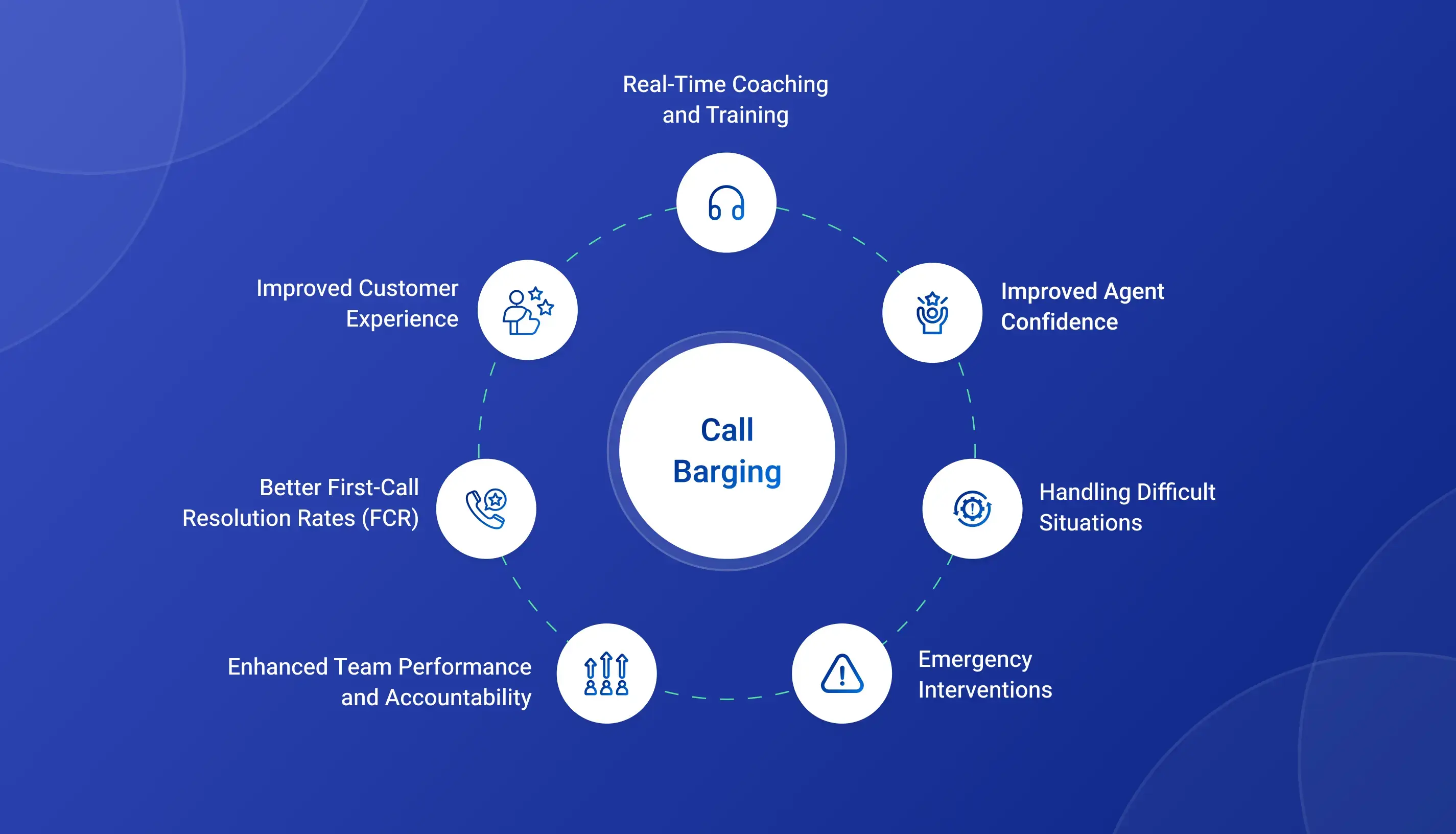
Call barging does more than solve problems in the moment. When used consistently, it strengthens teams, improves service levels, and builds confidence across the floor. The main advantages are:
1. Real-Time Coaching and Training: Supervisors can provide immediate, on-the-spot coaching and support. Instead of waiting for performance reviews or call recordings, guidance is given at the exact moment it is needed. This helps agents fix mistakes immediately and learn through real experience, which often works better than theory-based training.
2. Improved Agent Confidence: Agents work better when they know supervisors will help in challenging scenarios. Call barging gives employees the confidence to handle complex calls without feeling devastated. This builds comfort, skill, boosts agent confidence, reduces job-related stress and burnout over time.
3. Handling Difficult Situations: Certain calls may turn emotional or strained. A manager intervening at the time can assist in soothing the discussion and steering it back to the right path. Clients usually react positively when a higher-level team member participates in cases of grievances or confusion.
4. Emergency Interventions: If an agent shares incorrect information, breaches a policy, or faces an aggressive customer, supervisors can step in immediately to solve the problem before it turns into a serious issue.
5. Enhanced Team Performance and Accountability: Through call barging, supervisors observe conversations, enabling them to offer unbiased feedback rooted in true performance. When teams are aware that support is accessible and expectations are consistently maintained, they cultivate practices. Gradually, this enhances the level of service quality.
6. Better First-Call Resolution Rates (FCR): When managers provide support promptly, issues get resolved on the call rather than being transferred repeatedly. Quicker decisions and professional advice minimize repeat calls, callbacks, and customer dissatisfaction.
7. Improved Customer Experience: Customers consistently value responses from agents, and knowing that a supervisor is available reassures them that the company genuinely cares about them and their issues. This leads to exchanges that build trust and enhance customer satisfaction.
How to Get Started with Call Barging
Initiating call barging involves more than activating a feature; it requires readying your team for its application. When equipped with the system, well-defined guidelines and transparent communication turn call barging into an effective assistance tool instead of an interruption.
1. Choose the Right Platform: Pick a business phone system that offers call barging along with call monitoring, whisper coaching and reporting capabilities. The system should be easy to use and reliable. Ensure it integrates smoothly with your applications, such, as CRM or helpdesk software.
2. Establish Training and Guidelines: Educate supervisors on entering calls and inform agents about what happens when a manager intervenes. This avoids misunderstandings. Encourages teams to see call barging as an assistive resource instead of monitoring.
3. Engage with Customers: Customers feel at ease when they realize that oversight is a component of quality service instead of a disruption. Inform customers that calls might be listened to or co-handled by a supervisor via automated notifications, service agreements, or support guidelines.
4. Track and Improve Usage: Examine the frequency of call barging. The reasons behind it. Investigate problems prompting supervisors to intervene and modify training or procedures accordingly. Consistent evaluation guarantees that the feature enhances service quality rather than turning into a habitual disruption.
5. Build a Culture of Support: Call barging should feel like a safety net, not a spotlight. Make it clear that stepping into calls is about help, not criticism. When agents trust the process, they become more open, more confident, and more willing to grow. The right culture turns a tool into real support.
Conclusion
Call barging brings leadership closer to real customer conversations. It replaces delayed feedback with immediate guidance and replaces guesswork with real insight. Instead of letting problems grow unnoticed, supervisors can step in at the right moment and change the outcome of a call in seconds.
When used thoughtfully, call barging improves service quality, strengthens agent confidence, and builds trust with customers. It is not about watching every move. It is about being present when support is needed most.
For contact centers focused on consistency, learning, and customer trust, call barging is more than a feature.
Frequently asked questions (FAQ)
See how supervisors step in at the right moment to improve call outcomes

Live call barging, whisper coaching, and call takeover
Real-time monitoring to prevent escalations
Faster resolutions with confident, supported agents
Vignesh N

With deep expertise in cloud telecommunications, I help readers explore the latest trends in VoIP and modern business communication. At TeleCMI, I focus on educating businesses with clear, practical insights, making complex telecom concepts easy to understand. I’m passionate about helping organizations improve efficiency, enhance customer engagement, and adopt smarter communication strategies.


 for your Call Center and Enhance Efficiency_.webp)