What is a Hunt Group in Telecom? How-to Guide for Business

8 mins read

Posted on Nov 20, 2024

Vignesh N
SEO


Vignesh N
SEO






In today’s fast-paced environment, businesses are looking for effective and uninterrupted communication to enhance productivity and effectiveness. Whether a startup, small business, medium-sized business, or enterprise business, it is crucial to implement high-end communication strategies to achieve efficiency.
Hunt groups are one such factor that ultimately helps achieve it. In this blog, let's explore the significance of hunt groups in a phone system more.
What are Hunt Groups
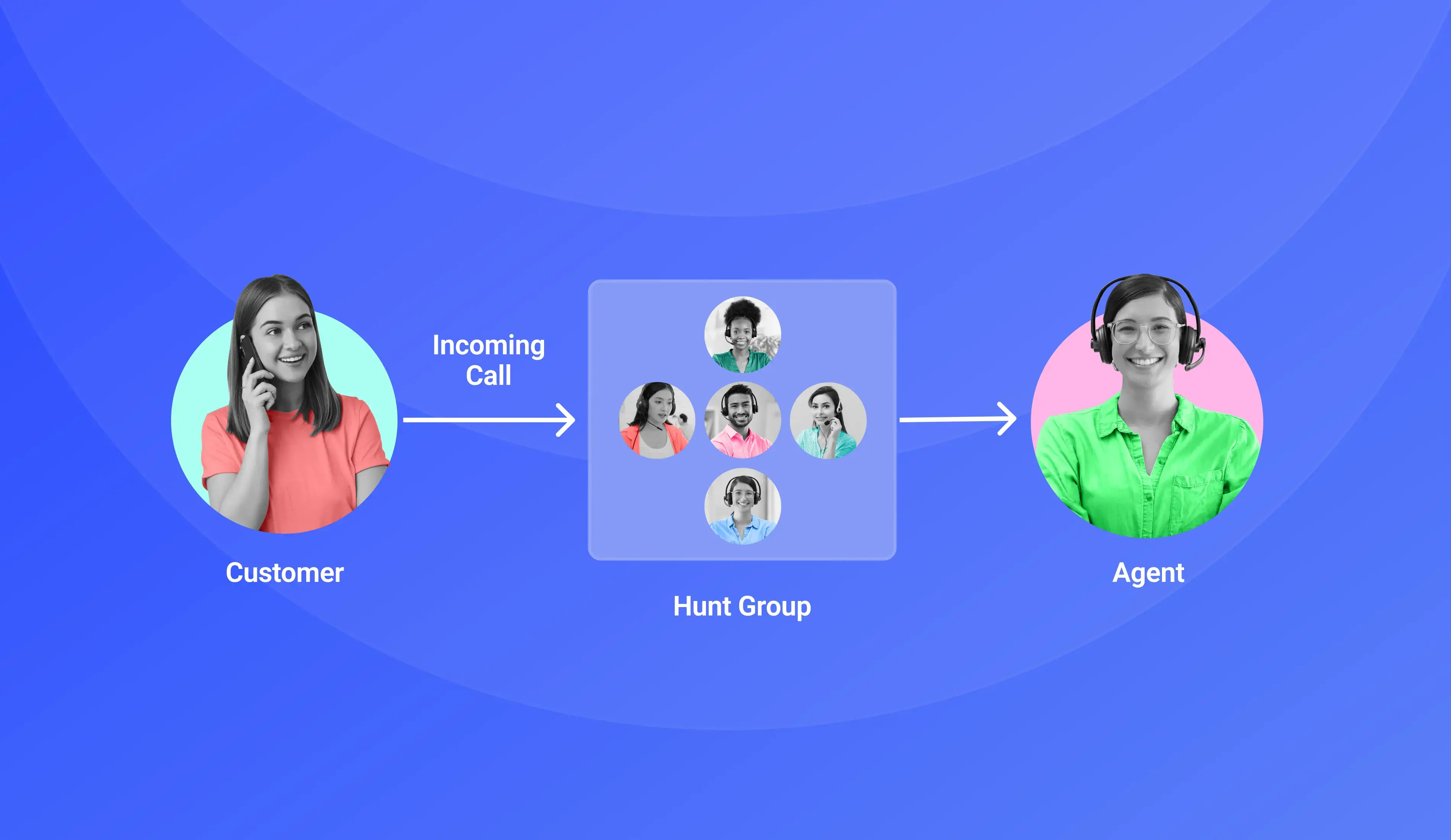
Hunt Groups are an automated feature available on the phone system that distributes incoming calls among a group of lines or extensions. Rather than ringing one phone or going directly to the voicemail, the hunt group ensures that the call is routed to the following available line or the user on the list.
This feature is highly beneficial in environments dealing with bulk call volumes, such as those of customer service departments or sales teams. Instantly transferring calls to the desired department saves the customer a lot of time.
This feature must be implemented to improve efficiency and productivity if you run a business with large call volumes and customers.
Enhance Call Efficiency with Hunt Groups!
Optimize call routing and never miss a customer call with TeleCMI’s advanced Hunt Group feature.
How do Hunt Groups work?
Hunt groups usually utilize one phone number to receive calls and hunt for phone lines in the group. When the customer calls your official business number, hunting groups start hunting for the availability.
Hunting calls depend on the algorithm created along with the hunt group phone. The cloud telephony system can contain multiple groups and forward calls to an extension, which leads to different teams, such as sales, technical, marketing, customer service, etc., where agents are waiting to respond to customer queries. It is applicable for both landline and VoIP phones.
Types of Hunt Groups
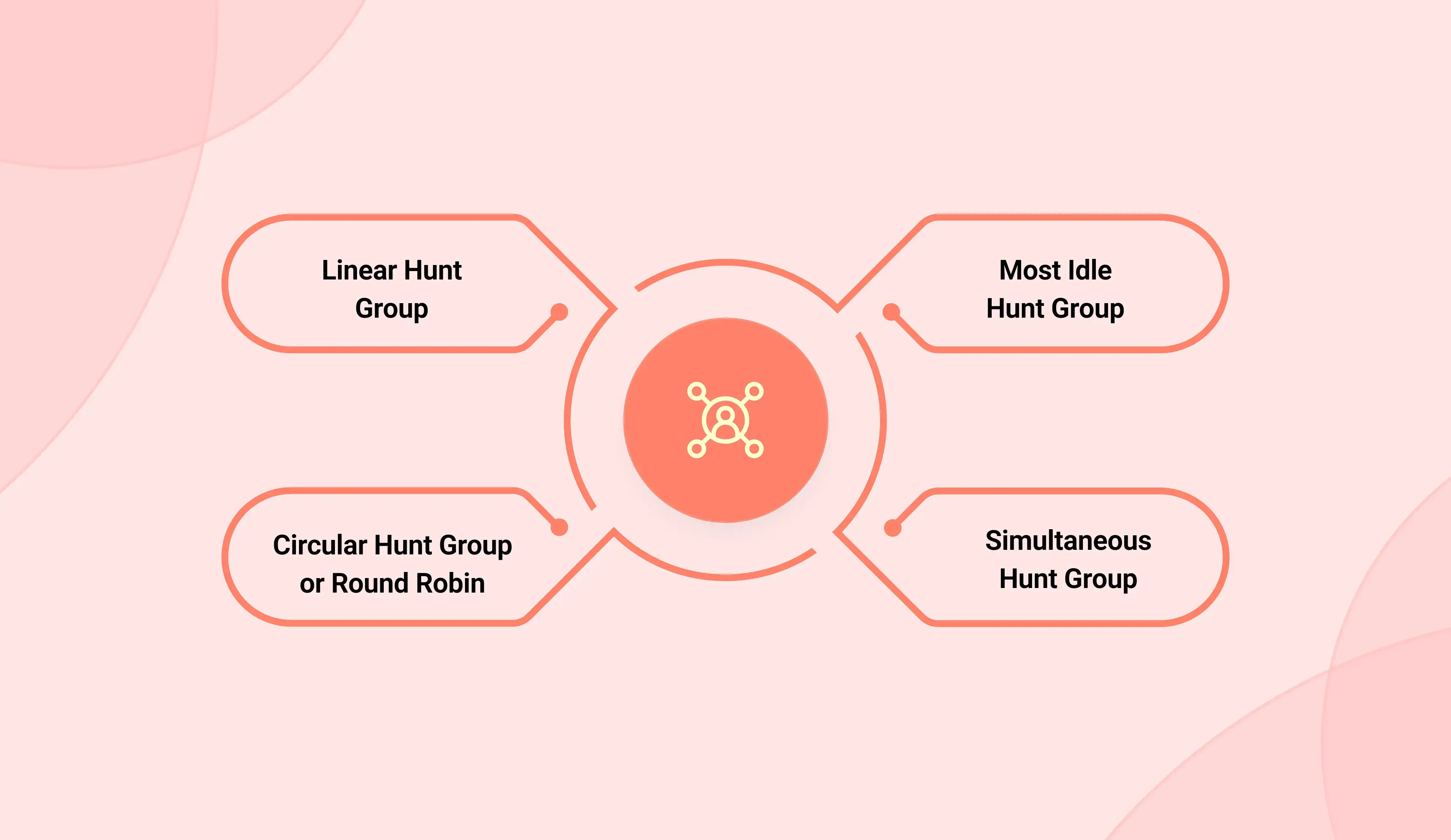
Hunt Groups are classified into the following types:
Linear Hunt Group
In this type of hunt group, calls are directed to the line with the lowest number. This is called call forwarding, where calls are directed to the first line. If busy or there is no answer, second line, and further the next line, and so on.
Small businesses with more than one line can set up their phones this way. This can be a noteworthy option for getting calls to the agent who is more experienced or can handle customer queries well.
Circular Hunt Group or Round Robin
As the name suggests, a round-robin hunt group refers to a strategy in which calls are passed from one agent to the next. If the call goes to line 1, the next call will go to line 2, and so on. When the last line of the hunt group is reached, it again starts from the first. This type of call distribution tries to provide calls to agent groups such as sales organizations.
Most Idle Hunt Group
In most idle hunt groups, calls are directed to the line that has not been used for a longer time. This considers how long the call taker has been busy vs. how long they have been free. It is often used in call centers where agents answer customers’ calls for efficiency.
Simultaneous Hunt Group
Simultaneous hunt groups are the ones where all phones in the group ring simultaneously when a customer calls. The team members or the agents who are available can respond to those calls quickly.
How do you set up and manage hunt groups?
Businesses can set up and manage hunt groups in several steps. Here are a few:
- Creating a group and adding the members to it.
- Businesses can create multiple hunt groups for a single department.
- Add the relevant numbers where hunt groups will be reaching to.
- Create business hours and set up a call-handling strategy to reach out to various groups based on your preference.
- Choose the type of hunting calls that we have discussed before.
Benefits of Hunt Group

Here are a few advantages of hunt groups in the phone system:
Increased call handling efficiency
By distributing the calls among multiple users, hunt groups can significantly reduce call waiting times. This can enhance customer satisfaction and provide overall service that also helps in retaining customers.
Enhanced team collaboration
With a hunt group, team members can work together more effectively, increasing productivity. They can pick up calls for each other when someone is available. Increased productivity thus results in enhanced business operations.
Flexible call management
Hunt groups can be customized to meet specific customer demands. Businesses can adjust the group’s settings based on peak times or staff availability, which allows for a more effective communication strategy.
Enhanced call tracking and reporting
VoIP Phone System provide deep and advanced call tracking, reporting, and analytics functionality on hunt group performance, including call volume, response times, and user performance.
Improved business reputation
Quick call redirection and prompt issue resolution will increase customer satisfaction. They will also give your business a trustworthy, credible, organized, and professional look, helping it remain competitive.
How do Businesses Use Hunt Groups?
Initially, you should know how to set up a group. Then, get the right tools, phone system, phone service, and phone to work with this system. Following this, you will also require a number that is given to you.
In the case of a cloud PBX system, the admin is responsible for setting up the group and adding members using the extension line. Secondly, they will give the hunt group a phone number. Once this is done, you can log in to the hunt group if you are a member.
In addition, you can set up features and other notifications, such as email to voicemail, greetings, and menu options. One can also set up the type of hunt group to receive customer calls and respond to them.
Implementing a Hunt Group
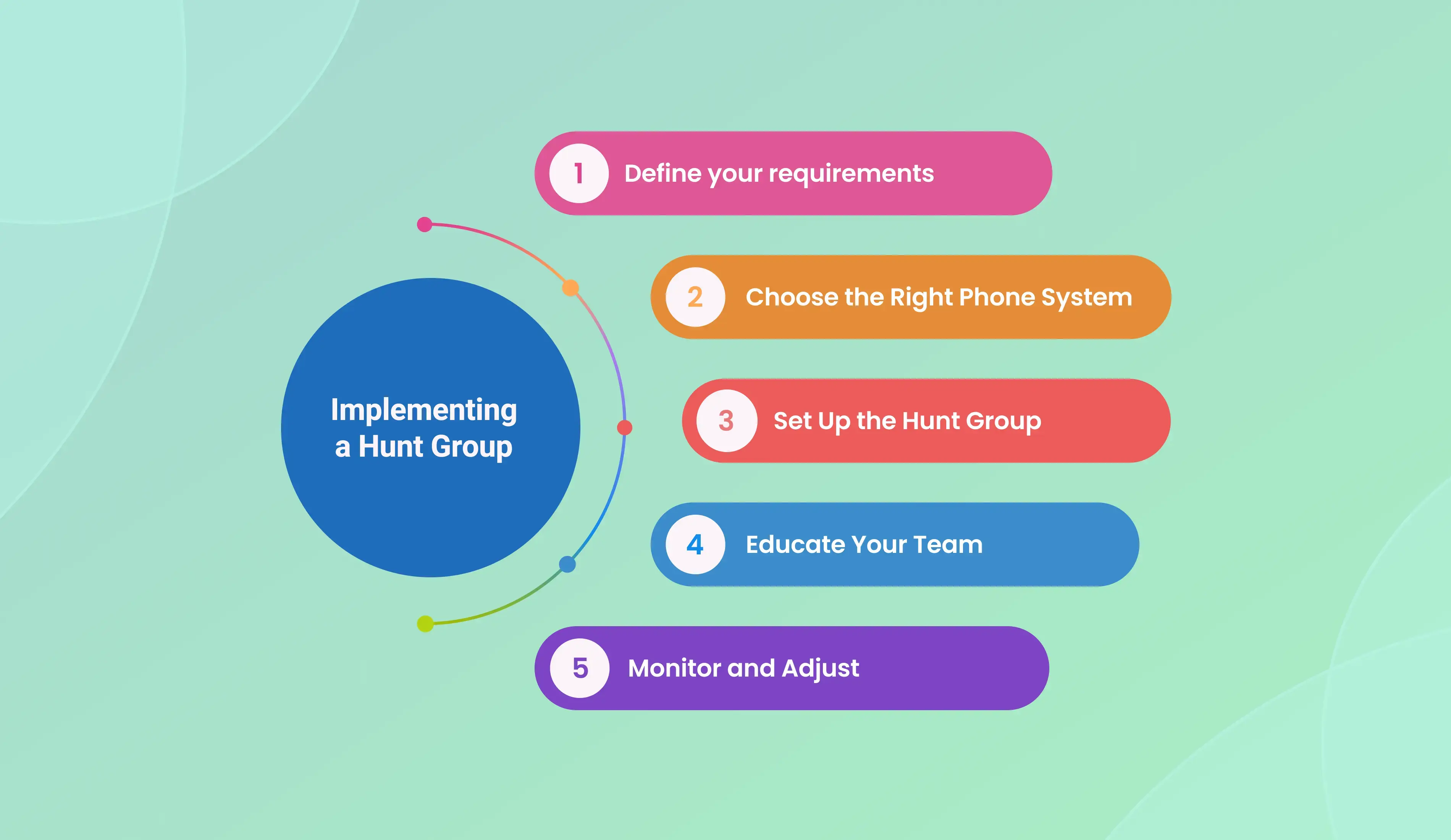
Here are the steps to implement a hunt group:
Step 1: Define your requirements
Evaluate the size of your team, call volume, and customer needs. Explore how many users will be in the hunt group and what type of hunting strategy will be suitable for your business.
Step 2: Choose the Right Phone System
Look for a reliable VoIP or hosted PBX system that offers flexible hunt group options for effective customer engagement.
Step 3: Set Up the Hunt Group
Optimize the hunt group settings in your phone system. Evaluate the order of extensions, pick the hunting type, and allocate users to the respective group.
Step 4: Educate Your Team
Make sure that your team knows how the hunt group works. Offer training sessions on picking up calls and effectively using relevant features.
Step 5: Monitor and Adjust
Frequently review call data to collect the hunt group’s performance. Make configurations as needed to optimize efficiency and improve customer experience.
To Close
Hunt groups are a robust strategy for businesses looking to enhance communication efficiency. You can improve customer service, team collaboration, and call management by learning how they work and incorporating them effectively. Whether you're a small startup or a large corporation, implementing hunt groups into your business phone system can provide comprehensive benefits that ultimately lead to better business outcomes.
Optimize Call Handling with Hunt Groups

Flexible Routing
Scalable
Increased Productivity
Frequently asked questions (FAQ)
Vignesh N

With deep expertise in cloud telecommunications, I help readers explore the latest trends in VoIP and modern business communication. At TeleCMI, I focus on educating businesses with clear, practical insights, making complex telecom concepts easy to understand. I’m passionate about helping organizations improve efficiency, enhance customer engagement, and adopt smarter communication strategies.