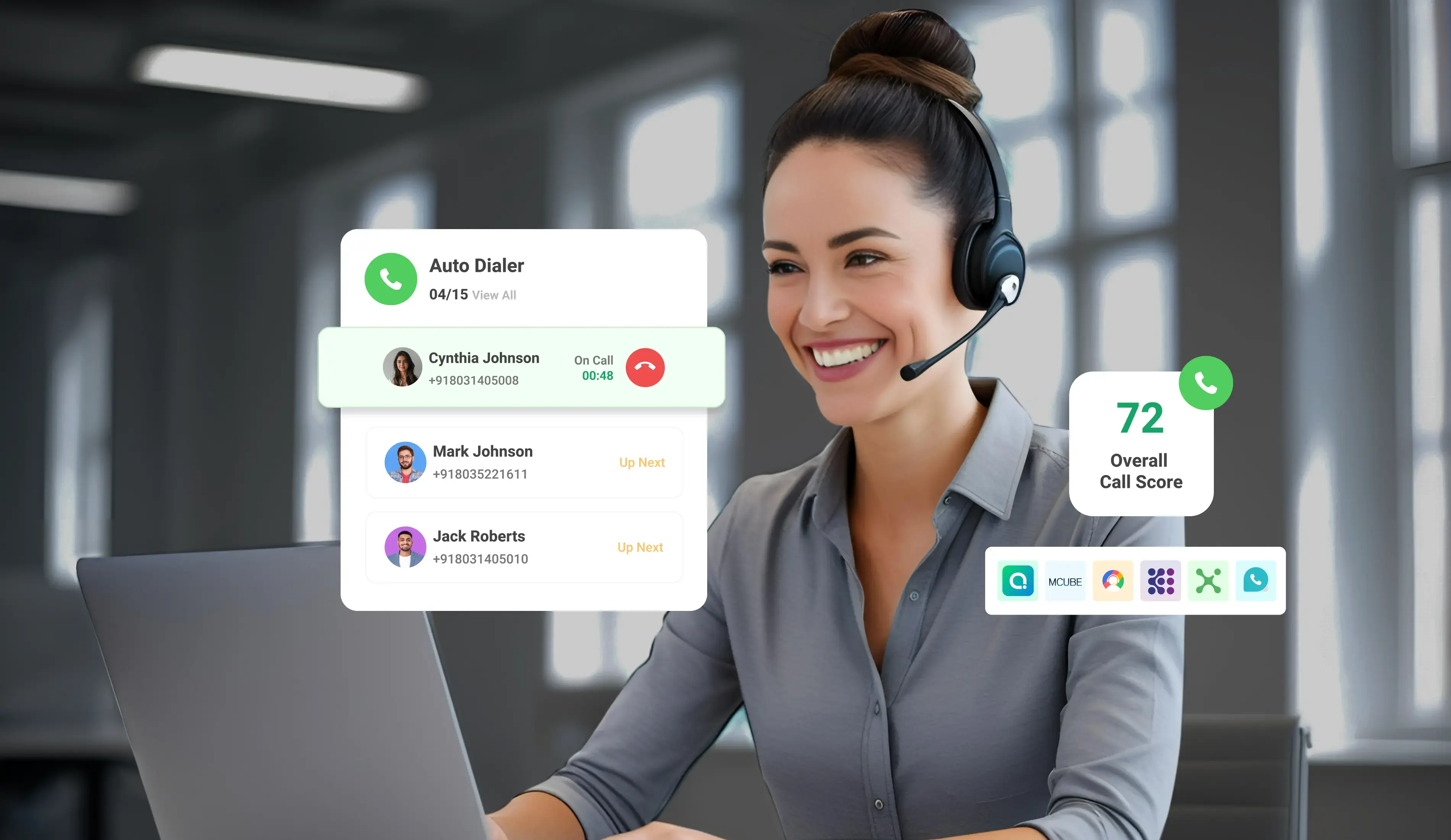
Auto Dialer with CRM Integration: Why Your Sales Stack Needs Both

9 mins read

Posted on Jul 28, 2026

Saravana Kumar
SEO


Saravana Kumar
SEO






Auto dialer CRM integration connects an auto dialer directly to a CRM so contact details, call outcomes, recordings, and notes sync automatically in both directions, without an agent typing anything in by hand. The auto dialer handles the dialing. The CRM handles the customer data. Integration is what lets both systems talk to each other in real time, and it's quickly becoming the standard setup for teams that make a lot of outbound calls.
Picture a sales rep finishing a call. The prospect sounded interested. Without integration, the next few minutes go into opening the CRM, typing in the call duration, picking an outcome from a dropdown, writing a note about what got discussed, and setting a follow-up date before dialing the next number by hand and starting again. Fifty times a day, this adds up fast. With auto dialer CRM software in place, that entire second half of the process happens on its own.
This guide is for sales managers, operations leads, and business owners who are looking at their outbound calling stack and trying to decide what to add next.
What Is an Auto Dialer and What Does a CRM Do Individually?
An auto dialer is cloud software that dials a customer or leads list automatically and connects agents only when a call is answered. It removes the manual dialing step, skips busy signals and voicemails where possible, and keeps agents talking to more people in less time.
A CRM (customer relationship management software) is where all the customer data and interaction history lives. Calls, emails, deal stages, notes on a prospect- all of it sits in one place, so the whole team has the same view regarding where things stand with any given contact.
Both tools bring real value on their own. An auto dialer speeds up the calling process by cutting down idle time between calls and making sure agents spend more of the day actually talking to prospects instead of waiting on a dial pad. A CRM keeps records organized, so nothing about a customer relationship depends on one person’s memory or a sticky note on a desk.
The gap occurs when both systems run as separate tools that never talk to each other. Agents end up switching between screens mid-call, typing the same contact details twice, and losing context between one conversation and the next. A manager pulling reports has to cross-reference two different tools just to understand what happened on a given day. Auto dialer CRM integration removes that friction and lets both tools do what they do best, together, as one connected workflow instead of two separate ones running side by side.
What Does Auto Dialer and CRM Integration Actually Mean?
In simple terms, auto dialer CRM integration means the two systems share information in real time, without an agent typing anything in manually.
Before the call connects, the CRM record for that contact opens automatically on the agent’s screen. While the call is in progress, the agent can see the full history, past notes, the current deal stage, and any open support tickets tied to that contact. Once the call wraps up, the outcome, call duration, recording link, and notes sync straight back to the CRM record on their own.
No tab switching. No retyping. No missing pieces of the conversation history the next time someone calls that contact.
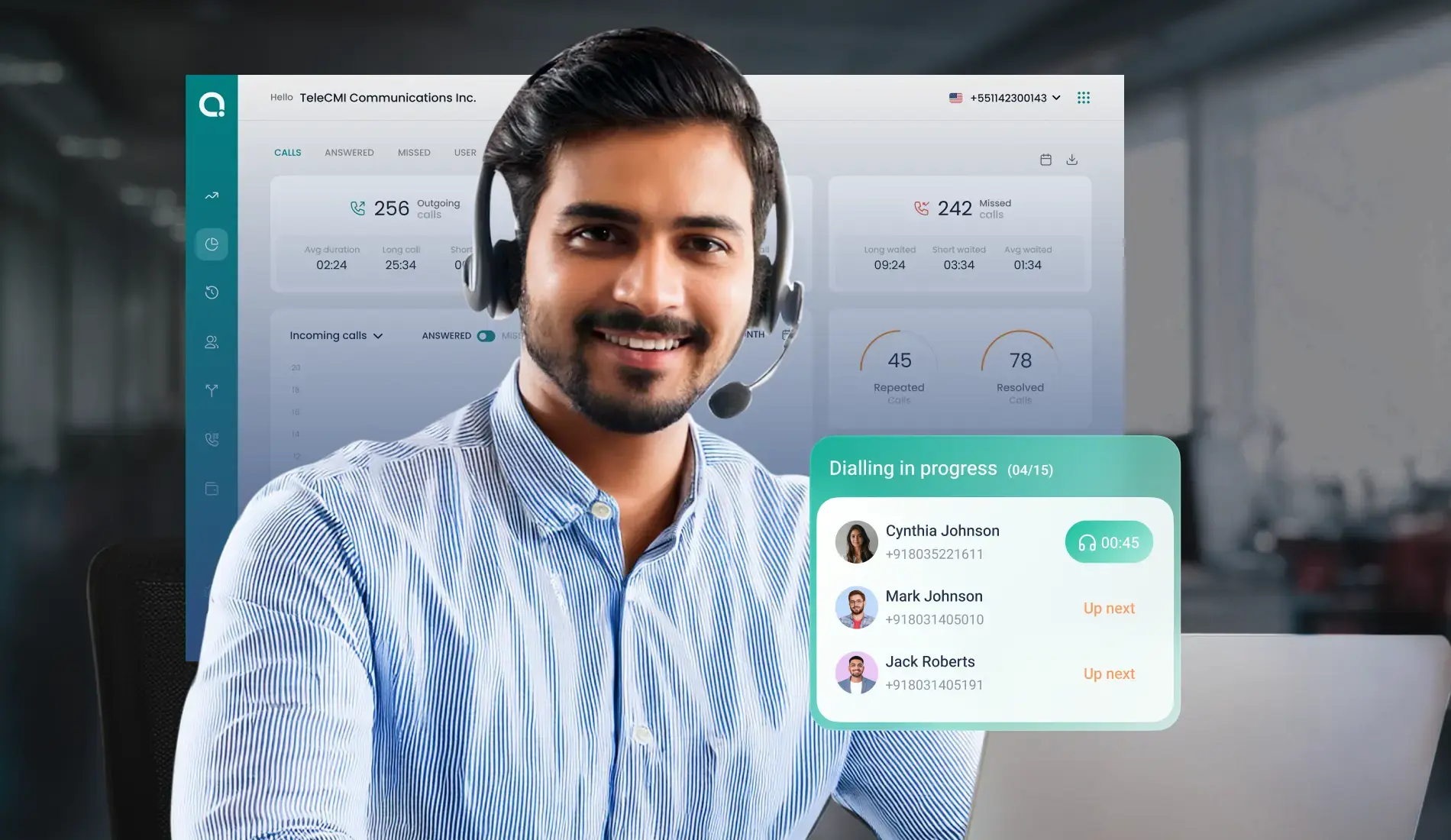
Automate Every Customer Conversation
Sync your CRM with an intelligent auto dialer to improve productivity, streamline workflows, and help your team focus on selling instead of manual data entry

Why this matters for time: According to HubSpot’s sales research, sales representatives dedicate only two hours a day to active selling, whereas administrative tasks take up another hour daily. Auto dialer CRM software is built to shrink that second number and grow the first.
6 Ways CRM Integration Makes Your Auto Dialer More Powerful
1. Automatic call logging takes care of itself the moment a call ends. Whether the call was answered, missed, or went to voicemail, it gets logged against the right CRM contact with the duration, outcome, and a link to the recording, all without the agent touching a keyboard.
2. A screen pop with full context emerges the moment the agent connects a call. Previous conversations, the current deal stage, any open tickets, and notes from earlier calls all show up right there. Nobody has to ask the prospect to repeat why they called last time.
3. Smart call list building from CRM segments replaces manual list-building entirely. The auto dialer pulls the list from CRM segments, whether that’s everyone tagged “follow up this week,” attendees from a recent webinar, or accounts coming up for renewal. The list builds itself, and agents always know who’s next and why.
4. Automatic follow-up task creation kicks in based on how the agent closes out a call. Mark a call as “interested, call back Thursday,” and the CRM creates that follow-up task on its own. Nothing depends on someone remembering to add it later.
5. Call recording linked to the contact record means every call recording lives directly on the relevant CRM contact or deal, not as a separate file sitting somewhere else. Managers reviewing calls get the entire context in one place.
6. Pipeline movement triggered by call outcomes: When an agent closes out a call as "demo booked" or "proposal sent," the deal stage in the CRM moves on its own.
Which CRMs Work With Auto Dialers?
Most modern auto dialers connect with whatever CRM a business is already running, and a handful of names come up again and again across India and elsewhere.
- Zoho CRM shows up constantly among Indian SMBs and IT companies, largely because of its pricing and the strength of local support.
- HubSpot integration suits startups and marketing-led sales teams who want most things under one roof.
- Salesforce is still the enterprise default for larger sales organizations running more complicated pipelines.
- Pipedrive was built with outbound teams in mind from the start and stays popular with sales-first businesses.
- Freshsales has been picking up adoption in India as a lighter, more budget-friendly option.
- LeadSquared turns up a lot in Indian EdTech and healthcare sales teams, where lead volume tends to run high.
TeleCMI's auto dialer connects with 170+ integrations covering all of the CRMs above and quite a few more, so moving to integrated calling rarely means having to switch CRMs first.
The adoption numbers back this up. G2's Winter 2025 Grid Report for CRM puts average CRM user adoption among sales professionals at 72 percent, which tells you most sales teams already have a CRM sitting in place. For a lot of them, the piece missing isn't the CRM. It's connecting it to how they actually call.
Real Use Cases: Who Benefits Most From This Integration?
Outbound sales teams move from call to call without stopping to log anything by hand. Pipeline stages update automatically, and managers get a real-time view of team activity without waiting for a weekly report.
EdTech admission teams handling hundreds of student inquiries a day get something different: a full application history on screen before every call, so the conversation starts already knowing where that student is in the process.
For insurance and financial services, it's policy history and renewal dates showing up the moment a call starts, with follow-up tasks created automatically once it ends. Renewal windows are a lot less likely to slip past unnoticed.
Packers, movers, and logistics teams automatically pull up customer booking details the instant a confirmation or subsequent call connects, saving time on every call and keeping the customer experience smooth.
D2C and e-commerce brands benefit from agents seeing order history and past support interactions before picking up the phone, which shortens each call and makes support feel more personal.
What to Look for in an Auto Dialer With CRM Integration
A few questions help separate a genuinely integrated system from one that only claims to be:
A couple more worth checking while at it. Do recordings sit directly on the CRM record, or do they end up somewhere separate that someone has to go link manually later? And can a call disposition actually trigger something in the CRM, like moving a deal stage or creating a task, or does the agent still have to go do that part by hand?
Support for the specific CRM already in use matters more than a long logo list of unrelated ones. TeleCMI pre-built CRM integrations make it easier to connect supported CRMs without complex development, while self-serve setup helps teams get started quickly. Can it happen without a developer, or does every small change mean waiting on someone technical?
TeleCMI checks each of those boxes, with native integration, screen pops that load before the call connects, and self-serve setup that most teams finish in under 15 minutes. Backed by 170+ integrations, 99.99% uptime, a footprint across 85+ countries, and 7+ global data centers, TeleCMI already runs integrated calling for more than 2,500 businesses. Teams still comparing options might also want to look at Capterra's auto dialer listings for side-by-side research.
Conclusion
An auto dialer on its own still speeds up the dialing side of the job, but it leaves the admin work sitting there for agents to handle. Integration is what takes that last manual step out of the workflow, tying every call back to the right record automatically and freeing up time for the conversations that actually move deals forward.
Curious what auto dialer CRM integration looks like with a sales stack already in place? TeleCMI's team can walk through it, CRM included.
Make Every Sales Call More Productive

Automatic Call Logging
CRM Synchronization
AI-Powered Call Insights
170+ CRM Integrations
Real-Time Analytics
Frequently asked questions (FAQ)
Saravana Kumar

I’m passionate about exploring and sharing insights on modern cloud communication technologies. At TeleCMI, I focus on helping readers understand the evolving world of cloud telephony and IVR solutions in a simple yet in-depth way. My goal is to deliver genuine value by turning complex telecom concepts into clear, actionable knowledge that builds trust and drives innovation.