Blended Contact Centers: A Guide to Inbound and Outbound Success

8 mins read

Posted on Jul 01, 2025
.webp)

Vignesh N
SEO


Vignesh N
SEO





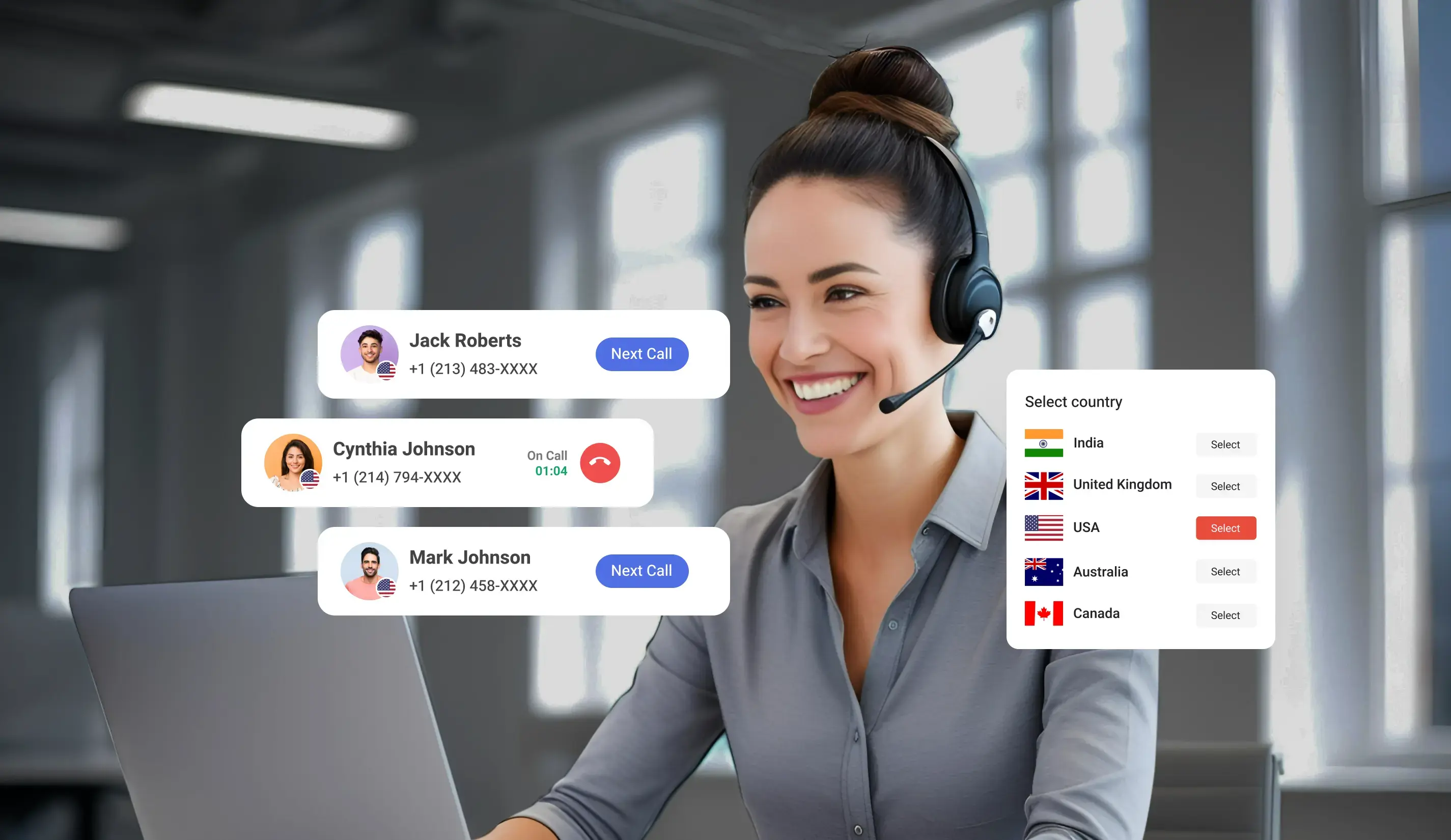
A blended contact center is a unified communication platform that consolidates customer interactions from service requests to proactive outreach. It enables agents to handle incoming queries and outreach campaigns by utilizing AI-powered call routing, real-time analytics, omnichannel engagement, and smart dialers, all from a centralized platform. This streamlines operations, optimizes resource allocation, and enhances the customer experience (CX).
According to Deloitte, 62% of companies still operate separate inbound and outbound contact center teams, resulting in inconsistent customer experiences and increased operational costs.
Yes, most businesses still rely on separate teams to handle prospects and customers. However, in today's business environment, customers expect you to understand their emotions when making any decision or seeking support, and agents are struggling with fragmented tools, missed communication, and growing burnout.
To stay aligned and competitive, forward-thinking businesses are now adopting Blended Contact Center Software to manage both inbound and outbound calls from a single dashboard. In this blog, we'll delve deep into how a blended contact center can help your business become more productive, enhance agent performance, and meet the needs of every prospect or customer.

Key Takeaways
 Blended contact centers unite inbound and outbound Interactions from a single platform.
- By utilizing AI-powered routing, real-time analytics, and centralized dashboards, it enhance agent productivity, reduce burnouts and provide high-impact conversations.
- Smart automation powers scalability, personalize services and enhance faster resolution.
- Synchronizing communication across voice, chat, email, and social media ensures customers never have to repeat themselves.
- Real-time performance data, sentiment analysis, and campaign insights allow supervisors to optimize team output, agent training, and overall contact center strategy.
What is a Blended Contact Center?
A blended contact center is a customer support and service operation where agents handle both incoming support and outreach campaigns, primarily by utilizing a cloud contact center software. By combining both features and functionality, you can enhance overall growth while reducing agent workload and elevating CX.
For example, the sales agent addresses all inbound messages, calls, and inquiries in the morning; he can then shift to making outbound sales calls. This approach balances the shift, keeping teams organized and optimizing resource allocation.
Inbound Support Capabilities in a Blended Contact Center
.webp)
Here are a few impactful benefits of the inbound support capabilities of a blended contact center platform:
- Managing Large Call Volumes: You can easily manage a high volume of customer service calls, emails, and chats with AI-powered solutions, automation, and integrations.
- Automatic Call Distribution (ACD): Calls are intelligently routed to the right agent based on customer intent, department, agent experience, skill set, location, or shift timing.
- Smart Ticketing and Escalation: Track issues and resolutions from a single platform by customizing self-service options and workflows through smart IVR, which escalates calls to human agents with full context.
- Real-Time Queue Management: With a detailed live call feed and complete visibility into wait times, volumes, and agent activity, you can optimize your workflow or redistribute calls during peak hours.
Outbound Capabilities in a Blended Contact Center
.webp)
Here are a few impactful benefits of the outbound capabilities of a blended contact center platform:
- Proactive Communication: Reach customers for strategic touchpoints, such as follow-ups and sales enablement, including upselling, re-engagement, renewals, or collections. This value-driven conversation offers a context-rich discussion, enabling you to maintain a smooth customer relationship.
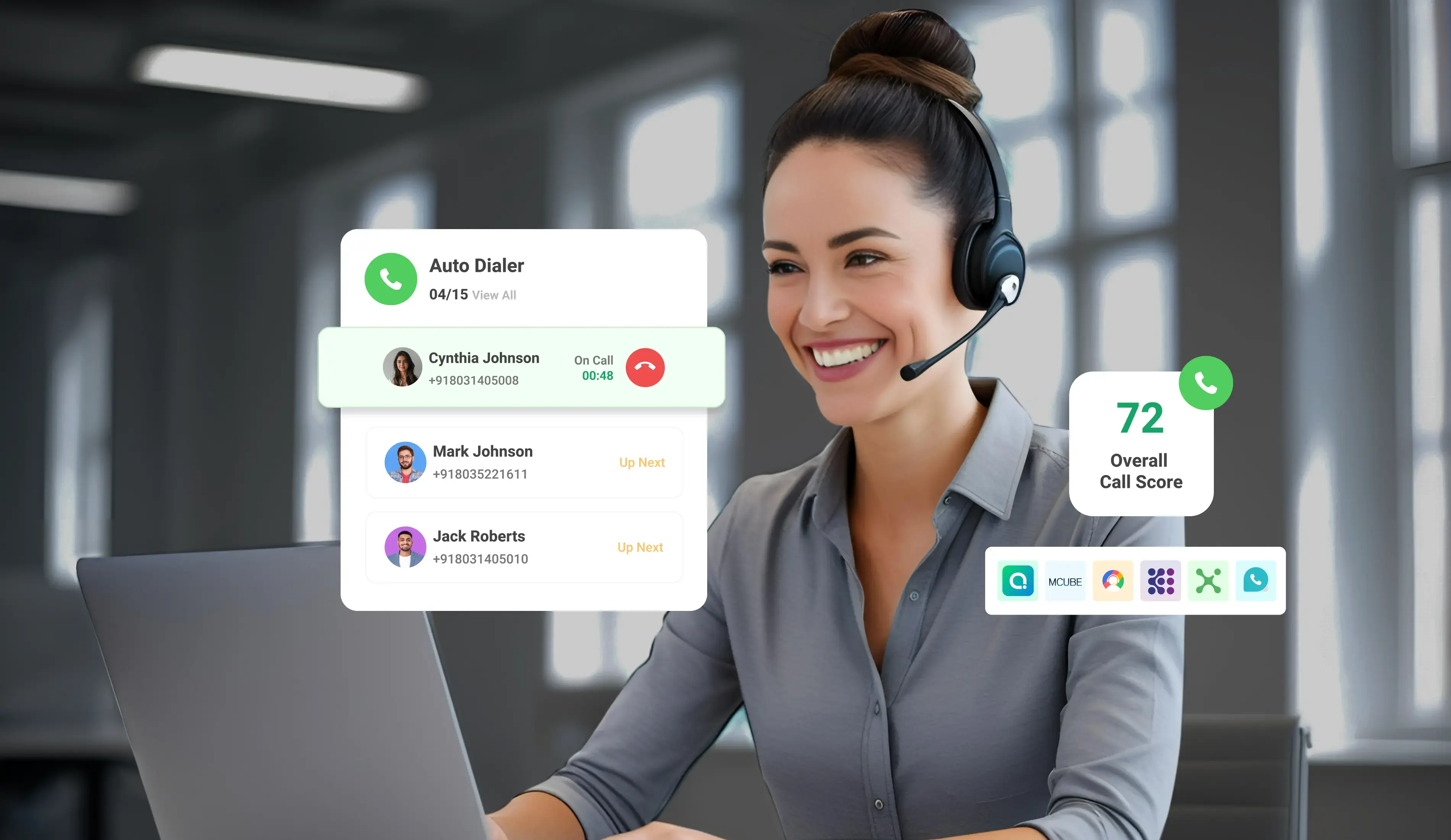
- Smart Dialers: By utilizing auto-dialers, progressive dialers, and predictive dialers, you can simplify the dialing process and gain a clear understanding of interactions, customer journeys, and the topic of conversation.
- Campaign Management: Comprehensive insights into customer behavior, purchase history, lifecycle stage, agent productivity, campaign ROI, and valuable KPIs. You can also synchronize each customer journey by integrating multiple platforms.
- Compliance and Regulatory Considerations: Ensure end-to-end encryption, automated rerouting during outages, and adherence to industry-specific regulations, including TCPA, GDPR, and Do-Not-Call List Requirements, as well as call recordings.
How Blended Contact Center Bridges the Gap
Here's how a blended contact center bridges both inbound support and outbound engagement operations within a single platform.
Unified Agent Dashboard
Agents can handle both inbound and outbound operations simultaneously without hassles.
- Access chats, calls, emails, or customer history from a centralized dashboard without juggling multiple tabs.
- Instant visibility in ongoing calls, tickets, and responses and make data-driven decisions.
- Easily view knowledge bases, generate automated scripts, view customer interactions, and analyze sentiment cues.
Smart Blending Algorithms
With built-in AI techniques, this system allows agents to balance both inbound support volume and outbound campaigns automatically.
- Handle inbound calls during peak hours and automatically allocate them to outreach when the volume is low.
- Reduces agent workload with proper call transcripts, call recording, and auto-syncs on customer or lead information.
- Manage call queues, waitings, and call durations, and prioritize calls based on SLAs, customer intent, or urgency.
Omnichannel Communication
Synchronize customer interactions across channels to maintain consistency and reliability automatically, which eliminates query repetition.
- Agents can view full interactions across all channels, including voice, chat, email, social media, and SMS.
- Provides feasibility to connect with customers or leads across channels without losing the context.
- Intelligently escalate channels based on the customer preferences, issue depth, or urgency.
Monitoring and Real-Time Analytics
Supervisors and agents can access detailed reports and customized metrics to analyze outcomes for training and improvement.
- Gain complete visibility into queue volumes, agent performance, call durations, and customer sentiments in real-time.
- Agents can get live notifications on SLA breaches, spikes, or drop-offs.
- Drill down each report for agent coaching, forecasting the customer journey, and process operational improvements.
Seamless Integrations
Integrating multiple third-party tools enables agents to deliver context-aware and personalized interactions across all channels, thereby making customers feel valued.
- Integrate with multiple CRM, helpdesk, marketing, and automation platforms for a seamless customer experience.
- Access the 360° Customer View, which includes contact details, purchase history, recent queries, and personalized upselling recommendations.
- Every interaction across channels will be logged automatically to maintain consistent and relevant responses.
Expert Advice
When evaluating a blended contact center, prioritize platforms that offer intelligent routing, omnichannel visibility, and robust CRM integrations.

Explore Modern Inbound Call Center Software to Optimize Customer Interactions and Enhance Service Efficiency
Business Benefits of Using a Blended Contact Center
Investing in a blended contact center for your organization enhances operations, increases customer experience, and drives overall business growth. Here are a few benefits listed:
- Increased agent productivity and reduced idle time:
Based on real-time demands, agents can seamlessly switch between inbound support and outbound outreach with automated routing and AI-driven resource allocation.
- Higher customer satisfaction with personalized support:
With detailed and instant updates of customer profiles across channels, you can provide contextual interactions that eliminate customer repetition, even during escalations or call transfers.
- Cost savings through centralized operations:
By consolidating both inbound and outbound tasks on a cloud-based calling software, you can reduce tech costs by half, eliminate on-premise infrastructure, lower labor costs, and generate greater ROI.
- Improved scalability and flexibility:
Adding or removing users, departments, and locations in a blended contact center platform is simple. With the pay-as-you-go model, you can easily upgrade or downgrade the plan according to your business needs.
- Enhanced data insights and decision-making:
The system provides real-time insights on agent performance, customer emotions, purchase history, business improvements, and recommendations, ensuring you can make informed business decisions.
Explore Modern Outbound Call Center Software to Streamline Workflows and Drive Sales Growth
Implementing a Blended Contact Center
Here are five steps to follow while implementing a blended contact center for your business.
- Contact Center Infrastructure: Invest in and implement cloud-native or hybrid contact center, such as TeleCMI, taking into account factors specific to your business size, requirements, and goals.
- Roles and Permissions: Segment agents based on their roles, skill sets, experience, and responsibilities and provide required functions to prevent unwanted data breaches.
- Dashboards & Metrics: Customize the complete dashboard to have a detailed view of your agent's performance, customer insights, and business growth metrics.
- Deliver Targeted Agent Training: Provide training on handling inbound queries and outbound scenarios, as well as utilizing AI-powered coaching tools and offering performance feedback.
- Go Live and Implement Continuous Improvement: After this configuration, you can test the calls with virtual or toll-free numbers and make calls in minutes.
Conclusion
In today's business landscape, a blended contact center platform is not just a tech upgrade; it's a strategic shift toward simplification and personalization. By unifying both operations in a single dashboard, businesses can provide an exceptional experience, balancing agent workload and enhancing business productivity. TeleCMI positions them as a stand-out option with advanced engineering, location-specific security, 12-month call recording, advanced analytics, and seamless integrations.
Experience the Power of Blended Contact Center

AI-Powered Routing
Centralized Dashboard
Real-Time Analytics
Frequently asked questions (FAQ)
Vignesh N

With deep expertise in cloud telecommunications, I help readers explore the latest trends in VoIP and modern business communication. At TeleCMI, I focus on educating businesses with clear, practical insights, making complex telecom concepts easy to understand. I’m passionate about helping organizations improve efficiency, enhance customer engagement, and adopt smarter communication strategies.


 for your Call Center and Enhance Efficiency_.webp)