Conversational AI vs Traditional IVR: What Businesses Should Use in 2026?

10 mins read

Posted on Jun 03, 2026

Vignesh N
SEO


Vignesh N
SEO






A mid-size logistics company in Pune. One hundred and forty inbound calls daily. Mostly tracking queries, some billing, and a handful of complaints. Their IVR had six levels. Customers pressed 1, then 2, then 3 — got confused, hit 0, got re-routed, hit 0 again. Either hung up or finally reached an agent who had no idea why they called.
Three enterprise accounts gone in one quarter. Not product issues. Not pricing. A phone tree.
Happens more than most founders track. In 2026, this scenario is completely preventable.
Moving from a traditional IVR system to conversational AI for customer service isn't a software swap. It's the gap between a call that leaves a customer more frustrated than before and one that actually gets something done. Real differences, real costs, and a clear way to decide what your business actually needs — that's what this covers.
What Is a Traditional IVR System?
A traditional IVR system is a Interactive Voice Response with automated phone menu most of us have cursed at least once. It works through DTMF, which stands for Dual-Tone Multi-Frequency. Fancy way of saying: you press a key, the system hears a tone, it follows a pre-set path.
Here's how the logic works:
- IVR plays a prompt: "Press 1 for billing, press 2 for support."
- Customer presses a key.
- System routes based on that key.
- If nothing is pressed? Usually lands in a generic queue.
The routing logic is hard-coded. Linear. Every branch of the decision tree has to be built manually. And if a customer's query doesn't match any branch? Stuck.
Where traditional IVR shines:
- Low setup cost — no AI training, no model tuning
- Reliable for high volumes of simple, predictable calls
- Easy to audit in compliance-heavy industries like banking or insurance
- Fast to deploy when you need something running in days
A regional bank with straightforward routing — account balance, card block, branch locator, can absolutely thrive on a traditional IVR system. Known menu. Known callers. Known outcomes. Clean.
The problem starts the moment queries get complicated. Or when a customer calls about something that doesn't map neatly to Option 1, 2, or 3.
What Is Conversational AI?
Conversational AI is not just a smarter IVR. It's a fundamentally different kind of system.
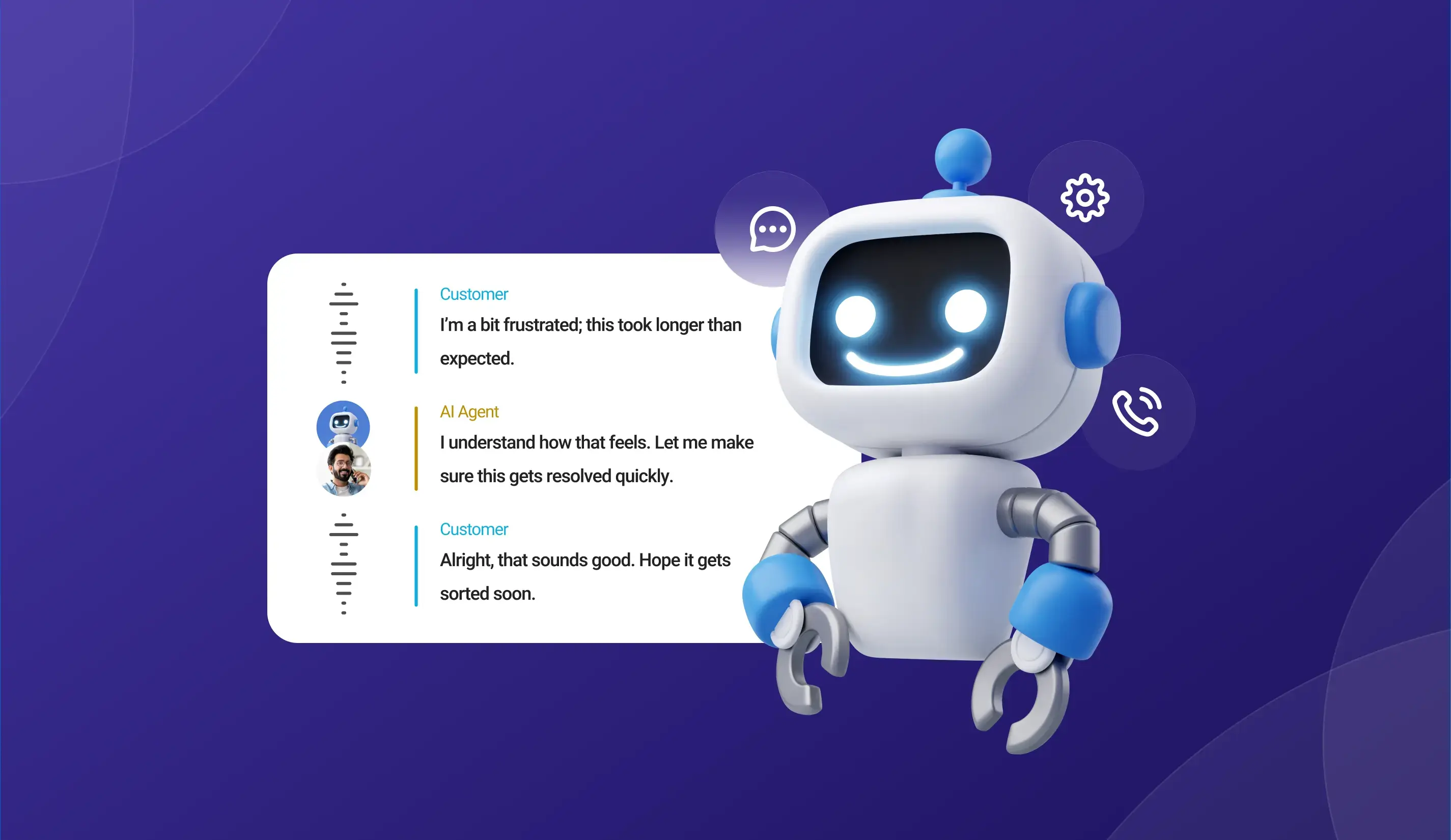
Instead of waiting for a key press, it listens. It uses Natural Language Processing (NLP) to convert what a customer says into structured meaning. Then intent recognition kicks in — figuring out what the person actually wants, not just what they said. Dialogue management keeps the conversation moving. And most modern deployments use AI voice agents that sound natural enough that callers don't immediately feel like they're talking to a robot.
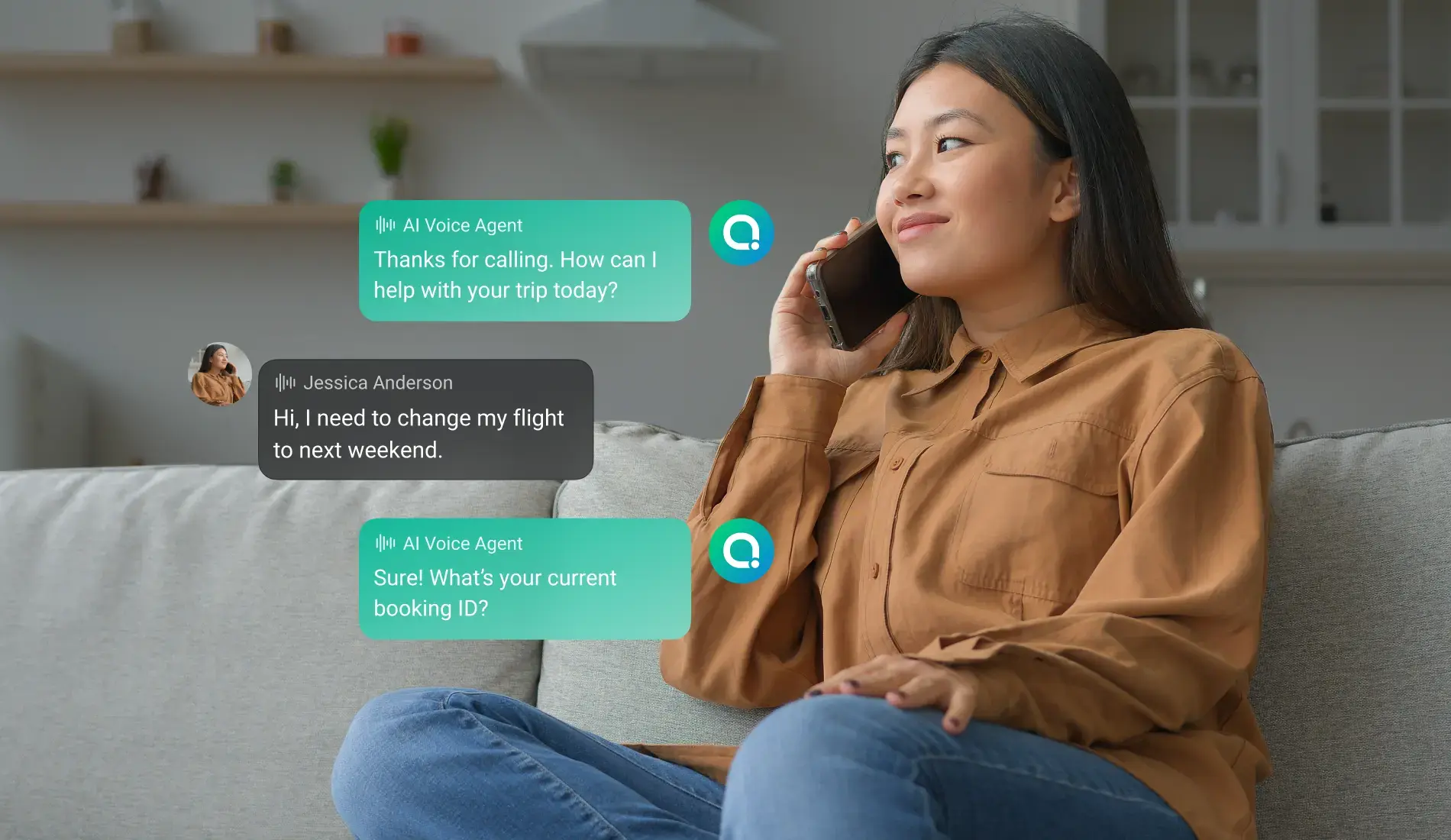
Real flow: A customer calls in and says, "Hey, I need to update my delivery address."
The AI voice agent catches the intent, address change. Asks: "Is this for your billing address or your shipping address?" Pulls the account from the CRM. Either updates it right there or routes the call with full context already attached.
No menus. No key presses. No repeating yourself to a live agent who starts from zero.
What's powering this:
- NLP for understanding language
- Intent recognition for reading between the lines
- Dialogue management for multi-turn conversations
- CRM and backend integrations for real-time data pulls
- AI-generated voice responses that adapt tone
An e-commerce brand running conversational AI for customer service across tracking, returns, and account changes can automate 60–70% of inbound volume. Agents handle only escalations, and they walk into those calls with context.
Customer satisfaction scores for AI-powered conversational IVR are 30–40% higher than for traditional IVR in 2026 deployments, according to industry benchmarks tracking voice-AI implementations across contact centers. (Salesforce)
That gap is not small. And it's not closing in IVR's favour.
Conversational AI vs Traditional IVR — Key Differences
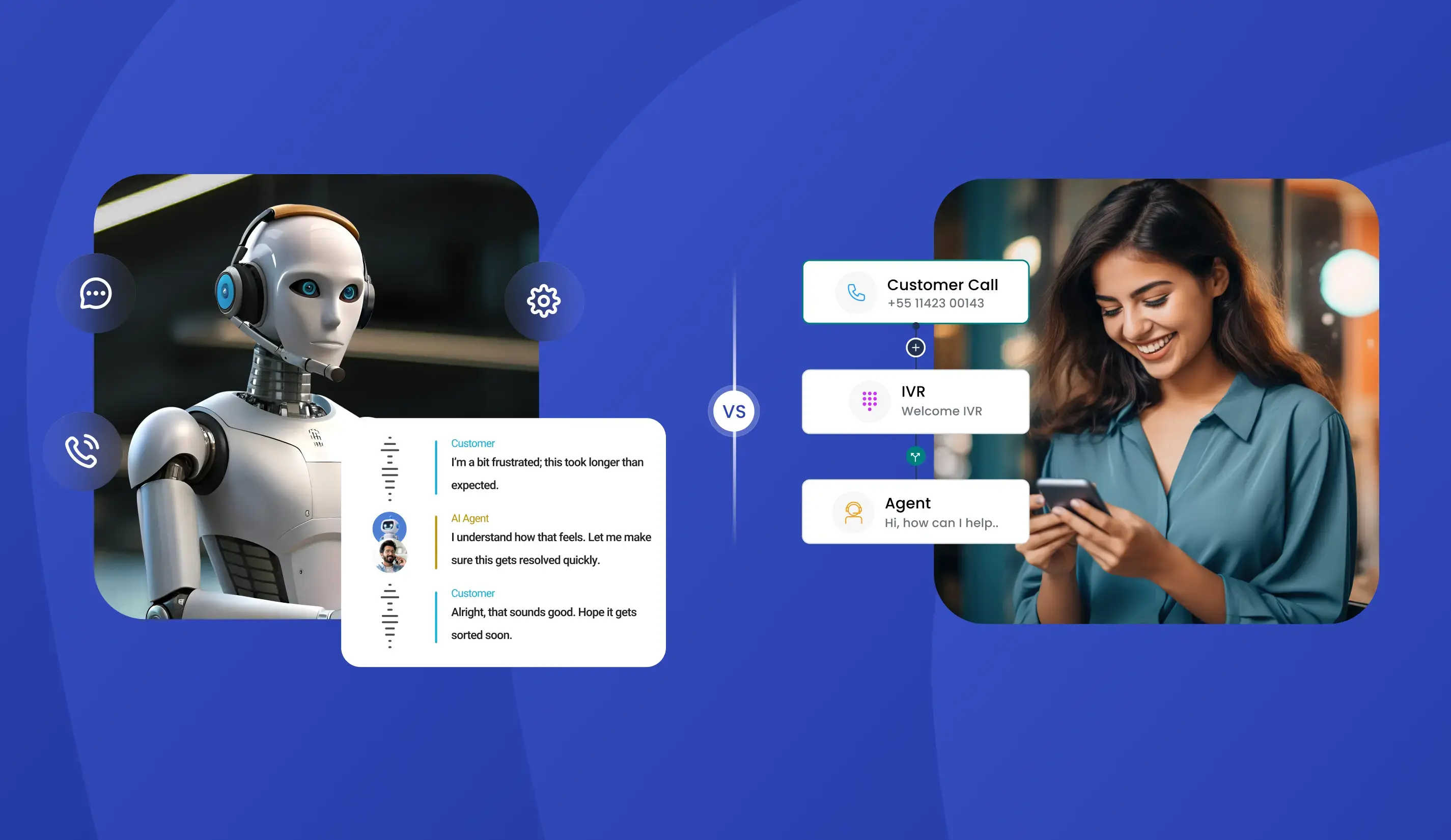
Here's the clearest side-by-side breakdown of conversational AI vs traditional IVR:
The IVR vs conversational AI debate isn't really about technology preference. It's about what your customers' calls actually look like. Simple and predictable? IVR holds up. Complex, varied, multilingual, or nuanced? AI vs IVR is no contest.
Where Traditional IVR Still Works Best
Let's be clear: traditional IVR is not dead. Not even close.
There are specific situations where a traditional IVR system is still the right call:
Simple routing only. If 90% of your inbound calls need to reach one of three departments and callers know the menu, keep it. Don't fix what isn't broken.
Tight budget, fast timeline. AI voice agents need training data, integration time, and ongoing tuning. A startup running on lean operations may not have six weeks and a vendor contract to burn. A TeleCMI IVR solution can go live quickly and route effectively from day one.
High volume, low complexity. Thousands of daily calls that mostly need to be sorted into queues? Traditional IVR is cheap, fast, and reliable at exactly this.
Compliance-heavy industries. Banking, insurance, healthcare, government, these sectors often require every interaction to be scripted and auditable. Hard-coded IVR logic makes compliance review straightforward. AI systems need more documentation overhead.
The mistake isn't using traditional IVR. The mistake is using it for workflows it was never built to handle.
Where Conversational AI Wins
For every scenario where IVR falls short, conversational AI steps in.
Complex, multi-step calls. When a customer needs to dispute a charge, change a plan, report an issue, and get a callback scheduled, that's four intent layers in one call. IVR can't navigate that. An AI voice agent can.
Repetitive but nuanced queries. Balance checks, address updates, appointment reschedules — these are easy enough to automate, but they still need to feel conversational. Robotic menus tank satisfaction here.
24/7 support without 24/7 staffing. AI voice agents don't sleep. They don't take holidays. A TeleCMI AI voice agent running overnight handles the same queries your best agent handles at 2 PM.
Multilingual customer bases. Especially relevant for Indian businesses with customers across Hindi, Tamil, Telugu, Kannada, and English. Accent-adaptive, multilingual voice AI for call centers removes the friction that rigid IVR prompts create.
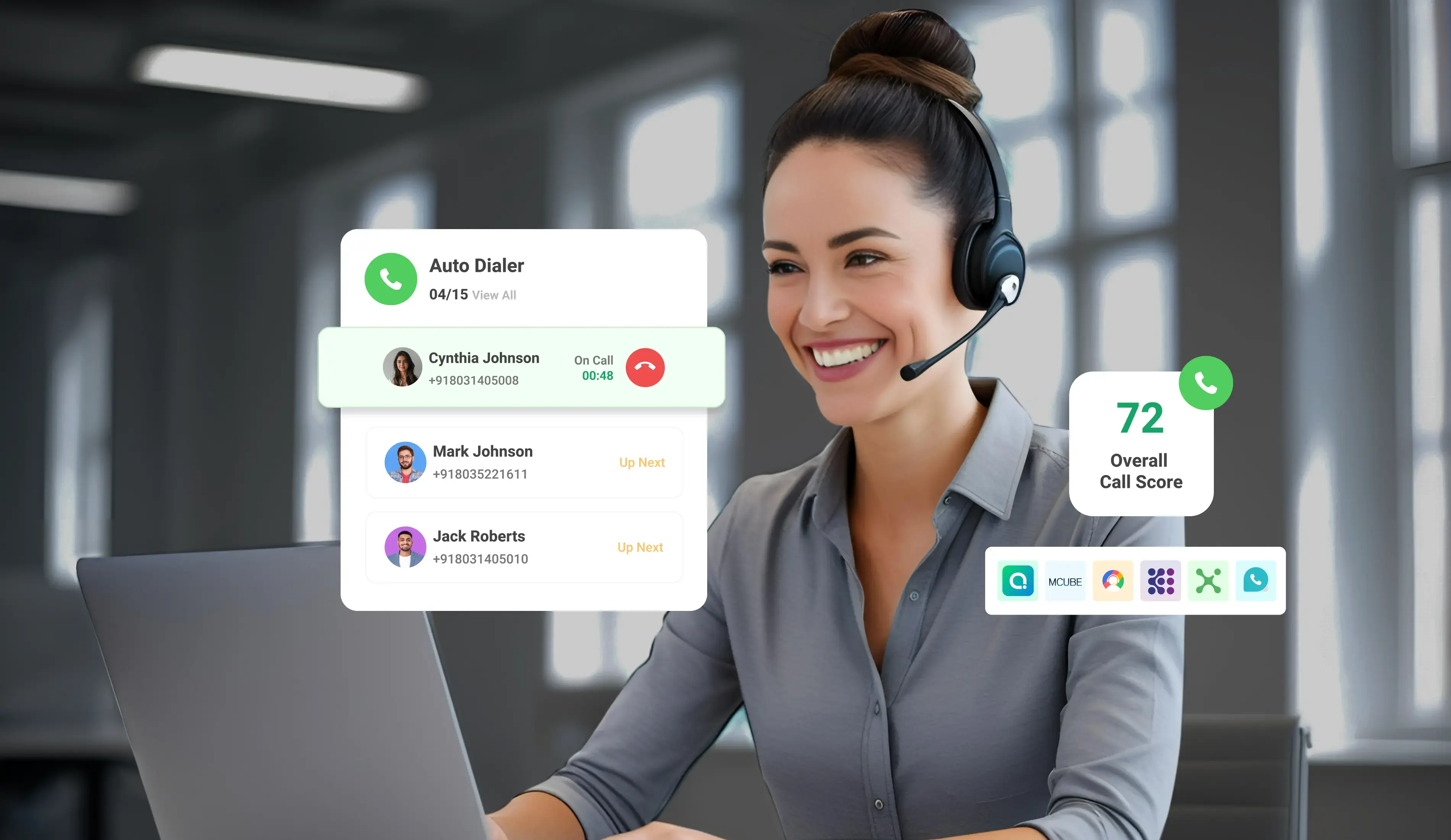
Reducing hold times. AI triage's and qualifies calls before they reach a human. Agents only pick up when they're actually needed and they come in informed.
Organizations combining intelligent call routing with conversational AI for customer service achieve 15–25% faster average speed-of-answer and 10–20% higher first-call resolution compared to teams running traditional IVR alone. (Talkdesk)
That's not marginal improvement. That's a measurable operational shift.
Cost Comparison — Conversational AI vs Traditional IVR
AI customer support automation costs more upfront. Month one, month two, the numbers look uncomfortable.
But stretch that view to 12–18 months. Every routine query that AI handles is one fewer agent-minute consumed. Every frustrated caller who gets instant resolution is one fewer churned customer. The ROI on AI-powered IVR comes from reduced headcount for routine tasks and measurable improvements in retention. For most businesses running more than 50 daily inbound calls, the math tips in AI's favour well before year two.
Can Businesses Use Both Together?
Yes. And in 2026, this is actually what most forward-looking contact centers are doing.
The hybrid model works like this:
1. Conversational AI handles the first 15–20 seconds. It listens, identifies intent, detects language, and flags urgency.
2. Traditional IVR executes the routing. Based on AI-provided tags — "Tech Support," "Billing," "High Priority", the IVR routes efficiently.
The result: smart routing without rebuilding the entire IVR stack. Lower cost than full AI replacement. Better experience than pure IVR.
TeleCMI supports exactly this kind of layered deployment. Start with a TeleCMI IVR solution for structured routing. Add the TeleCMI AI voice agent where conversations get complex. The two work together — no rip-and-replace required.
How to Decide Which One Your Business Needs
Every business is different. What works for a 500-seat contact center won't always make sense for a 10-person team. Run through these before making any decision.
1. How complex are your inbound calls?
Mostly "route me to department X"? Traditional IVR handles it. Multi-step, exception-heavy, open-ended queries? Conversational AI.
2. What's your daily call volume?
High volume, mostly simple calls: traditional IVR plus AI for edge cases. Lower volume, highly varied queries: lean toward full conversational AI for customer service.
3. Do customers speak multiple languages or strong regional accents?
If yes, traditional IVR will create friction that directly affects satisfaction scores. Voice AI for call centers is built for this.
4. What's the budget and timeline?
Need something live next week on a tight budget? TeleCMI IVR solution. Planning a 6-month CX overhaul with measurable ROI targets? AI customer support automation with intelligent call routing is the play.
Conclusion
The framing of IVR vs conversational AI as a binary choice is the wrong way to think about it. These aren't opponents. They're tools, and the right one depends on the exact shape of your support operation.
Use a traditional IVR system when calls are simple, budgets are lean, and routing is the whole job. Use conversational AI when conversations are complex, customer expectations are high, and automation has to resolve actually, not just redirect. Use both when scale demands it and the hybrid model makes the math work.
TeleCMI is built to support businesses at every stage of that journey. Start with a TeleCMI IVR solution and scale into the TeleCMI AI voice agent as your CX strategy matures. No forced migration. No all-or-nothing commitment. Just the right infrastructure for where your business actually is and where it's going.
The company in Pune from the beginning of this piece? They rebuilt their call flow with a hybrid model — AI for intent detection, IVR for routing, live agents only for escalations. Call abandon rate dropped 38% in 90 days. Two of those three accounts came back.
The phone experience is a brand experience. Treat it that way.
Ready to Improve Call Routing and Customer Experience? Explore TeleCMI’s AI Voice & IVR Solutions

AI-Powered Voice Agents & Smart IVR
Trusted by 3500+ Businesses Worldwide
Multilingual Support for Indian Businesses
Faster Routing, Lower Wait Times & Better CX
Vignesh N

With deep expertise in cloud telecommunications, I help readers explore the latest trends in VoIP and modern business communication. At TeleCMI, I focus on educating businesses with clear, practical insights, making complex telecom concepts easy to understand. I’m passionate about helping organizations improve efficiency, enhance customer engagement, and adopt smarter communication strategies.