What is a Direct Inward Dialing (DID) & How to get One?

9 mins read

Posted on Jun 14, 2024
_ Everything You Should Know.webp)

Vignesh N
SEO


Vignesh N
SEO






There are times when customers get frustrated with multiple redirects or long waiting times. Customer care is one of the best places where customer queries are resolved instantly and their issues get addressed.
In this case, it is crucial to resolve customer issues and eliminate long waiting times. Direct Inward Dialing (DID) is one such beneficial approach that can handle this challenge and generate happy customers for business.
In this blog, let us explore DID, its benefits, and working for a clear perspective.
Direct Inward Dialing (DID): An Overview
Direct Inward Dialing is a feature in the Business Phone System that enables callers to connect directly with the respective agent or team without forwarding the calls to an auto attendant or other agents. It assigns each user or extension with a unique phone number in the company. Hence, callers can connect with specific people without any interruption.
In order to get started with DID, you have to approach telephone service providers who can connect a block of telephone numbers to the company’s Private Branch Exchange (PBX) phone system.
With DIDs, businesses can get their own virtual phone numbers that can bypass the reception and go directly to the user extension or group of extensions. Apart from cloud numbers, it can also be used for toll-free, local, and international phone numbers.
They are also referred to as direct-dial numbers, direct dial, and direct dial-ins. These numbers can provide an enhanced and professional brand image.
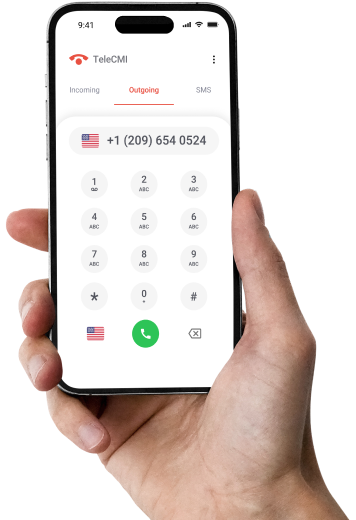
Get Your DID Number with TeleCMI Today!
Simplify your business communication by offering direct connections to your team with a DID number.
What is DID Number?
DID is a phone number that goes directly to the extension or perspective in the organization. These direct-dial phone numbers can point incoming customer calls to the organization’s phone number.
Moreover, VoIP phone systems have efficient call routing strategies, and this DID number can add more credits to them.
Understanding how Direct Inward Calling Works
Being a beneficial approach from the customer’s end, the working of DID also looks simple and effective.
Here is how it works:
Direct Dialing on PSTN
Let us consider direct dialing on PSTN right off the bat. The telephone service provider will connect a set of trunk lines to the customer’s hosted PBX system. Further, the provider will assign a set of phone numbers to the businesses as their direct-to-call numbers.
When the caller makes a call, and it reaches the direct-dial numbers, it is forwarded to the organization’s PBX system through a trunk line. When the call reaches PBX, it is quickly routed directly to one of the phone extensions.
Direct Inward Dialing on VoIP
In this case, DID works through SIP Trunking. VoIP is a modernized communication feature where no physical wires or other infrastructure is required. Here, SIP creates trunk line connections across broadbands when required.
They are configured internally, and the numbers are directly connected to the VoIP application. You don’t need a telephone service provider, and it can be done by anyone. Moreover, a VoIP DID is highly scalable, and you can add or remove the trunk lines based on your changing requirements.
DIDs for Faxing
This is a simple process where DIDs are quickly connected to fax machines. Here, a set of phone numbers is assigned to the computer that manages the fax machine. This can provide multiple fax numbers for your organization that are linked to a particular machine or several machines too.
Similar to how you assign a separate email address, you can allocate a unique fax number. When a fax comes in for an agent, it will be routed to the printer in that area or even to that computer with the printer.
Direct Inward Dialing with IP PBX and SIP Trunking
In this case, an onsite PBX system will work similarly to handle direct incoming calls. The VoIP provider will receive the PSTN or VoIP transmission connection in order to transfer the digital data to the company’s PBX network.
Once the IP PBX system receives the inbound call, it utilized the internet to wirelessly transmit the call to the respective device. VoIP providers can offer DID numbers and you can purchase them for your business.
Types of Direct Inward Dialing (DID)
Let us explore the different types of DID,
Individual DID Numbers
As the name suggests, each agent gets an unique DID number where the call gets routed to them directly. Hence, callers can easily reach the required agent without getting disrupted or managing the switchboard in between.
Department DID Numbers
This is for a group of people or a team. The whole workgroup or department will share a single DID number. When a customer makes a call, the number rings for the entire group in the department. Hence, multiple people can engage the calls easily.
Location-based DID Numbers
A specific DID number will be allocated based on the company's location or branch. Calls to the number will ring only in that specific location or branch.
Toll-free DID Numbers
Toll-free numbers are those where external callers can reach the business free of cost. For instance, numbers such as 1800-001-002 are easy to remember and do not charge.
Virtual DID Numbers
Virtual DID numbers are cloud-based phone numbers that are not tied to physical infrastructure but are hosted virtually through cloud telephony solutions. This allows calls to be routed to any device, anywhere in the world, offering greater flexibility, scalability, and cost-efficiency for businesses and individuals.
Auto Attendant DID Numbers
Here, customers will be provided with a set of dialing options on their keypads, and the calls are routed without human intervention.
Benefits of Direct Inward Dialing
Let us learn the advantages of DID:
Cost-effective and Affordable
DID numbers are budget-friendly ones that any business can afford. You can limit the trunk lines for traditional phones. VoIP systems are already cheap, as they do not require any physical infrastructure or investments, so you can save on operational costs, as well.
Quick and More Efficient Routing
Instead of directing calls to different departments and making the customer wait a long time, DID is a beneficial process for connecting with the respective agent or team effectively and quickly.
Enhanced Flexibility and Mobility
By implementing DID, you can get greater control and manage your calls more effectively. Moreover, VoIP DID provides the flexibility to handle calls from anywhere, which increases mobility. They are also flexible in terms of providing enhanced communication.
Increased Customer Experience
Since customers are directed to the respective teams or departments, their queries will be addressed quickly. This can enhance their experience and help them reach businesses whenever they encounter hurdles.
A Better Agent or Employee Experience
Similar to the customer, agents as well as teams can also have an improved experience with DID. Agents can get to receive their customer queries promptly and they are trained to resolve them quickly.
Greater Productivity
As it eliminates several routing routes, auto attendants, and other processes, agents can focus on the most important tasks. All repetitive tasks are automated, making it easier for agents to work, which increases their productivity.
Faster Internal Team Communication
Similarly, collaboration and internal team communication are also efficient as they enable single-click calls with each other instead of switching between platforms.
Real-time Use Cases of DID
Let us understand the real-time use cases of DID. Here are a few of them:
Sales Operations
As the sales team handles multiple calls every day, DIDs can help with the lead-generation process and engage customers promptly.
Customer Services
This department can set up DIDs for billing questions, general queries, technical support, or other inquiries to route calls effectively.
Marketing Teams
Marketing teams can temporarily use DIDs to run ads, campaigns, and other activities. Getting a unique DID can also increase engagement rates.
Multi-branches Organizations
Companies with multiple branches worldwide can find this effective, as they can set up a DID for each branch and seamlessly transfer calls between them.
Government Agencies
Government agencies can use DIDs to direct the calls to appropriate departments or agents effectively.
How to Get a DID Number with TeleCMI?
As an industry leader in the cloud communication market, we offer unique DID numbers to help you engage customers. Depending on your needs, you can get a virtual, toll-free, or local DID number.
You must log in to the dashboard with your credentials and select the number that best matches your requirements. Then, you are all set to connect with your customers instantly.
Get Started with Direct Inward Dialing Now
You can quickly get started with Direct Inward Dialing with TeleCMI. With a decade of experience in the industry, we carefully understand your business needs and devise a feasible solution that matches them.
You can get in touch with us, and our experts will provide a free demo of our intuitive application along with user-friendly features to help you get an idea.
TeleCMI DID numbers — Smart, seamless business communication. Try now.

Instant Setup
Get Local & International Numbers
Enjoy Unlimited Calling
Frequently asked questions (FAQ)
Vignesh N

With deep expertise in cloud telecommunications, I help readers explore the latest trends in VoIP and modern business communication. At TeleCMI, I focus on educating businesses with clear, practical insights, making complex telecom concepts easy to understand. I’m passionate about helping organizations improve efficiency, enhance customer engagement, and adopt smarter communication strategies.