How Multilingual Call Centers Are Driving Global Customer Satisfaction?

8 mins read

Posted on Oct 10, 2025

Vignesh N
SEO


Vignesh N
SEO






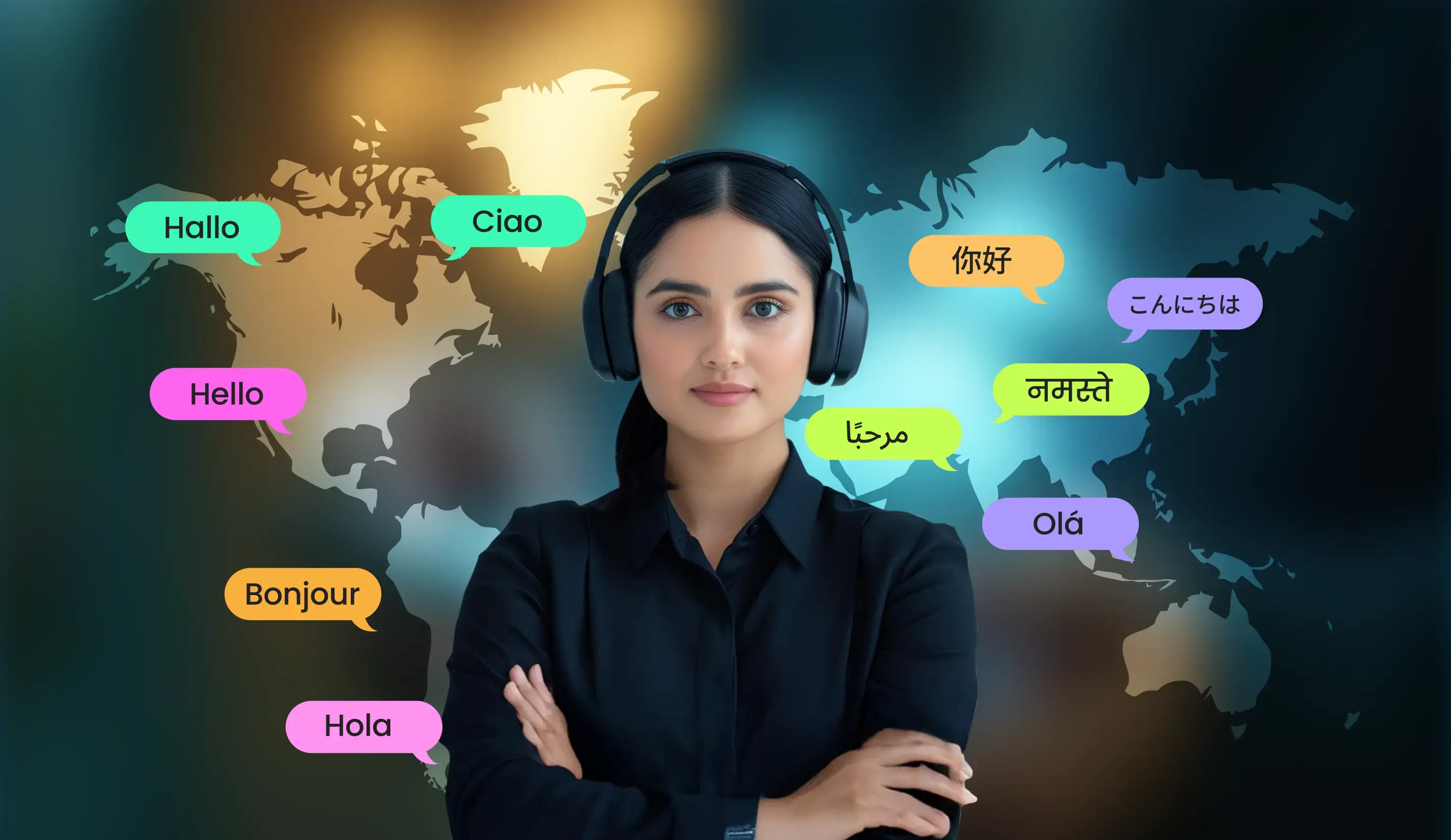
Not everyone speaks the same language, even though English is the dominant language in global enterprises; customer connections often occur in the customer's native language.
Some insights indicate that multilingual customer support is the new norm for providing a global customer experience. It not only helps in translation but also creates empathy, builds trust, and maximizes accessibility.
Here in this blog, we will discuss what multilingual call centers are, if they are suitable for your company or not, and how to adopt and grow them successfully with an emphasis on AI, infrastructure, and ROI.

Key Takeaways
 Multilingual call centers help businesses connect with customers across languages and cultures, improving trust and global reach.
- Language inclusion leads to better customer satisfaction, loyalty, and sales growth in international markets.
- AI and speech recognition make multilingual support faster, smarter, and more personalized.
- Reliable technology ensures smooth operations, strong data security, and better customer service outcomes.
- Customer experience has no language barriers—speaking your customer's language shows empathy and builds stronger relationships.
- AI-driven insights help reduce waiting times, improve issue resolution, and increase agent efficiency.
- In 2025 and beyond, multilingual call centers will be key to creating borderless, customer-first communication.
What is a Multilingual Call Center?
In a multilingual call center, agents address customer or prospect inquiries in multiple languages rather than depending solely on a single language.
Agents can utilize AI-powered translation and speech recognition technologies to address inquiries in multiple languages and enhance the service quality.
Is a Multilingual Call Center Right for Your Business?
Not every business requires a multilingual call center for its support teams. We have listed self-assessment statements that help you to identify whether your business requires one or not.
- Have customers in various regions or countries
- Get frequent inquiries in various languages.
- Need higher customer satisfaction (CSAT) and loyalty.
- Want to minimize misunderstandings and callbacks.
- Want to enhance your company's international image
Difference Between Support and Sales Multilingual Call Centers
How to Implement Multilingual Call Center Support
Implementing a multilingual call center involves finding the proper people, process, and technology. Companies can do it in two ways: by developing in-house support or by outsourcing to experts.
In-House Multilingual Support
In this model, you can manage all multilingual operations internally, gain full control over service quality, training, and customer experience, and directly integrate with your company's CRM, knowledge base, and policies, keeping you aligned with brand standards and representing your culture.
Outsourced Multilingual Call Center Services
In this method, you work with an external supplier who has existing trained multilingual staff and a refined call center. It is affordable, scalable, and well-suited for companies expanding into new markets and businesses looking to improve service.
Step 1: Analyze Customer Needs
Identify your clients and what languages they use by applying CRM data, sales history, and local inquiries to chart demand for language and support levels.
Step 2: Choose Your Model
You can either create an in-house multilingual team or outsource to a multilingual call center vendor. In-house teams are ideal for organizations requiring complete control of training, tone, and service culture, and outsourcing is best for scalability,cost-effectiveness, and quicker setup in most languages
Step 3: Integrate Technology
Customer support call centers primarily utilize solutions like chatbots powered by AI, speech recognition software, and omnichannel platforms to ensure precise, prompt, and human-like interactions regardless of language

According to a CSA Research report, 76% of consumers prefer purchasing products with information in their own language.
Step 4: Train and Empower Agents
Agents must not only be trained in language skills but also in cultural communication. Tone and etiquette for every language, product, and policy training, translation aids, and Zoho CRM phone system integrations need to be part of the training modules.
Step 5: Monitor and Optimize Performance
Once the system is live, continuously track performance metrics such as Customer Satisfaction (CSAT), First Call Resolution (FCR), Average Handle Time (AHT), and language-based customer feedback. These insights help refine your processes and identify where more language support or training is needed.
Step 6: Scale Gradually
Start with the top two or three most in-demand languages, then expand. For instance, an organization operating in Europe could start with English, Spanish, and French, then expand to include German or Italian as the demand for customers increases.
The Value of Multilingual Customer Support
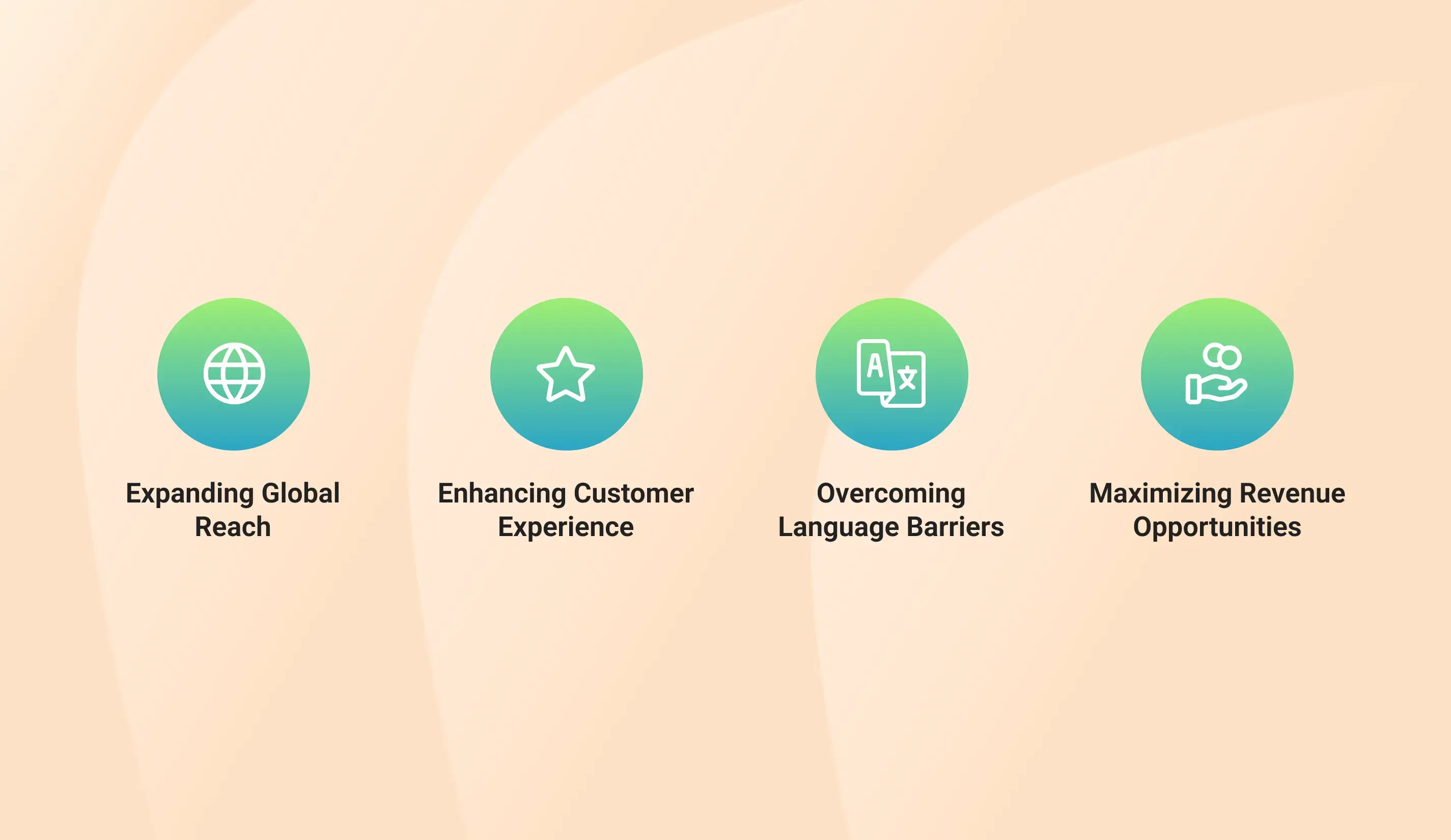
Expanding Global Reach
Multilingual customer support enables businesses to venture into new markets with confidence. It indicates that your brand cares about diversity and makes consumers feel at ease interacting with you.
Enhancing Customer Experience
When customers talk on their own terms in their native language, satisfaction and trust grow, customized support creates emotional loyalty, with lasting relationships.
Clarity of communication reduces errors and frustration. It shortens resolution times and enhances your brand reputation for dependability.
Maximizing Revenue Opportunities
By reaching customers in their preferred language, businesses can improve conversion rates and expand their sales potential in non-English-speaking markets.
Running a Successful Multilingual Call Center
One of the major aspects in the successful management of operations is the right software and a suitable partner. When evaluating a solution, consider these capabilities:
- Comprehensive Language Support: The platform should handle multiple languages and dialects, enabling seamless communication with diverse customer bases.
- Reliability & Uptime: The adoption of a cloud-based pbx phone system with a high-availability infrastructure leads to the minimum downtime, thus, the staff can be on duty 24/7.
- AI & CRM Integration: Integration with AI-powered chatbots, predictive routing, and speech recognition, along with CRM connectivity, ensures consistent and accurate customer data across languages.
- Transparent Pricing & Scalability: Flexible pricing models allow businesses to scale operations across regions without hidden costs.
- Performance Tracking: Multilingual dashboards and analytics help monitor KPIs like FCR, CSAT, and call volumes across languages in real time.
- Compliance & Security: Adherence to global data privacy standards, such as GDPR, ensures secure handling of multilingual customer interactions.
How AI and Speech Recognition Help Multilingual Call Centers
Artificial Intelligence (AI) is transforming how multilingual support works. It helps businesses provide faster, smarter, and more personalized service. Here's how AI adds value:
AI-Powered Chatbots
AI chatbots can detect a customer's preferred language in real time and reply accordingly. From answering frequently asked questions to order tracking or transferring difficult cases, these bots handle massive numbers of multilingual inquiries without interruption.
Real-Time Language Translation
Artificial intelligence translation software eliminates communication barriers by translating voice and text interactions in real time. This allows agents to listen and respond to customers accurately, whether they share a common language or not. Also, an manual translation can slow support and create formatting issues, making a pdf translator tool a practical way to simplify document translation using Canva.
Speech Recognition
Artificial intelligence-based speech recognition systems are designed to recognize regional accents, dialects, and tone variations. This reduces misinterpretations and enhances transcription accuracy for call recordings.
Sentiment Analysis
AI not only translates words, but it translates emotions. Sentiment analysis tools look at tone, word selection, and speech patterns to identify customer mood: frustrated, neutral, or satisfied.
Also read: Why call recording software is vital for maintaining quality in multilingual call centers
Intelligent Call Routing
AI algorithms route calls automatically based on conditions such as language preference, customer history, or type of issue. This assures that every customer is put through to an agent best suited to resolve their concern.
Intelligent Assistants
AI-powered assistants support agents during live calls by: suggesting relevant responses or solutions, offering instant translations, and displaying customer history and preferences.
Predictive Analytics
AI doesn't respond; it predicts. Based on call trends, seasonal behaviors, and customer habits, predictive analytics forecast call volumes by language or geography, typical issues within a specific region, and staffing requirements for future campaigns or holidays.
Conclusion
In the global business environment of today, customer experience is characterized by personalization and accessibility. With business growth in new regions, language cannot be made a secondary aspect; it's an integral part of customer interaction. A multilingual call center closes this gap, enabling businesses to speak the same language across cultures and geographies.
Moreover, as AI, speech recognition, and machine translation continue to advance, multilingual call centers are becoming smarter and more proactive.
Struggling to Support Global Customers? We’ve Solved It with Call Center Software

Optimize Your Global Support Now
Transform Customer Service Today
Empower Your Team with Our Software
Frequently asked questions (FAQ)
Vignesh N

With deep expertise in cloud telecommunications, I help readers explore the latest trends in VoIP and modern business communication. At TeleCMI, I focus on educating businesses with clear, practical insights, making complex telecom concepts easy to understand. I’m passionate about helping organizations improve efficiency, enhance customer engagement, and adopt smarter communication strategies.


 for your Call Center and Enhance Efficiency_.webp)