VoIP Phone System for Small Businesses: Features, Benefits & Pricing Guide

14 mins read

Posted on Apr 21, 2026

Vignesh N
SEO


Vignesh N
SEO





Solve Dropped Calls and Lost Customers.
A prospect calls your small business. No answer. They try again, navigate a frustrating phone menu, and give up. By the time they reach someone, they've switched to your competitor. Legacy landlines make this a daily risk for SMBs.
Switching to a modern VoIP phone system gives small businesses quick setup and enterprise-grade features at affordable prices. Deploy cloud systems in hours, not weeks. Save 50-75% vs. traditional lines while gaining AI tools once exclusive to big companies.
This guide simplifies your decision. For your first VoIP system or a provider switch, discover features (AI call handling, analytics), pricing, security, setup, and key considerations.

Key Takeaways
 VoIP phone systems have seen a reduced communication rates of 40-70% than traditional landlines.
- The best VoIP phone systems have IVR, call analytics, CRM integrations and mobile apps that are beyond just call forwarding.
- Setup is within 24 hours; we do not require on site hardware or specialized IT.
- Number portability helps to move your existing business numbers to VoIP seamlessly, without changing numbers.
- AI, the wheel of these features that provides call transcriptions, sentiment analysis, and post call summaries, is what we have in 2026.
What is a VoIP Phone System for Small Business & Why It’s Essential
VoIP (Voice over Internet Protocol): Instead of old copper phone lines, VoIP sends voice calls over the internet—like email or video calls.
For small businesses, this changes everything:
- Clear calls from anywhere
- Costs cut by 50-75%
- Smart features like AI call routing, SMS, and analytics—all from a simple cloud dashboard
Traditional phones lock you into physical wires. Adding a new line? Visit the provider, wait days for installation, and pay high fees.
With VoIP:
- Add a user in 30 seconds from your dashboard. No cables, no hassle.
- Remote or multi-location teams share one professional phone system instantly.
- Customers expect fast, seamless communication—voice, text, digital—all in one.
A basic landline is like using a flip phone in an iPhone world. VoIP keeps you modern and competitive.
"The defining shift in 2026 isn't that VoIP is cheaper, it's that VoIP phone systems with AI is smarter. Small businesses can now operate with the communication intelligence of an enterprise contact center."
Key features of VoIP phone systems for small businesses
Not all VoIP platforms are created equal. When evaluating any small business VoIP system, these are the features that separate genuinely useful tools from glorified call-forwarding services.
For small teams without IT support, features like skill-based routing and sticky agent assignment are game-changers. Sticky agents connect returning customers to their preferred rep every time, building trust that basic VoIP services miss. This seamless flow turns one-off callers into loyal clients.
Benefits of VoIP for small businesses
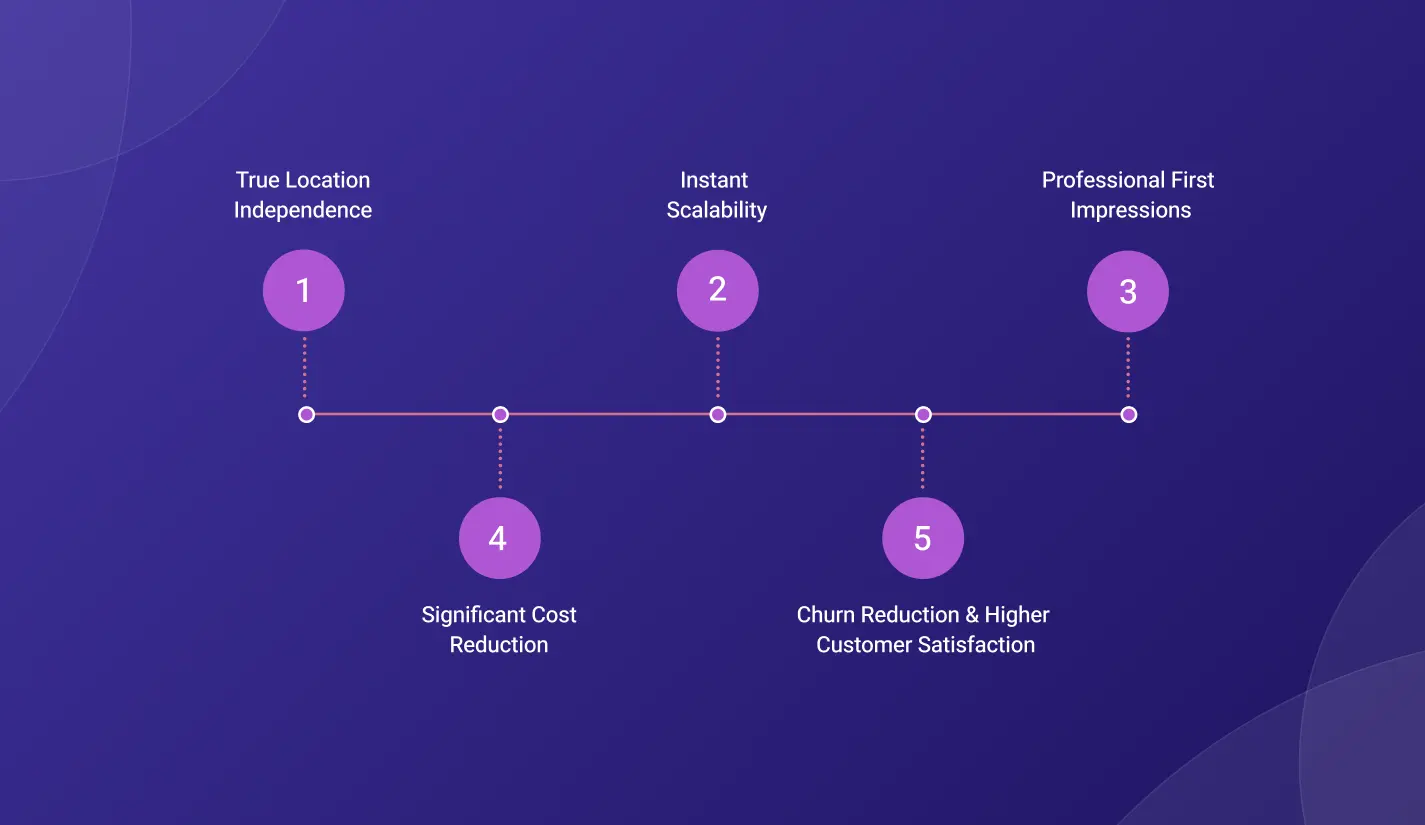
- True Location Independence
Post-pandemic, work happens anywhere. VoIP keeps your business number active on laptops, smartphones, or desk phones—office, home, or café abroad. No missed calls when someone steps away.
- Instant Scalability
New hires? Expanding offices? VoIP adds users, numbers, or departments in minutes—no hardware, technicians, or contract changes. It scales as fast as your business grows.
- Professional First Impressions
Multi-level IVR, branded hold music, and smart routing make a 5-person startup sound like a 500-person enterprise. Level the playing field against bigger competitors.
- Significant Cost Reduction
Bills drop immediately. Traditional PBX costs thousands upfront plus maintenance and per-line fees. VoIP uses your existing internet—no hardware needed. Long-distance and international calls slash per-minute rates, delivering 40-70% savings within 6 months for most SMBs 2026.
- Churn Reduction & Higher Customer Satisfaction
AI routing, quick answers, and sentiment analysis keep callers happy. Returning customers connect to their preferred rep (sticky agents), building trust. Studies show VoIP boosts satisfaction by 30-45%, cutting churn significantly
Small business VoIP vs traditional phone systems
How much does a VoIP phone system cost for small businesses?
Pricing for small business VoIP services varies considerably, and the advertised per-user number rarely tells the whole story. Here's a realistic breakdown of what to expect in 2026:
A few hidden costs to watch for: some providers charge separately for international numbers, call recording storage, or API access. Before signing, always ask specifically about charges beyond the base subscription.
Explore a modern VoIP phone system built for small businesses — try TeleCMI at no cost.
Start 14 Days Free TrialHow to choose the right VoIP solution for small business
There are dozens of VoIP service providers competing for small business attention in 2026. Rather than comparing feature lists in isolation, the more useful question is: what does this business actually need — right now, and six months from now?
Security & reliability of VoIP systems
Security issue is what most buyers bring up but then forget to follow up on. It is a widely spread belief that VoIP calls are by nature less secure than that of the traditional phone lines. What we see is that modern enterprise grade VoIP systems are in fact much more secure, if the provider puts in the proper encryption.
End to the end encryption of calls and messaging, TLS/SRTP protocols, multi factor authentication for admin access, SOC 2 compliance or equivalent, and regular third party security audits.
Reliability is about what happens in a breakdown as well as uptime. Cloud based phone systems, calls reroute automatically, but with a landline, a broken cable is a broken phone.
For businesses in healthcare, finance, legal it is required that you confirm compliance to GDPR, PCi DSS and HIPAA before you add VoIP phone service for small business.
Why VoIP is the future for small businesses
In many markets, traditional PSTN networks are already being phased out. The UK's PSTN switch-off is reshaping business telephony across Europe. Similar transitions are underway globally. This isn't speculative: the window for delaying a VoIP migration is closing.
AI now manages full phone calls on its own—routes callers, answers common questions, and qualifies leads before passing to a human. For small teams with limited staff, this saves time and scales service effortlessly.
Post-call analytics have evolved from "here's a recording" to "here's what your customer was feeling, what topics came up, and which calls need a follow-up today." The data intelligence available through modern VoIP systems in 2026 would have required a dedicated analytics team just five years ago.
"VoIP costs $15-40/user/month vs. $50-100+ for traditional landlines, with 30-75% reductions in phone bills and up to 90% overall savings"
Why choose TeleCMI for your small business VoIP phone system
TeleCMI is designed for growing businesses. We know that medium-sized businesses face challenges, like limited IT resources, tight budgets, and a mobile workforce. They need to provide top-notch service to every customer.
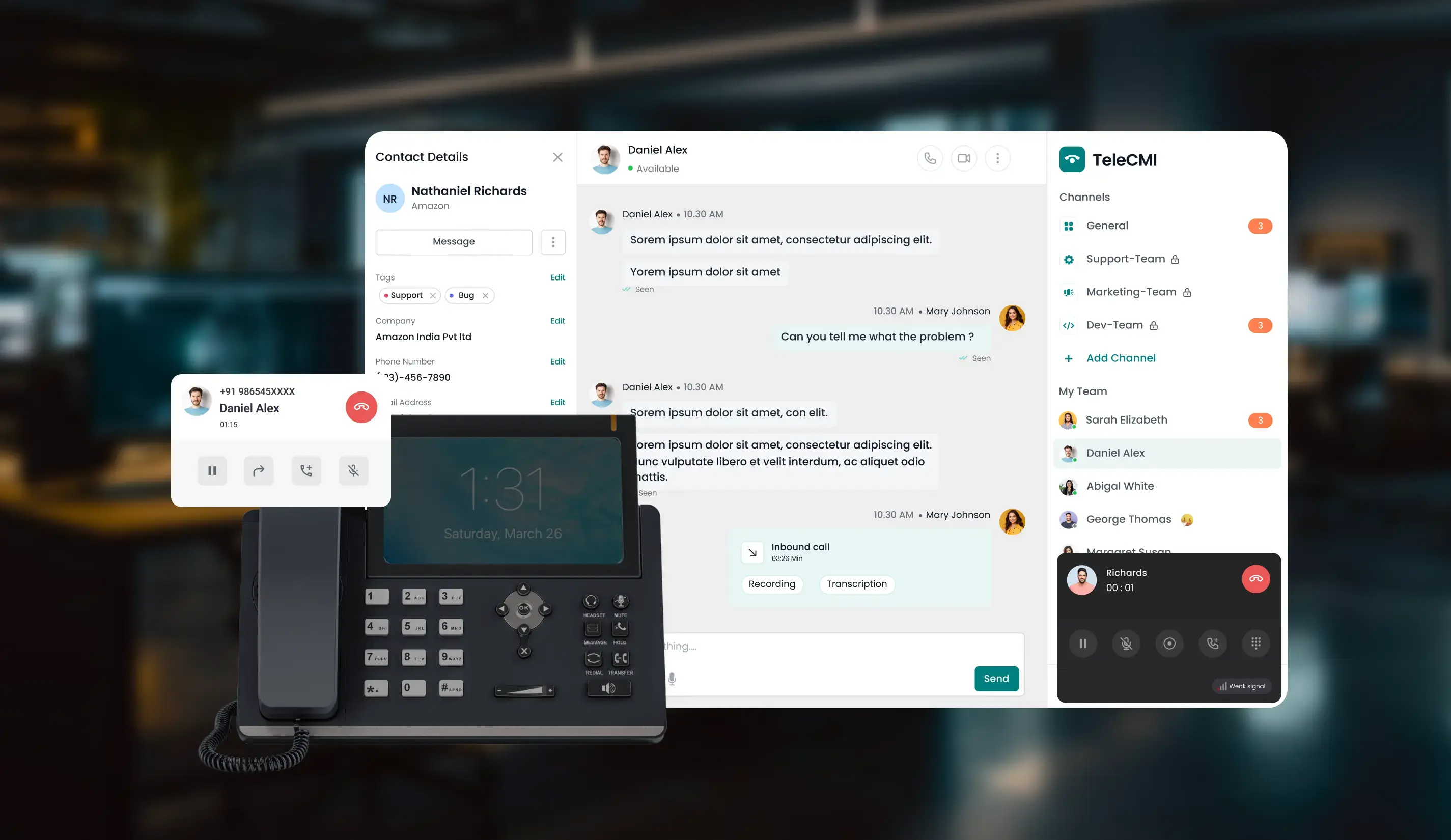
The TeleCMI's VoIP Phone System is a communication hub. It replaces phone systems with smart cloud-based features. TeleCMI helps businesses meet these challenges. Below is the table that helps to see the full scope of the platform quickly.
Move past the limitations of traditional telephony. With TeleCMI, you aren't just getting a phone system; you’re gaining a competitive advantage that scales as fast as you do.
How to set up VoIP for a small business
The setup process for a cloud-based VoIP phone system is far simpler than most businesses expect. Here's what it looks like in practice:
Conclusion
The decision to switch to a VoIP phone system for a business is not really about the technology anymore. It is about being competitive. The things that used to make a company's phone system different from a small business system are gone now. The difference is a matter of choice.
Small businesses that use VoIP services with artificial intelligence are not just saving money on their phone bills. They can respond to customers, learn more about what their customers want, support workers who are not in the office without any problems, and look very professional from the start.
VoIP phone system, for business is what TeleCMI specializes in. TeleCMI makes it easy to switch to a VoIP phone system for business with no need to buy any equipment no requirement to stay with the service for a long time and help is available whenever it is needed. For businesses that want to stop using old phone systems TeleCMI offers a free demo to get started and it only takes a few hours to get everything set up not a few months.
Experience better call quality, faster setup, and built-in CRM integration.

Trusted by 3500+ Businesses Worldwide
Virtual Numbers in 150+ Countries
Reliable Support from VoIP Experts
Frequently asked questions (FAQ)
Vignesh N

With deep expertise in cloud telecommunications, I help readers explore the latest trends in VoIP and modern business communication. At TeleCMI, I focus on educating businesses with clear, practical insights, making complex telecom concepts easy to understand. I’m passionate about helping organizations improve efficiency, enhance customer engagement, and adopt smarter communication strategies.


.webp)