What Is an AI Voice Agent? A Complete Beginner’s Guide

11 mins read

Posted on Jan 22, 2026

Vignesh N
SEO


Vignesh N
SEO






Most software learns to speak before listening.
Customer support systems have long followed this pattern. A call often begins with a greeting, followed by instructions. Press one for orders. Press two for billing. Press three for returns. The process continues until the caller fits a predefined path.
The voice is polite, yet the interaction seems stiff.
They respond to inputs, not intent.
Their logic is scripted, their responses predictable. When a customer’s issue falls outside those scripts, satisfaction drops quickly.
The issue is not voice. It is the system that doesn’t understand. Instead of navigating menus for users, they hear and interpret the speech and respond to it.
In this blog, we will explore what an AI voice assistant is, its major characteristics and advantages, the implementation process for this technology, the challenges it faces today, and the future of AI.

Key Takeaways:
 Traditional voice systems fail not because of how they sound, but because they do not understand intent. AI voice agents are designed to listen first and respond with purpose.
- The AI voice assistants are able to work with natural speech patterns compared to IVR scripts, and they are able to carry follow-up conversations.
- The strength of these contact channels is the speed, availability, and reliability they offer. Calls are answered immediately, 24/7, with quicker resolutions made possible because of early intent identification.
- AI Voice Agents can be scaled without additional human resources. This makes it ideal for a high volume of calls and peak times.
- While challenges remain around emotional nuance and edge cases, AI voice agents are steadily evolving toward deeper understanding and broader autonomy.
- Looking ahead to the future of voice support, the trend indicates the use of AI agents as the first point of contact for the majority of these calls.
What is an AI Voice Agent?
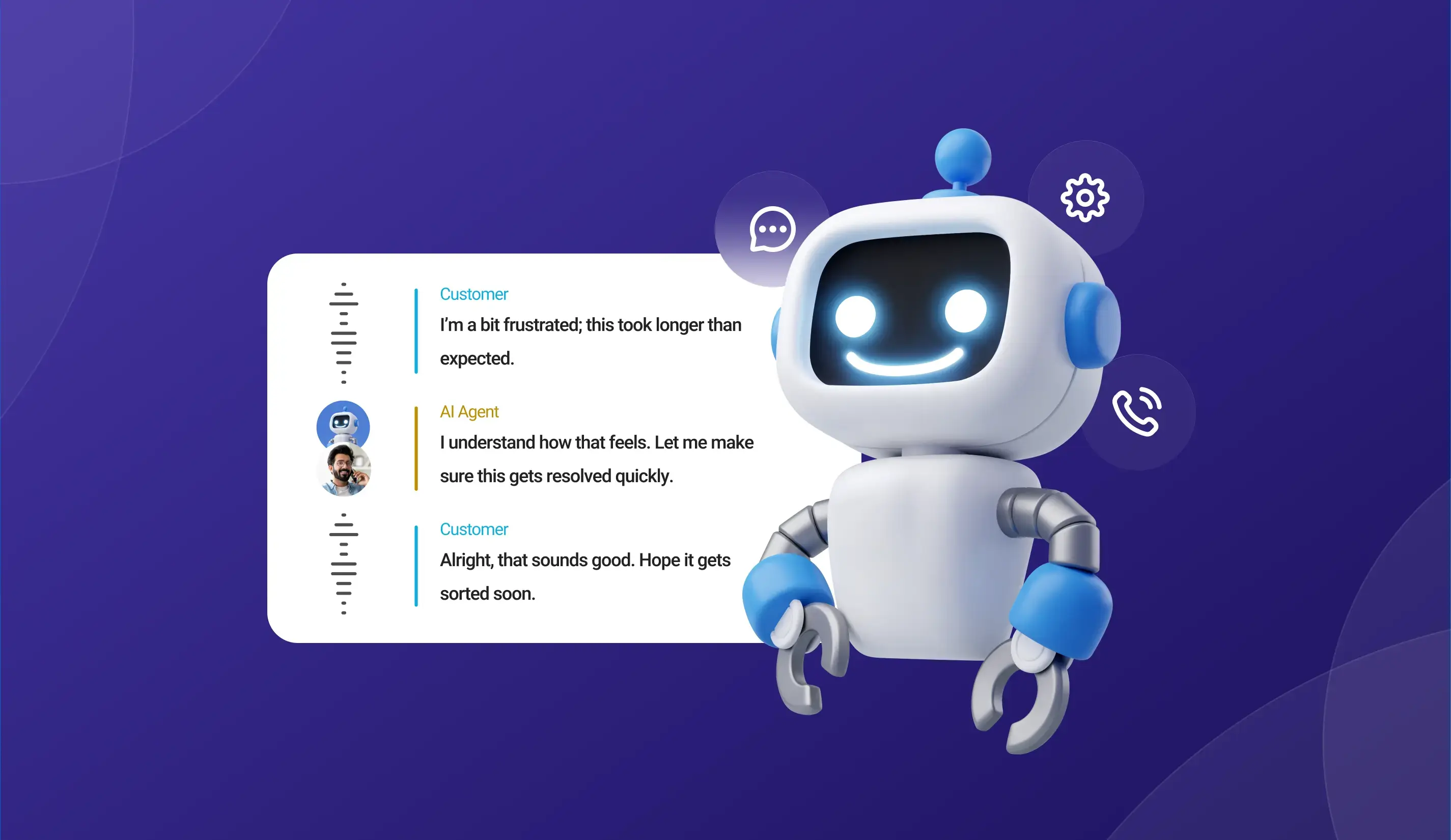
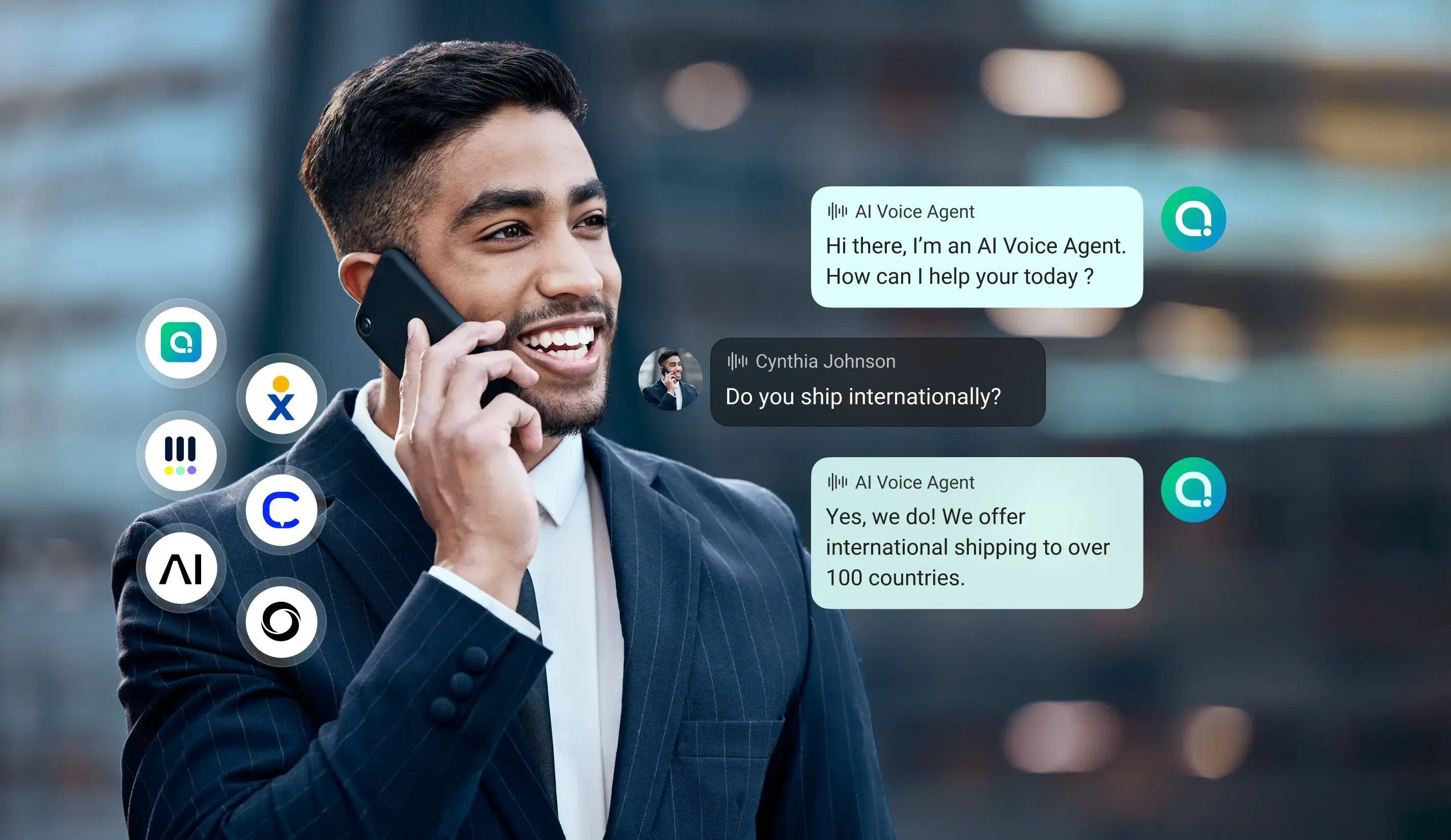
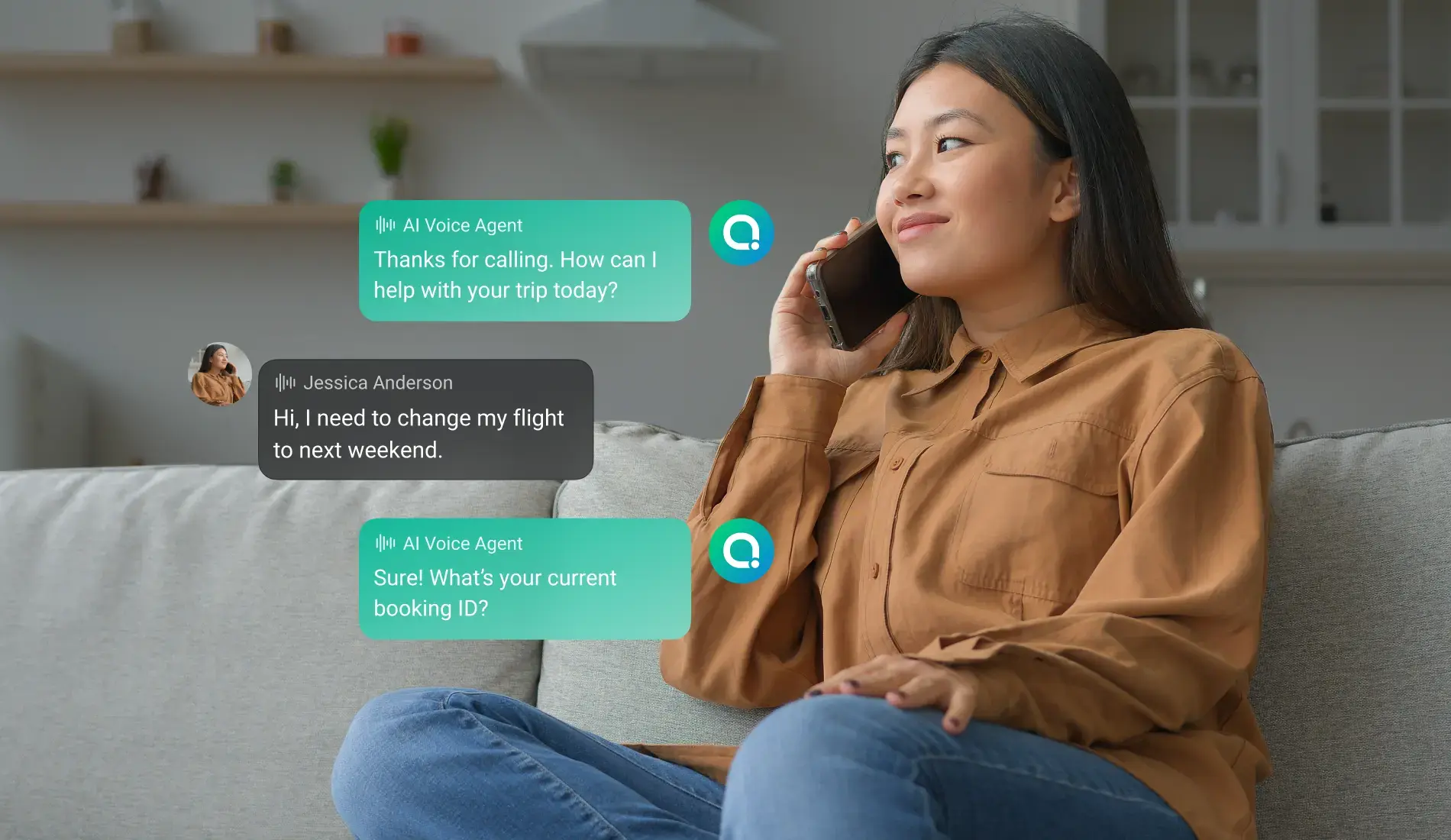
An AI voice agent is an integrated system capable of conducting a proper conversation without human support. It listens to what the calling party is saying, interprets the message that the caller is talking about, decides what to do next, and speaks back to the calling party using a natural voice. An AI voice agent integrates speech recognition, language understanding, decision-making, and voice synthesis in one loop. This allows it to respond to inquiries, fetch information, add to records, or divert calls when necessary.
How an AI Voice Agent Works
AI voice agents focus on a continuous loop rather than fixed scripts.
1.Inbound Call Handling: It picks up the spoken input and forms text using speech recognition.
2. Conversation Processing: It then reads through the text, understands the intention, and captures the relevant information. The voice agent would interpret the caller's requirements and analyze past relevant interactions.
3. Response Generation: It chooses the response based on the analysis, comprising a range of actions such as answering questions, booking tickets, and seeking clarification.
4. Call Completion & System Updates: The response is converted into speech and delivered in a clear, natural voice. and then this process repeats until the request is resolved or the conversation is transferred to a human.

Insight: 76% of customers prefer phone support for complex issues over other channels. - Gitnux
Key Features of AI Voice Agents
These key attributes allow AI Voice Assistants to make way for quicker resolution, systematic responses, and a more natural conversational user experience for scalable voice operations. An AI ad maker further enhances this process by enabling businesses to create personalized promotional content and voice-based advertisements efficiently.
1. Conversational Speech Handling: AI voice agents are designed to follow how people actually speak. They manage interruptions, incomplete sentences, and changing intents without making the caller restart or repeat.
2. Live Understanding During Calls: The agent processes meaning as the conversation unfolds. It does not need to wait for the first command. It is different for every message that has been sent, as well as for the most probable following question of the caller.
3. Voice Driven Actions: Actions can be triggered by requests made through a call. An agent can open tickets, edit customer data, send meeting invites, or even fetch account information just through voice calls.
4. Language Flexibility: AI Voice Assistants support multiple languages and regional speech variations, allowing the organization to reach a more diverse population without having to duplicate support teams and processes.
5. System Connectivity: It is an agent that works within a system. Integrate it with internal and external tools to ensure that voice conversations result in data updates or completed tasks, rather than just isolated interactions.
Benefits of Implementing AI Voice Agents
AI-powered voice assistants provide seamless voice services without the limitations imposed by the need for staff or by the number of calls.
1. Enhance Customer Experience: AI voice agents make interactions simpler and more direct. Callers explain what they need in their own words and receive clear responses without being guided through rigid menus or repeated transfers.
2. 24/7 Call Availability: Support remains available at all hours. Customers can reach assistance outside business hours without relying on on-call teams or extended shifts.
3. Zero Wait Times: Every call is answered immediately, even during peak demand. This removes long holds and reduces call abandonment.
4. Human-Like Conversations at Scale: AI voice agents maintain a natural conversational flow while handling large volumes of calls at once. The experience remains consistent regardless of scale.
5. Instant Scalability for High Call Volumes: Capacity expands automatically as call traffic increases. There is no need for advanced staffing or infrastructure changes.
6. Faster First Call Resolution: By understanding intent early, many issues are resolved in a single interaction without follow-up calls or escalation.
7. Global Reach with Minimal Operational Effort: Multilingual support allows one system to serve users across regions, reducing the complexity and cost of global voice operations.
Use Cases of AI Voice Agents
AI voice agents are used where voice interactions need to move quickly from request to outcome. They step in to handle tasks with clear intent, such as answering questions, scheduling, confirming details, or routing calls.
1. Customer Support Automation: AI voice agents handle routine support inquiries such as account questions, requests for service, and basic troubleshooting. In return, this decreases the overall call volume for human teams but still manages to provide customers with quick and consistent answers.
2. Appointment Scheduling and Reminders: Patients can book, reschedule, and confirm their appointments using a conversation with AI voice agents. Reminders are automated to ensure fewer no-shows and update the schedule accordingly.
3. Sales Lead Qualification: AI voice agents engage incoming leads, ask qualifying questions, and capture key details before routing high-intent prospects to sales teams. This ensures human effort is focused where it matters most.
4. Order Status and Delivery Tracking: Customers can check the status of their orders, shipping details, or delivery updates by speaking naturally. The agent retrieves real-time information and responds without requiring a live representative. This capability is especially valuable for logistics companies, as it reduces support workload while improving customer experience through instant, accurate delivery updates.
5. Payment Reminders and Collections: Voice assistants provide reminders regarding payments to be made or the long-overdue ones through calls, provide details regarding the amount paid or pending, and assist customers in the next step in a humanized voice.
6. Call Center Overflow Management: During peak times, these AI-based voice assistants absorb overflowing call volumes. They address frequent requests, too. This ensures no queues occur and reduces the need for new hires.
AI Voice Agent vs Traditional Contact Center
How to Implement an AI Voice Agent in Your Business
To implement the use of a voice agent with AI capabilities, a carefully planned strategy is essential. This is how to begin with it:
1. Identify Processes for Automation: Look for repetitive, predictable tasks such as booking appointments, checking order status, or answering routine support questions.
2. Select the Right AI Voice Agent Platform: Pick a system that understands natural speech, remembers context, and adapts to conversations. Flexibility is more valuable than a long feature list. Businesses comparing solutions can also explore Dialixo as an option for building AI voice workflows that support natural conversations and scalable call handling.
3. Integrate With Existing Systems: Make sure to integrate the AI agent with other systems like CRMs and databases to allow information retrieval and action-taking during a call.
4. Measure Performance and ROI: Track metrics like call volume handled, resolution rates, cost savings, and customer satisfaction. Use these insights to improve workflows over time.
Challenges Specific to AI Voice Agents
1. Handling complex or emotional calls: AI voice agents excel with routine tasks but can struggle with emotional calls, poor audio quality, and real-time delays. Ensuring smooth handoffs to humans is essential to maintain context and customer satisfaction.
2. Background noise and call quality issues: Poor audio signals, talkovers, or background noise might impact the accuracy of the speech recognition process. This, in turn, might trigger confusion or re-requests during a phone conversation.
3. Latency in Real-Time Conversations: Delays in reacting to the user input in real-time can seriously affect the natural feel of the conversation. Low latencies are very crucial for a seamless voice conversation.
4. Smooth and Contextual Human Handoff: When a problem cannot be solved through automated resolution, it is important to ensure a smooth transition of a call to a human operator so that callers do not have to repeat previously provided information.
The Future of AI Voice Agents
AI voice agents are heading toward a more practical and human-centered role in everyday support. Rather than acting as scripted systems, they are becoming better listeners who understand context, tone, and intent over the course of a conversation.
Emotion-Aware Voice Conversations: The future agents will be able to recognize the emotional state of the caller’s voice, resulting in more empathetic communication.
Fully Autonomous Call Handling: Artificial intelligence will handle end-to-end calls on its own and will provide the solution to common requests.
Personalized Voice Agents per Customer: The agents will learn from personal preferences and histories of the user.
Voice Agents as First-Line Call Operators: The role of the AI in relation to human customer service representatives includes acting as the first point of contact for customers and dealing with high volume and repetitive work.
Conclusion
AI-powered voice agents have redefined customer support, moving away from inflexible menus and embracing intelligent conversations in natural speech. They listen, discern intent, and act to provide answers and complete tasks in real-time. From appointment setting to order status, repetitive customer inquiries are handled efficiently, freeing human agents to deal with more complex or sensitive cases.
Being available 24*7 and instantly scalable makes them perfect for volume calls. Multilingual skills will help your business reach out to customers globally without additional staffing, and consistency in performance will improve first-call resolution and overall satisfaction. Looking forward, AI-based voice assistants will become more intelligent and learn to recognize emotions and deal with calls autonomously with little reliance on humans.
Utilizing AI voice assistants enables organizations to enhance the customer experience while improving the efficiency of operations. Start the journey of using an AI voice assistant in your organization with TeleCMI to change the way your company communicates with the consumer.
See how AI voice agents listen, understand, and resolve calls in real time

24/7 AI voice agents with zero wait times
Natural, human-like conversations at scale
Real-time intent detection and faster resolutions
Frequently asked questions (FAQ)
Vignesh N

With deep expertise in cloud telecommunications, I help readers explore the latest trends in VoIP and modern business communication. At TeleCMI, I focus on educating businesses with clear, practical insights, making complex telecom concepts easy to understand. I’m passionate about helping organizations improve efficiency, enhance customer engagement, and adopt smarter communication strategies.