Best VoIP for Sales Teams to Increase Conversions

15 mins read

Posted on May 13, 2026

Vignesh N
SEO


Vignesh N
SEO





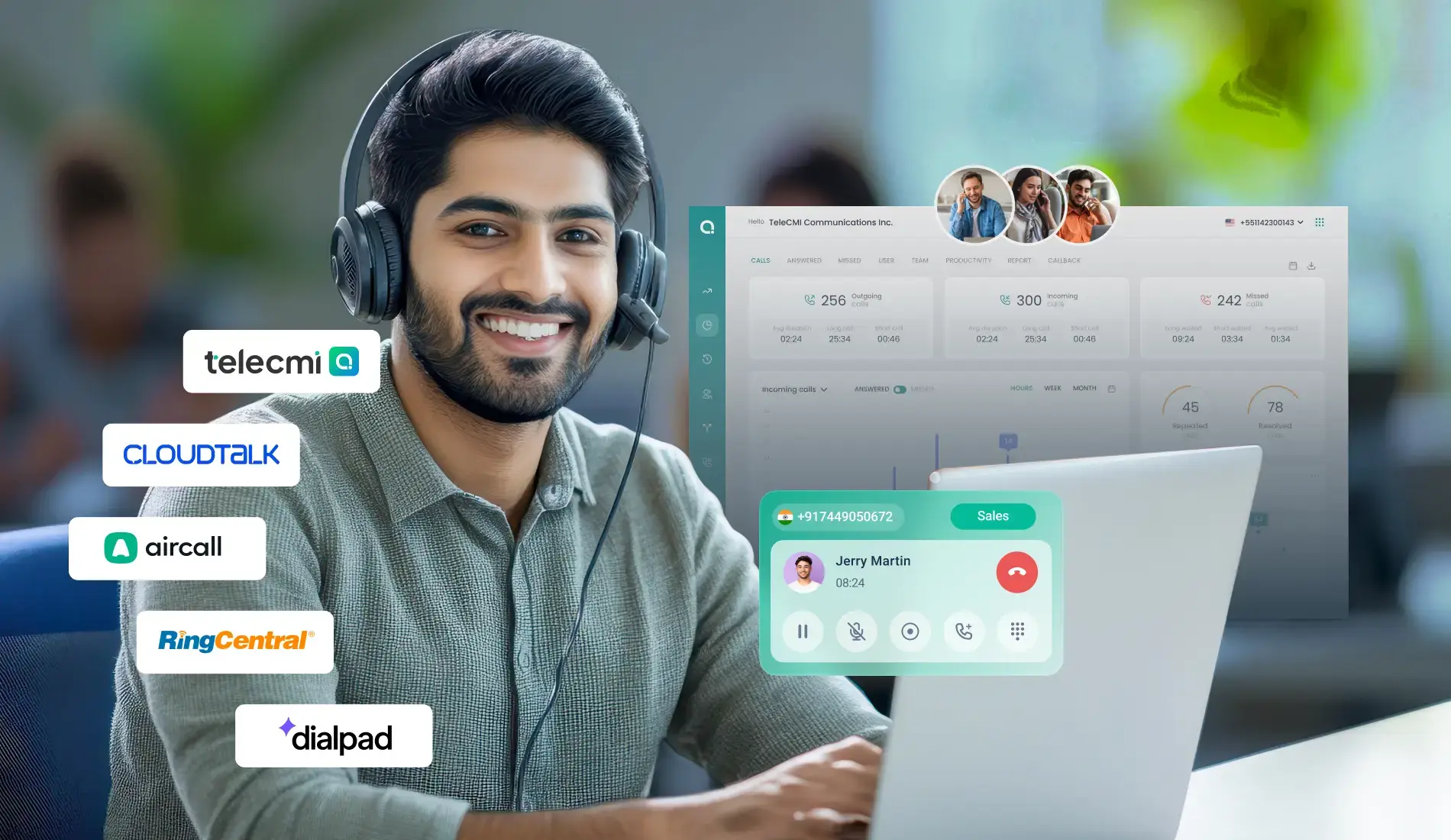
Fifty-three minutes. That’s the actual talk time one sales rep logged during a full eight-hour shift.
Not because he was slacking. Most of his day disappeared into manual dialing, wrong numbers, hold time, and updating CRM notes after every call.
That is not a sales problem. It is a workflow problem.
And it is happening in sales teams everywhere. Reps are still using outdated phone systems that slow them down instead of helping them close deals. Manual dialing, disconnected CRMs, and limited reporting quietly kill productivity every single day.
Modern VoIP systems built for sales teams solve this differently. They reduce downtime between calls, automate repetitive tasks, and give teams better visibility into performance.
In this guide, we break down the best VoIP systems for sales teams in 2026, the features that actually matter, and which platforms genuinely help teams sell faster and smarter.

Key Takeaways
 Sales-focused VoIP systems push daily call volume up to 3x higher than manual dialing
- Calling a lead within 5 minutes vs. 30 minutes makes contact 100x more likely — the right VoIP makes that automatic (Harvard Business Review)
- CRM integration and post-call analytics are non-negotiable in any serious VoIP solution
- TeleCMI, CloudTalk, Aircall, RingCentral, and Dialpad are the strongest picks for 2026
- The right VoIP platform doesn't just cut phone costs; it directly lifts your close rate
What Is VoIP and How It Works
VoIP stands for Voice over Internet Protocol. It sends calls through the internet instead of traditional phone lines — cutting call costs, removing hardware dependency, and giving sales teams a phone system that actually connects to the rest of their tech stack.
What actually matters is what happens around the call.
Old systems connected the call and stopped there. A proper VoIP phone system connects the call, pushes it into your CRM, like Kanggiten iGaming CRM, transcribes what was said, creates the follow-up task, and shows your manager what every rep on the floor is doing right now. All without anyone manually doing any of it.
Under the hood, it converts voice into data packets and sends them over IP networks. Runs entirely in the cloud. Per-seat pricing scales up or down with your headcount.
For CFOs — The fixed infrastructure bill becomes a flexible per-seat cost that moves with your team.
For CTOs — Integrations are mature, APIs are well-documented, and 99.99% uptime SLAs are standard on enterprise plans.
For CEOs — The team makes more calls, follows up faster, and you finally have data showing exactly what's working.
Why Sales Teams Need a Modern VoIP System
Sales is a volume game. It's a timing game. And a consistency game. Legacy phone setups fail at all three — usually at the same time.
- Volume: Auto dialer eliminate dead time between calls. One TeleCMI customer went from 45 to 140 outbound calls per rep per day. Same team. Same working hours. Just a different system.
- Timing: Harvard Business Review research showed that contacting a lead within 5 minutes versus 30 minutes makes you 100x more likely to connect actually. A hosted VoIP platform with smart routing and auto-callback makes sub-5-minute response times the default, not something you're chasing.
- Consistency: AI-generated summaries and synced CRM notes mean every rep has full context before they dial. No scrambling to remember the last conversation. No "let me pull that up" while a prospect waits.
How VoIP Helps Increase Sales Conversions
- Faster Lead Response
The second a lead submits a form or calls your line, the clock is running. VoIP with intelligent routing connects the nearest available rep within seconds. That speed advantage alone shifts conversion numbers — before a single word is spoken.
- More Daily Calls
Auto dialers skip voicemails, busy signals, and dead numbers without rep involvement. They only pick up when a live person answers. The shape of a sales day changes completely when reps aren't burning time waiting for lines to connect.
- Better Follow-Ups
Every call gets logged. Every outcome gets tagged. Follow-up tasks land in the CRM automatically. Nothing gets missed because someone forgot to write it down after their twelfth call of the morning.
- Improved Call Quality
HD voice codecs make calls sound noticeably cleaner than PSTN lines. When a rep comes through crisp and clear, the prospect pays more attention. Small difference in perception, real difference in engagement.
- Sales Coaching and Analytics
Live dashboards show who's connecting, who's struggling, and what's converting — today, not at the end of the quarter. AI surfaces coaching moments without managers sitting through hours of recordings trying to find them.
- After-Hours Coverage
Find Me/Follow Me routing, after-hours IVR flows, and voicemail-to-email mean a lead that comes in at 7pm on a Friday doesn't go cold by Monday. The system catches it. Conversions don't stop when the office does.
Key Features to Look for in Sales VoIP Software
.webp)
- Auto Dialer - Assists sales teams in making a consecutive call without having to enter numbers individually by enabling the next call to begin as soon as the first one is completed and timely savings when making calls during peak calling periods.
- CRM Integration - Will integrate with several programs e.g., Salesforce, HubSpot, and Zoho; you'll automatically see all of a client's history when you call him/her and don't have to input any information regarding call history manually.
- IVR - Will enable the caller to get to the correct place quickly by allowing them to select from a menu of options (i.e., "Press 1 For Sales", or "Press 2 For Support"; Directly connecting to the proper department.
- Call Recording - Full recordings of all calls are kept in a searchable and indexed library. This helps with compliance, dispute resolution, and coaching the rep. Look for software that has flexible retention options.
- AI Call Summaries - Key discussion points, commitments, and next steps from every call will be automatically summarized along with saving 5 – 10 minutes per call of note-taking time across a full outbound team.
- Post-call analytics - provides conversion rates based on the rep, media campaign, duration of call, and time of day. Understanding the actual success of a rep relies solely on this data as opposed to whether your gut says it's successful.
- Click to Call - With one click, you can dial any number displayed on CRM records or your contact list. This removes any manual entry. Reps are making 80+ calls per day, and the time savings will amaze you.
- Find me / follow me - call routing will happen (desk phone, mobile, remote) in a cascading manner until the call is answered. This helps ensure that when reps step away from their desks they are not creating missed opportunities.
Best VoIP Solutions for Sales Teams in 2026
1. TeleCMI
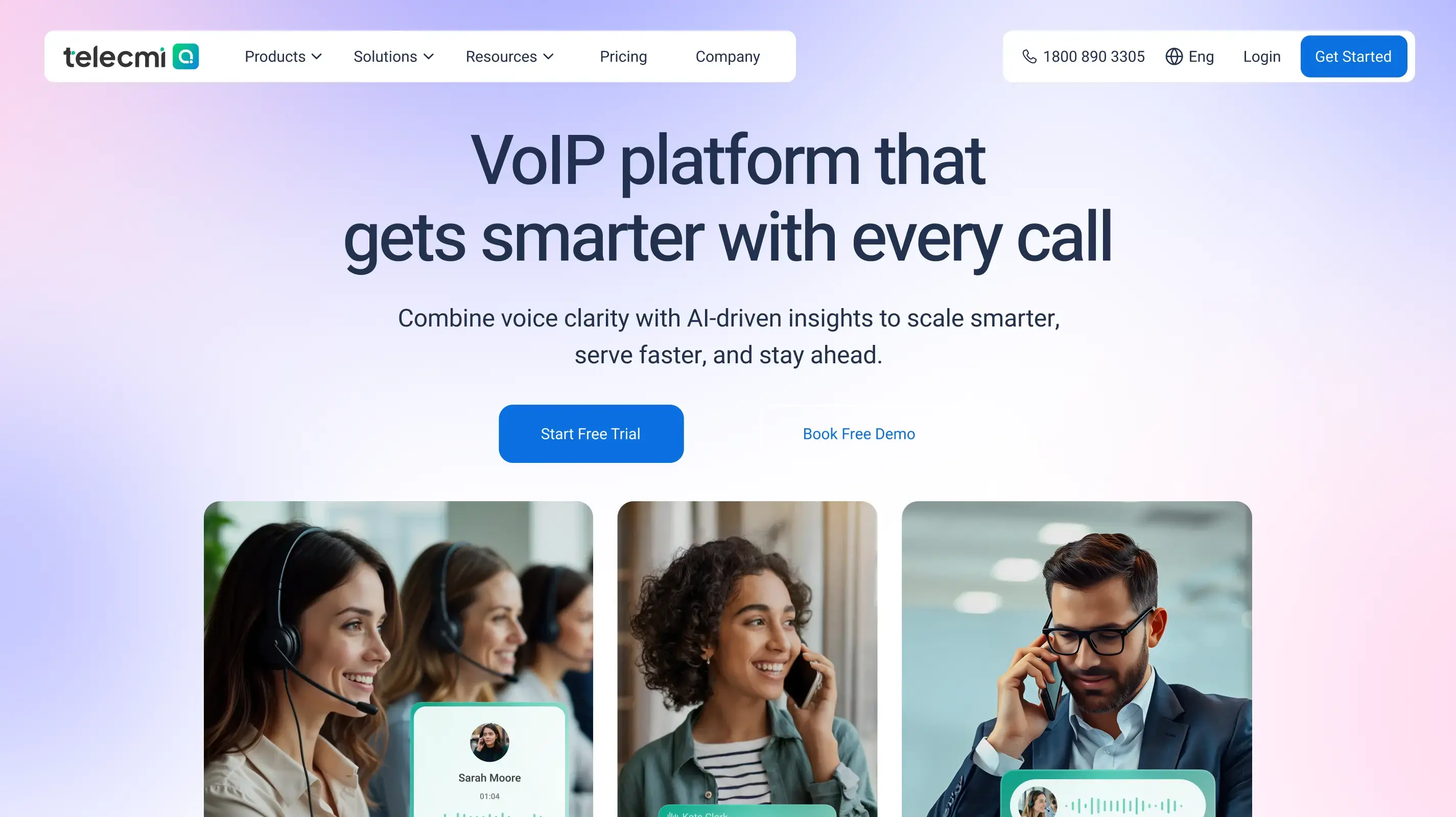
VoIP software built from the ground up for sales and support teams. Combines a strong auto dialer, deep CRM integrations, and real analytics — with particularly strong call quality across Asia-Pacific and Middle East routes.
Key Features: Auto dialer with adjustable pacing, live barge-in and whisper coaching, native integrations with HubSpot / Salesforce / Zoho / Freshdesk, AI transcription and call summaries, multi-level IVR, click-to-call browser extension, rep-level performance scoring, local numbers in 150+ countries, 99.99% uptime SLA.
Pricing: From $14.99/user/month. Enterprise plans available on request.
Pros: Most teams are live within 24–48 hours. Best price-to-feature ratio in the category. Excellent support with real escalation paths. Standout call quality on APAC and MEA routes.
Cons: Smaller brand recognition in North America compared to legacy players. Mobile app still catching up to desktop feature parity.
G2 Rating: 4.8/5
2. CloudTalk
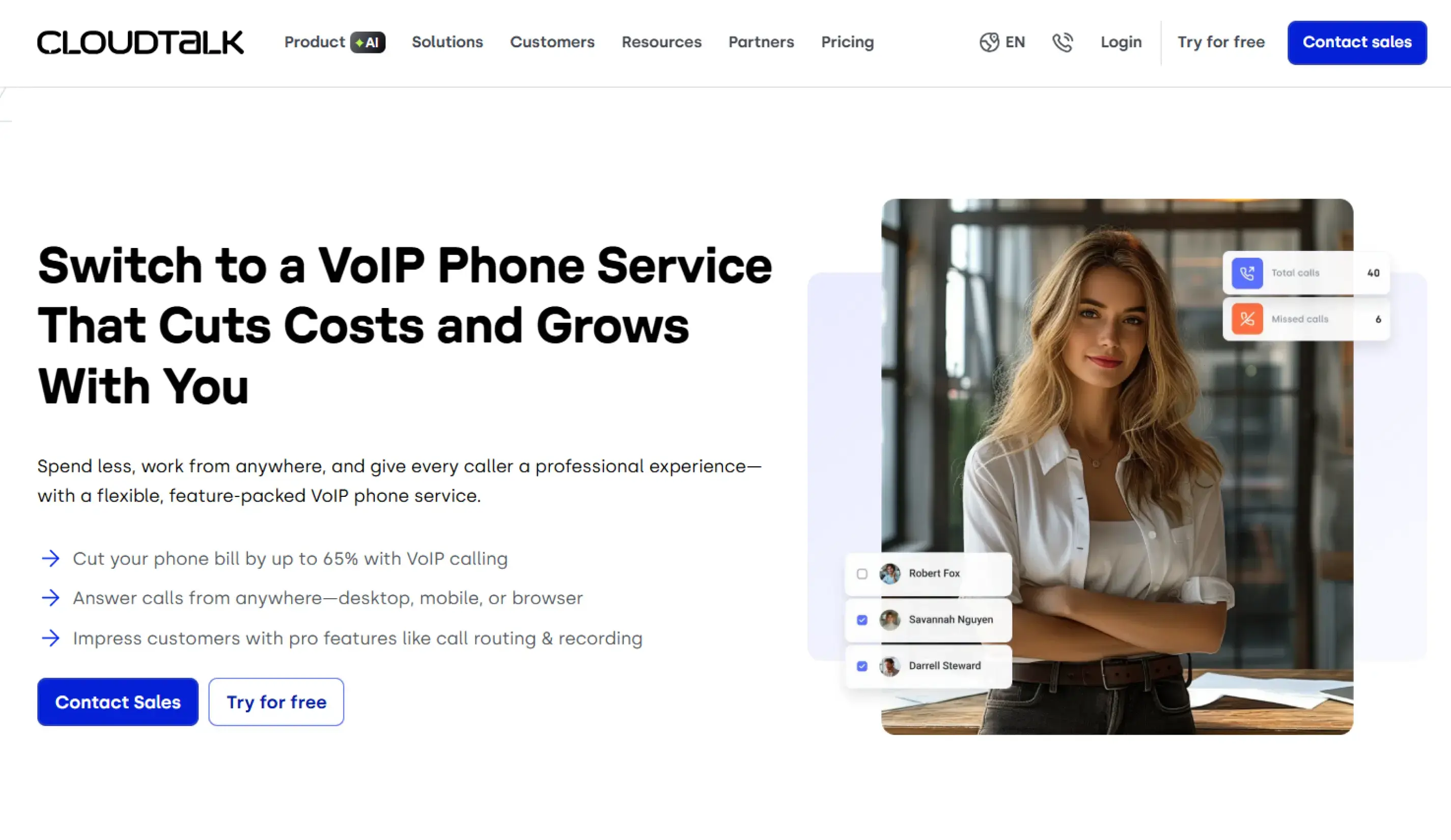
A reliable hosted VoIP option for outbound sales — especially for teams operating across Europe. Clean interface, straightforward setup, broad integration library.
Key Features: Smart dialer with queue prioritization, 70+ CRM and helpdesk integrations, drag-and-drop IVR builder, live dashboards, numbers in 160+ countries.
Pricing: From $25/user/month. Advanced automation features from $50/user/month.
Pros: Strong European number coverage. Fast to onboard. Solid out-of-the-box integrations.
Cons: Deeper analytics require higher-tier plans. AI features are less developed than newer competitors. Occasional latency reported on Asia-Pacific routes.
G2 Rating: 4.4/5

Considering CloudTalk for your business?
Compare TeleCMI vs CloudTalk to evaluate features, pricing, integrations, and support before making your decision.
3. Aircall
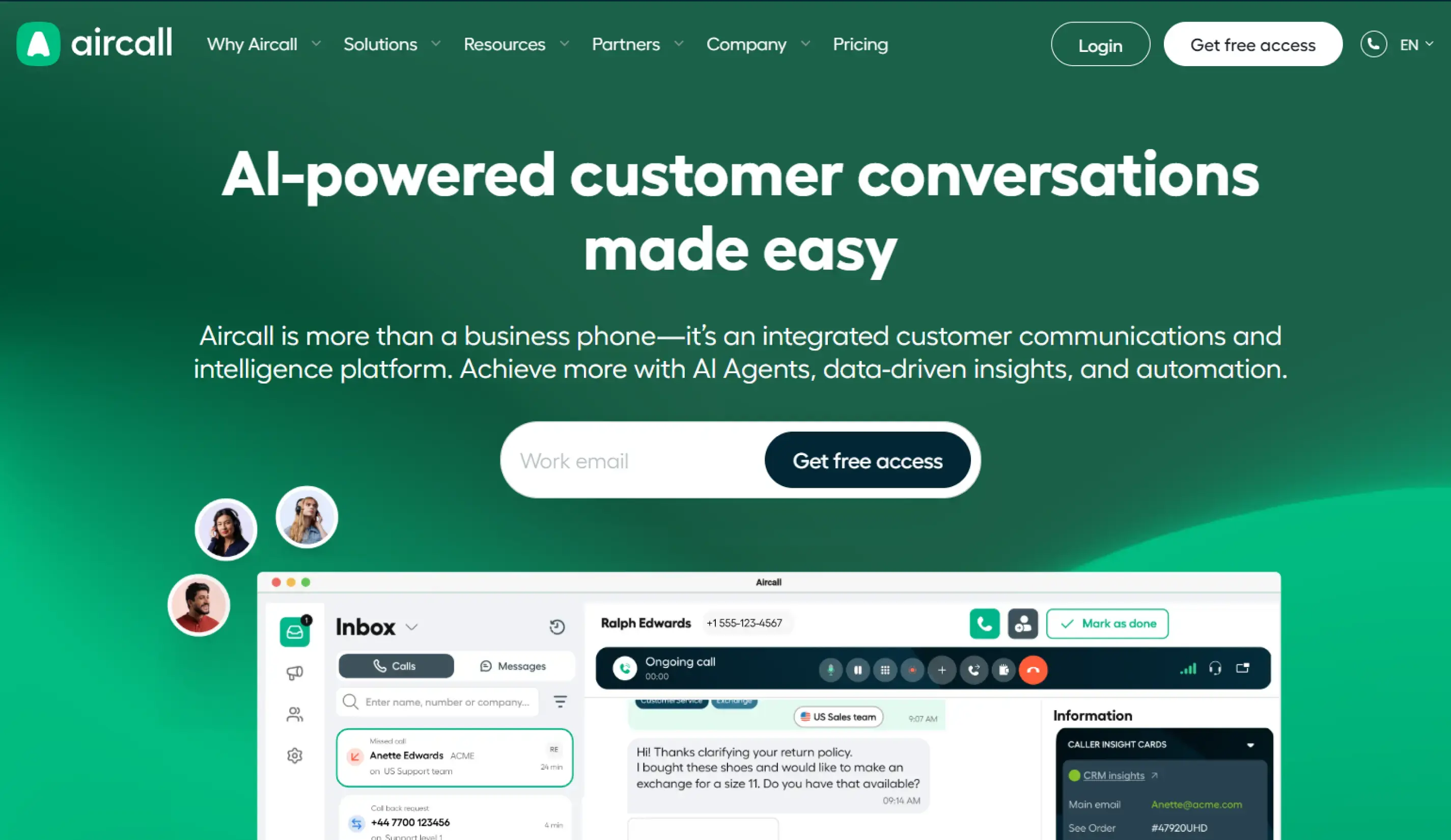
A well-known VoIP platform for mid-market sales teams — particularly those already running on HubSpot or Salesforce. Polished interface, one of the largest integration marketplaces in the category.
Key Features: Auto dialer, 100+ marketplace integrations, call recording with coaching tags, IVR with time-based routing, live activity feed.
Pricing: From $40/user/month. Requires a minimum of 3 users.
Pros: Huge integration ecosystem. Easy for non-technical teams to set up. Reliable support track record.
Cons: Most expensive per seat of the five. No native AI summaries on entry-level plans. Minimum user count locks out very small teams.
G2 Rating: 4.3/5
4. RingCentral
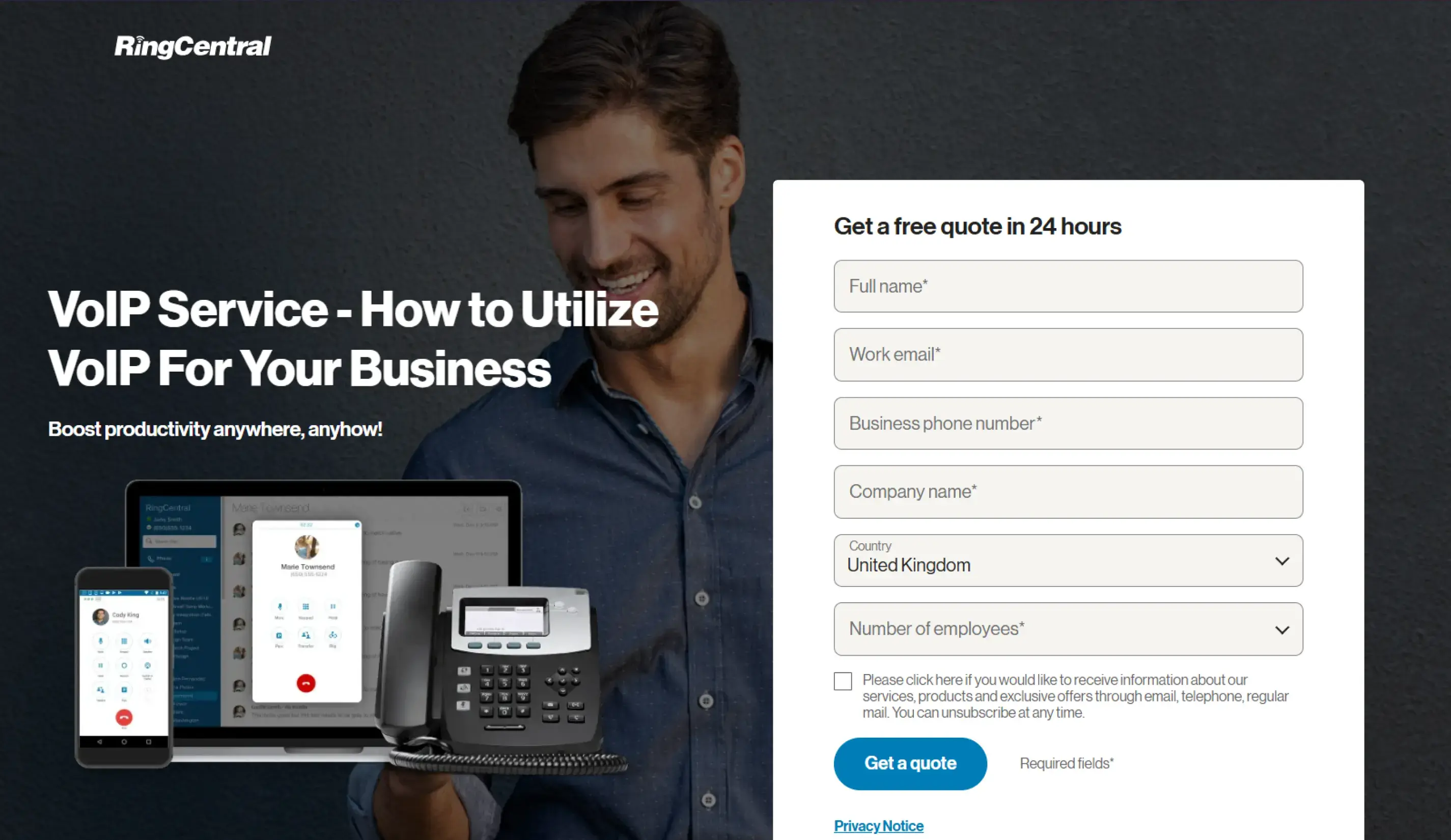
The enterprise standard in hosted VoIP services — voice, video, messaging, and fax under one roof. Built for large organizations with complex communication needs, not lean sales floors chasing conversion.
Key Features: Full UCaaS suite, AI conversation intelligence, 300+ pre-built integrations, advanced analytics, PSTN coverage across 45+ countries.
Pricing: From $20/user/month. Sales-relevant features sit on Advanced ($25) and Ultra ($35) plans.
Pros: Proven at enterprise scale. Strong compliance and security certifications. Widest feature breadth in the market.
Cons: More complexity than most sales teams need. Admin setup has a steep learning curve. Support quality is inconsistent once you're past the initial onboarding.
G2 Rating: 4.1/5
5. Dialpad
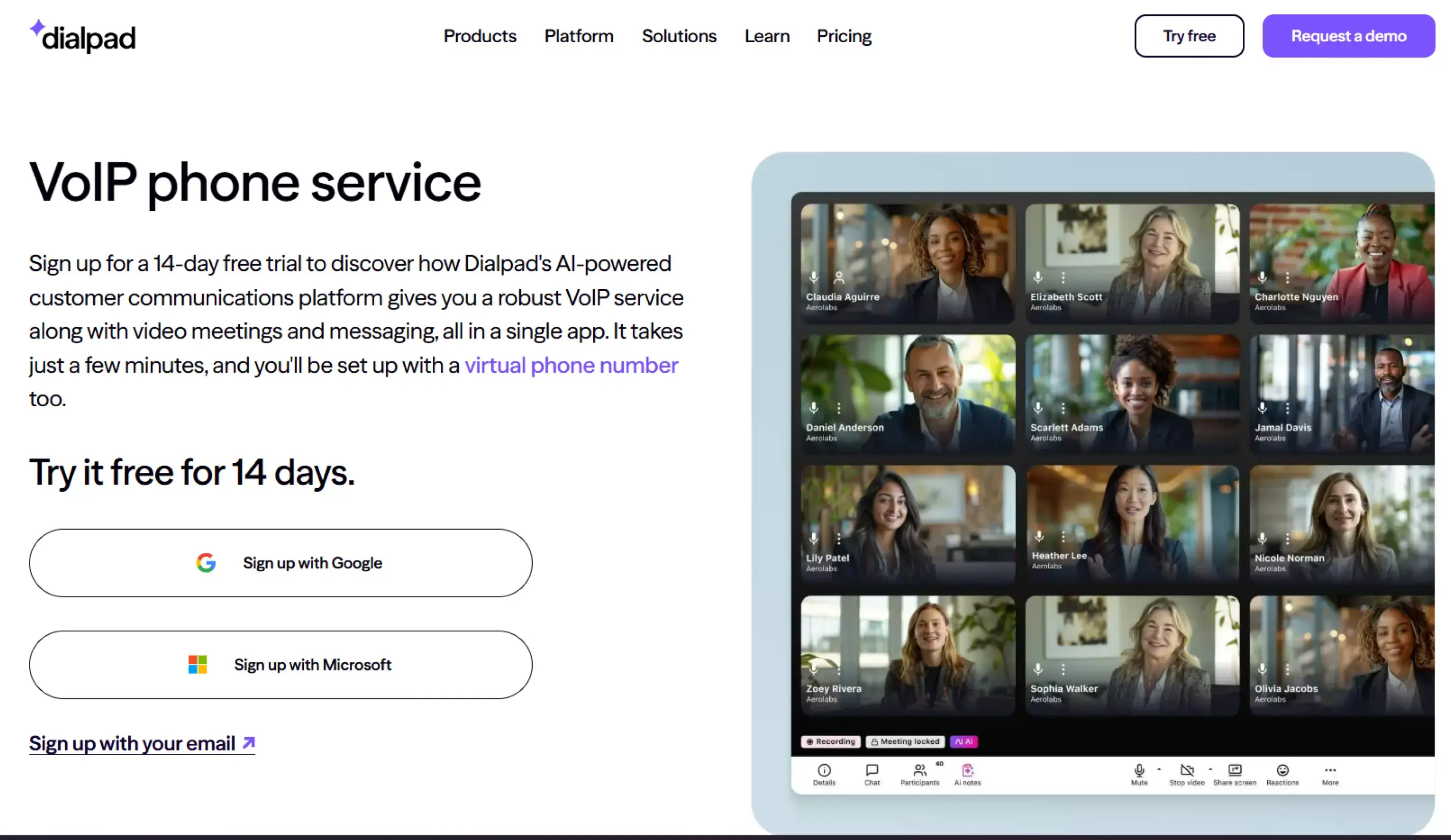
An AI-first VoIP service with live transcription, real-time coaching prompts, and sentiment analysis running on every call — not bolted on as an upgrade. The right pick if data and in-call intelligence matter most to your team.
Key Features: Real-time AI transcription, live coaching cues, automatic CSAT scoring, built-in video meetings, AI call summaries and action item detection, native Salesforce and HubSpot integration.
Pricing: From $27/user/month. Full AI coaching features on Pro ($35) and Enterprise (custom).
Pros: Best AI call intelligence in the category. Excellent mobile experience. Clean, modern interface.
Cons: Call quality can dip in low-bandwidth environments. International number coverage narrower than most competitors. Full AI toolkit requires a higher-tier plan.
G2 Rating: 4.4/5
Comparison Table: Best VoIP for Sales Teams
How to Choose the Right VoIP for Your Sales Team
Don't open this decision with pricing. That's how teams end up with a tool nobody actually uses six months later.
Open with how your team sells.
Outbound-heavy? A auto dialer is the first filter. If a platform's dialer is weak or bolted on as an add-on, move on.
Inbound-heavy? IVR logic and routing depth matter most. Look at how the platform actually handles call distribution, not just whether IVR is listed as a feature.
What CRM is your team on? Native two-way sync is the floor. Not a Zapier workaround. Not "coming soon." If it's not listed as a built integration today, assume it doesn't work the way you need it to.
Where are your customers located? International coverage claims are not the same as proven call quality. Check reviews from teams calling in your specific regions — especially APAC and the Middle East, where quality gaps are common.
What does leadership need to see? If there's currently no visibility into rep-level performance, call-to-opportunity conversion, or average talk time, prioritize analytics first. Getting that data changes how the whole team is managed.
Optimizing Your VoIP System for Maximum Sales Productivity
Getting the right VoIP platform in place is the starting point. Getting real value out of it takes a few deliberate habits.
Set call dispositions before anything goes live. Connected, voicemail, not interested, callback scheduled — pick your labels, make them mandatory. Within 60 days, that outcome data becomes the most valuable thing in your tech stack.
Coach from recordings, not impressions. Once a week, a manager and a rep sit with two or three real calls. Not the best ones — random ones. Reps who get coached from actual recordings improve faster than reps running on generic sales training.
Don't let your IVR collect dust. It's the first thing every inbound prospect hears. Test different greetings. Change the menu structure. Adjust routing logic. Small lifts in connect rate compound across hundreds of calls a week.
Build dial windows around your own data. Post-call analytics will show exactly when your connect rates peak. Most teams discover the pattern is different from what they assumed. Build campaigns around those windows.
Automate what happens after every call. A call marked "send proposal" should create a CRM task, queue a follow-up, and flag a manager — automatically. Every manual step removed is rep time that goes back into selling.
Final Verdict
The best VoIP for sales teams in 2026 isn't the one with the most features on a pricing page. It's the one your team uses every single day — consistently, correctly — and the one that gives leadership clear numbers on what's moving the needle.
For most sales teams, TeleCMI is the strongest overall pick. Practical AI, deep CRM integrations, pricing that doesn't punish growth, and a setup process measured in days not months. If AI-driven in-call coaching is the priority, Dialpad is worth a serious look. HubSpot-first teams will find Aircall's integration marketplace hard to beat. Large enterprises with complex unified communications needs — RingCentral is still the benchmark.
But don't let the options stall you. The cost of staying on your current setup — in slow lead response, invisible rep performance, and missed follow-ups — is almost certainly higher than the cost of switching.
Pick the platform that fits how your team actually sells. Run a 30-day pilot. Measure what changes. Then move.
The reps making 140 calls a day aren't working harder than the ones making 45. They just have better infrastructure.
Close More Deals Faster with Smart VoIP Calling, AI Analytics & Auto Dialer

Trusted by 3500+ Businesses
Virtual Numbers in 150+ Countries
AI Call Automation
Affordable Plans
Frequently asked questions (FAQ)
Vignesh N

With deep expertise in cloud telecommunications, I help readers explore the latest trends in VoIP and modern business communication. At TeleCMI, I focus on educating businesses with clear, practical insights, making complex telecom concepts easy to understand. I’m passionate about helping organizations improve efficiency, enhance customer engagement, and adopt smarter communication strategies.